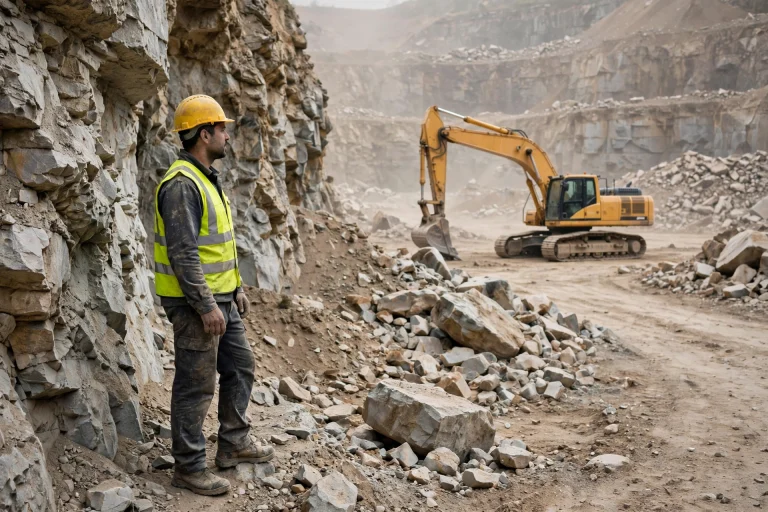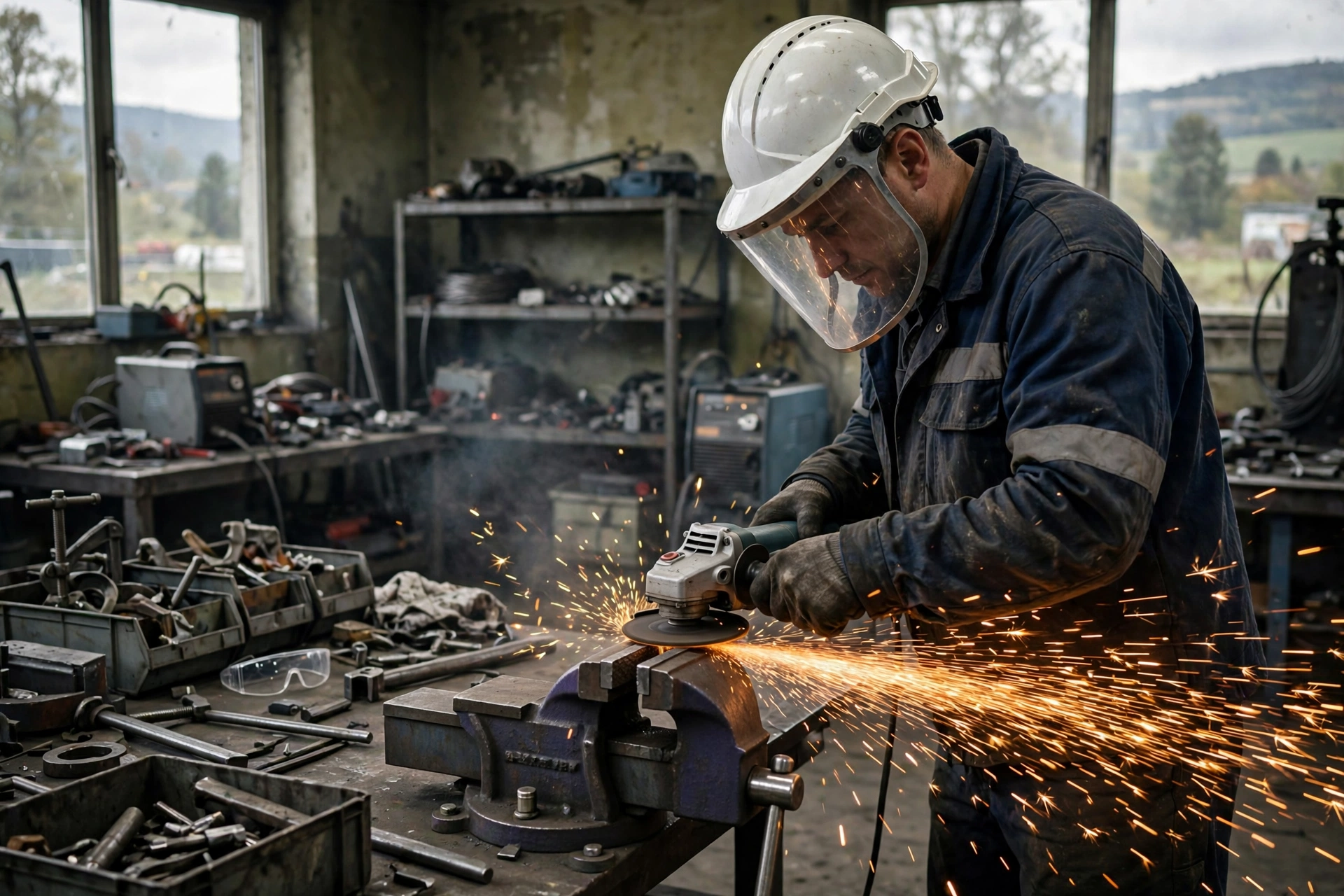
An industrial helmet with a face shield combination is a hard hat fitted with a clear shield that protects the face and eyes as well as the head — and in general terms, it is used where the work throws chips, splashes, dust, or sparks towards the face, not just where things might fall from above. The helmet and the shield work as one system: the helmet takes impacts from above, while the shield blocks what flies towards the face. Used together, they cover hazards that neither one handles alone.
Many industrial jobs need face protection as well as head protection: grinding, cutting, chemical handling, and working with molten materials all throw things at the face. This guide explains how helmet and face shield combinations work, what types are available, and how to choose, fit, and care for one.
What Is an Industrial Helmet with a Face Shield?
The combination pairs a standard industrial helmet shell with a face shield that attaches to the sides of the helmet. The shield is usually a clear, curved sheet of polycarbonate that covers the face from the forehead to below the chin. It can be flipped up when it is not needed and flipped down when the hazardous work starts, so the wearer does not have to take the helmet off to switch between tasks.
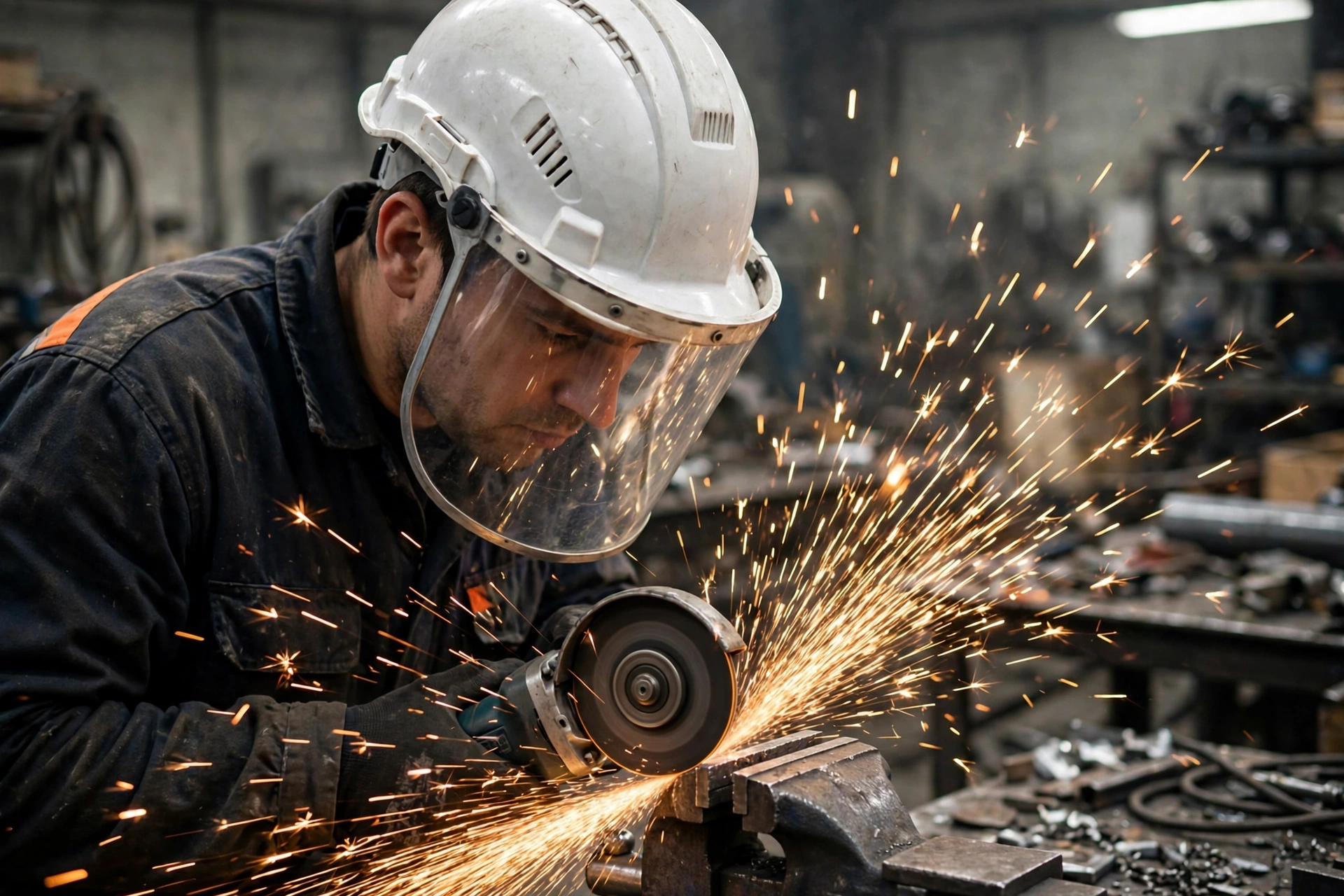
The shield protects against flying particles, liquid splashes, and sparks. A grinder throws hot metal chips, a saw throws wood dust, and some chemical processes splash liquids — in each case the shield stops the material reaching the eyes and skin. It does not replace safety glasses in all cases: fine dust and small particles can still get around the edges of a shield, so many sites require glasses as well.
Some shields are tinted or coated for particular jobs. A dark shield protects against the bright light of welding or cutting, a gold-coated shield reflects heat for work near furnaces, and a clear shield with an anti-fog coating suits humid or cold conditions. The right shield depends on the job, and the wrong one can make the work harder to see.
Which Face Shield Combinations Suit Different Jobs?
For grinding and cutting metal, a clear polycarbonate shield with a sturdy bracket is the usual choice. It needs to resist impact from fast-moving chips and to stay clear enough to see the work. Check that the shield is rated for the impact level of the job, and replace it if it becomes scratched or pitted, because a damaged shield blurs the view and weakens the protection.
For forestry and brush cutting, a mesh shield is sometimes used instead of a clear one. Mesh lets air through, so it does not mist up in hot weather, and it stops wood chips and twigs. It does not stop fine dust or liquids, so it suits outdoor cutting work rather than indoor chemical or grinding tasks. Always match the shield to the material being thrown at the face.
How Should the Helmet and Shield Fit Together?
The shield must fit the helmet it is attached to. Brackets and mounts are often made for particular helmet models, and a shield fitted to the wrong helmet may sit at the wrong angle, wobble, or leave a gap at the sides. Buy the shield and its bracket as a matched set for your helmet model, or check with the maker that the parts are compatible before fitting them.
When the shield is down, it should cover the whole face without touching the nose or chin, and it should not press against safety glasses worn underneath. The helmet itself should sit level and feel snug, with the harness adjusted so it stays put when you bend over the work. If the shield makes the helmet feel front-heavy or causes it to tip forward, adjust the harness or choose a lighter shield.
The flip mechanism should move smoothly and hold the shield in both the up and down positions. A shield that drops down unexpectedly blocks the view, while one that will not stay down leaves the face exposed. Check the pivots and locking parts regularly, and replace worn brackets rather than wedging the shield in place.
How Do You Care for a Helmet and Face Shield Combination?
Clean the shield after each use with mild soap and water, and dry it with a soft cloth. Never use abrasive pads, solvents, or paper towels on a polycarbonate shield, because they scratch the surface and the scratches scatter light, making it harder to see. A scratched shield is not only annoying — it can hide the very hazard you are trying to watch.
Check the shield for cracks, especially around the mounting holes, and check the helmet shell for cracks or dents. Replace the shield if it is cracked, deeply scratched, or has lost its clarity. Replace the helmet after any hard impact, even if the damage is not visible, because the shell and liner can be weakened inside.
Store the combination with the shield up or in a protective cover, so the shield is not scratched by other tools in a locker or van. Keep it away from heat, sunlight, and chemicals that can cloud the plastic. If you are learning how helmets handle different kinds of impact, reading about what MIPS is for helmets can help you understand one of the technologies used in modern helmet design.
What Are the Limits of a Face Shield Combination?
A face shield protects the face, not the whole body, and it does not make a dangerous job safe on its own. It should be used with the other protection the job needs: safety glasses for fine particles, gloves for the hands, and the right clothing for heat or chemicals. A shield is one layer in a system, and removing the other layers because the shield is on is a mistake.
A shield also limits the field of view slightly, especially at the edges, and it can mist up in cold or humid conditions. An anti-fog coating helps, but it wears off over time and needs reapplying or replacing. If misting becomes a problem, stop and clear the shield rather than lifting it during the hazardous part of the job.
Finally, a face shield is not a respirator. It does not filter the air, so it gives no protection against dust, fumes, or vapours that are breathed in. Where the air itself is hazardous, a mask or respirator is needed as well, and it must fit under or with the shield without breaking the seal of either one.
Frequently Asked Questions
Q: Can I wear safety glasses under a face shield?
A: Yes, and in many jobs you should. Glasses protect against fine particles that can get around the edges of a shield, while the shield protects against larger chips and splashes.
Q: Does a face shield replace a welding helmet?
A: No. Welding needs a dark filter that blocks the intense light of the arc. A clear face shield does not filter that light and would leave the eyes unprotected.
Q: How often should a face shield be replaced?
A: Replace it when it is scratched, cracked, or cloudy enough to affect your view. With daily use, that may be fairly often — a clear view of the work is part of the protection.

Olivia
Writer at Helmet Today, covering helmet reviews, fit and riding safety.