No, rowers do not usually wear helmets — rowing is a seated, low-speed sport on flat water, and in general terms, a helmet is not part of standard rowing kit for crews, scullers, or coxswains. That surprises people who associate all watersports with helmets, but rowing’s risks are different from those of sailing or whitewater paddling: there is no boom sweeping the boat, no rapids, and no high-speed fall onto hard surfaces. The main hazards in rowing are elsewhere, and a helmet would not address them.
That said, the answer has some nuance. A few rowing situations do call for head protection, and some clubs and coaches are starting to ask the question more seriously. This guide explains why rowers do not usually wear helmets, when one might be sensible, and what rowers wear instead.
Why Don’t Rowers Wear Helmets?
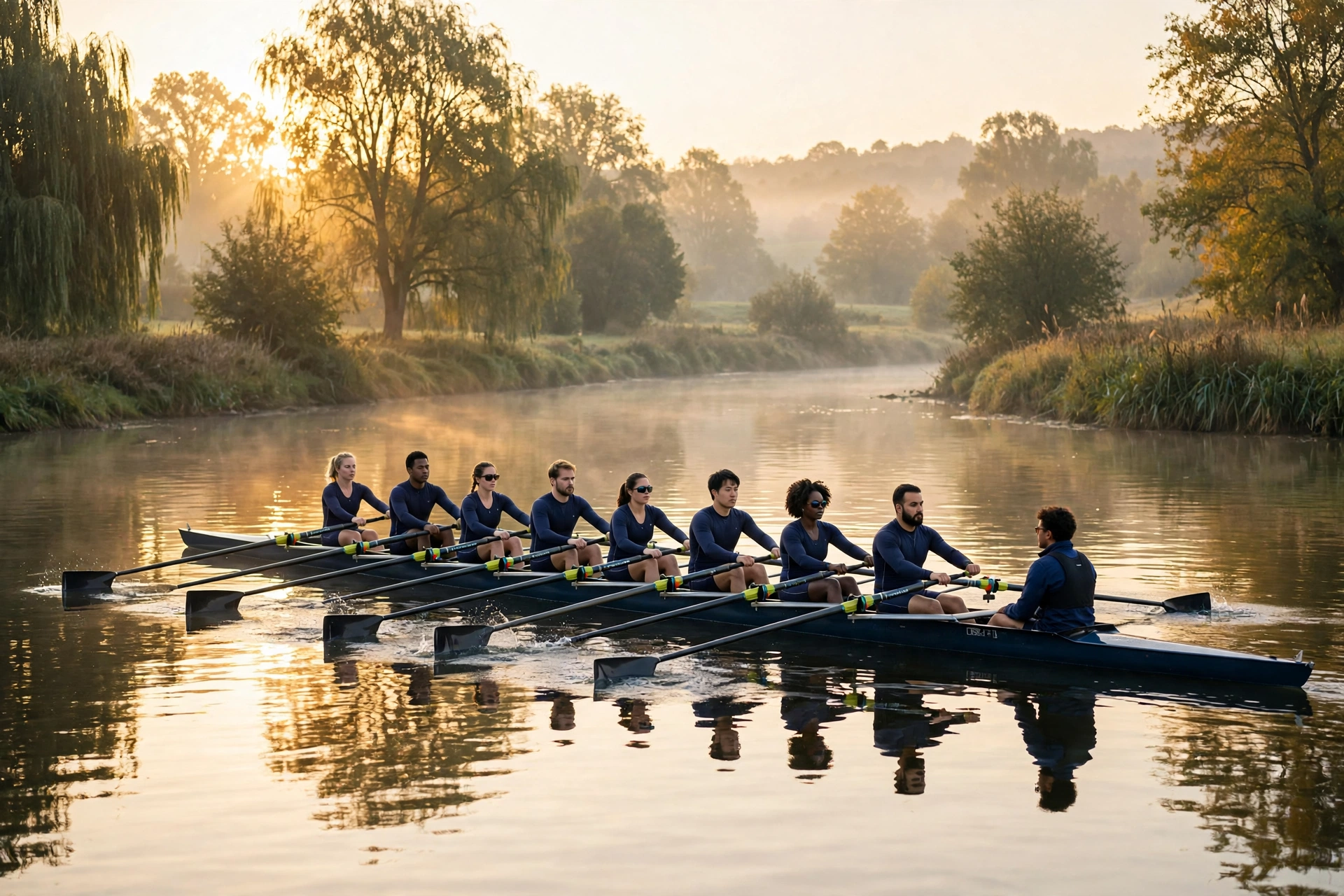
Rowing is a seated sport. The crew sit facing backwards, sliding on a seat, with their heads well below the level of any overhead structure. There is nothing above them to strike their heads: no boom, no rigging, no low bridge in most rowing venues. The boat moves at a steady, moderate speed on flat water, and the crew’s heads move in a smooth, predictable rhythm.
Capsizes in rowing are rare and usually gentle. A rowing shell is long and narrow, but it capsizes slowly compared with a dinghy, and the crew are already sitting low in the boat. When a capsize does happen, the rowers slide into the water rather than being thrown onto a hard surface, and the risk of a head injury is low. The main concern in a capsize is getting clear of the boat and staying warm, not protecting the head from impact.
Tradition and practicality also play a part. Rowing kit is built around freedom of movement, hearing the coxswain’s calls, and keeping cool during hard exercise. A helmet would muffle hearing, trap heat, and add weight to the head during a long, intense piece of rowing. For a sport where the head is not at risk, those downsides outweigh any benefit a helmet might offer.
Are There Rowing Situations Where a Helmet Makes Sense?
There are a few. Rowing under low bridges is one: on some rivers, the route passes under bridges with limited clearance, and a rower who sits up at the wrong moment could strike their head. Clubs that row under low bridges sometimes advise crews to be aware of the clearance and, in some cases, to wear a helmet for that stretch of the river.
Coastal rowing is another. Coastal boats row in open water with waves, and the motion is rougher than on a flat river. A coastal rower can be thrown against the gunwale or the rigger in a big wave, and some coastal rowing events encourage or require helmets for that reason. The same applies to ocean rowing, where the conditions are far more severe and the crew are far from help.
Learning to row also carries a small extra risk. Beginners are still learning the timing of the stroke, and they can catch a crab — when the blade gets stuck in the water — which can throw the handle back towards the rower’s face or chest. A helmet would not prevent a crab, but it could reduce the harm if the handle struck the head. Even so, most clubs address this with coaching and good technique rather than with helmets.
What Do Rowers Wear for Head Protection Instead?
Rowers protect their heads from the sun and cold rather than from impact. A cap or a visor shades the face during long rows in bright sun, and a thin beanie or headband keeps the ears warm in winter. These are comfort items, not safety equipment, and they are chosen for the weather rather than for impact protection.
Clubs also rely on coaching, river rules, and good boat handling to keep rowers safe. Crews are taught to look out for other boats, to follow the circulation pattern on the river, and to stop if they are unsure of the way ahead. These habits prevent the collisions that could cause a head injury, and they are more effective than a helmet would be.
Do Coxswains Wear Helmets?
In general terms, no — coxswains do not usually wear helmets either. The coxswain sits in the stern or lies in the bow, steering and calling the crew, and their head is at the same low level as the rest of the crew. They face the same low risk of head injury, and they need to hear and be heard clearly, which a helmet would make harder.
There are exceptions. A coxswain in a coastal boat in rough water may wear a helmet, and some coxswains wear one when the boat is being launched or recovered on a slipway, where there is a risk of slipping and striking the head. But in normal river rowing, a coxswain’s kit is the same as the crew’s: warm clothing, a lifejacket where required, and a cap for the sun.
Should Rowing Clubs Reconsider Helmets?
Some people in rowing think clubs should look again at helmets, at least for certain situations. Coastal rowing is growing, and as more rowers move from flat rivers to open water, the case for a helmet in those conditions gets stronger. A few events already require helmets for coastal races, and that trend may continue.
Others argue that the sport’s safety record on flat water does not justify helmets, and that adding them would discourage people from taking up rowing without making it meaningfully safer. Both views have merit, and the right answer probably depends on the venue: flat river rowing does not need helmets, while coastal and ocean rowing may do.
For now, the practical advice is simple. If you row on a flat river or lake, a helmet is not needed, and your attention is better spent on buoyancy aids, river rules, and good technique. If you row on the coast, under low bridges, or in rough water, talk to your club or coach about whether a lightweight watersports helmet would be sensible for those sessions. If you are learning how helmets handle different kinds of impact, reading about what MIPS is for helmets can help you understand one of the technologies used in modern helmet design.
Frequently Asked Questions
Q: Do rowers wear helmets in the Olympics?
A: No. Olympic rowing is on flat water, and neither the crew nor the coxswain wears a helmet. The kit is a racing suit, and a lifejacket is not worn during the race itself.
Q: Should children learning to row wear a helmet?
A: In general terms, no — a buoyancy aid and close supervision matter far more. A helmet may be sensible for specific hazards, such as a low bridge on the club’s stretch of river.
Q: Would a helmet help if a rowing boat capsized?
A: Not much. The risk in a capsize is getting clear of the boat and staying afloat, and a helmet does not help with either. A buoyancy aid and knowing what to do in a capsize are the real protections.

Olivia
Writer at Helmet Today, covering helmet reviews, fit and riding safety.