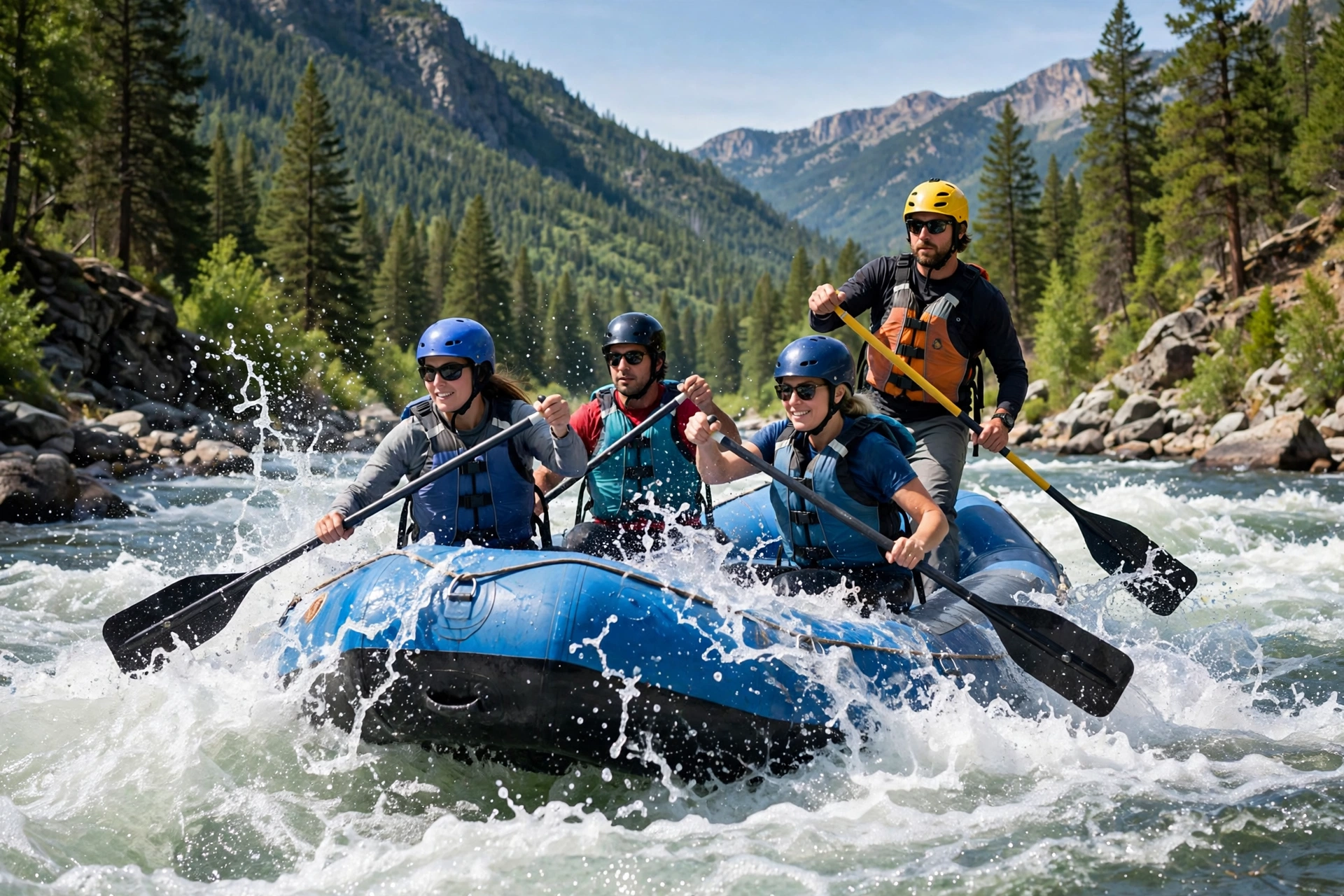
The difference between a whitewater rafting guide helmet and a guest helmet is mainly one of use: guides wear a tougher, fuller-coverage helmet for a full day on the river, while guests wear a simpler, lighter helmet for a single trip. Both are water sports helmets that protect against rocks, paddles and the raft itself, but the guide’s helmet is built for repeated hard use, long hours and the extra risks of rescue work. The guest’s helmet is built to fit many different heads quickly and to be easy to wear for a few hours.
Whitewater rafting puts everyone on the river at the mercy of rocks, waves and the current. A swim in a rapid can throw a person against a boulder, and a paddle or the raft’s frame can strike the head in the confusion. Guides and guests face the same river, but their roles on it are very different, and so are their helmets. This guide explains how the two differ and what each person should look for.
What Does a Rafting Guide Do on the River?
A rafting guide is the person in charge of the raft. The guide steers with long oar strokes or a paddle, reads the water ahead, calls commands to the crew, and decides the line through each rapid. The guide also looks after the guests’ safety, from the safety talk on the bank to the rescue if someone falls in.
Guides spend the whole day on the river, often running several trips back to back, and they are in the water more than anyone else: scouting rapids, helping swimmers, and righting a flipped raft. They also carry rescue kit and may have to climb onto rocks or wade through fast water to reach a guest. That means their helmet must cope with repeated knocks, long hours and hard use.
Because the guide is the one who has to think clearly in an emergency, the helmet must not block hearing or vision. The guide needs to hear calls from other boats, see the water ahead and judge the line through a rapid, all while wearing the helmet for hours at a time.
What Does a Guest Need from a Helmet?
A guest needs a helmet that fits quickly, feels comfortable for a few hours, and protects against the knocks of a single trip. Most guests are first-timers or occasional rafters, and they will wear the helmet for one trip only, so the priorities are a simple fit, a secure strap and a helmet that does not distract from the experience.
Guests are more likely to fall in than guides, because they are still learning how to brace and how to hold on in a rapid. A swim in whitewater can throw a guest against a rock or the raft’s frame, and the paddle can strike the head in the confusion. A helmet guards against those knocks, and it also protects against the sun and cold water on the head.
Comfort matters for guests too. A helmet that presses hard or slips over the eyes will be remembered for the wrong reasons, and a guest who is distracted by an uncomfortable helmet is less able to listen to the guide. A good guest helmet is one the wearer forgets about once the trip is under way.
How Do Guide and Guest Helmets Differ in Design?
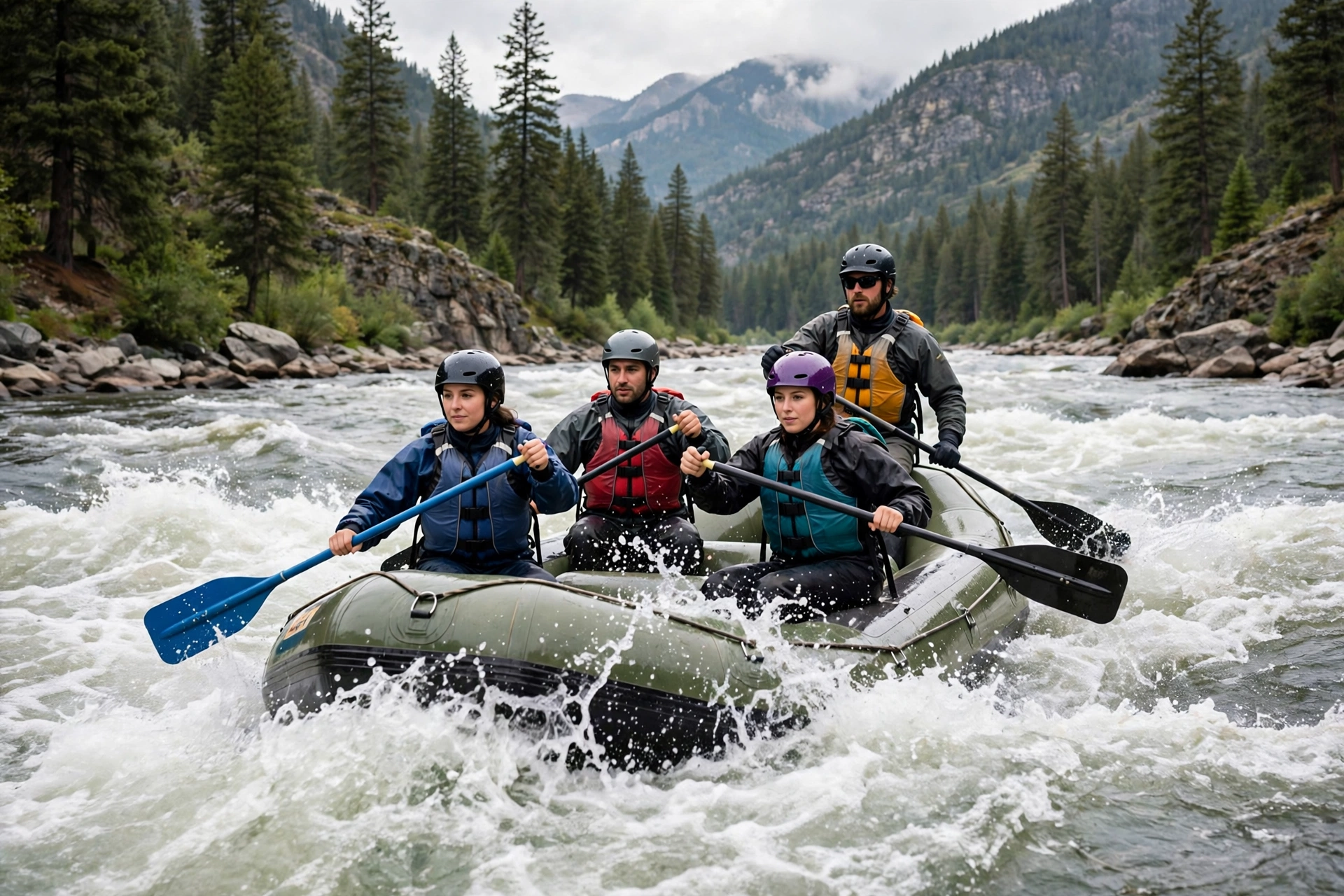
Guide helmets tend to have fuller coverage, especially around the sides, back and ears, because guides are in the water more and face harder knocks. They are often made with a tougher shell and a liner that can take repeated impacts over a season, and they may have a more secure fit system that can be adjusted quickly between trips.
Guest helmets tend to be simpler and lighter, with a straightforward fit that can be adjusted in seconds. Rafting companies keep a range of sizes so that every guest can be fitted quickly on the bank, and the helmets are often a single bright colour so the guide can spot each guest on the water. They are built to be cleaned easily between trips and to cope with many different wearers.
Both types should drain water quickly and dry fast, because a helmet that stays heavy and wet is uncomfortable and distracting. Both should have a smooth shell with no snag points that could catch on a paddle or a rope. If you are learning how helmets handle different kinds of impact, reading about what MIPS is for helmets can help you understand one of the technologies used in modern helmet design.
How Should Each Helmet Fit?
Whether guide or guest, the fit rules are the same. The helmet should sit level on the head, covering the forehead down to just above the eyebrows, and feel snug all round without pressing hard on one spot. When you shake your head gently, the helmet should move with your head rather than sliding on its own. If it wobbles, it is too loose, and if it leaves a sore mark after a few minutes, it is too tight.
The chin strap should fasten securely under the chin and hold the helmet in place without choking. On a river, a loose strap is a real problem: a swim in a rapid can pull a loose helmet off, and a helmet that shifts over the eyes can block the view of the next wave. Check the strap before every trip, and replace it if the buckle slips.
Guides should try their helmet on with the lifejacket and rescue kit they will wear, because a high collar can push the helmet forward. Guests should try theirs on with the lifejacket provided by the company, and tell the guide if it feels wrong. A few minutes spent on the fit on the bank can save a lot of discomfort on the river.
Who Should Wear Which Helmet?
Guides should wear the tougher helmet, because they are on the river all day, in the water often, and responsible for other people’s safety. A guide’s helmet is working kit, and it should be chosen for durability, coverage and a fit that stays secure through a long day. Many guides own their own helmet and know exactly how it fits.
Guests should wear the helmet provided by the rafting company, which will be a simple, well maintained helmet in the right size. There is no need for a guest to buy a guide’s helmet for a single trip, and the company’s helmets are checked and cleaned between trips. If you raft often, you may want your own helmet, and a guide-style helmet is a good choice for regular use.
Whatever the helmet, the rule is the same: wear it for the whole trip, from the moment you get in the raft to the moment you get out. A helmet in the bottom of the raft protects no one, and the rapids that cause most knocks are often the ones that look easiest from the bank.
Frequently Asked Questions
Q: Do rafting guests have to wear helmets?
A: In general terms, yes. Most rafting companies ask all guests to wear a helmet for the whole trip, and many include it in the kit provided.
Q: Can a guest bring their own helmet?
A: Usually, yes, as long as it is a water sports helmet in good condition. Check with the company first, because they may need to check the fit and condition.
Q: Is a guide helmet safer than a guest helmet?
A: In general terms, a guide helmet offers more coverage and durability, but a well fitting guest helmet still gives good protection for a single trip.

Olivia
Writer at Helmet Today, covering helmet reviews, fit and riding safety.