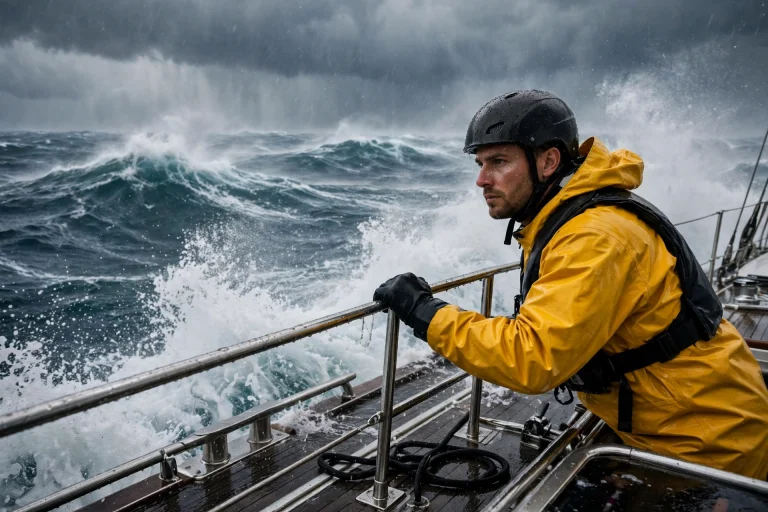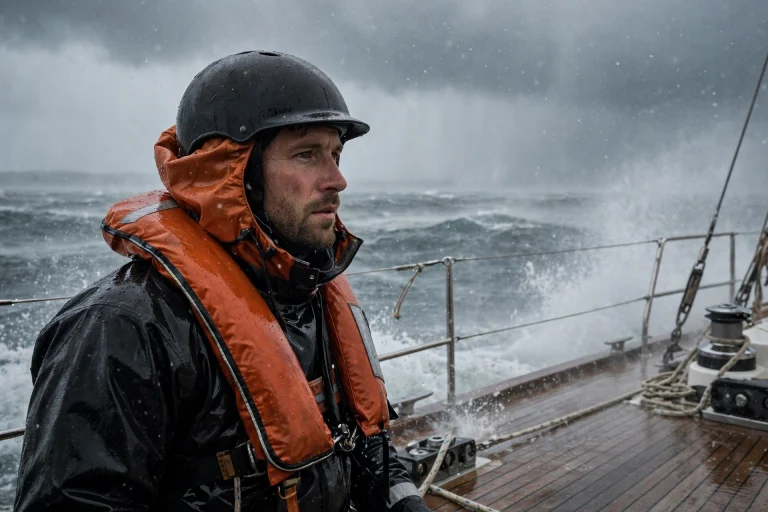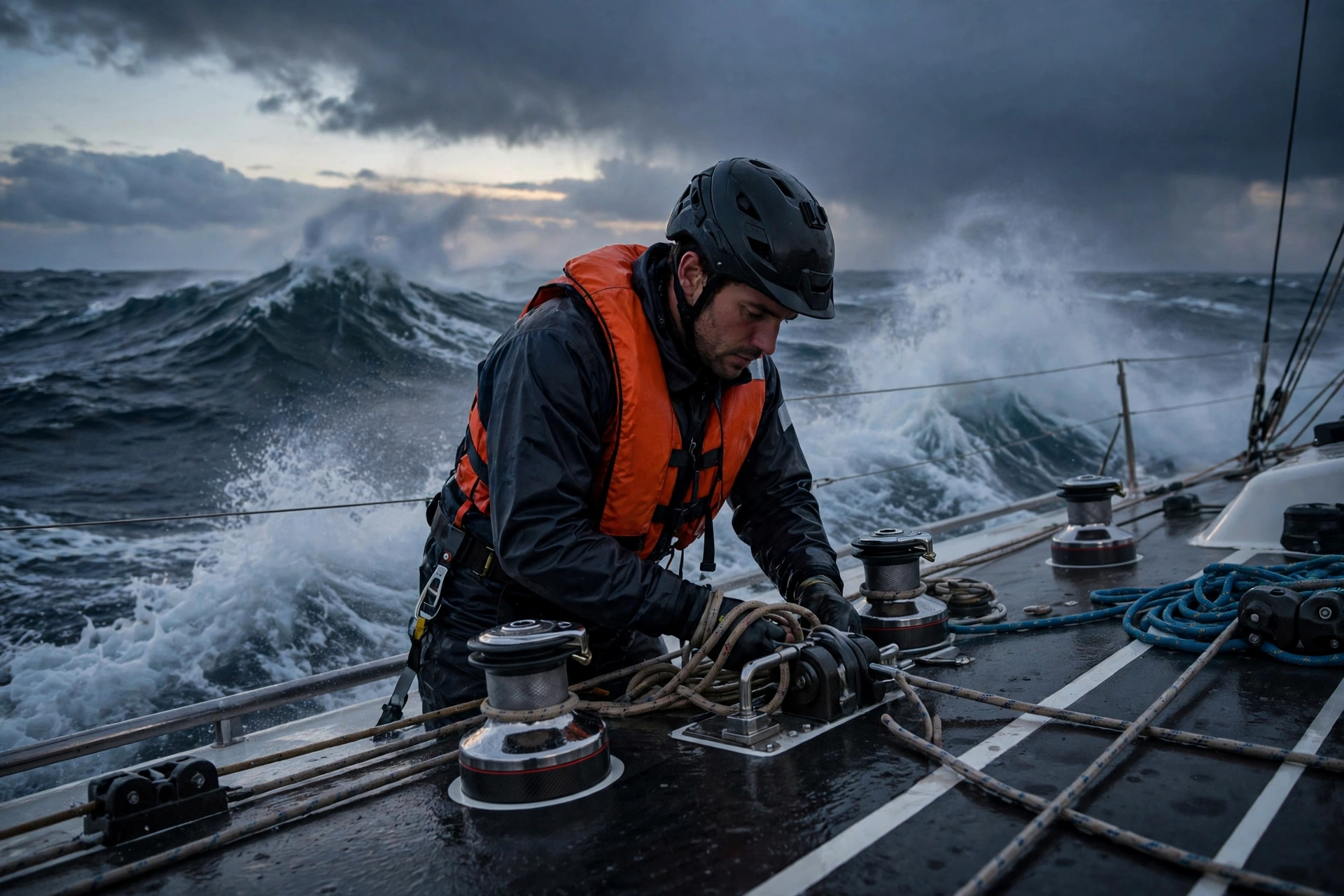
To choose a sailing helmet for offshore racing, pick a lightweight watersports helmet with a secure chin strap, good water drainage, and a fit that works with your lifejacket and foul-weather hood — and in general terms, prioritise fit and staying on in rough seas over weight saving alone. Offshore racing is long, wet, and violent: the boat pitches and rolls for days, the crew work on a moving deck in the dark, and a head injury far from shore is a serious problem. The right helmet is one you can wear for hours without thinking about it, and that stays on when the boat throws you around.
Offshore racing covers everything from short coastal races to ocean crossings, and the helmet needs to suit the whole range. This guide explains what matters in an offshore racing helmet, how it differs from a dinghy helmet, and how to choose, fit, and care for one.
What Makes Offshore Racing Different for Helmets?
Offshore racing lasts for days, not hours, and the crew live on the boat. A helmet may be worn for long watches, including at night, in rain and spray, and below deck in rough seas. Comfort over a long period matters far more than it does in a short dinghy race, because an uncomfortable helmet will be taken off — and it is usually taken off just before it is needed.
The motion is also more violent. In a storm, the boat can pitch and roll hard enough to throw a crew member across the cockpit or below deck. A helmet protects against bulkheads, winches, and the companionway as well as against the boom. The risk is not only on deck: moving around below in heavy weather is one of the most common ways offshore sailors hurt their heads.
Finally, help is far away. On an inshore race, a rescue boat is minutes away; offshore, medical help may be hours or days away. That raises the stakes for any head injury, and it makes prevention — including a helmet — more valuable. A small knock that would be a nuisance inshore can become a real problem when the nearest hospital is a day’s sail away.
What Should You Look for in an Offshore Racing Helmet?
Fit is the first thing to check. The helmet should sit level, feel snug all round, and stay put when you shake your head or are thrown sideways. It must work with your lifejacket and your foul-weather jacket hood: try the whole combination on together, because a hood that pushes the helmet forward, or a lifejacket collar that lifts it, will make the helmet useless in the conditions where it matters most.
Water handling is the second priority. The helmet will be soaked repeatedly, so it needs drainage holes, a liner that dries quickly, and straps that do not stretch when wet. A helmet that holds water becomes heavy and cold, and a cold, heavy helmet is one the crew will want to remove. Rinse it in fresh water when you can, and let it dry in the shade between watches.
Weight and ventilation come next. A light helmet causes less neck strain over a long race, and ventilation slots help with heat on sunny days. But do not choose the lightest helmet if it fits poorly or has a weak chin strap — a helmet that comes off in a knock is no protection at all. Balance weight against fit and security, and favour the helmet you forget you are wearing.
Should You Wear the Helmet Below Deck Too?
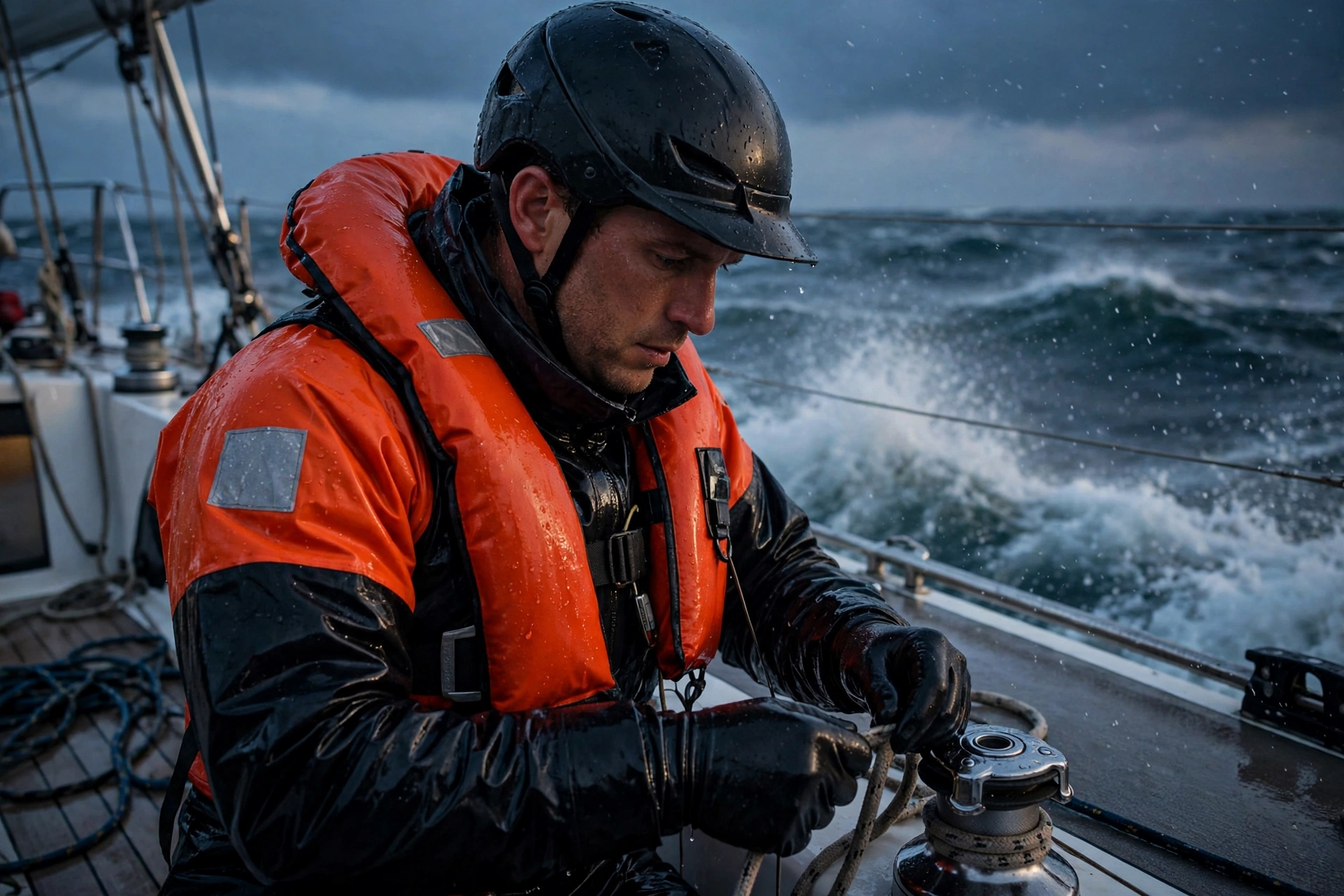
In rough weather, yes — many offshore crews wear their helmets below deck as well as on it. The cabin of a racing yacht is a small space full of hard edges: bulkheads, bunks, the galley, and the companionway steps. In a big wave, a sailor trying to rest or to move around can be thrown against any of them, and a helmet reduces the harm.
Wearing a helmet below deck takes getting used to, because it is warm and it can catch on low doorways and overhead fittings. Choose a low-profile helmet with a smooth shell that does not snag, and take it off only when the weather eases and the boat’s motion settles. Some crews have a simple rule: helmet on whenever the boat is moving in rough conditions, wherever you are on board.
How Does an Offshore Helmet Differ from a Dinghy Helmet?
An offshore helmet and a dinghy helmet share the basics — lightweight, water-draining, secure chin strap — but the emphasis is different. A dinghy helmet is built for short, intense races with frequent capsizes, so drainage and lightness matter most. An offshore helmet is built for long wear in rough seas, so comfort over hours, compatibility with foul-weather gear, and protection below deck matter more.
Offshore helmets often have more coverage, including better protection for the sides and back of the head, because the hazards come from every direction on a moving yacht. They may also be designed to work with a headlamp, which is essential for night watches, and with a lifejacket hood, which is worn in heavy rain and spray.
How Do You Care for an Offshore Racing Helmet?
Rinse the helmet in fresh water after the race, or whenever fresh water is available on board, because salt water corrodes buckles and stiffens straps. Let it air dry in the shade, and check the shell for cracks or dents after any hard knock. Check the chin strap and buckle for fraying, and replace the strap if it no longer holds firmly.
Inspect the liner and sweatband regularly. A liner that has compressed or worn thin lets the helmet move on the head, which reduces its protection and makes it less comfortable. Replace the liner or the helmet when the fit loosens. Store the helmet in a dry, ventilated place, away from fuel, solvents, and strong sunlight.
Replace the helmet after any hard impact, even if the damage is not visible. On a long race, a helmet may take several knocks against winches and bulkheads, and the damage can build up. If you are learning how helmets handle different kinds of impact, reading about what MIPS is for helmets can help you understand one of the technologies used in modern helmet design. Keep a spare on board if you can, so a damaged helmet can be swapped without leaving a crew member unprotected for the rest of the race.
Frequently Asked Questions
Q: Is a helmet required for offshore racing?
A: It depends on the race. Some offshore races require helmets for certain legs or in certain conditions, while others leave it to the crew. Check the race rules and the sailing instructions before you start.
Q: Can I wear a climbing helmet for offshore racing?
A: In general terms, yes, if it fits well, has a secure chin strap, and works with your lifejacket and foul-weather hood. A watersports helmet is usually better at draining water, so compare both before choosing.
Q: How do I stop an offshore helmet fogging my glasses?
A: Choose a helmet with good ventilation, keep your glasses clean, and make sure the helmet does not press your glasses against your face. Anti-fog wipes can help in cold, wet conditions.

Olivia
Writer at Helmet Today, covering helmet reviews, fit and riding safety.