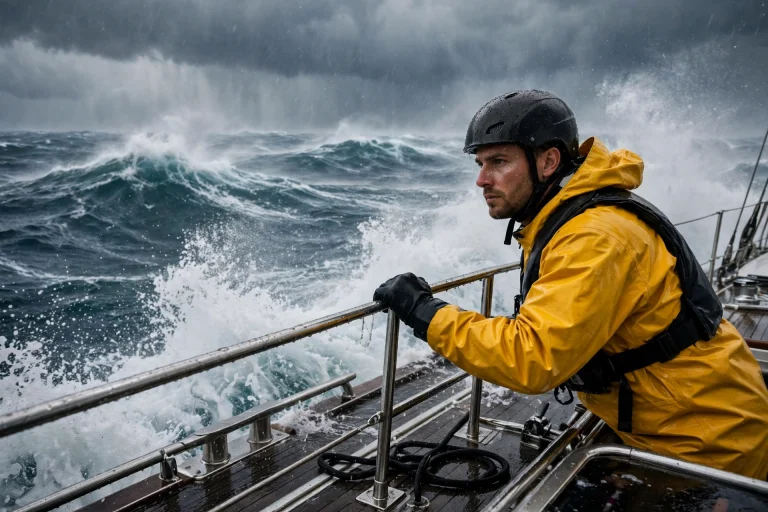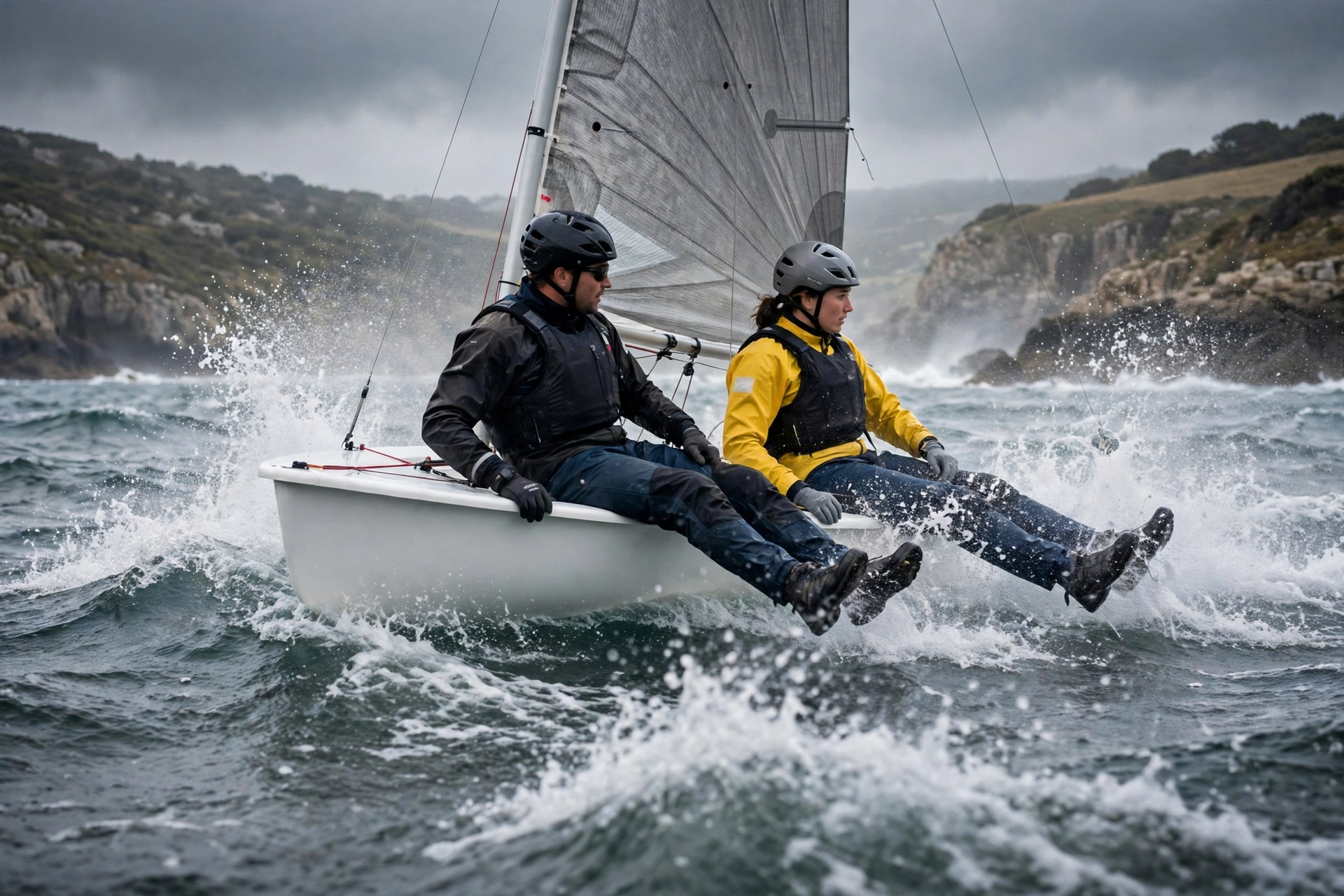
A sailing helmet for dinghy racing is a lightweight watersports helmet worn to protect against the boom, the mast, and the hull during fast tacks, gybes, and capsizes — and in general terms, it is now standard kit for most competitive dinghy sailors. Dinghies are small, fast, and tippy, and the crew work in a tight space where the boom sweeps across at head height on every manoeuvre. A helmet is the simplest protection against the knock that follows a mistimed duck.
Dinghy racing is the part of sailing where helmets have become most common, from youth fleets to Olympic classes. This guide explains what makes a dinghy racing helmet different, what to look for, and how to fit and care for one.
Why Do Dinghy Racers Wear Helmets?
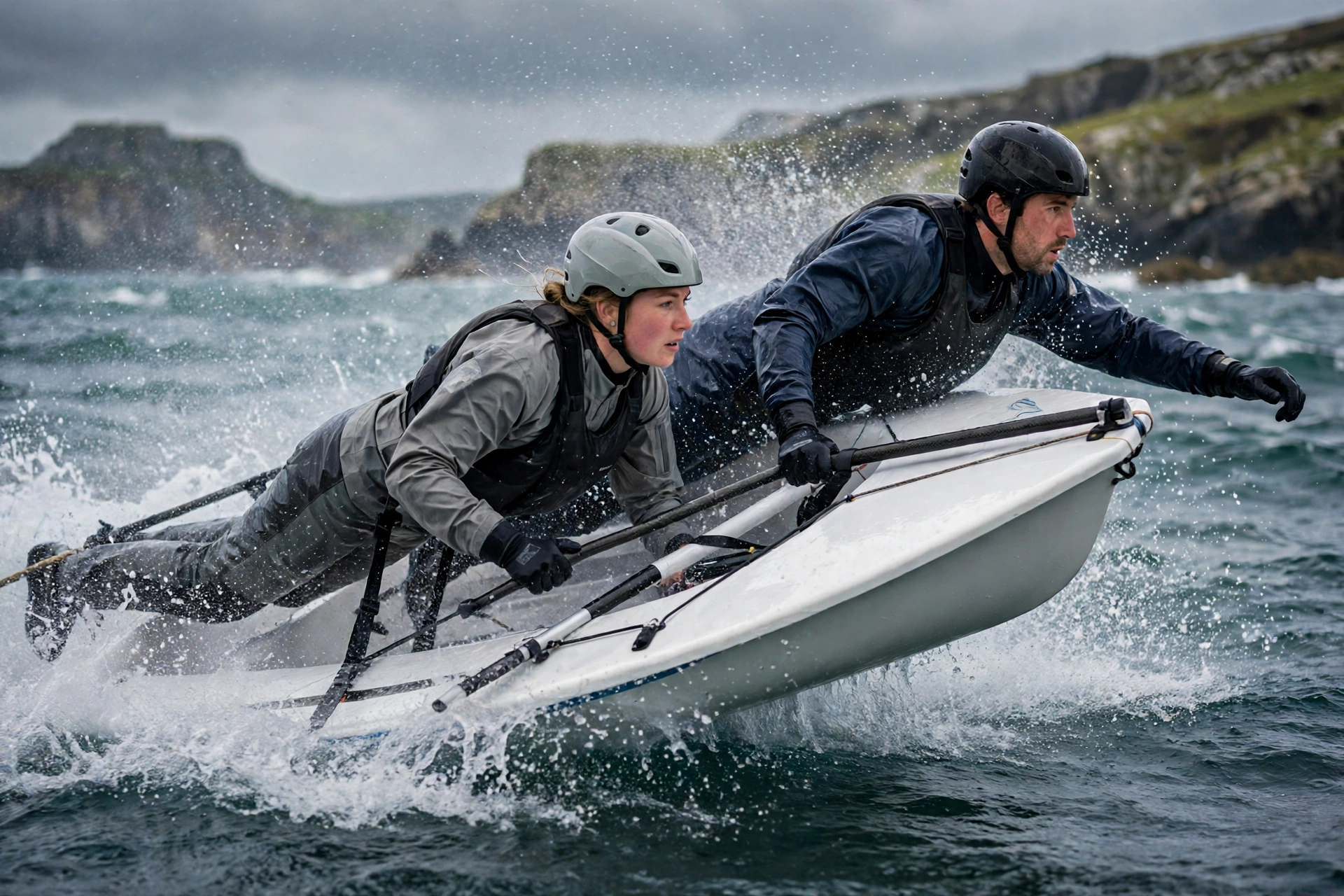
The boom is the main reason. In a dinghy, the boom sits low, and it crosses the cockpit every time the boat tacks or gybes. In a race, the crew are busy with sheets, the tiller, and tactics, and a moment’s distraction can leave a head in the boom’s path. A helmet turns a blow that could end the day — or worse — into a painful but minor knock.
Capsizes are the second reason. Dinghies capsize often, especially in strong wind, and a sailor can hit their head on the centreboard, the gunwale, or the mast as the boat goes over. The water itself can be a hazard too: falling onto flat water from a height at speed can feel like hitting a solid surface, and a helmet helps spread that impact.
The third reason is the speed of modern dinghies. High-performance classes, especially foiling dinghies, travel much faster than the dinghies of a generation ago. At those speeds, a fall or a collision with another boat carries more force, and a helmet is a sensible part of the kit, just as it is in other fast watersports.
What Kind of Helmet Suits Dinghy Racing?
A dinghy racing helmet is a lightweight watersports helmet with a snug fit and a secure chin strap. It should be light enough to wear for a whole race without causing neck strain, and it should drain water quickly, because a dinghy sailor is in and out of the water all day. Look for a shell that does not absorb water and a liner that dries fast.
Ventilation and drainage holes help water escape after a capsize, so the helmet does not become heavy and cold. The chin strap should be easy to adjust with wet hands and should hold the helmet firmly in place during a capsize. Some helmets have ear covers, which protect the ears from the boom and cold water, while others leave the ears open so the crew can hear each other clearly.
Many dinghy helmets are based on whitewater or surf helmet designs, which are built for repeated dunking and for impacts against hard objects. A climbing helmet can also work for some sailors, but a watersports helmet is usually the better choice, because it is designed to get wet and to drain. Check that the helmet meets a watersports or water impact standard recognised where you sail.
How Should a Dinghy Racing Helmet Fit?
A dinghy helmet should sit level on your head, low enough to cover the forehead without slipping over your eyes. The harness should be adjusted so the helmet feels snug all round and stays put when you shake your head or are dunked. If it slides forward when you look down at the sheets, it is too loose, and it will block your view at the moment you need it most.
Try the helmet on with the rest of your kit: lifejacket, spray top, and any neoprene hood you wear in cold weather. The helmet should not push the lifejacket out of place, and the lifejacket should not push the helmet forward. If you wear sunglasses, check that the helmet does not press them into your temples or push them down your nose.
The chin strap should be snug but not tight enough to be painful. You should be able to fit two fingers between the strap and your chin, and the strap should not slip when you pull on it. Practice adjusting it with wet hands before your first race, so you can tighten it quickly on the water if it loosens.
Do Young Dinghy Sailors Need Helmets?
Yes, young sailors are among the most important helmet wearers in dinghy racing. Children and teenagers are still learning to read the boat, to duck the boom, and to handle capsizes, and they are more likely to be caught out by a sudden gybe. Many sailing schools and youth fleets now require helmets for all on-the-water sessions, and parents should treat that rule as a minimum, not a maximum.
A child’s helmet must fit properly. A helmet that is too large will slip and block vision, while one that is too small will be uncomfortable and may be worn incorrectly. Measure the head, try several sizes, and check the fit with the child’s lifejacket on. A helmet that fits well is one a young sailor will keep on without complaining.
Coaches should set the example by wearing a helmet themselves. Young sailors copy what the adults around them do, and a coach in a helmet sends a stronger message than any rule. If the whole fleet wears helmets, no young sailor feels singled out, and the habit becomes part of the sport rather than a chore.
How Do You Care for a Dinghy Racing Helmet?
Rinse the helmet in fresh water after every session in the sea, because salt water corrodes buckles and stiffens straps over time. Let it air dry in the shade, never in direct sun or on a radiator, because heat can weaken the shell. Shake out any sand from the vents, and check the liner for wear — a worn liner lets the helmet move on the head, which reduces its protection.
Check the shell for cracks or dents before each race, especially after a capsize in which the helmet struck the boat. Check the chin strap and buckle for fraying or stiffness, and replace the strap if it no longer holds firmly. A helmet that has taken a hard impact should be replaced, even if the damage is not visible on the outside.
Store the helmet in a dry, ventilated place, away from fuel, solvents, and strong sunlight. If you are learning how helmets handle different kinds of impact, reading about what MIPS is for helmets can help you understand one of the technologies used in modern helmet design. A well-cared-for helmet will last longer and protect better, but no helmet lasts forever, so follow the maker’s guidance on service life.
Frequently Asked Questions
Q: Is a helmet compulsory in dinghy racing?
A: It depends on the class and the event. Some classes and youth fleets require helmets, while others leave it to the sailor. Check the sailing instructions for your event before you race.
Q: Will a dinghy helmet make me overheat?
A: In general terms, no — dinghy helmets are light and ventilated, and you will be splashed with water regularly. Choose a well-vented model and take shade breaks between races.
Q: Can I use a kayak helmet for dinghy racing?
A: Yes, in general terms. Many kayak and whitewater helmets suit dinghy racing well, because they are built for water impacts and quick drainage. Check the fit with your lifejacket first.

Olivia
Writer at Helmet Today, covering helmet reviews, fit and riding safety.