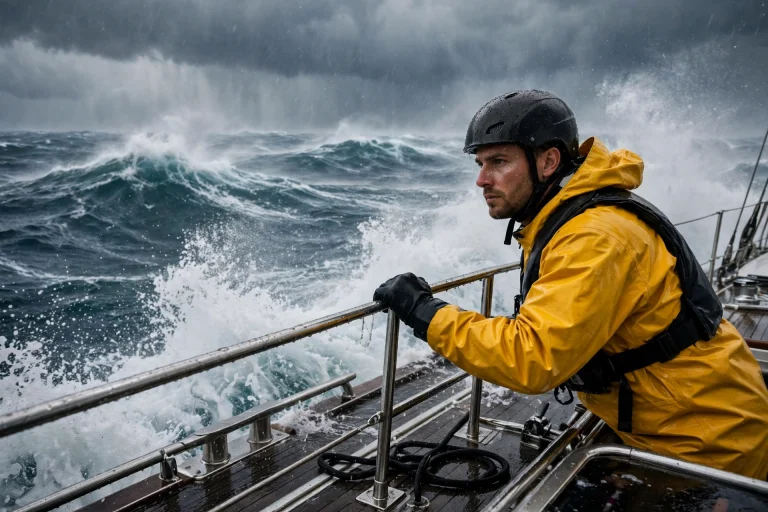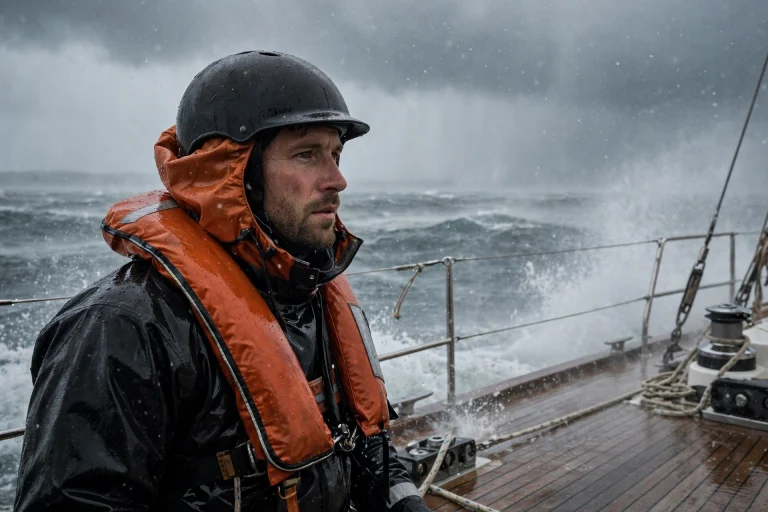
A fishing boat deck helmet is a lightweight industrial or water sports helmet worn by crew working on the open deck of a fishing boat to protect the head from swinging gear, falling objects and slips on a wet, moving deck. The deck of a working fishing boat is a busy place: nets, pots, booms and catches move overhead and underfoot, and the boat rolls with the sea. A helmet guards against the knocks that are part of everyday work at sea.
Commercial fishing is one of the hardest and most physical jobs on the water. Crews work long hours in all weathers, handling heavy gear on a deck that is often wet, oily and moving under their feet. Head injuries are a known risk in that setting, and a helmet is a simple piece of kit that can prevent a minor knock from becoming a serious injury. This guide explains what a deck helmet is, who wears one, what it should do, and how to choose one for fishing work.
What Happens on a Fishing Boat Deck?
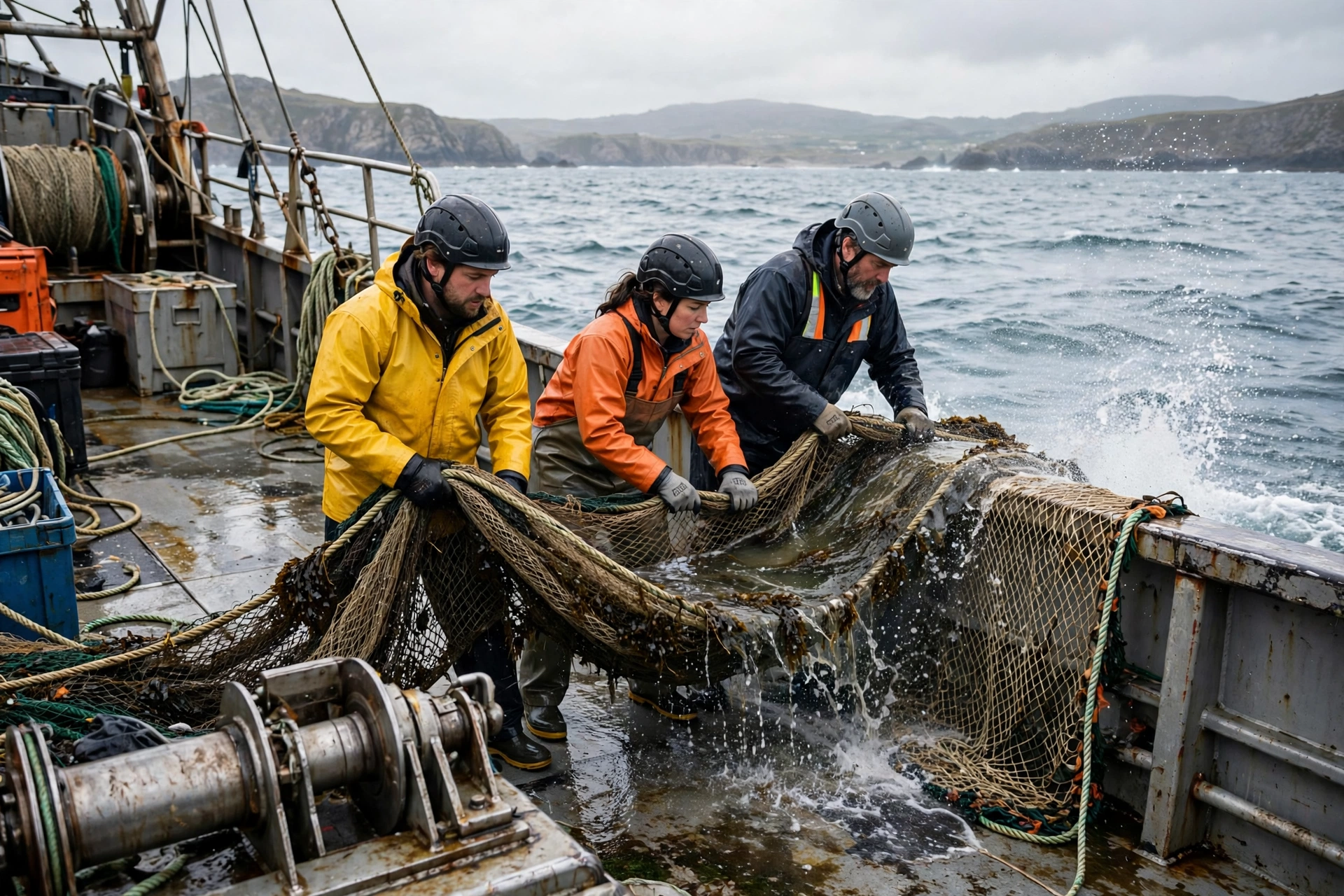
The deck is where the catch is hauled, sorted and stowed, and where the gear is shot and recovered. Crews handle nets, trawl doors, pots, lines and crates, often with a crane or a winch moving loads overhead. The work is fast and physical, and it goes on in rain, spray and darkness, with the deck rolling and pitching underfoot.
That combination creates several head risks at once. A swinging block or hook can strike the head as gear is moved, a pot or crate can fall from a stack, and a crew member can slip on a wet deck and hit the bulwark or a hatch. In rough weather, the boat can lurch without warning, throwing a standing crew member off balance. A helmet is a guard against all of these.
The work also involves long hours and tired crews, and tired people are more likely to misjudge a swing or miss a step. A helmet does not stop tiredness, but it does reduce the harm when a mistake leads to a knock.
Why Would Fishing Crew Wear a Helmet on Deck?
The main reason is protection from falling and swinging objects. Nets, pots and crates are heavy, and even a light object falling from a height can cause a serious head injury. A helmet spreads the force of a blow over a wider area and reduces the chance of a cut or a fracture, which matters when the nearest hospital may be hours away by sea.
A second reason is the risk of a slip or a fall on deck. A wet, oily deck on a rolling boat is easy to slip on, and a fall can send the head into a hatch, a rail or the deck itself. A helmet guards against that impact, and it keeps the head covered while the crew member gets back on their feet.
There is also the risk of being struck by moving gear. Winches, booms and cranes move loads across the deck, and a load that swings in a roll can hit a crew member who is standing in the wrong place.
What Kind of Helmet Suits Deck Work?
A deck helmet should be a lightweight helmet that can cope with salt water, fish, oil and long hours of wear. Many crews use an industrial safety helmet, because those are made to protect against falling objects and are built to a recognised standard for that job. Others use a water sports helmet, which is lighter and drains better but may offer less protection from a heavy falling object.
The right choice depends on the work. On a boat where heavy gear moves overhead, an industrial helmet with a chin strap is often the better choice, because it stays on in a roll and protects against a falling pot or crate. On a smaller boat where the main risks are slips and light knocks, a water sports helmet may be enough, and its lightness makes it easier to wear all day.
Whatever the type, the helmet should have a chin strap that keeps it on in wind and rough seas, and it should be comfortable enough to wear for a full shift. A helmet that is hot, heavy or painful will be taken off, and a helmet in a locker protects no one. If you are learning how helmets handle different kinds of impact, reading about what MIPS is for helmets can help you understand one of the technologies used in modern helmet design.
How Should a Deck Helmet Fit?
Fit decides whether the helmet actually protects the wearer. It should sit level on the head, covering the forehead down to just above the eyebrows, and feel snug all round without pressing hard on one spot. When you shake your head gently, the helmet should move with your head rather than sliding on its own. If it wobbles, it is too loose, and if it leaves a sore mark after a few minutes, it is too tight.
The chin strap is especially important on a fishing boat, because wind and rolling seas can pull a loose helmet off. The strap should fasten securely under the chin and hold the helmet firmly, without choking. A four-point chin strap, which holds the helmet from four directions, is often more secure than a simple two-point strap on a moving deck.
Try the helmet on with the waterproof jacket and lifejacket you will wear, because a high collar can push the back of the helmet forward if the two do not sit well together. A good combination lets the helmet stay level, the collar sit below the helmet rim, and the wearer turn the head freely to watch the gear and the sea. Test this on deck before your first trip.
How Do You Look After a Deck Helmet?
Care is simple but worth doing. After each trip, rinse the helmet in fresh water to wash off salt, fish and oil, and leave it to dry in the shade. Salt left on the shell and strap can weaken them over time, and a helmet that smells of fish and oil is one that will be left in a locker.
Check the helmet regularly for cracks, dents and loose padding, and check the strap and buckle for wear. In general terms, a helmet that has taken a hard impact should be checked and usually replaced, even if the damage is not visible on the outside, because the liner inside can be damaged in ways you cannot see.
Store the helmet in a dry place, away from fuel, chemicals and direct sun, and do not hang it by the strap, which can stretch the webbing. A well looked after helmet lasts longer and protects better, and it is far easier to keep up with this care than to replace a helmet that has been left to rot.
Frequently Asked Questions
Q: Do all fishing crews wear helmets on deck?
A: No. Practice varies between boats and fisheries, but helmets are becoming more common, especially on boats where heavy gear moves overhead and in rough weather.
Q: Is an industrial helmet better than a water sports helmet for deck work?
A: In general terms, an industrial helmet offers more protection from falling objects, while a water helmet is lighter and drains better. The right choice depends on the work your boat does.
Q: Does a deck helmet need a chin strap?
A: Yes. Wind and the motion of the boat can pull a loose helmet off, so a secure chin strap is essential for deck work at sea.

Olivia
Writer at Helmet Today, covering helmet reviews, fit and riding safety.