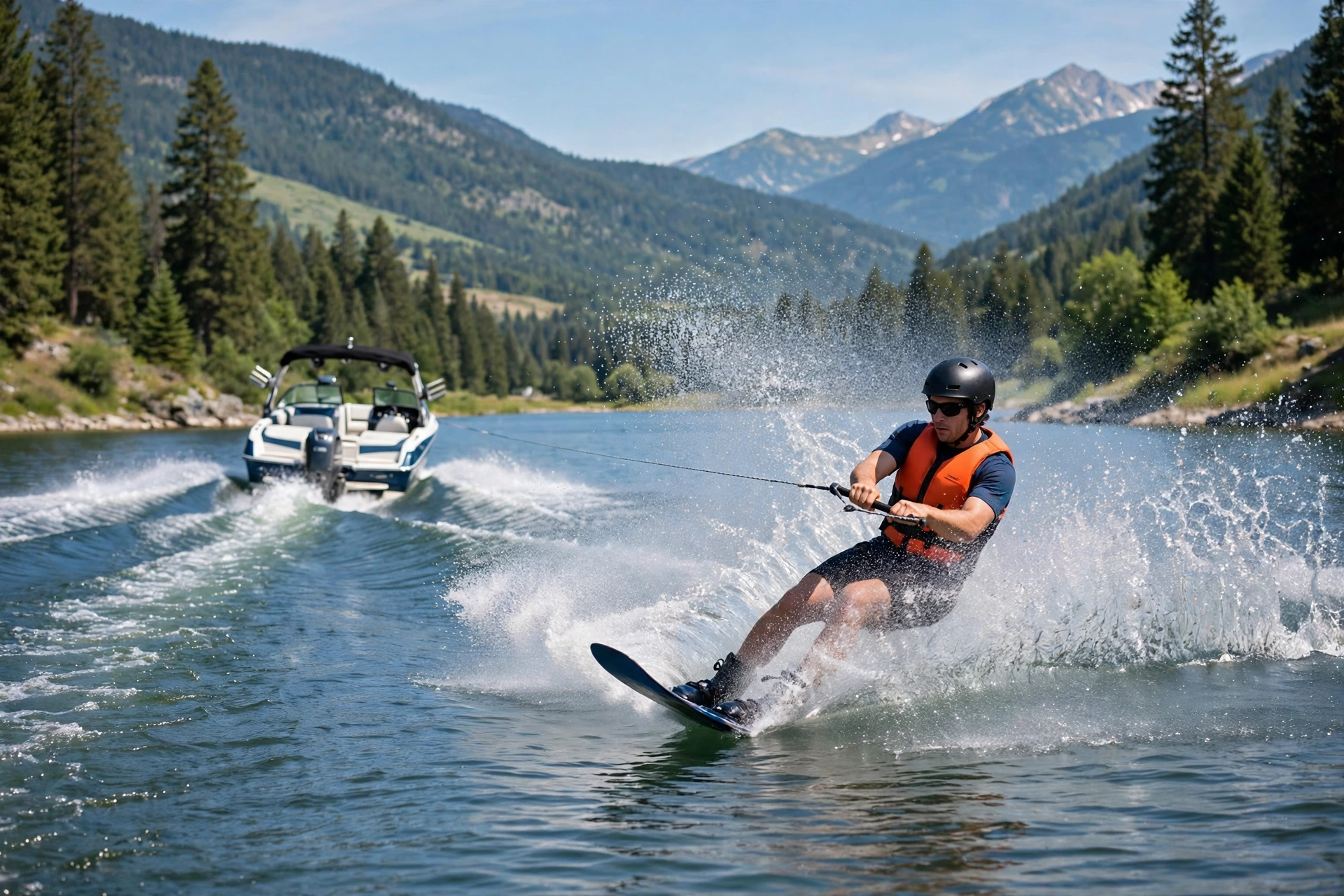
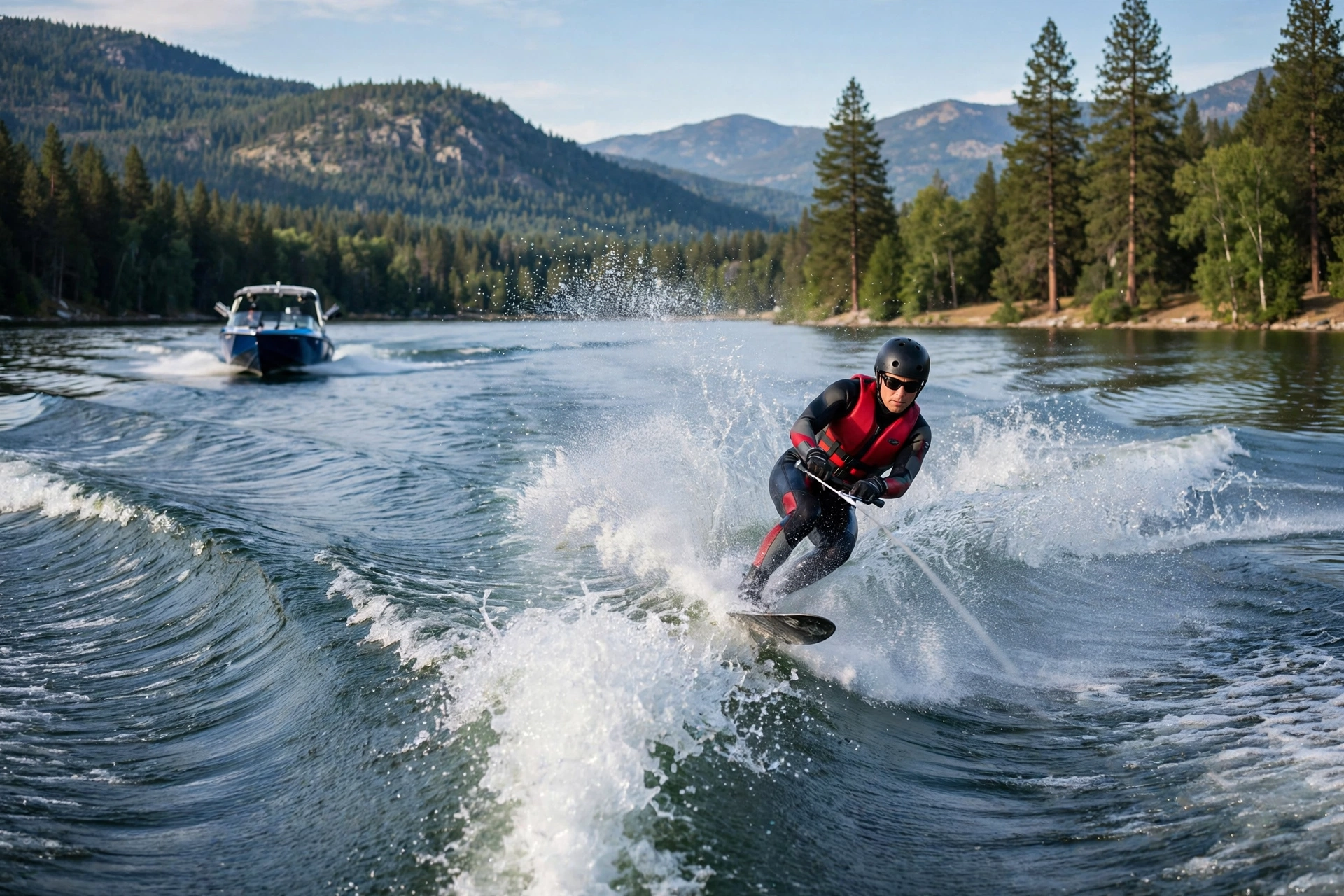
A water skiing helmet is a lightweight water sports helmet worn by skiers to protect the head from the ski, the tow rope handle and the water surface during falls, especially at higher speeds and in tricks, jumps and slalom. Most casual skiers on calm water do not wear one, but competitive skiers, jumpers and barefoot skiers often do, because their falls are faster and harder. A helmet made for water sports drains quickly, stays light when wet, and guards against the knocks that come with the sport.
Water skiing looks smooth and graceful from the boat, but the falls can be sudden and forceful. A skier travelling at speed who catches an edge or loses balance can hit the water hard, and the ski or the handle can swing back towards the head. This guide explains what a water skiing helmet is, who wears one, what it should do, and how to choose one that fits.
Do Water Skiers Wear Helmets?
It depends on the kind of skiing. Recreational skiers on calm lakes, skiing at modest speeds in a straight line, rarely wear helmets, and many ski schools do not ask them to. The falls in that kind of skiing are usually gentle: the skier lets go of the handle and slides into the water feet first or sideways, with little risk to the head.
Competitive skiers are a different story. Slalom skiers cut hard across the wake at speed, trick skiers spin and flip, and jump skiers launch off a ramp and land at high speed. Their falls are faster, less predictable and more likely to involve the ski, the handle or the ramp. Helmets are common in those disciplines, and some competitions ask skiers to wear one.
Barefoot skiers, who ski without skis at high speed, are also likely to wear helmets, because a fall at barefoot speed can be a hard slap onto the water. In general terms, the faster and more technical the skiing, the stronger the case for a helmet. If you are learning, talk to your coach about when a helmet makes sense for you.
What Does a Water Skiing Helmet Protect Against?
The main risk is the ski itself. A water ski is a long, hard object that can swing back towards the skier during a fall, and the fins and edges are sharp enough to cut. A helmet guards the head against a glancing blow from the ski, and the ear coverage on many water helmets protects the ears as well.
The tow rope handle is the second risk. When a skier falls, the handle can snap back towards the boat or swing across the skier’s path. It is light, but at speed it can still cause a painful knock. A helmet spreads that force and reduces the chance of a cut.
The third risk is the water surface itself. At speed, water does not feel soft: a face-first or head-first fall can slap the head hard enough to cause a headache or a brief blackout. A helmet does not stop that force entirely, but it can reduce the sharpness of the impact. It is not a guarantee of safety, and it does not replace good technique and sensible speed, but it is a useful extra layer.
What Kind of Helmet Suits Water Skiing?
A water skiing helmet should be a lightweight water sports helmet with good drainage and ventilation. Helmets designed for kayaking, canoeing, wakeboarding and other water sports are the usual choice, because they are built to get wet, dry fast and stay comfortable through a long session. A heavy helmet is a poor choice: it adds neck strain and can make a long day on the water feel much harder.
Ear coverage is worth considering, because the ears are exposed during a fast fall and can be hit by the ski or the water. Many water helmets have ear pads or extended coverage that protects the ears while still letting the skier hear the boat driver and other skiers. Test the hearing before you buy, because a helmet that muffles calls is a nuisance on the water.
The shell should be smooth and free of snag points, so it does not catch on the tow rope or the ski bindings when the skier falls. A low profile shape is better than a tall one, because it is less likely to catch the water during a fall. If you are learning how helmets handle different kinds of impact, reading about what MIPS is for helmets can help you understand one of the technologies used in modern helmet design.
How Should a Water Skiing Helmet Fit?
Fit decides whether the helmet actually protects the skier. It should sit level on the head, covering the forehead down to just above the eyebrows, and feel snug all round without pressing hard on one spot. When you shake your head gently, the helmet should move with your head rather than sliding on its own. If it wobbles, it is too loose, and if it leaves a sore mark after a few minutes, it is too tight.
The chin strap should fasten securely under the chin and hold the helmet in place without choking. A loose strap lets the helmet shift forward over the eyes during a fall, which is dangerous at speed, and a strap that slips can let the helmet come off altogether. Check the strap before every session, and replace it if the buckle slips or the webbing is worn.
Try the helmet on with the lifejacket you will wear, because the lifejacket collar can push the back of the helmet forward if the two do not sit well together. A good combination lets the helmet stay level, the lifejacket collar sit below the helmet rim, and the skier turn the head freely to look at the boat and the water. Test this on land before your first run.
How Do You Look After a Water Skiing Helmet?
Care is simple but worth doing. After each session, rinse the helmet in fresh water to wash out lake or sea water, and leave it to dry in the shade with the vents open. Do not leave it in a hot car or in direct sun for long, because heat can weaken the shell and liner over time.
Check the helmet regularly for cracks, dents and loose padding, and check the strap and buckle for wear. In general terms, a helmet that has taken a hard impact should be checked and usually replaced, even if the damage is not visible on the outside, because the liner inside can be damaged in ways you cannot see.
Store the helmet in a cool, dry place, away from chemicals and fuel, and do not hang it by the strap, which can stretch the webbing. A well looked after helmet lasts longer and protects better, and it is far easier to keep up with this care than to replace a helmet that has been left to rot in a damp bag.
Frequently Asked Questions
Q: Do beginners need a water skiing helmet?
A: In general terms, it is a sensible choice for beginners, who fall more often and less predictably. Ask your ski school or coach what they recommend for your level.
Q: Will a water skiing helmet slow me down?
A: In general terms, no. A lightweight water helmet adds very little weight and no real drag, so it should not affect your skiing.
Q: Can I use a bike helmet for water skiing?
A: In general terms, no. Bike helmets are not made to drain water or cope with being soaked, and they may be heavier and less comfortable on the water.

Olivia
Writer at Helmet Today, covering helmet reviews, fit and riding safety.