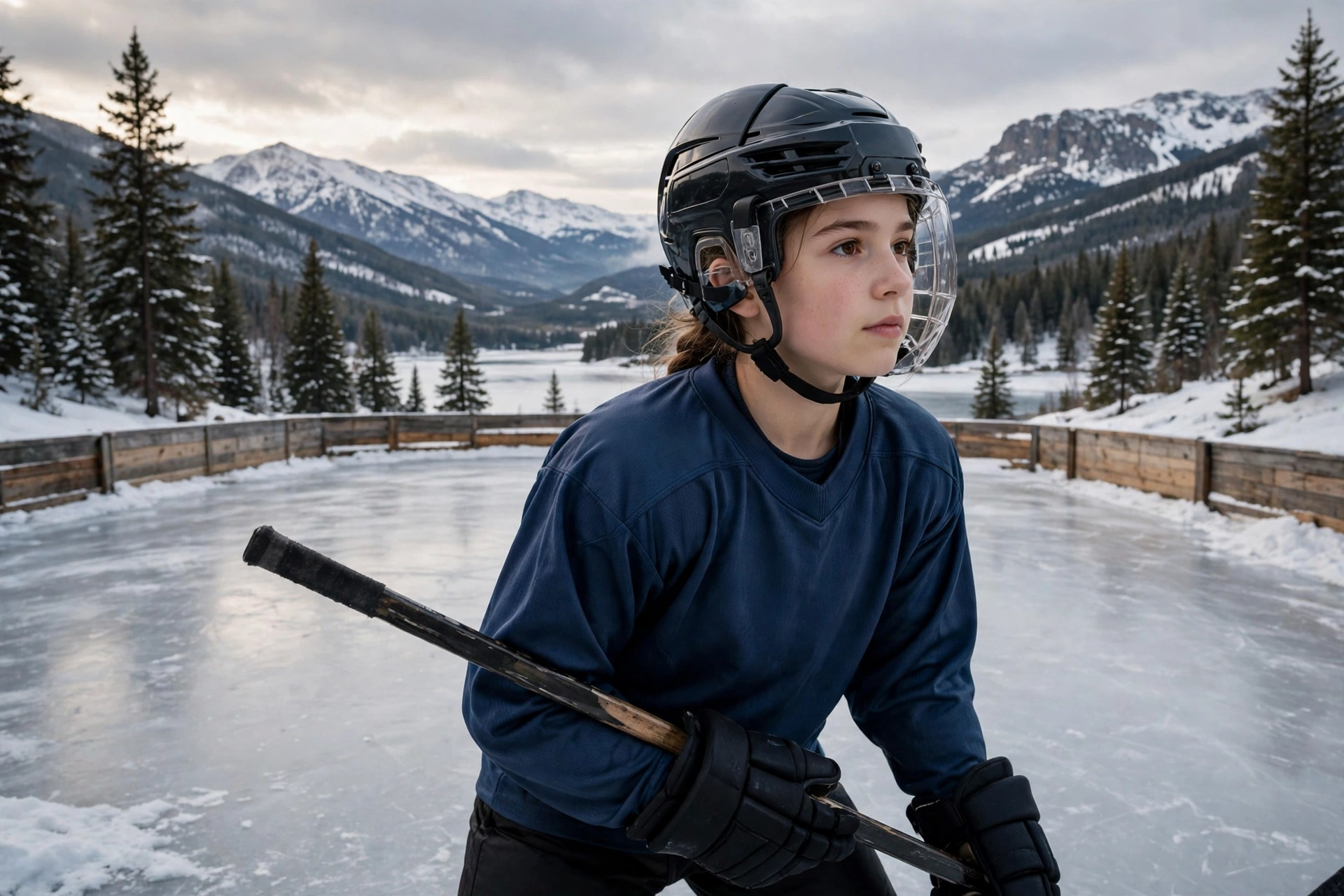
In general terms, a girls’ hockey helmet should fit snugly all round, sit level just above the eyebrows, and stay in place when she shakes her head — with no sliding, no pressure points, and room to grow only in the sense that the fit system can be adjusted, never by buying a helmet that is too big now. The right size is the one that fits her head today, measured with a tape and checked with a proper try-on, because a helmet that is too loose will not stay where it should on the ice.
Parents often face a tricky choice with a growing child: buy the size that fits now, or buy a size up so it lasts longer. With a hockey helmet, the answer is clear — buy the size that fits now. A helmet that is too big can slide over her eyes during a game, block her view, and move out of place at the moment she needs it most. This guide explains how to measure, size, and check a girls’ hockey helmet, and what to look for as she grows.
How Do You Measure a Girl’s Head for a Hockey Helmet?
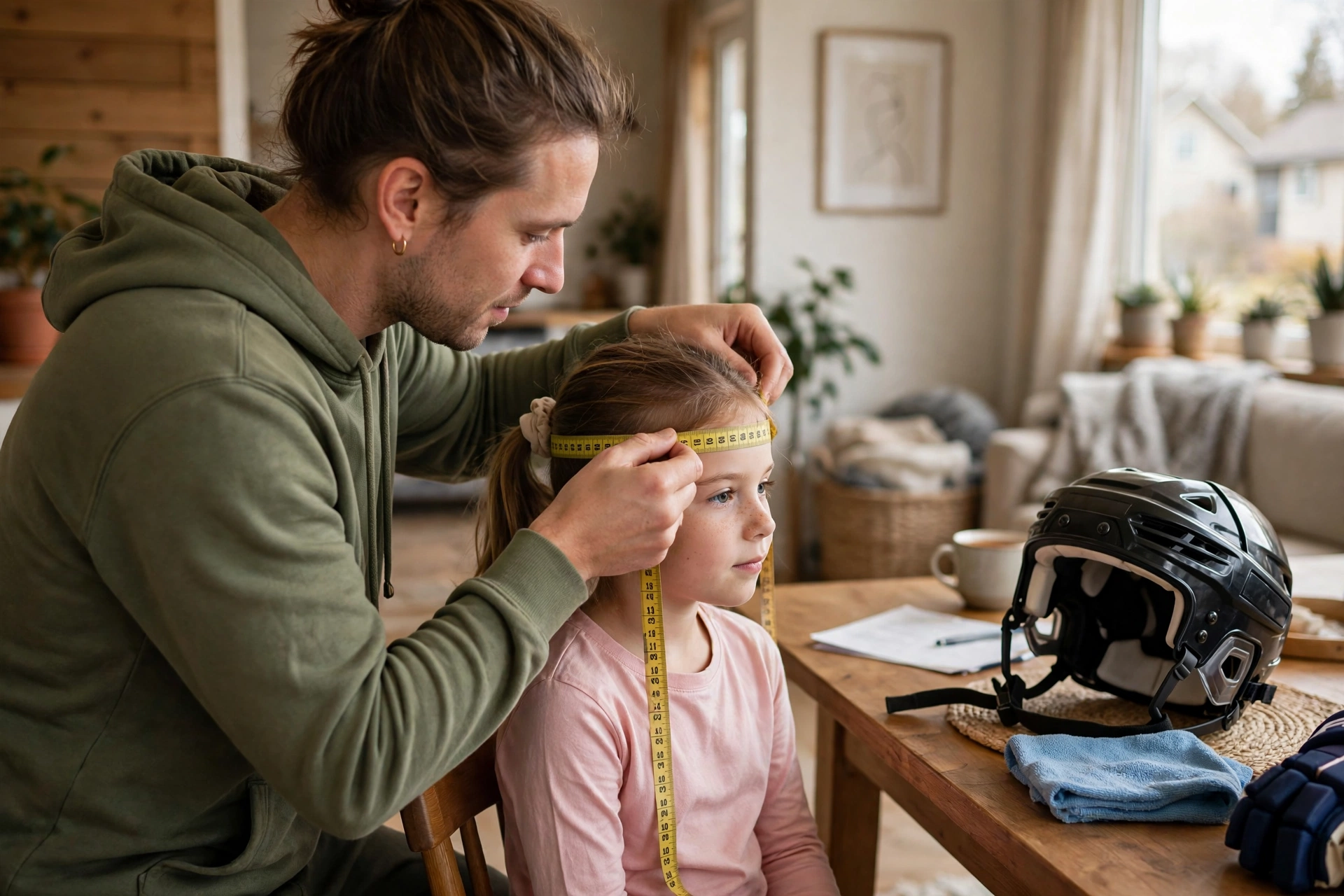
Start with a soft tape measure around the widest part of her head, just above the eyebrows and ears, keeping the tape level all the way round. Take the measurement twice and write it down in centimetres. Then compare it with the size chart for the helmet you are considering, because sizes vary between makers, and a size from one brand may fit very differently from the same size from another.
Measure with her hair in the style she will wear on the ice. If she usually plays with a ponytail, a braid, or a headband under her helmet, measure and try on the helmet in that style. A ponytail can change how a helmet sits at the back, and a helmet with a ponytail opening or a lower cut at the back can make a real difference to comfort for a girl who plays with her hair up.
What Does a Good Girls’ Hockey Helmet Fit Feel Like?
A good fit feels snug all round, with even contact and no hard pressure point on the forehead, the temples, or the back of the head. The helmet should sit level, with the front edge just above her eyebrows — about two fingers above them. It should not tilt back and expose her forehead, and it should not sit so low that it presses on her eyebrows or blocks her view of the puck and the players around her.
Ask her to shake her head gently from side to side and up and down. The helmet should move with her head, not slide around on its own. If it wobbles, it is too loose. If it leaves a red mark after a few minutes, or if she says it hurts at one spot, it is the wrong shape or size for her. The padding should touch her head evenly, with no gaps at the sides or the back.
Use the fit system if the helmet has one. Many hockey helmets have an adjustable dial or side adjustments that let you fine-tune the fit. Tighten it until the helmet feels snug but not tight, and check that she can still move her jaw and talk comfortably. The chin strap should sit snugly under her chin, with room for about two fingers, and it should hold the helmet firmly without digging in or rubbing her skin.
How Do Ear Loops, Cages, and Mouthguards Affect the Fit?
Hockey helmets are worn with other kit, and that kit affects the fit. The ear loops should sit comfortably over her ears without pressing hard, and the chin cup or strap should hold the helmet without pulling it to one side. If the helmet comes with a cage or a visor, try it on with that fitted, because a cage that is the wrong size can push the helmet up or press on her face.
Check that the cage or visor gives her a clear view. She should be able to see the puck, the boards, and the players around her without turning her whole head to look past a bar or a scratch. If the cage sits too low or too high, it may need adjusting, or the helmet may be the wrong size. In general terms, the helmet and the cage should work together, with neither one pushing the other out of place.
When Should a Girls’ Hockey Helmet Be Replaced?
Children grow quickly, so check the fit regularly — at the start of each season, and again part-way through if she is growing fast. If the helmet feels loose, if it slides when she shakes her head, or if she says it feels different from last season, measure her head again and check the size. A helmet that fitted last year may not fit this year, and a loose helmet should be replaced, not tightened beyond what the fit system can do.
A helmet should also be replaced after a hard impact, even if the damage is not visible on the outside. The liner inside can be damaged in ways you cannot see, and a helmet that has taken a hard hit may not protect as it should next time. Check the maker’s guidance on replacement, and if you are unsure, have the helmet checked by a coach or a specialist at the rink.
What Else Should Parents Check Before Buying?
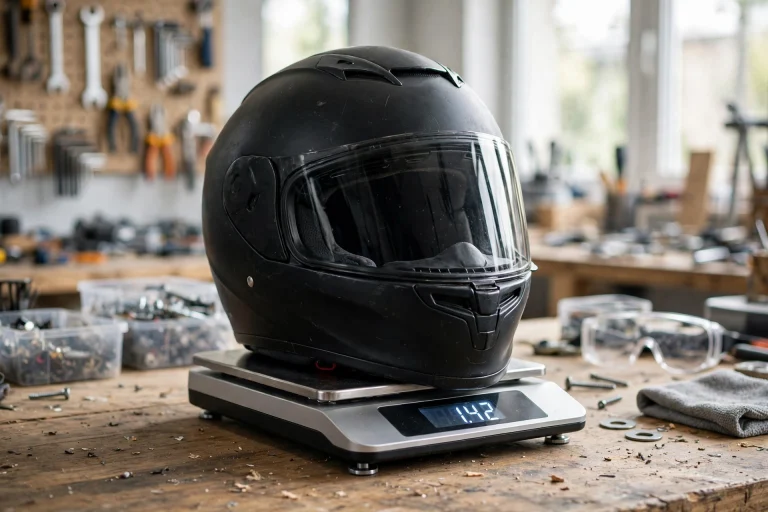
Before you buy, check the helmet’s weight. A lighter helmet is less tiring over a full game, and it can make a difference to neck comfort for a younger player. Check that the helmet meets the standard required for the league or rink where she plays, because different leagues may have their own rules about helmets, cages, and visors. Make sure the helmet you choose is allowed for her age group and level of play.
It is also worth learning about the technology inside modern helmets, so you can understand what the features on the box mean. Reading about what MIPS is for helmets can help you understand one of the technologies you may see listed on a hockey helmet, in general terms, before you compare models.
Frequently Asked Questions
Q: Should I buy a girls’ hockey helmet a size up so she grows into it?
A: In general terms, no. Buy the size that fits her head today. A helmet that is too big can slide over her eyes and move out of place, so check the fit again each season instead.
Q: How tight should a girls’ hockey helmet feel?
A: It should feel snug all round, with even contact and no hard pressure point. It should stay put when she shakes her head, and the chin strap should be snug with room for about two fingers.
Q: Should she try a hockey helmet on with her cage and mouthguard?
A: Yes. Try the full set-up together, because a cage or mouthguard can change how the helmet sits. Check that her view is clear and the strap still fastens comfortably.

Olivia
Writer at Helmet Today, covering helmet reviews, fit and riding safety.