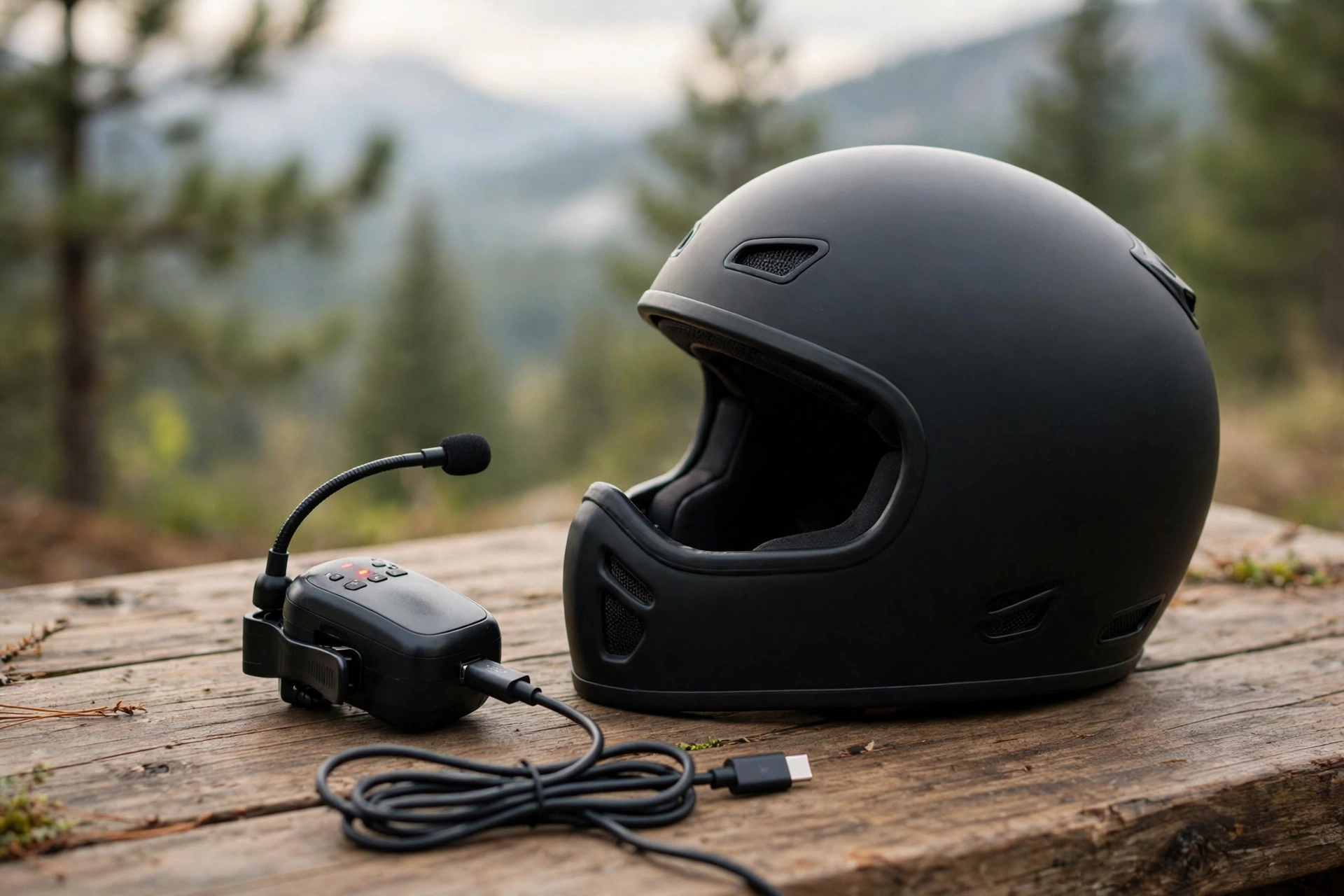
Helmet intercom battery life varies by model and by how you use it, but in general terms a modern unit lasts a full day of riding — roughly a long day’s use on a single charge — with music and intercom running, and longer if you use it sparingly. The exact figure depends on the unit, the volume, the temperature, and whether you are using mesh, Bluetooth, music, or all three at once.
Battery life is one of the first things riders ask about, because a flat intercom on a long ride is worse than no intercom at all: you have the weight and the bulk, but none of the benefit. The good news is that modern units are far better than early ones, and a few simple habits can stretch the battery through even a long day. This guide explains what affects battery life and how to make it last.
How Long Does a Helmet Intercom Battery Last?
Most makers state a battery life for their units, usually measured in hours of talk time or hours of music playback. Those figures are a useful starting point, but they are measured in ideal conditions — moderate volume, mild temperature, and a steady connection. Real riding is different: cold weather, high volume, a weak signal, and a busy mesh group all use more power.
In practice, many riders find that a fully charged unit lasts a full day of riding, from morning to evening, with regular intercom use and some music. A solo rider listening to music at moderate volume may get longer, while a rider in a large mesh group, talking often and at high volume, may get less. The only way to know for your unit and your riding is to use it on a few rides and see how it behaves.
Standby time is much longer than talk time. A unit left switched on but not in use can last for days, because it is only listening for a connection. But a unit left on overnight in a cold garage will lose charge, so switch it off when you are not riding, and charge it before the next ride rather than assuming it is still full.
What Uses the Most Battery in a Helmet Intercom?
The biggest battery drain is usually the radio connection itself — keeping the intercom linked to other riders, especially on a mesh system with many riders, uses power continuously. Music playback is the next biggest drain, particularly at high volume, because the speakers and the Bluetooth link to your phone both draw power. Phone calls use power too, but most riders make fewer calls than they play music.
Cold weather shortens battery life as well. Batteries work less efficiently in the cold, so a unit that lasts all day in summer may run out earlier on a cold winter ride. Keeping the unit charged and warm before the ride — for example, charging it indoors rather than in a cold garage — helps. In general terms, heat is worse than cold for long-term battery health, so do not leave a unit on a hot dashboard or near a radiator.
How Can You Make the Battery Last Longer on a Ride?
The simplest way to save battery is to turn the unit off when you do not need it. If you stop for lunch, switch the intercom off rather than leaving it connected. If you are riding alone for a stretch and do not need music, switch the music off and keep only the intercom link, or switch the unit off entirely until you rejoin the group.
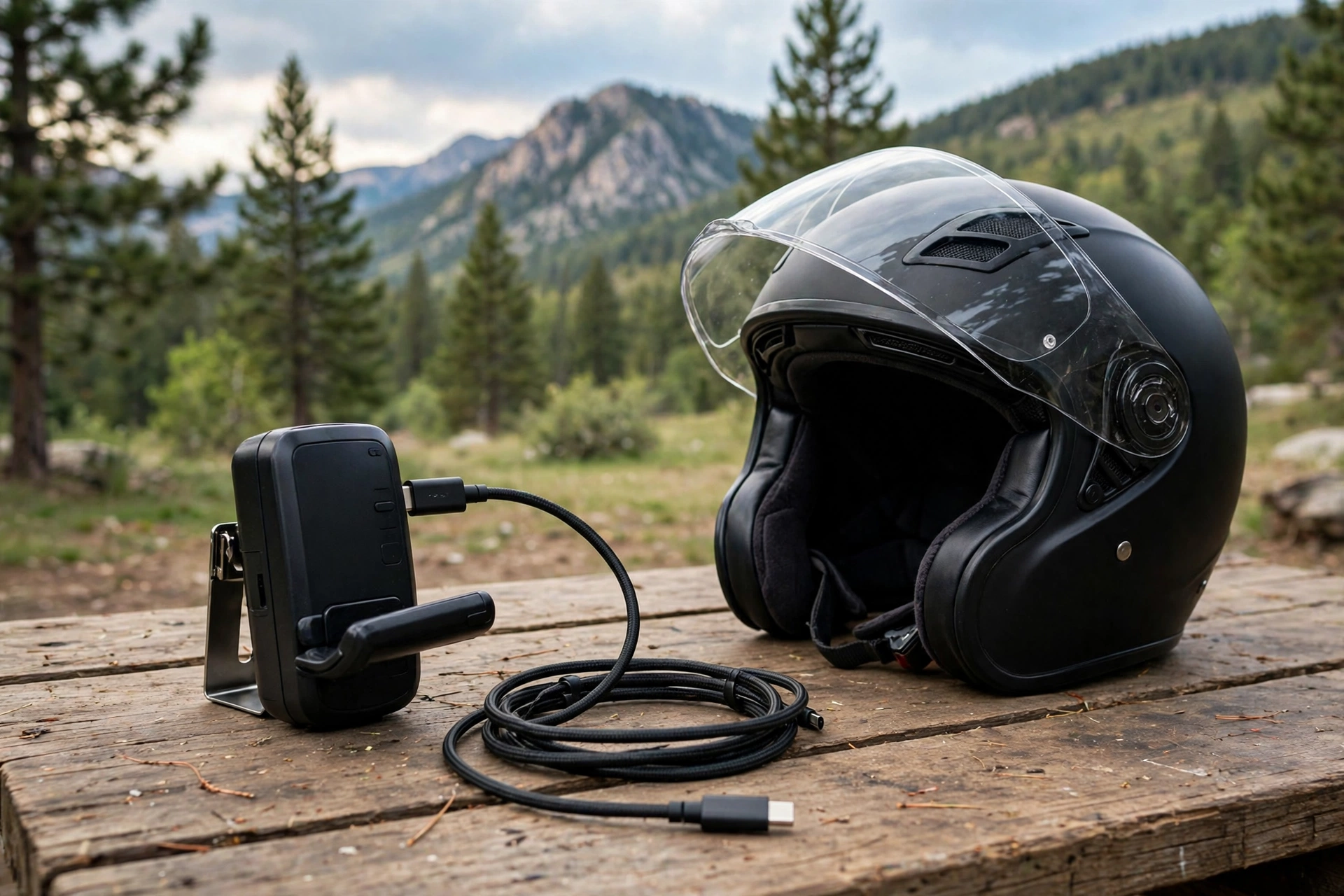
Carry a small power bank and a charging cable on long trips. Many units can be charged from a power bank during a stop, and even a short charge at lunch can add enough power for the afternoon. Some riders charge the unit from the bike’s USB socket while riding, but check your unit’s guidance first: not all units are designed to be used while charging, and a cable trailing across the helmet can be a distraction.
How Should You Charge a Helmet Intercom?
Charge the unit with the cable and charger supplied by the maker, or a good-quality equivalent. A cheap or damaged cable can charge slowly or, in rare cases, damage the unit. Charge indoors at room temperature, and do not leave the unit charging overnight on every occasion — once it is full, unplug it. Modern units stop charging when full, but unplugging is still good practice.
Do not charge a unit that is wet. If the unit has been out in the rain, dry it first, and check the charging port for water before you plug it in. Water in a charging port can damage the unit, and it is a safety risk. If the port cover is damaged or missing, replace it, because it keeps rain and dust out.
If you are not going to use the intercom for a while, charge it to about half full and store it in a cool, dry place. A battery left flat for months can lose capacity, and a battery left fully charged in a hot place can age faster. If you are learning how helmets protect the head, reading about what MIPS is for helmets can help you understand one of the technologies used in modern helmet design.
When Should You Replace an Intercom Battery?
Intercom batteries wear out over time, like phone batteries. After a few years of regular use, you may notice that the unit no longer lasts as long as it used to, or that it runs out suddenly with little warning. That is a sign the battery is ageing, and it is worth checking whether the maker offers a replacement battery or a replacement unit.
Some units have a user-replaceable battery, while others have a sealed battery that must be replaced by the maker or a specialist. Check your model’s guidance before you open the unit, because opening a sealed unit can void a warranty and can damage the waterproofing. If the battery cannot be replaced, a new unit may be the practical answer — and newer units often have better battery life anyway.
Do not ignore a battery that swells, overheats, or smells strange. Stop using the unit, do not charge it, and contact the maker. A damaged battery is a safety risk, and it should be handled carefully and disposed of through a proper battery recycling route, not in ordinary household waste.
Frequently Asked Questions
Q: How long should a helmet intercom last on one charge?
A: In general terms, a modern unit should last a full day of riding on one charge, with regular intercom use and some music. Heavy mesh use, high volume, and cold weather can shorten that.
Q: Can I charge my intercom while riding?
A: Some units allow it, but not all do, so check your maker’s guidance first. A charging cable can also be a distraction, so a power bank top-up at a stop is often the simpler option.
Q: Why does my intercom battery drain faster in winter?
A: Batteries work less efficiently in the cold, so a unit lasts less long on a cold ride. Charge it indoors before the ride and keep the volume at a comfortable level to help it last.

Olivia
Writer at Helmet Today, covering helmet reviews, fit and riding safety.