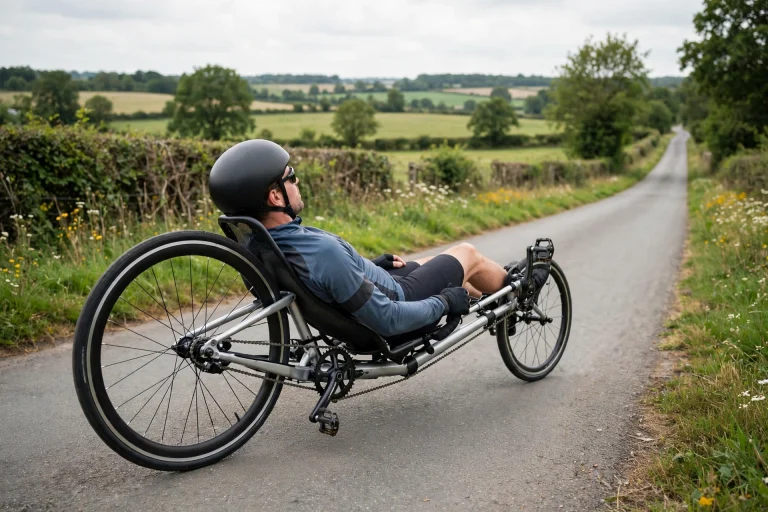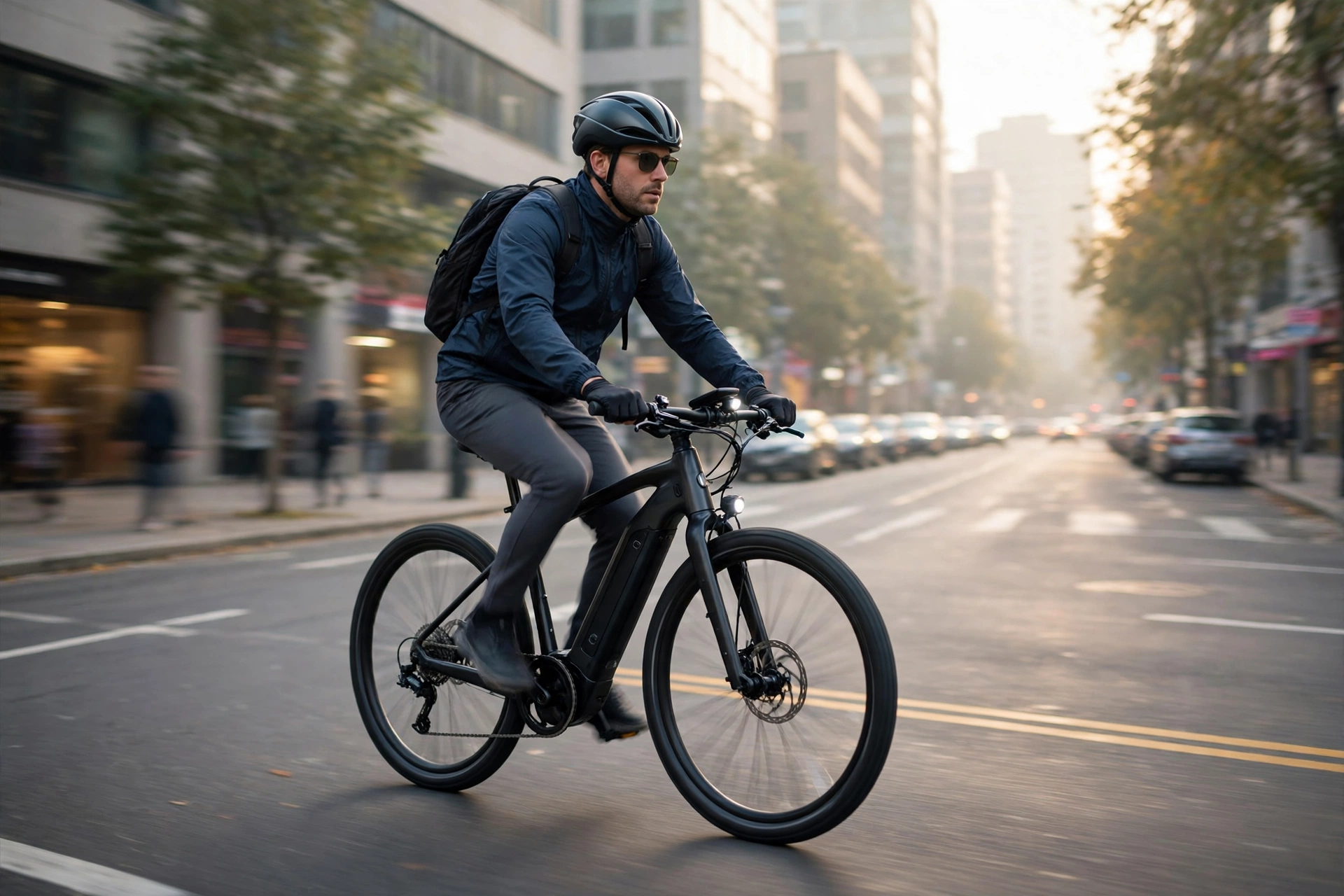
Yes, helmet aerodynamics matter for e-bike commuting at speed — a smooth, well-fitting helmet can cut wind drag and wind noise noticeably compared with a bulky, poorly vented one, especially once you are riding at the higher speeds an e-bike makes easy to hold. The effect is not magic, and it will not turn a slow commute into a race, but on a long, fast ride into a headwind, the shape of your helmet is one of the few things you can change that affects how hard the wind pushes against you.
E-bikes let many commuters hold a steady pace that would be hard work on a regular bike. That steady speed means you spend more time pushing through the air, and your head and helmet sit right at the front of your body, where the airflow first meets you. This guide explains how helmet shape, vents, and riding position work together on an e-bike commute, and what to look for when you choose a helmet for fast daily riding.
Why Does Speed Make Helmet Aerodynamics Matter More on an E-Bike?
On a regular bike, most commuters slow down on hills and speed up on the flat, so their average speed stays modest. On an e-bike, the motor helps you hold a higher speed for longer, and that changes the balance. In general terms, the faster you ride, the more of your effort goes into pushing air out of the way, and the more your helmet shape starts to matter.
Your helmet is not the largest thing facing the wind — your chest and shoulders are bigger — but it sits at the top and front of your riding position, where the airflow is cleanest. A helmet with a smooth outer shell lets air flow over it with less disturbance, while a helmet with sharp edges, a large peak, or bulky add-ons can catch the air and create drag. The difference is small on a short, slow ride, but it adds up over a long commute, especially into a headwind.
What Helmet Shape Works Best for Fast E-Bike Commuting?
In general terms, a smooth, rounded road-style helmet works well for fast e-bike commuting. The rounded shape lets air flow over the top and sides without catching, and the lack of a large peak means there is less for the wind to grab. Many commuters find that a road helmet feels quieter and more stable at speed than a mountain bike helmet with a visor.
Fit matters here too. A helmet that sits level and snug will present a clean shape to the wind, while a helmet that tilts back or wobbles can catch the air unevenly. Make sure the helmet sits low on your forehead, the straps sit snugly under your chin, and the helmet does not rock from side to side when you shake your head. A good fit also keeps the helmet quiet, because a loose helmet can rattle and whistle at speed.
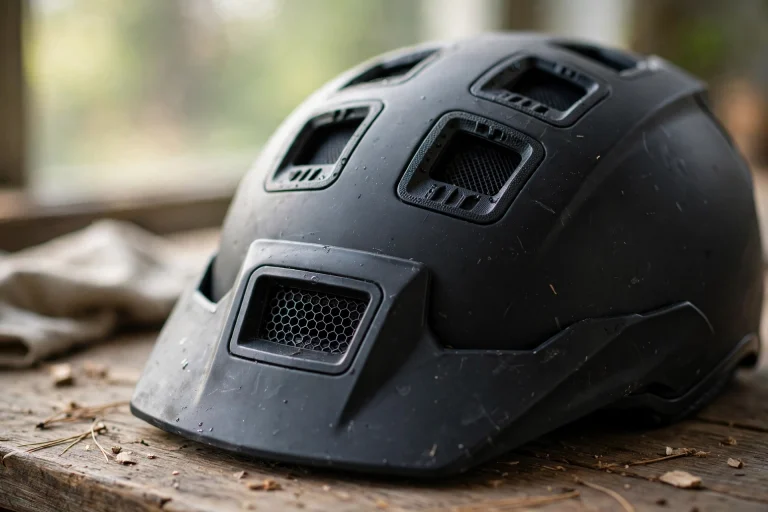
Do Helmet Vents Help or Hurt Aerodynamics?
Vents are a trade-off. Open vents let air flow through the helmet and over your head, which keeps you cool on a warm day or a long climb. But each vent is also an opening that can disturb the airflow over the shell, and in general terms, a helmet with very large, open vents may create slightly more drag than a smoother helmet with smaller vents.
For most e-bike commuters, cooling matters more than the small drag cost of vents. E-bike riding is still exercise, and on a warm day a helmet with poor ventilation can become hot and uncomfortable, which makes you want to slow down or take the helmet off — neither of which is a good outcome. A helmet with well-placed vents, especially channels that guide air from the front to the back, can keep you cool without a large aerodynamic penalty.
Some helmets offer adjustable vents or covers that let you close some vents in cold or wet weather and open them in the heat. That can be useful for a commuter who rides through the seasons. In cold weather, closing the front vents can reduce the cold air on your head, while in summer, opening them fully keeps the airflow moving. Look for vents you can adjust easily, ideally without taking the helmet off.
How Does Your Riding Position Affect Helmet Aerodynamics?
Your riding position shapes how the air meets your helmet. If you sit upright, with your head held high, the front of your helmet faces the wind directly, and a smooth, rounded front helps the air flow over it. If you lean forward into a lower position, the top of your helmet faces the wind instead, and the shape of the crown and the rear of the helmet matter more.
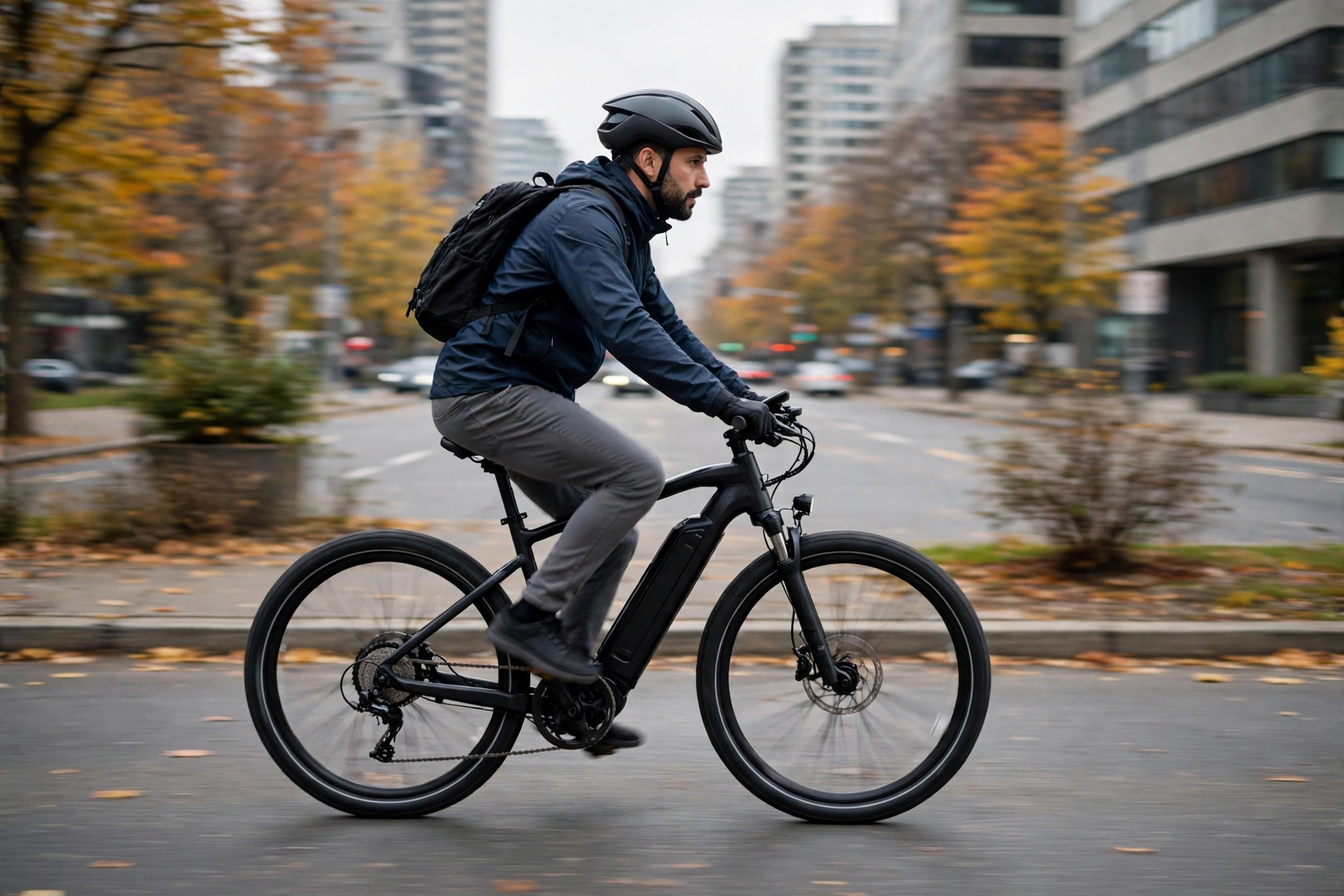
Most e-bike commuters sit fairly upright, because comfort and a good view of traffic matter more than a racing tuck. In that position, a helmet that is smooth all over, without a peak sticking out at the front, tends to work best. A peak or visor can act like a small sail, catching the wind and lifting the front of the helmet, especially in a crosswind or a gust.
You can also make small changes to your position that help. Lowering your head slightly and tucking your chin a little on a fast, open stretch can reduce the area facing the wind. You do not need to ride in a full racing tuck — just a slight change in head angle can make the ride feel calmer. Keep your eyes on the road, though: aerodynamics should never come before seeing traffic clearly.
Should You Choose an Aero Helmet or a Vented Helmet for Commuting?
For most commuters, a well-vented road helmet is the better choice. An aero helmet, with a smooth shell and fewer vents, may save a small amount of effort at high speed, but it can also run hotter, and on a daily commute, heat and comfort matter every day. A helmet you enjoy wearing is one you will keep wearing, and that matters more than a small gain in speed.
There are helmets that try to balance both, with a smooth outer shape and internal channels that move air through the helmet. These can be a good middle ground for a fast commuter. When you try one on, check that it feels cool enough for your ride, that it sits steadily at speed, and that it does not press on your forehead or temples.
If you are learning about how helmets handle different kinds of impact, reading about what MIPS is for helmets can help you understand one of the technologies used in modern helmet design. It is worth weighing that alongside shape and vents, because protection and fit should always come before aerodynamics.
Frequently Asked Questions
Q: Does a more aerodynamic helmet make a big difference on an e-bike commute?
A: In general terms, the difference is modest but noticeable at higher speeds. A smooth helmet can reduce drag and wind noise, but it will not change your commute time by much — comfort and fit matter more.
Q: Should I remove the peak from my helmet for faster commuting?
A: In general terms, yes, if your helmet allows it. A peak can catch the wind and add drag, so removing it often makes a helmet quieter and smoother at speed.
Q: Is an aero helmet too hot for daily commuting?
A: It can be, especially in warm weather. Many aero helmets have fewer vents, so try one on a warm ride first and choose a well-vented road helmet if you tend to overheat.

Olivia
Writer at Helmet Today, covering helmet reviews, fit and riding safety.