A helmet with built-in cooling is a helmet that uses vents, channels, fans, or cooling pads to move air across your head and carry heat away, and in general terms it is designed to keep you cooler and more comfortable on hot rides. Most helmets already have vents, but a helmet with built-in cooling takes that idea further, with features that are made to manage heat rather than just let a little air in.
Overheating is a real problem for riders. A helmet traps warm air around the head, and on a hot day or a hard climb that heat builds up fast. Sweat runs into your eyes, your head feels heavy, and you may find it harder to concentrate. A cooling helmet aims to deal with that by keeping air moving and by drawing sweat away from the skin.
What is a helmet with built-in cooling?
A helmet with built-in cooling is any helmet that adds a cooling feature beyond the standard vent holes found on most helmets. The simplest versions use large, well-placed vents and air channels moulded into the foam lining, so that air flows in at the front and out at the back as you ride.
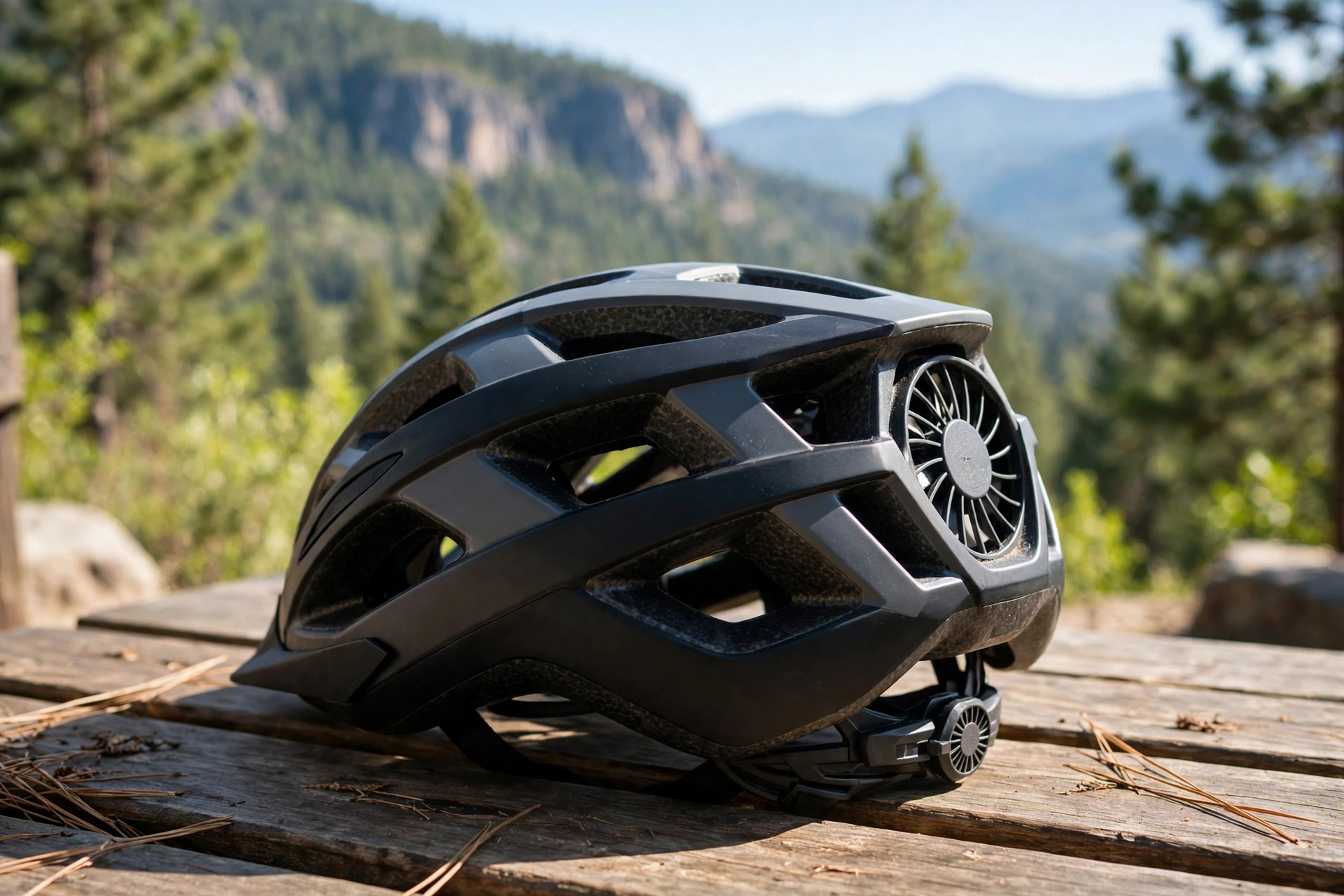
More advanced versions add a small battery-powered fan, which pulls air through the helmet even when you are riding slowly or standing still. Others use cooling pads filled with a gel or a material that absorbs heat, or a lining made from fabric that wicks sweat away from the skin. Some helmets combine two or more of these ideas, for example large vents plus a fan plus a sweat-wicking lining.
How does built-in cooling work?
In general terms, built-in cooling works in two ways: moving air and removing heat. Vents and channels move air by using the rider’s forward speed. Air enters through openings at the front, travels across the scalp through channels in the lining, and leaves through openings at the back. This airflow carries warm, damp air out of the helmet and replaces it with cooler air from outside.
Fans add to this by creating airflow even when you are not moving fast. A small fan, usually at the front or the top of the helmet, draws air in and pushes it through the channels. Cooling pads work differently: they sit against the head and absorb heat, which can feel refreshing for the first part of a ride. Sweat-wicking fabrics do not cool the head directly, but they move sweat away from the skin so it can evaporate, which helps the body cool itself.

Do cooling helmets really keep you cooler?
In general terms, yes, a well-designed cooling helmet can feel noticeably cooler than a helmet with poor ventilation, especially on a hot day or during a slow, steep climb when natural airflow is low. Riders often report that their head feels drier and their eyes sting less from sweat.
That said, no helmet can make a hot day feel cold. The cooling effect depends on the air temperature, your speed, and how hard you are working. A fan helps most at low speeds, when there is little natural airflow, while large vents help most at higher speeds. A cooling helmet will not stop you from sweating, but it should help sweat evaporate instead of pooling inside the helmet.
What are the downsides of a cooling helmet?
The main downside is extra weight and complexity. A fan and battery add weight, and a battery needs charging, so a cooling helmet is one more thing to keep powered. Fans can also make a little noise, and they add parts that can break or need replacing.
Large vents can let in rain, dust, and insects more easily than small ones, and some riders find that a heavily vented helmet feels colder than they want on a cool morning. Cooling pads can feel heavy when they are full of sweat, and they need to be washed or replaced from time to time. Some helmets include a system designed to reduce rotational forces in a fall, such as MIPS, and it is worth checking whether a cooling helmet still has that kind of protection, since vents and fans can change how the inside of the helmet is built.
How do you choose a cooling helmet?
Start with fit, because a helmet that does not fit well will not protect you properly, however cool it is. Try the helmet on and check that it sits level, covers your forehead, and feels snug without pressing painfully. Then think about the riding you do: a fan helps if you ride slowly in traffic or climb steep hills, while large vents suit faster road riding.
Check how the cooling system is powered and how long the battery lasts, and find out whether the fan and pads can be removed for washing. Look at the weight, and check whether the helmet still meets the safety standard you need. If you ride in changeable weather, look for vents that can be closed, or a cover that keeps rain out when you need it.
How do you look after a cooling helmet?
Keep the vents clear of dirt and insects, and clean the fan and channels following the maker’s instructions. Remove and wash the lining and cooling pads regularly, and let everything dry fully before you put it back. Charge the battery as instructed, and do not leave the helmet in a hot car, since heat can damage the battery and the foam inside.
Check the helmet regularly for cracks, dents, and loose parts, and check the fan and its wiring for wear. In general terms, a helmet that has taken a hard knock in a fall should be replaced, even if it looks fine on the outside, because the inner lining may have been compressed. The same applies to a cooling helmet, fan and all.
Is a helmet with built-in cooling worth it?
In general terms, yes, if you ride often in hot weather or sweat a lot, because it can make long rides much more comfortable. If you mostly ride in cool weather, a well-vented standard helmet may be enough.
Do cooling helmet fans need charging?
Yes, fan-cooled helmets use a small rechargeable battery. Check how long it lasts on a charge and whether it can be charged with a standard cable, so you are not caught with a flat fan on a hot ride.
Can you wash a cooling helmet?
Yes, but follow the maker’s instructions. Remove the battery and fan first if they are removable, wash the lining and pads gently, and let everything dry fully before you use the helmet again.

Olivia
Writer at Helmet Today, covering helmet reviews, fit and riding safety.