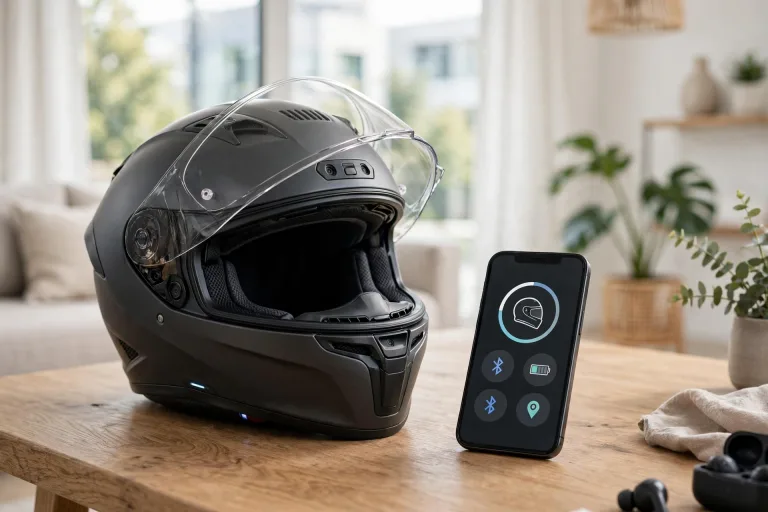
NFC in a helmet is a small wireless chip built into the helmet that shares information with a nearby phone when the phone is tapped against it, and in general terms it is used to store emergency details or to prove the helmet is genuine. NFC stands for Near Field Communication, and it is the same short-range technology used in contactless payment cards and phone taps. The chip needs no battery and no charging, because it draws its power from the phone that reads it.
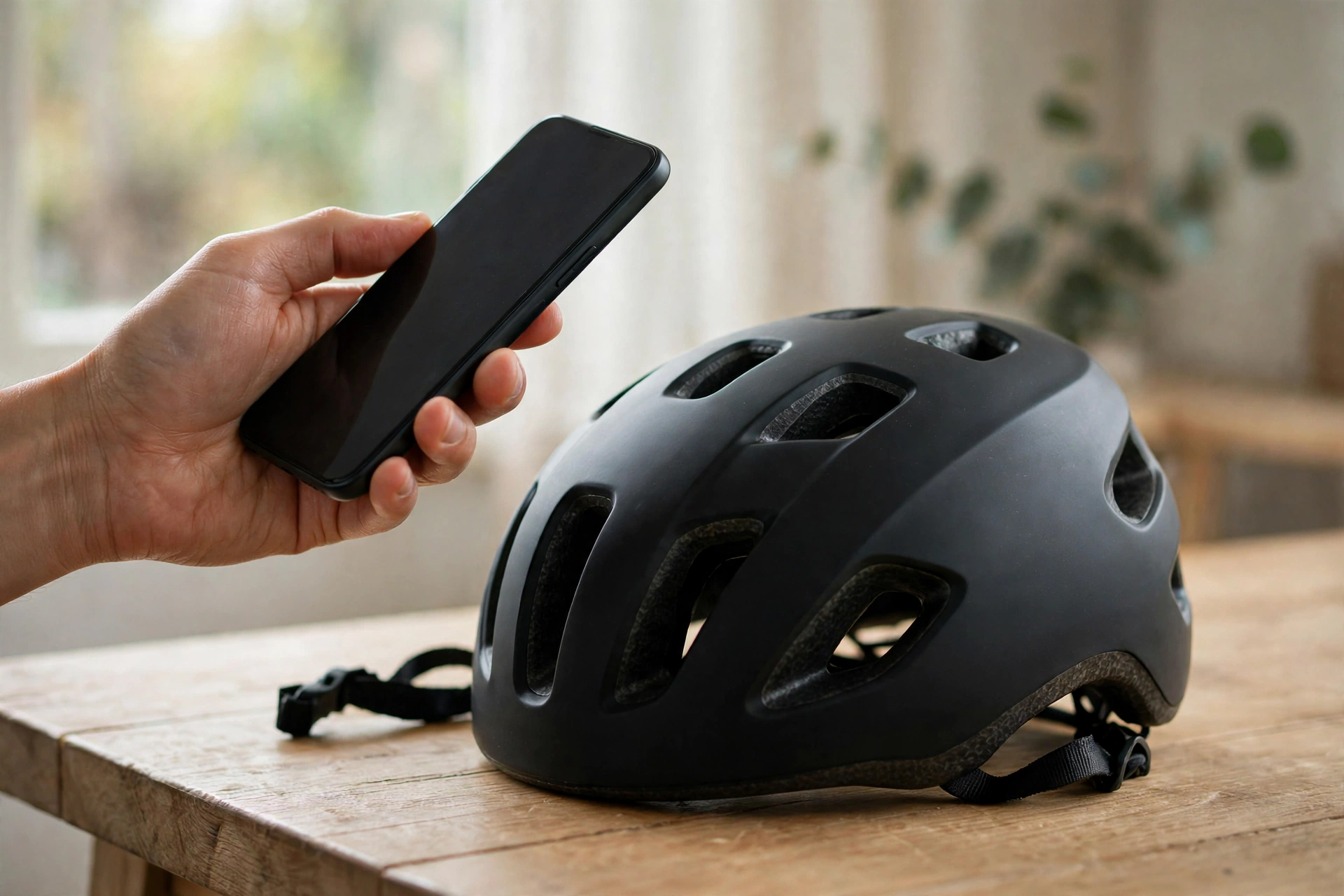
You will not see the chip from the outside, because it is usually hidden inside the lining or under a small label on the shell. To use it, you simply hold a phone close to the marked spot on the helmet, and the phone reads the information stored on the chip. It is a quiet piece of technology that does not change how the helmet looks or feels when you wear it.
What is NFC?
NFC is a short-range wireless technology that lets two devices share small amounts of information when they are held very close together, usually within a few centimetres. It is the technology behind tapping a card to pay in a shop, tapping a phone to open a door, and sharing a contact by touching two phones together. Because it only works at close range, it is simple to control: nothing happens until you deliberately hold the devices together.
An NFC chip, sometimes called a tag, is a tiny circuit that can store a small amount of information, such as a link, a number, or a few lines of text. The chip is passive, which means it has no battery of its own and only wakes up when a phone or reader is held near it. In general terms, that makes it cheap, light, and easy to build into products such as helmets.
How does NFC work in a helmet?
In a helmet, the NFC chip is fitted during making, usually in the lining or under a label on the shell, in a spot marked with the NFC symbol. When you hold a phone against that spot, the phone powers the chip and reads the information stored on it. Depending on how the chip was set up, the phone may open a web page, show a contact card, or display emergency details.
Some helmet makers use NFC to link the helmet to its owner, so the phone shows the model, the size, and the date it was made. Others use it for safety, storing medical notes or an emergency contact that a first responder could read with a phone. The chip does not track your location and it does not connect to the internet by itself; it simply hands over the information stored on it when a phone is held close. It is separate from impact protection systems such as MIPS, which work in a fall rather than through a phone tap.
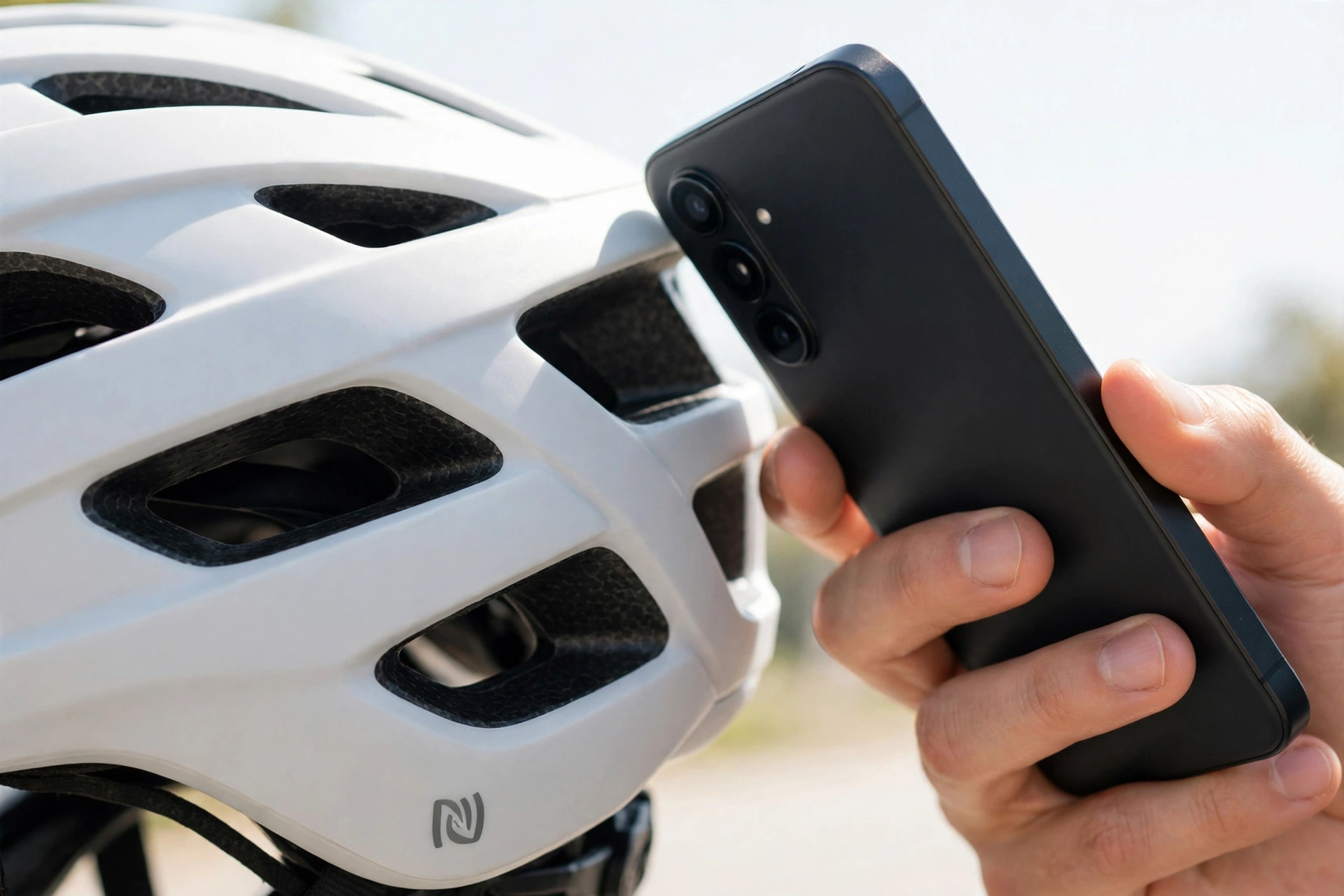
What information does an NFC helmet share?
What an NFC helmet shares depends on how the chip was set up. The most common use is emergency information, such as the rider’s name, a contact number for a family member, and any important medical notes, for example an allergy. In an accident, someone with a phone could tap the helmet and see those details straight away, which can help first responders act quickly.
Other helmets use NFC for identification, showing the helmet’s model, serial number, and proof that it is genuine. Some brands let owners register the helmet through the chip, which can help with warranty claims or with proving ownership if the helmet is stolen. In general terms, the chip stores only what the maker or the owner chose to put on it, and it can usually be updated or rewritten with a phone app.
Is NFC in a helmet safe?
In general terms, NFC in a helmet is safe to use. The chip is passive, so it gives off no signal on its own, and it only shares information when a phone is held within a few centimetres of it. It does not contain a battery, it does not get hot, and it does not affect the structure of the helmet or the way it protects your head in a fall.
There are a few sensible precautions. If your chip stores personal or medical details, think about who could read them, because anyone with a phone could tap the helmet if they get close enough. Many owners choose to store only an emergency contact and a first name rather than full personal details. You should also check that the chip has not changed the fit of the helmet, and that it sits flat inside the lining without creating a pressure point.
Do you need a special phone to use NFC in a helmet?
Most modern smartphones can read NFC, because the technology is built into the majority of phones sold in recent years. On many phones it is switched on by default, so you only need to hold the phone near the marked spot on the helmet. If nothing happens, check that NFC is turned on in your phone’s settings and try holding the phone still for a second or two, because moving it too quickly can break the connection before the chip has been read.
Some older phones, and a few budget models, do not have NFC at all, so it is worth checking your phone’s specifications if you plan to rely on the feature. You do not need a special app to read a basic NFC chip, because the phone’s own software will usually open the link or show the information. In general terms, if your phone can pay by tap in a shop, it can almost certainly read an NFC helmet.
What does NFC in a helmet do?
It lets a phone read information stored on a small chip in the helmet, such as emergency contacts, medical notes, or the helmet’s model and serial number, simply by tapping the phone against it.
Does NFC in a helmet need charging?
No. The chip is passive and has no battery. It draws its power from the phone that reads it, so it never needs charging or replacing.
Can anyone read the NFC chip in my helmet?
Anyone with an NFC phone could read it if they hold their phone close to the chip, so it is best to store only the details you are happy to share, such as an emergency contact.

Olivia
Writer at Helmet Today, covering helmet reviews, fit and riding safety.