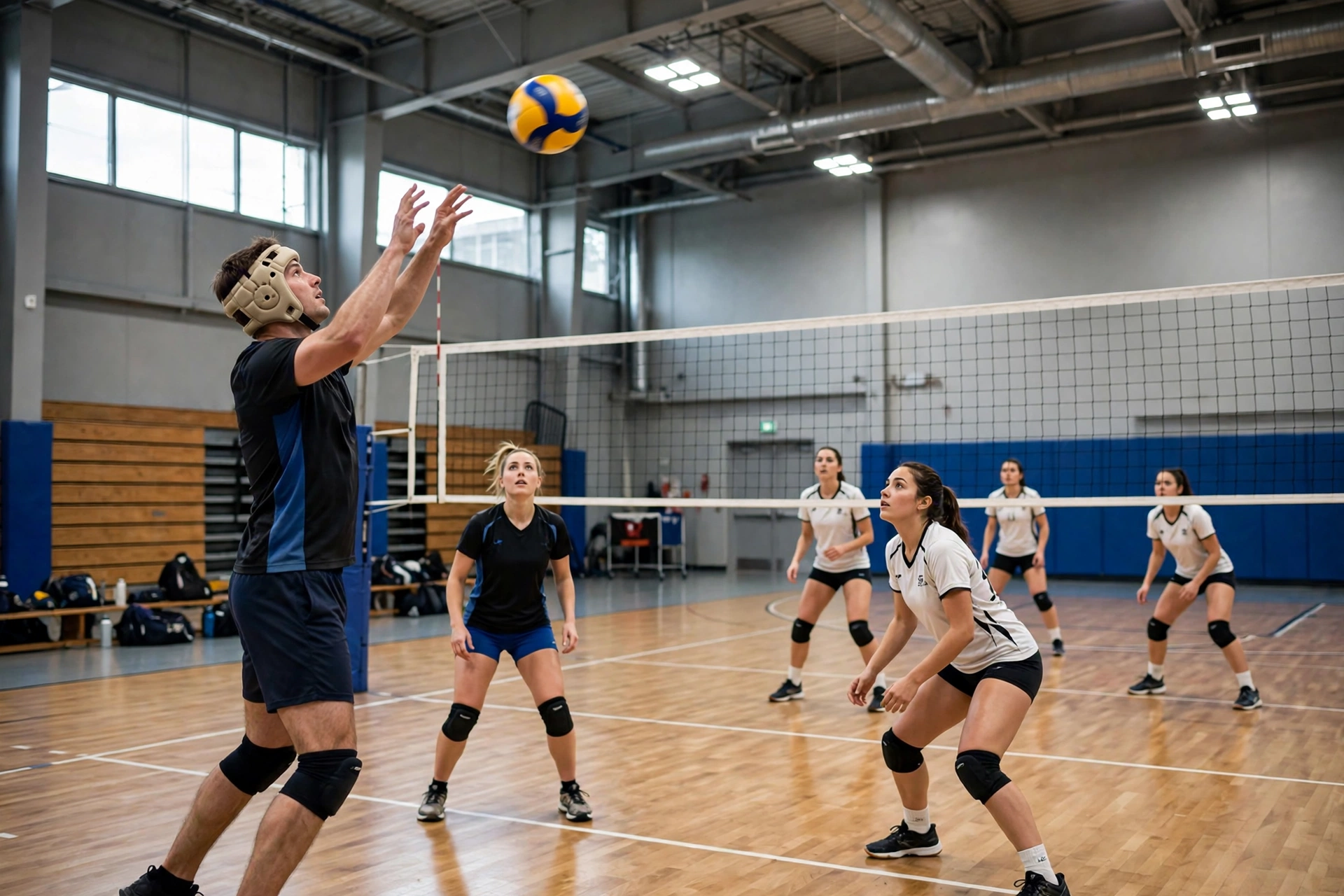
A helmet for volleyball players is light protective headgear worn on court to guard against knocks, head clashes, and falls, and in general terms it is most often seen in indoor volleyball, where players dive and collide at close quarters. Volleyball is not usually thought of as a helmet sport, but fast play near the net and hard dives to the floor can lead to head knocks. A low-profile helmet is a simple way to reduce the risk without getting in the way of the game.
Most people picture volleyball as a sport played in a vest and knee pads, and for many players that is all they ever need. But at higher levels, and for younger players still learning to control their movement, the game moves quickly and the court is hard. A helmet designed for the sport can give players, parents, and coaches a little extra peace of mind.
Do volleyball players wear helmets?
Some volleyball players do wear helmets, although it is far from universal. You are most likely to see them in youth volleyball, in school teams, and among players who have had a previous head knock and want extra protection. Professional players rarely wear them, because the rules of the game and the culture of the sport have not made helmets the norm at the top level.
That does not mean a helmet is a bad idea for an amateur or a young player. In general terms, the decision is a personal one, often made by the player or their parents, sometimes with advice from a coach. If a player feels safer and more confident wearing one, that confidence can help their game as much as the protection itself.
Attitudes may change over time. Other sports once treated headgear as unusual before it became normal, and volleyball may follow a similar path as more players try light, comfortable headguards. For now, a player who chooses to wear one is making a sensible personal choice, not breaking with the sport.
What kind of helmet do volleyball players wear?
A volleyball helmet is usually a soft, light headguard rather than a hard shell helmet. It is made from padded foam covered in fabric, and it fits close to the head like a snug cap. The aim is to soften a knock from a ball, an elbow, or the floor, while staying light enough to play in and letting heat escape. Some players use a padded headband instead, which protects the forehead and the sides of the head.
Hard shell helmets, such as cycle or skate helmets, are not suited to volleyball, because they are heavy, they restrict hearing, and they could hurt another player in a collision. If you are choosing headgear, look for something made for court sports, with a close fit and good ventilation. Some headgear includes a system designed to reduce rotational forces in a fall, such as MIPS, which is worth asking about when you are comparing options.
When does a volleyball player need a helmet?
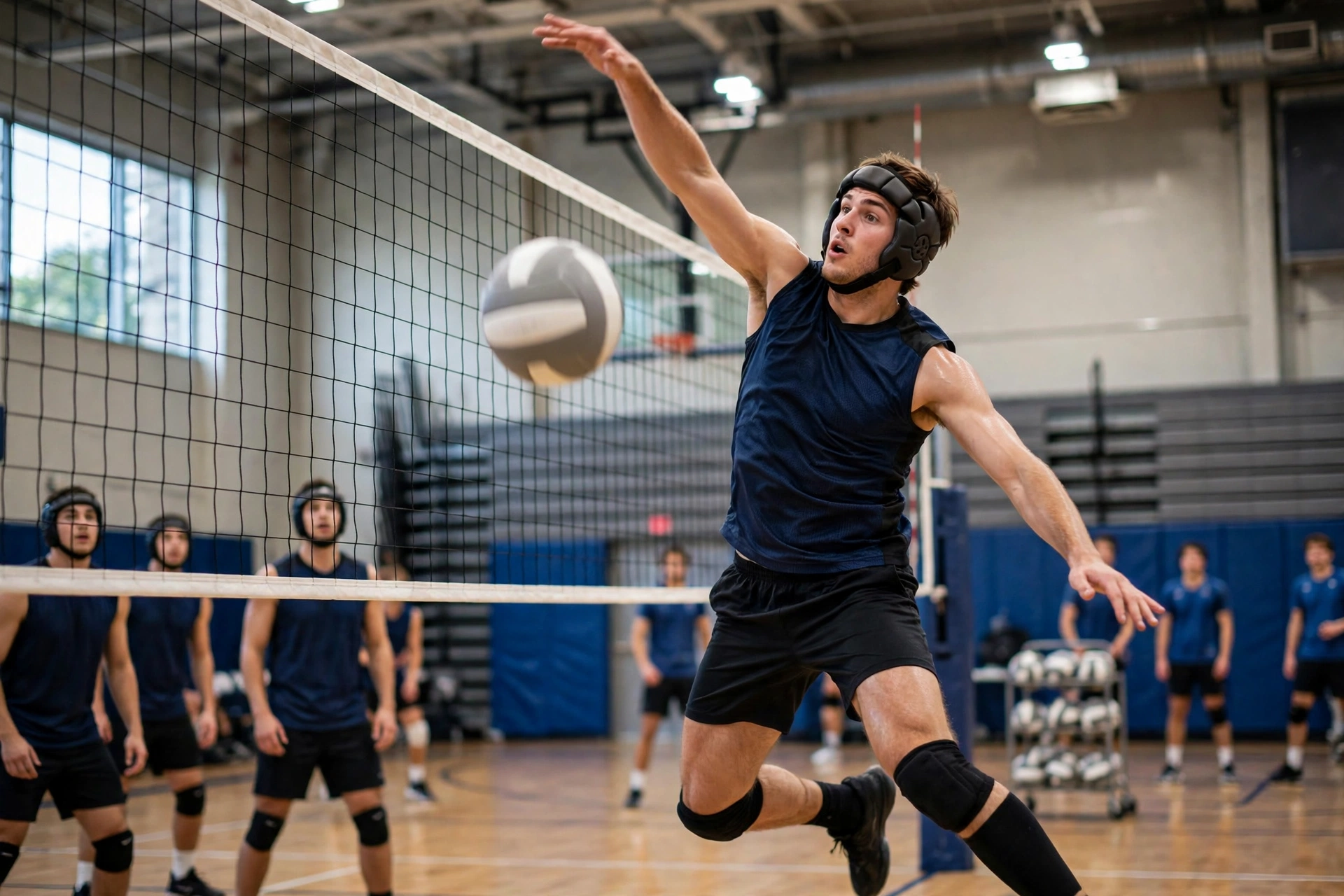
A volleyball player may want a helmet if they play at the net, where blocks and spikes bring heads close together, or if they dive often for low balls and risk hitting the floor. Players who have had a head knock before, or who are returning to play after one, are also more likely to wear headgear. Young players learning to dive and roll can benefit too, because their control is still developing.
Coaches sometimes suggest headgear for a player who is nervous after a knock, because the added protection can help them commit to the play instead of holding back. In general terms, a helmet is most useful where the risk of a head knock is highest, and it is least needed in a slow, casual game with plenty of space between players.
How should a volleyball helmet fit?
A volleyball helmet should fit snugly all round, without sliding around when the player jumps, dives, or turns quickly. It should sit low enough to cover the forehead and the sides of the head, but it should not slip down over the eyes or press painfully on the temples. Most soft headguards come in sizes based on head measurement, so measure before you buy.
Try the helmet on with a full practice if you can, because a fit that feels fine standing still can shift during a game. Check that it does not block hearing, because players need to hear calls from their team. The chin strap, if there is one, should be snug but comfortable, and the helmet should stay in place through a full session without constant adjustment.
What are the alternatives to a helmet in volleyball?
The most common alternative is a padded headband, which covers the forehead and temples and is lighter than a full headguard. Knee pads and good court shoes are also part of the usual kit, and they protect the parts of the body that hit the floor most often. In general terms, headgear is one layer of protection, not a replacement for good technique.
Learning to dive and roll safely, keeping a good distance from other players at the net, and communicating loudly on court all reduce the chance of a head knock. Coaches can teach players how to land and how to move without colliding. A helmet can help, but it works best alongside these habits rather than instead of them.
Good court awareness matters too. Players who watch the ball and call for it clearly are less likely to crash into a team-mate, and a team that talks through the game tends to have fewer collisions. In general terms, the safest players are the ones who combine good habits with the right kit for their level of play.
Is a helmet required in volleyball?
In general terms, no. Helmets are not required by the rules of volleyball at most levels. Players who wear one do so by choice, often for extra protection or after a previous head knock.
Can you wear a helmet in a volleyball match?
Yes, soft headgear is usually allowed in matches, but it is worth checking with the league or the referee first, as rules can differ between competitions and some events may have their own specific requirements for protective gear.
Does a volleyball helmet affect your game?
A light, well-fitting headguard should not affect your game much once you are used to it. It may feel warm at first, so try it in practice before wearing it in a match.

Olivia
Writer at Helmet Today, covering helmet reviews, fit and riding safety.