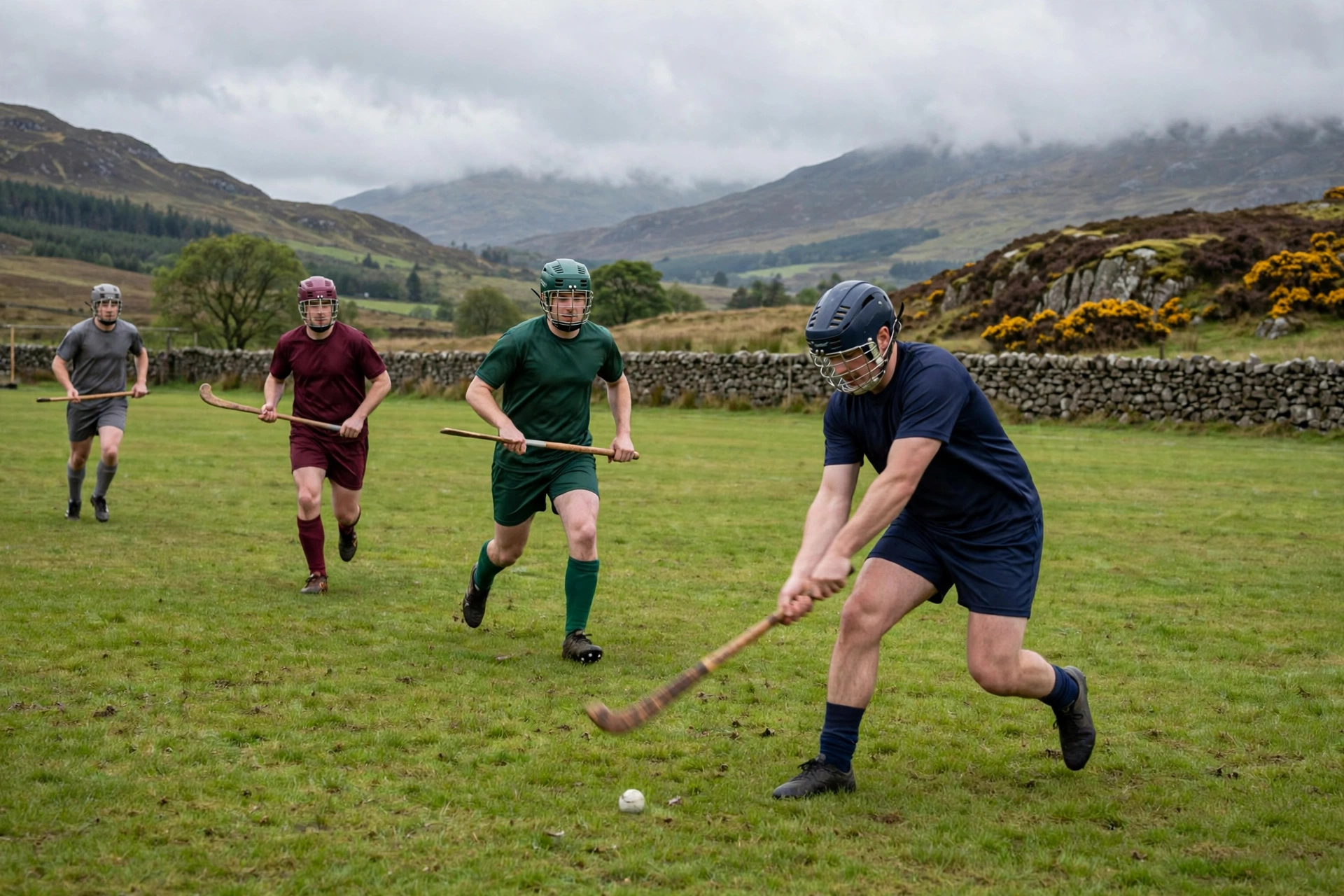
A helmet for shinty players is a protective helmet worn to guard the head while playing shinty, and in general terms a well-fitting sports helmet with good coverage around the sides and back of the head is what most players look for. Shinty is a fast stick-and-ball game played mainly in Scotland, and sticks, a hard ball, and close contact with other players all create a risk of a knock to the head.
Shinty is played on a grass pitch with two teams, each trying to hit a small, hard ball into the other team’s goal using a curved wooden stick called a caman. The game moves quickly, the ball can travel at speed, and players often compete shoulder to shoulder for it. A helmet will not stop a fall or a clash from happening, but it can reduce the force of a knock to the head if a stick, a ball, or the ground makes contact. In general terms, that is the main reason players wear one, whether they are playing a full match, training, or simply practising skills with friends.
What is shinty?
Shinty is a traditional Scottish team sport with a long history, played outdoors on a large grass pitch. Each team has a set of players, including a goalkeeper, and the aim is to score more goals than the other team by hitting the ball through the goalposts with the caman. Players can hit the ball in the air or along the ground, and they can also use the stick to block an opponent’s shot or to tackle for the ball.
What kind of helmet do shinty players wear?
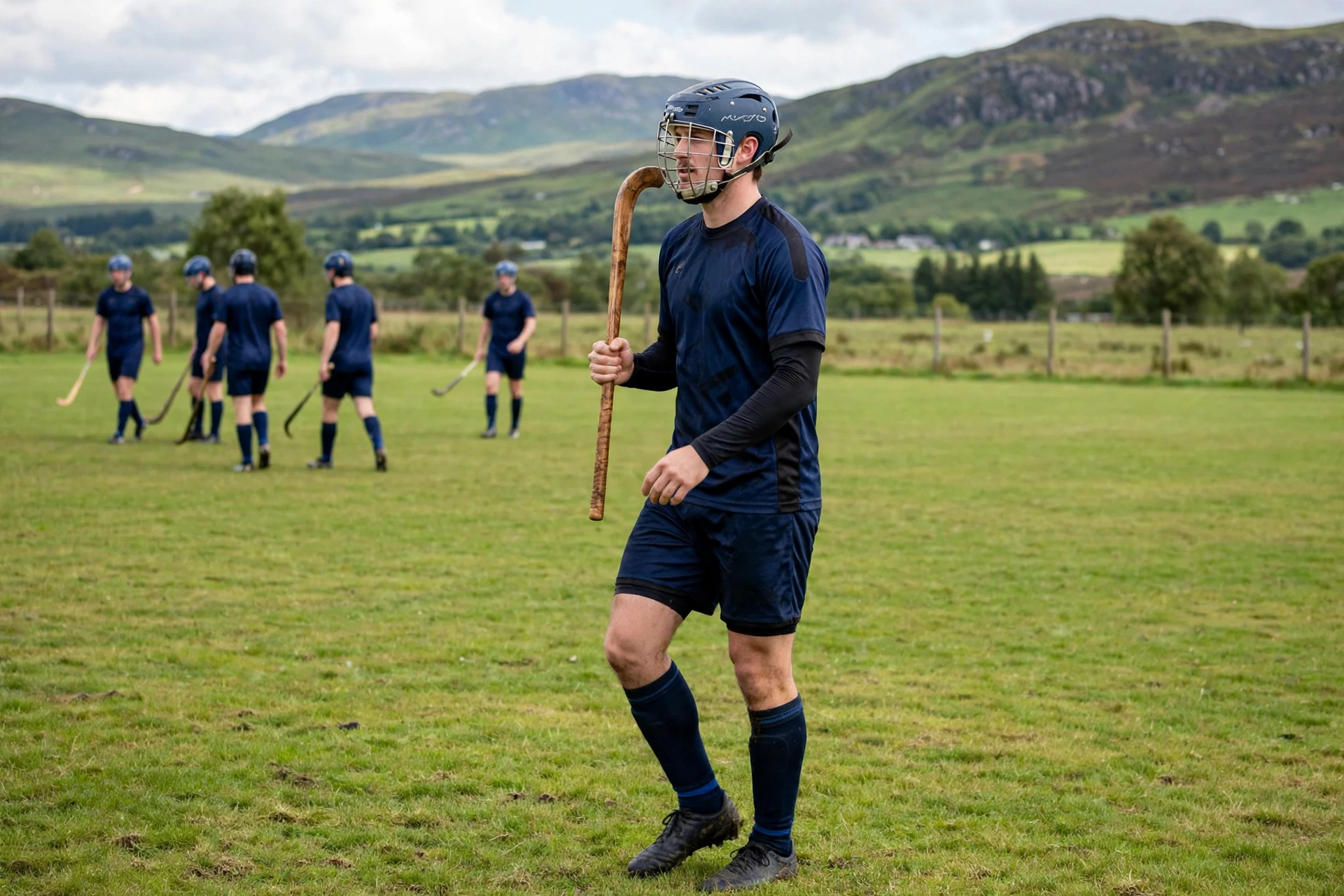
In general terms, shinty players wear a helmet made for a stick sport, such as a hurling or shinty helmet, which is designed to protect the head and face from a ball and a stick while still letting the player see and move freely. These helmets usually have a hard outer shell, padding on the inside, and a face guard or grille at the front. The face guard is an important part of the design, because a swinging stick or a rising ball can reach the face as well as the top of the head.
Some players wear a helmet that looks more like a close-fitting sports helmet without a full face guard, but for most players the version with a guard gives more complete protection. The right choice depends on the level of play, the position on the pitch, and what the player feels comfortable in. A goalkeeper, for example, faces shots at close range and may want as much coverage as possible, while an outfield player may want a lighter helmet that does not limit their view of the ball. Whatever style is chosen, the helmet should be in good condition, with no cracks in the shell, no bent or loose parts on the face guard, and padding that still sits firmly in place.
How should a helmet for shinty fit?
A helmet for shinty should sit level on the head, low enough at the front to cover the forehead, and snug all round without pressing painfully on the temples or the top of the head. It should not tip forward over the eyes or slide back when the player nods, and it should stay in place when the head is shaken gently from side to side. A helmet that moves around during play is a distraction, and it may not be in the right place when a knock happens.
The chin strap should be fastened securely, with only a finger or two fitting between the strap and the chin. The face guard should sit far enough from the face that it does not press on the nose or chin, but close enough that a ball or stick cannot easily slip through the gap. Try the helmet on with any mouthguard or glasses that will be worn during play, and check the fit again after a few minutes of running, because a helmet that feels fine while standing still can feel different once the player is warm and moving. If the helmet has adjustable padding or straps, use them to fine-tune the fit rather than settling for a helmet that is only close enough.
What features matter in a helmet for shinty players?
Coverage matters, because a shinty helmet needs to protect the top, sides, and back of the head as well as the face. A face guard that covers the front of the face, along with a shell that comes down low at the back, gives more complete protection than a helmet that only covers the crown. Some helmets include a system designed to reduce rotational forces in a fall or a knock, such as MIPS, and it is worth asking about when choosing a helmet.
Do shinty players have to wear a helmet?
In general terms, whether a shinty player has to wear a helmet depends on the rules of the competition, the club, or the age group they play in. Some leagues and youth competitions require helmets, while adult play in other settings may leave the choice to the player. The safest step is to check the rules that apply to your own team or competition before the season starts, and to ask the coach or the club if anything is unclear.
How do you look after a shinty helmet?
After a match or training session, wipe the shell clean and let the helmet dry naturally, away from direct heat. Do not leave it in a hot car or next to a radiator, as heat can damage the materials inside over time. If the lining is removable, take it out and wash it following the maker’s instructions, and let it dry fully before putting it back. The face guard can be wiped down as well, and any mud or grass caught in the vents should be cleared out.
What is a helmet for shinty players?
A helmet for shinty players is a protective helmet, often with a face guard, worn to guard the head and face from sticks, the ball, and falls during a shinty match or training session.
Do all shinty players wear a helmet with a face guard?
In general terms, many do, especially younger players, but the style varies. A helmet with a face guard gives more complete protection, while some players prefer a lighter helmet, so the choice depends on the level of play and personal comfort.
When should a shinty helmet be replaced?
Replace it after a hard knock in play, if the shell is cracked, if the face guard is bent or loose, or if the strap and buckle are worn. A helmet that has protected you in a heavy blow has done its job and should not be relied on again.

Olivia
Writer at Helmet Today, covering helmet reviews, fit and riding safety.