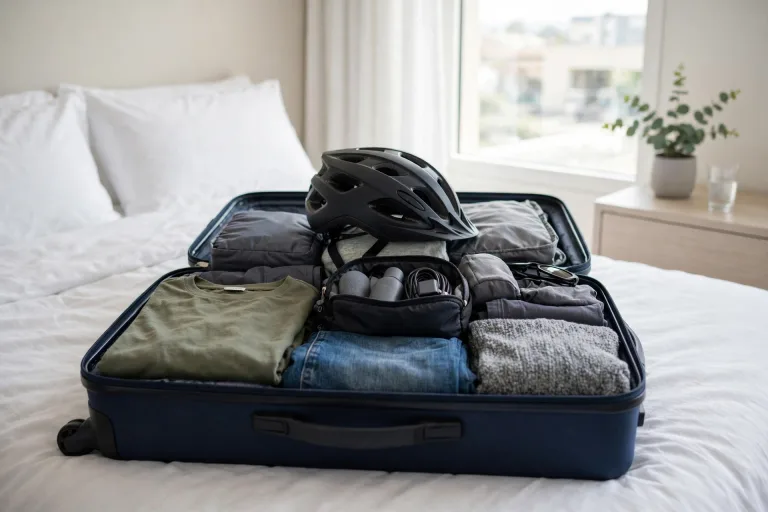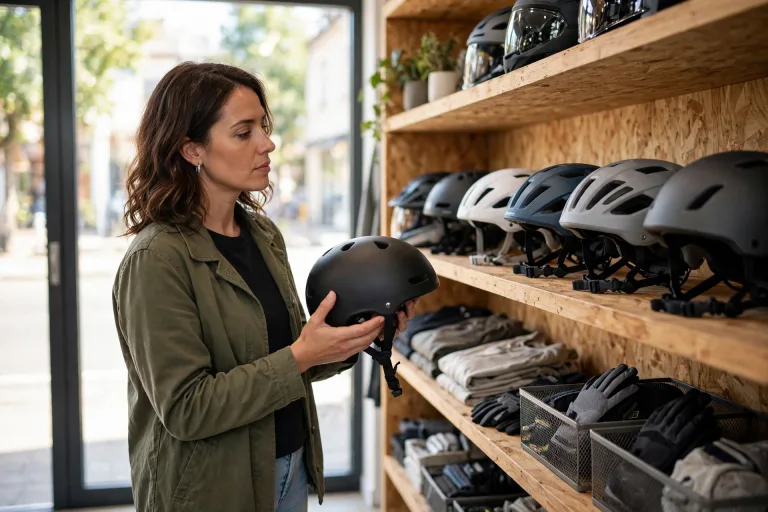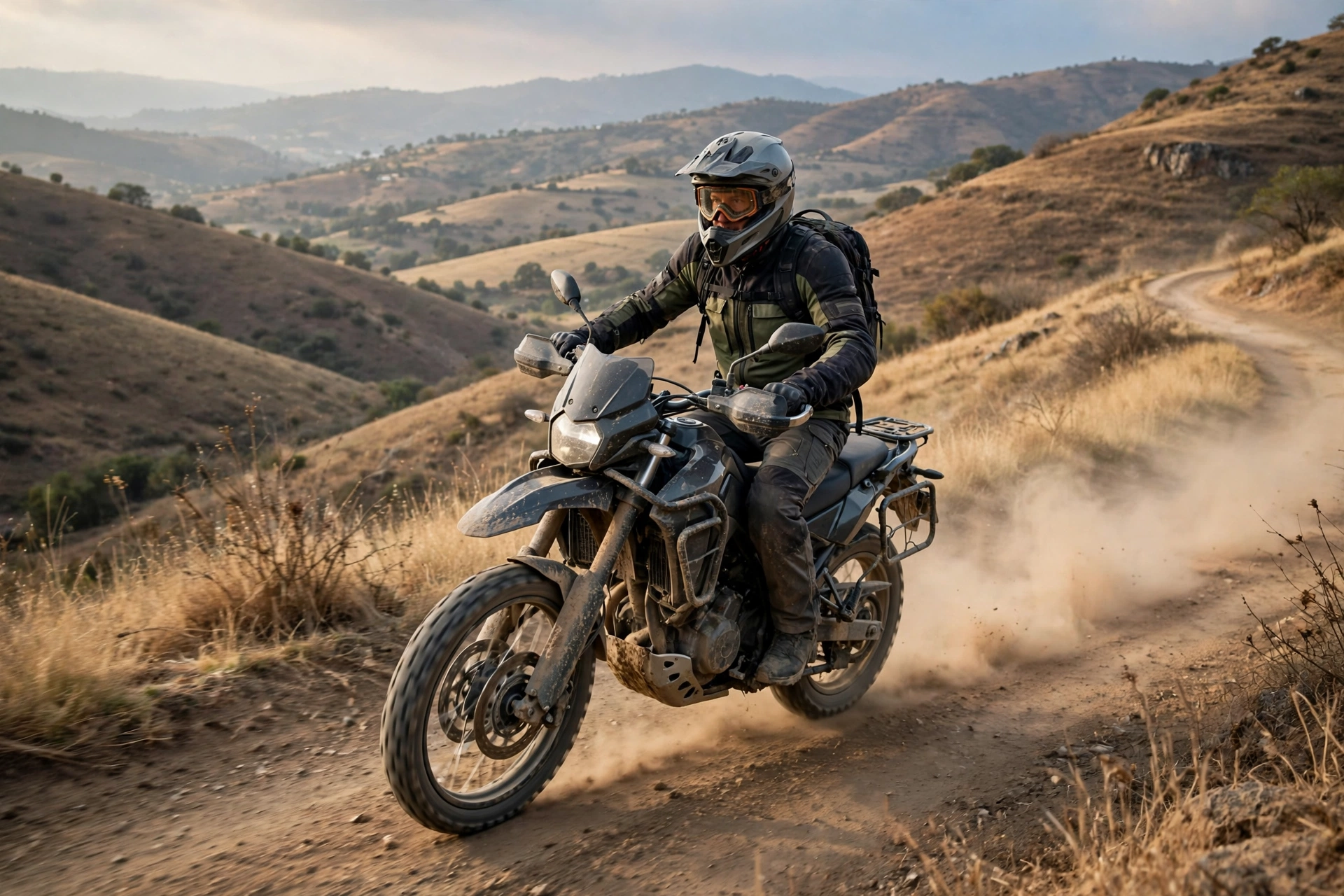
A helmet buying guide for adventure riders is a guide to choosing a helmet that works on the road and off it, and in general terms a well-fitting dual-sport helmet is the usual starting point. Adventure riding mixes tarmac, gravel, mud and dirt trails, often in a single ride, so the helmet has to cope with speed, dust, heat and rough ground. Choosing the right one is less about picking the most expensive model and more about matching the helmet to the riding you actually do.
An adventure helmet sits between a road helmet and an off-road motocross helmet. It has a visor like a road helmet, a peak like a dirt helmet, and plenty of airflow for slow, technical sections. That mix makes it a good all-round choice, but it also means there are more things to check before you buy, from the fit and the weight to the way the visor seals against dust and rain.
What is an adventure riding helmet?
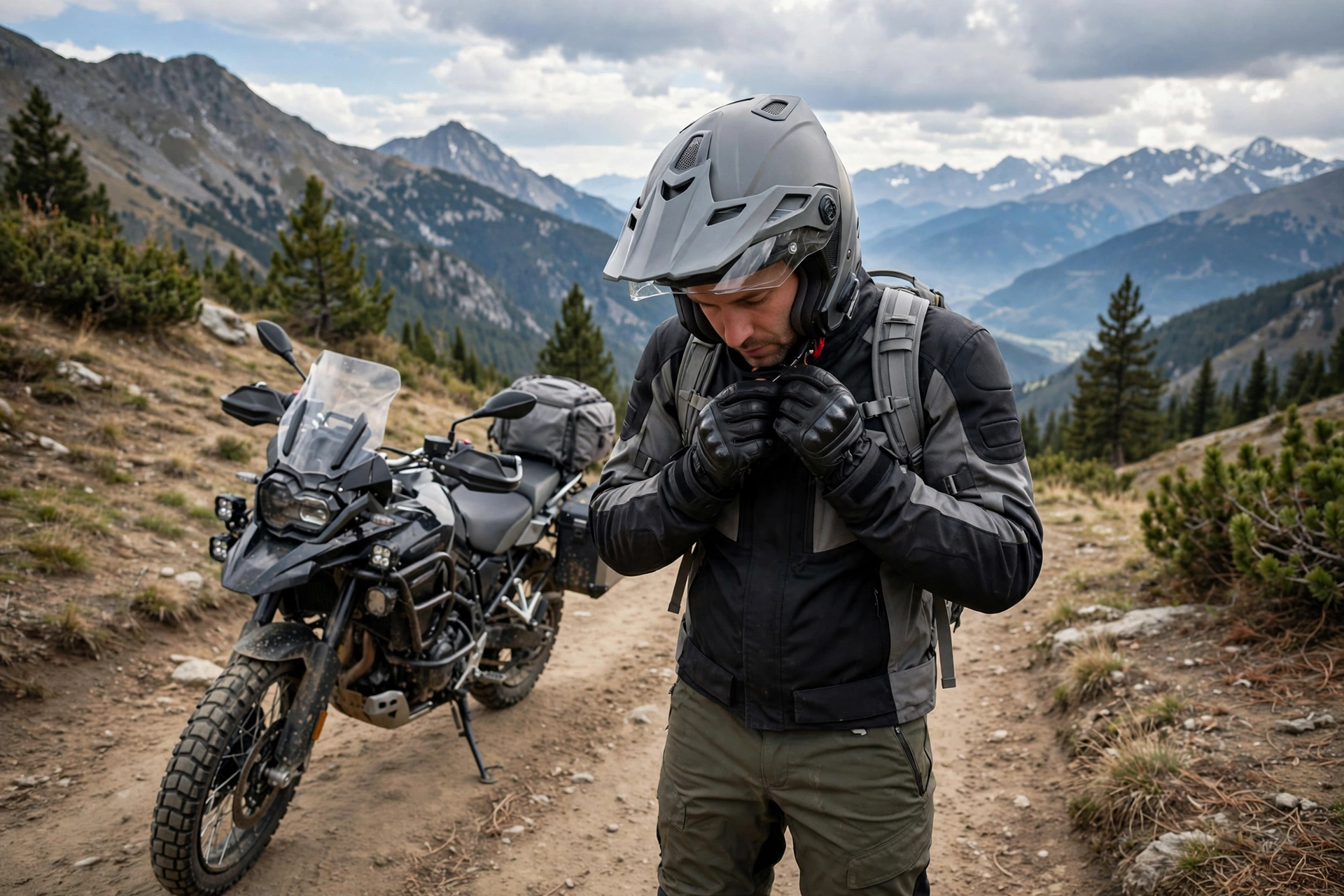
An adventure riding helmet is a full-face helmet designed for riders who ride both on the road and on unsurfaced tracks. It usually has a peak above the visor to shade your eyes from sun and roost, a wide opening for goggles, and large vents that move air through the helmet when you are working hard at low speed on a trail.
Most adventure helmets come with a clear visor that you can lift or remove, so you can ride with the visor down on the road and switch to goggles when the trail gets dusty. Some models let you remove the peak for long motorway stretches, where a peak can catch the wind. In general terms, the idea is one helmet that covers the whole ride, rather than a different helmet for each surface.
What kind of helmet do adventure riders need?
In general terms, most adventure riders choose a dual-sport helmet, which is built for exactly this mix of road and trail. It gives full-face protection, a visor for road speed, and a peak and ventilation for off-road work. If most of your riding is on the road with only the odd gravel lane, a road touring helmet with good ventilation can also work well.
Riders who spend most of their time on rough trails sometimes choose a motocross helmet worn with goggles, which is lighter and flows more air, but it has no visor, so it is less comfortable at motorway speed and in rain. The best choice depends on the balance of your riding: more road means a visor matters more, while more trail means airflow and light weight matter more.
How should an adventure helmet fit?
An adventure helmet should sit level on your head, low enough at the front to cover your forehead, and snug all round without pressing painfully on your temples or the back of your head. It should not tip forward over your eyes or slide back when you nod, and it should stay in place when you shake your head gently from side to side.
The chin strap should be snug enough that you can fit only a finger or two between the strap and your chin. Try the helmet on with the goggles or glasses you plan to wear, and check that nothing pushes it out of position. Wear it around the shop for a few minutes if you can, because a pressure point that feels small at first can become painful after an hour on the trail. In general terms, a helmet that fits well is also a helmet you will keep wearing.
What features matter most in an adventure helmet?
Ventilation matters a great deal, because adventure riding is physical work and you will get warm on slow, technical trails. Look for a helmet with large vents at the front and exhaust vents at the back, and a lining that can be removed and washed after a dusty ride. A comfortable lining also helps the helmet sit well, which matters on a long day in the saddle.
The visor matters too. It should seal well against rain and dust, open and close smoothly with gloves on, and give a wide field of view. Some helmets include a system designed to reduce rotational forces in a fall, such as MIPS, and it is worth asking about when you choose. Weight matters as well: a lighter helmet is less tiring on a long ride, and a peak that can be adjusted or removed adds useful flexibility.
Should you choose a dual-sport or a full-face road helmet?
Whether a dual-sport helmet or a full-face road helmet suits you better depends on where you ride. A dual-sport helmet is the better choice if you regularly ride gravel, dirt or forest tracks, because the peak shades your eyes, the vents keep you cool at low speed, and the wide opening takes goggles easily. It is the more flexible option for mixed riding.
A full-face road helmet is quieter and smoother at motorway speed, and its visor usually seals better in heavy rain. If your idea of adventure riding is mainly long road journeys with the odd unsurfaced lane, a road helmet may suit you better. Some riders keep both: a dual-sport helmet for trail days and a road helmet for long road trips. In general terms, the best helmet is the one that suits the riding you actually do.
How do you look after an adventure helmet?
After a ride, wipe the shell clean and let the helmet dry naturally, away from direct heat. Dust and mud should be brushed off the vents so the airflow stays clear. Do not leave the helmet in a hot car or next to a radiator, as heat can damage the materials inside over time. If the lining is removable, take it out and wash it following the maker’s instructions, and let it dry fully before you put it back.
Check the helmet regularly for cracks, dents, or loose parts, and check the chin strap, buckle and visor mechanism for wear. In general terms, a helmet that has taken a hard knock in a fall should be replaced, even if it looks fine on the outside, because the inner lining may have been compressed. The same applies to a helmet that has been dropped hard onto a hard surface. When in doubt, replace it.
What is the best helmet for adventure riding?
In general terms, a well-fitting dual-sport helmet is the best all-round choice for adventure riding, because it works on the road and on trails. The right one for you depends on how much of your riding is off-road and how it fits your head.
Can you wear goggles with an adventure helmet?
Yes, most adventure helmets are made to work with goggles. Lift or remove the visor, put the goggles on, and check that they sit neatly inside the helmet opening without pushing it out of place.
When should an adventure helmet be replaced?
Replace it after a hard fall or a heavy knock, if the shell or lining is damaged, or if the strap, buckle or visor mechanism is worn. A helmet that has protected you in a fall has done its job and should not be relied on again.

Olivia
Writer at Helmet Today, covering helmet reviews, fit and riding safety.