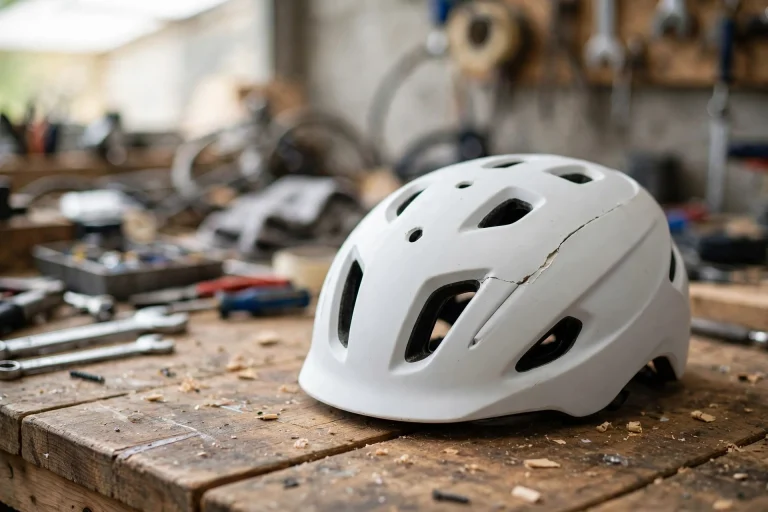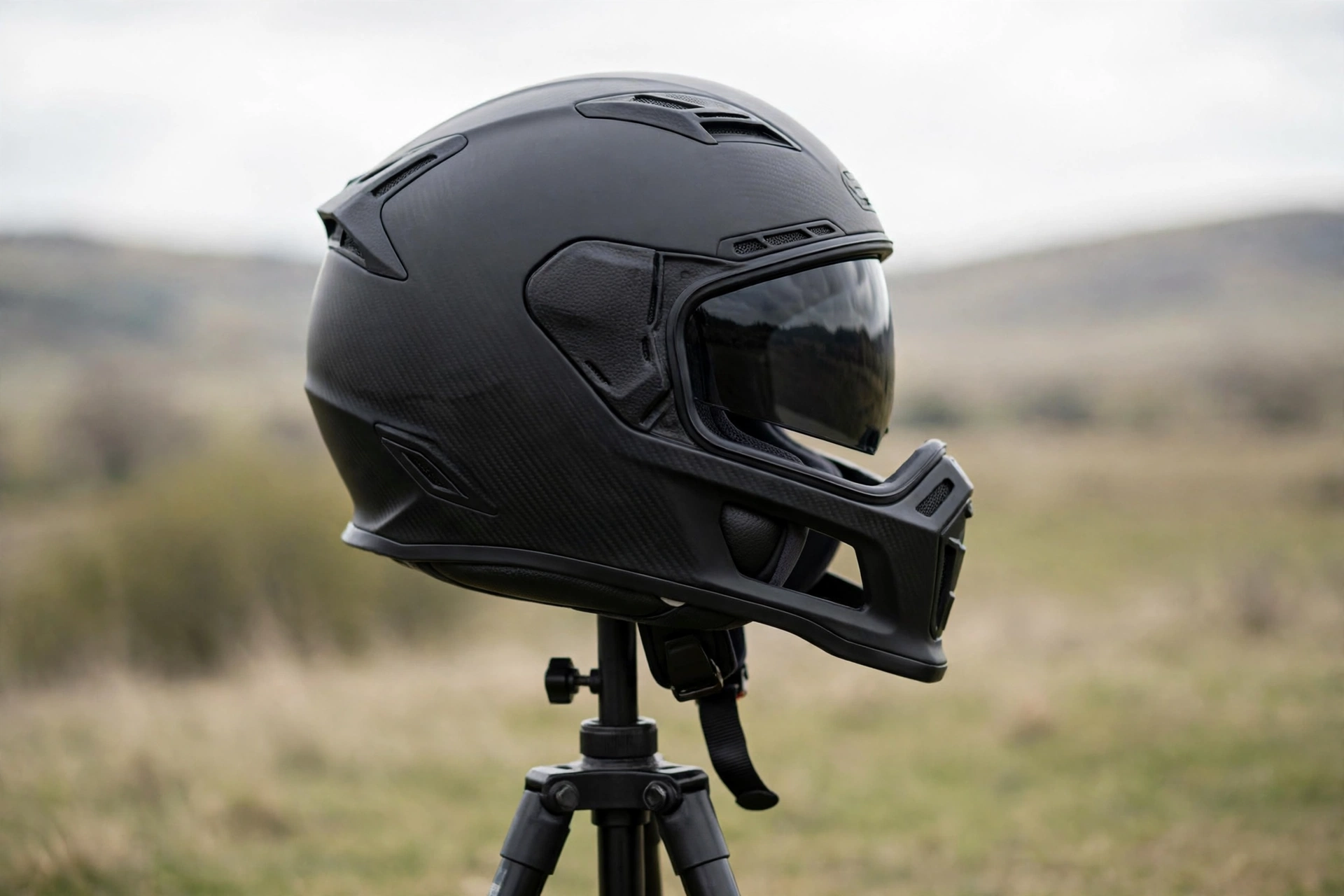
Yes, helmets can protect your jaw, but only some types do, and in general terms a full-face helmet with a chin bar is the one that gives real jaw protection. An open-face helmet covers the top, back, and sides of the head but leaves the face and jaw exposed, so it offers little or no protection to the chin and jaw in a fall.
The jaw is vulnerable in a crash because it sticks out from the face and often hits the ground first in a forward fall. A knock to the jaw can be painful and can damage teeth, and it can also transmit force to the rest of the head. That is why riders who face a higher risk of forward falls often choose a helmet that covers the lower face as well.
How does a helmet protect your jaw?
A helmet protects your jaw with a chin bar, which is a rigid bar that runs across the front of the helmet at chin level. In a fall, the chin bar takes the impact first and spreads the force across the structure of the helmet, instead of letting it hit the jaw directly. The padding inside the chin bar also absorbs some of the force.
The chin bar works together with the rest of the helmet. The outer shell spreads the force of a knock, the foam lining absorbs it, and the strap holds the helmet in place so the chin bar stays where it should be. If the helmet shifts on your head during a fall, the chin bar may not be in the right place to protect your jaw, which is why a good fit and a snug strap matter so much.
Which helmets protect the jaw best?
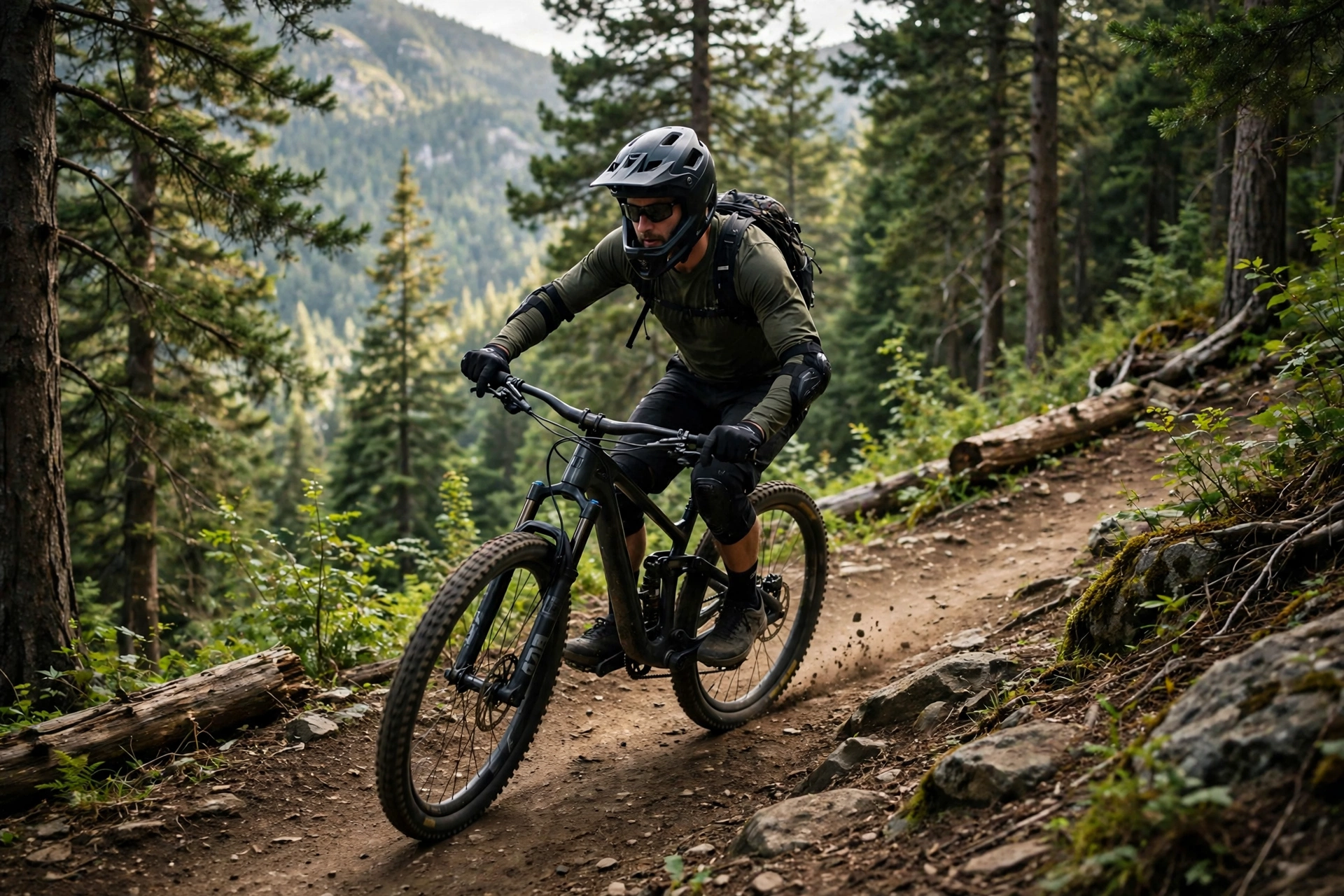
In general terms, a full-face helmet protects the jaw best, because its chin bar is part of the shell and covers the chin and jaw completely. Full-face helmets are common in downhill mountain biking, motocross, and motorcycling, where forward falls at speed are a real risk.
Some helmets offer partial jaw protection. A helmet with a removable chin bar can be worn as a full-face helmet on rough trails and as an open-face helmet on easier rides. A skate-style helmet covers more of the sides and back of the head than a road helmet, but it still leaves the jaw exposed. A standard road or commuter helmet, with no chin bar at all, gives no jaw protection, however good it is at protecting the top of the head.
What are the limits of jaw protection?
Even the best full-face helmet cannot guarantee that your jaw will be unhurt in a crash. A very hard impact can still cause damage, and a blow from the side or from below may reach the jaw around the edges of the chin bar. A helmet reduces the force of a knock, but it cannot remove it entirely.
The chin bar itself can also be a weak point if the helmet is poorly made or damaged. A cracked or loose chin bar may not hold up in a crash, and a chin bar that is too flexible may bend into the face. That is why it is worth checking that the helmet meets the safety standard for the riding you do, and replacing it after a hard knock. Some helmets include a system designed to reduce rotational forces in a fall, such as MIPS, which can help with the twisting forces that a jaw impact can create.
Another limit is the fit. A chin bar only protects the jaw when the helmet sits correctly, so a helmet that is too big can shift in a crash and leave the jaw exposed. A helmet that is too small may press on the face and tempt the rider to loosen the strap, which also weakens the protection. Choosing the right size and keeping the strap snug are just as important as the chin bar itself.
How should a full-face helmet fit around the jaw?
A full-face helmet should fit snugly around the cheeks and jaw, with the cheek pads pressing gently against your face without squeezing painfully. The chin bar should sit close to your chin, with a small gap, and you should be able to open your mouth and speak without the bar pressing hard against your chin.
When you shake your head gently, the helmet should stay in place and move with your head, not slide around on its own. The strap should be snug under the chin, with only a finger or two of space. Try the helmet on with any goggles or glasses you plan to wear, and check that you can breathe easily and see clearly to the sides.
What should you do after a hit to the jaw?
If you take a hit to the jaw while wearing a helmet, stop and check yourself before you carry on. Check whether your jaw moves normally, whether any teeth feel loose or broken, and whether you have pain, swelling, or bleeding. If anything feels wrong, get medical advice rather than riding on.
Check the helmet too. Look at the chin bar for cracks, dents, or loose parts, and check the shell and lining for damage. In general terms, a helmet that has taken a hard knock should be replaced, even if it looks fine on the outside, because the inner lining may have been compressed. A helmet that has protected your jaw in a fall has done its job and should not be relied on again.
Do open-face helmets protect your jaw?
In general terms, no. An open-face helmet covers the top, back, and sides of the head but leaves the face and jaw exposed, so it offers little protection to the jaw in a forward fall.
Is a full-face helmet worth it for jaw protection?
Yes, if you ride fast, off-road, or in places where a forward fall is likely, because the chin bar is the only part of a helmet that covers the jaw. For slow, gentle riding, an open-face helmet may be enough.
Can a helmet with a chin bar hurt your jaw?
A poorly fitting helmet can press on the jaw and cause discomfort, but a well-fitting full-face helmet should feel snug, not painful. If the chin bar presses hard on your chin, the helmet may be the wrong size or shape for you.

Olivia
Writer at Helmet Today, covering helmet reviews, fit and riding safety.