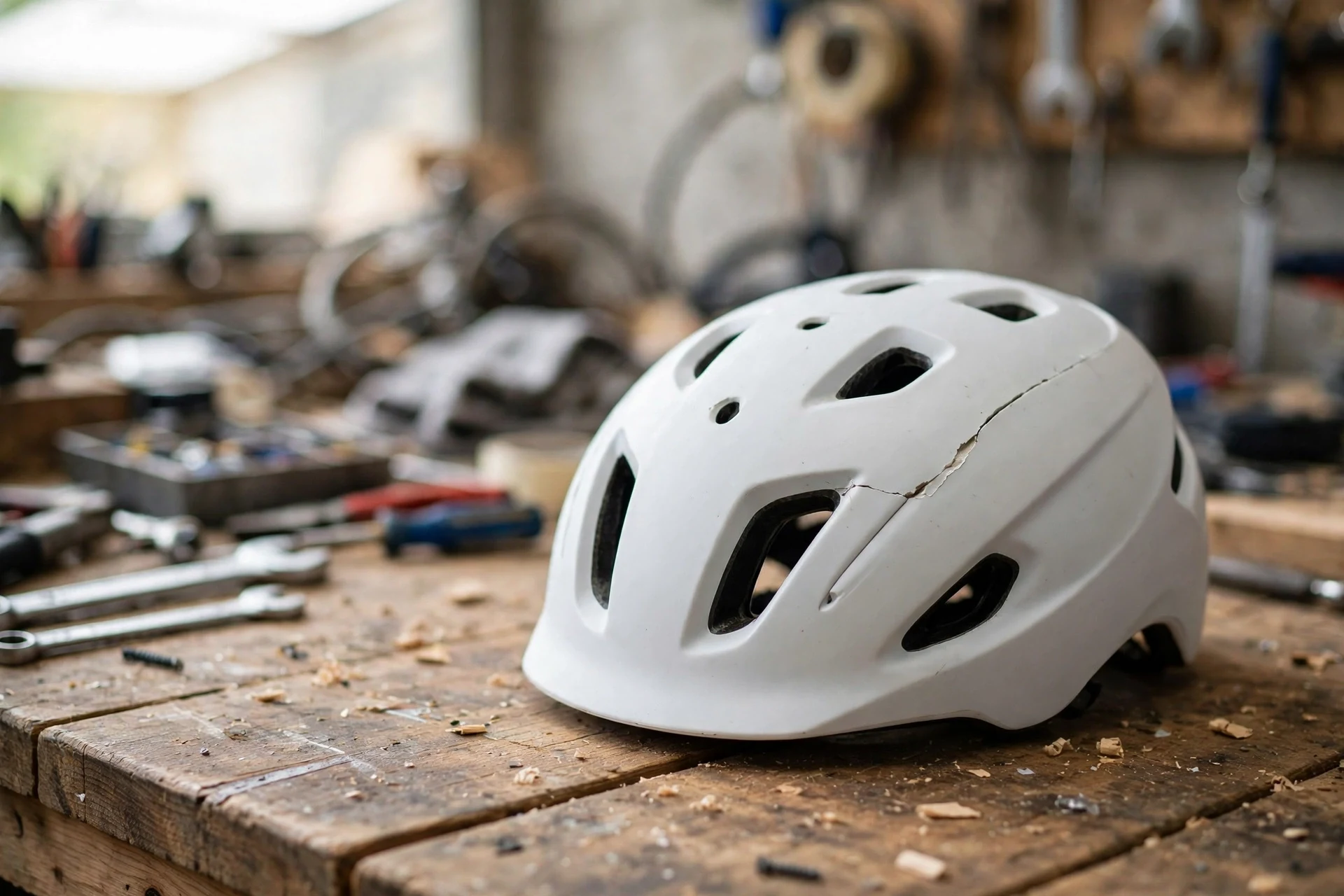
No, in general terms you should not keep wearing a helmet with a small crack — the safe choice is to replace it, because even a small crack can weaken the shell and reduce the protection it gives you. A crack is a sign that the helmet has already taken damage, and a cracked shell may not spread the force of an impact the way an undamaged shell does. The crack may look minor, but you cannot tell from the outside how far the damage goes.
It is tempting to keep using a helmet with a small crack, especially if the helmet was expensive or if the crack is hard to see. But a helmet is a safety device, and its job is to protect you in a crash you cannot predict. If you are not sure the helmet will do its job, the sensible answer is to replace it rather than take the risk.
Why is a small crack a problem?
A helmet shell works by spreading the force of an impact over a wide area. When the shell is whole, it flexes slightly and passes the energy into the foam liner, which absorbs it. A crack breaks that structure. Instead of spreading the force, the shell can split further along the crack, and the energy can concentrate at one point on your head.
A crack can also let water and dirt into the helmet. Moisture can work its way into the foam liner, where it can weaken the foam and encourage mould. Dirt in the crack can widen it over time, especially if the helmet is knocked again.
The liner underneath the crack may also be damaged. A hard knock that cracks the shell can compress the foam liner at the same spot, even if the liner looks normal from the outside. Foam that has already compressed once may not absorb a second impact as well. Some modern helmets also use a slip layer similar to MIPS inside the shell, but a crack in the outer shell still means the helmet should be replaced.
How can you tell if a crack is serious?
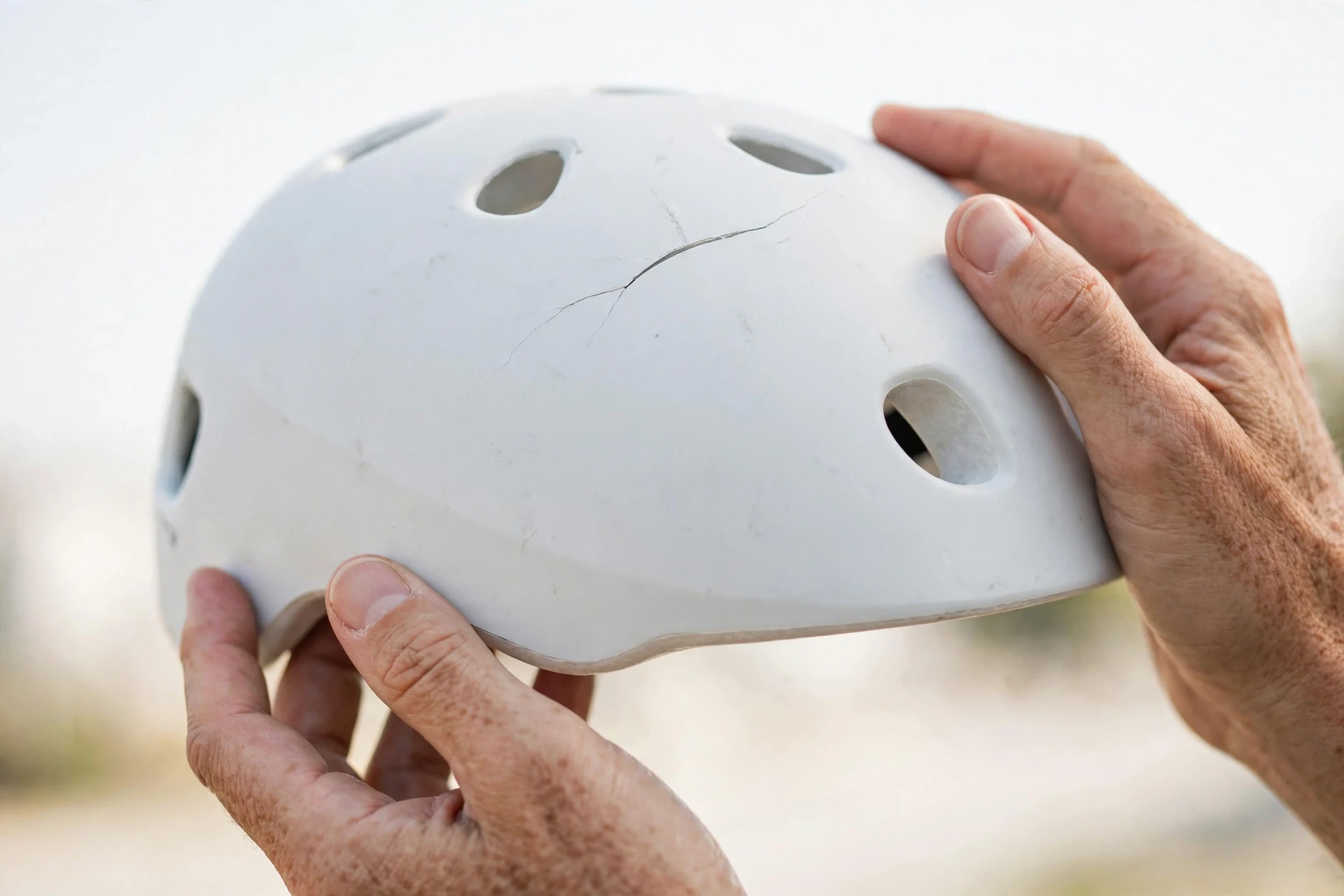
In general terms, any crack in the shell should be treated as serious. But there are a few checks you can make. Look at the crack in good light and run your finger gently along it. If you can feel a step or a gap, or if the crack runs through the shell rather than just across the surface, the helmet is damaged. If the crack is near a vent, a strap anchor, or the edge of the shell, it is more worrying, because those are points where the shell takes stress.
Press the shell gently on either side of the crack. If the shell flexes more there than elsewhere, or if you hear a creaking sound, the structure is weakened. Check the inside of the helmet too: look for a matching crack or a dent in the foam liner at the same spot. If the liner is damaged, the helmet must go.
Do not confuse a crack with a scratch. A surface scratch that only marks the paint or the outer coating does not weaken the shell. A crack goes deeper, into the shell material itself. If you are not sure which one you are looking at, treat it as a crack and replace the helmet.
Can a cracked helmet be repaired?
In general terms, no, a cracked helmet should not be repaired. Glue, tape, filler, or paint will not restore the strength of the shell, and they can hide the damage so that the next crack is harder to spot. The shell is made from materials that are shaped and cured in a factory, and a home repair cannot reproduce that structure.
Some riders ask whether a manufacturer can repair a cracked helmet. Most manufacturers do not offer repairs, because a repaired helmet cannot be tested to the same standard as a new one. A helmet that has been repaired may look fine but may fail in a crash, and no manufacturer wants to take that risk.
The same rule applies to the foam liner. Compressed or cracked foam cannot be repaired, and it cannot be replaced on its own in most helmets. The liner is bonded to the shell, and it works as one unit. If either part is damaged, the whole helmet needs replacing.
What should you do if you find a crack before a ride?
If you find a crack just before a ride, do not ride with that helmet. Use a spare helmet if you have one, borrow one that fits and is in good condition, or postpone the ride until you have a replacement. Riding without a helmet, or with a damaged one, is not worth the risk.
Remove the cracked helmet from use so that nobody else picks it up by mistake. Mark it clearly or cut the straps before you throw it away, so that it cannot be used again. Some shops and recycling schemes take old helmets, and some manufacturers run trade-in offers, so it is worth asking before you bin it.
When you buy a replacement, check the fit carefully. A new helmet should sit level on your head, feel snug without pressing hard, and stay in place when you shake your head. Keep the receipt and the manual, and note the date you bought it, so you know when it is time to replace it again.
How do cracks happen in the first place?
Cracks most often happen after an impact. A fall, a crash, or a hard knock against a wall or the ground can crack the shell, even if the helmet looks fine at first glance. That is why any helmet that has been in a crash should be replaced, even if you cannot see a crack.
Cracks can also happen without a crash. Dropping a helmet onto a hard floor can crack the shell, especially if it lands on its edge or on a vent. Storing a helmet under heavy items, or squeezing it into a tight bag, can stress the shell over time. Sunlight and heat can also make the shell brittle as it ages, so an old helmet is more likely to crack than a new one.
How can you avoid cracks in your next helmet?
Handle your helmet with care. Do not drop it, do not throw it into a car boot, and do not hang it by its straps from a hook where it can swing and bang against a wall. Carry it in a padded bag when you travel, and store it on a shelf where it cannot fall.
Keep your helmet out of direct sunlight and away from heat, such as radiators or a hot car. Heat and sunlight can weaken the shell over time and make it more likely to crack. Store it in a cool, dry place, and clean it gently with mild soap and water.
Can I still wear a helmet with a tiny crack?
No, in general terms, you should replace a helmet with any crack, however small. A crack can weaken the shell and the liner, and you cannot tell from the outside how much protection has been lost.
Is a surface scratch the same as a crack?
No. A scratch that only marks the paint does not weaken the shell. A crack goes into the shell material itself and can spread. If you are unsure, treat it as a crack and replace the helmet.
What should I do with a cracked helmet?
Take it out of use so nobody wears it by mistake. Cut the straps before disposal, and ask your local shop about helmet recycling or trade-in schemes.

Olivia
Writer at Helmet Today, covering helmet reviews, fit and riding safety.