To clean a helmet after a multi-day ride, remove the liner and pads, wash them gently, wipe the shell and straps, and let everything air-dry fully before your next ride. A multi-day ride leaves a helmet full of sweat, dust, and road grime, and the longer that build-up sits, the harder it is to remove and the worse the helmet smells. A proper clean at the end of the trip keeps the helmet comfortable and helps it last longer.
On a multi-day ride you may have had no chance to clean the helmet properly. You may have ridden in rain, dust, or heat, and the helmet may have been stuffed into a bag each night while still damp. By the time you get home, the liner can be stiff with dried sweat and the shell can be coated in insects and grit. The good news is that a thorough clean is simple, and it only takes a little time and a few basic supplies.
What should you do first after a multi-day ride?
Start by taking the helmet apart as far as it is designed to come apart. Remove the liner, the cheek pads, and the ear pads if they are removable. Take off the visor if it is easy to remove, and unclip any accessories such as a camera mount or a communication unit. Put the small parts somewhere safe so nothing gets lost.
Shake the helmet gently upside down to tip out loose dust and grit. Then wipe the inside of the shell with a dry cloth to pick up the rest. Look inside for signs of wear or damage: check the liner for tears, the straps for fraying, and the shell for cracks. A multi-day ride is a good time to spot problems, because you have been using the helmet hard.
Check your helmet manual before you start washing. Some liners can go in a washing machine on a gentle cycle, while others must be hand-washed. Some visors have coatings that can be damaged by the wrong cleaner. A quick read of the manual can save you from ruining a part.
How do you clean the liner and pads?
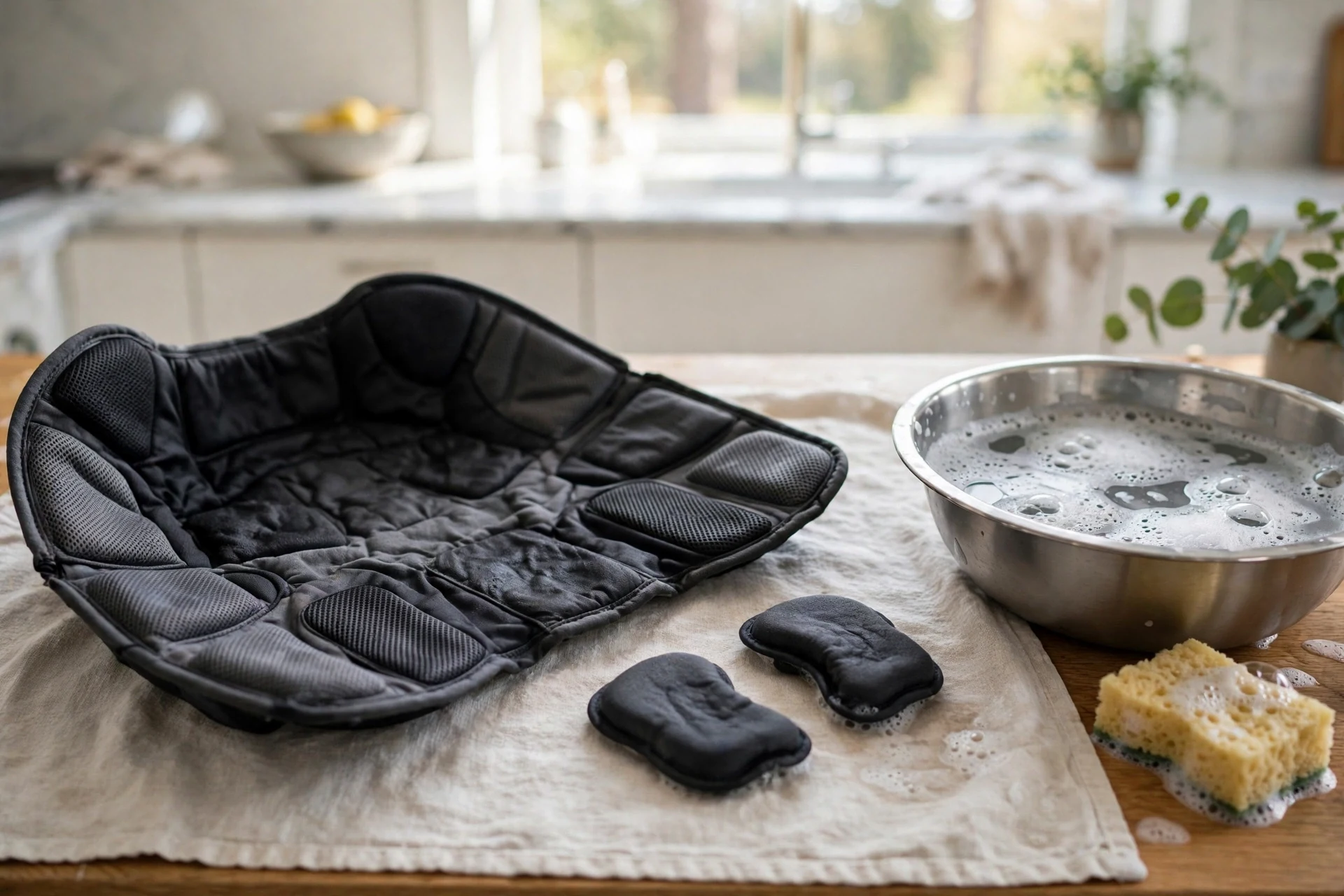
Hand-washing is the safest method for most liners. Fill a basin with lukewarm water and add a small amount of mild soap or a gentle detergent. Put the liner and pads in the water and squeeze them gently, letting the soapy water work through the foam. Do not twist or wring them hard, because that can tear the foam.
Rinse the liner and pads in clean lukewarm water until the water runs clear and no soap remains. Soap left in the foam can irritate your skin on your next ride, so rinse well. Press the water out gently with a towel rather than wringing, and then leave the pieces to air-dry.
If the liner smells strongly after a multi-day ride, a longer soak can help. Leave it in soapy water for half an hour before rinsing, and let it dry completely.
How do you clean the shell and visor?
Clean the outside of the shell with a soft cloth, lukewarm water, and a little mild soap. Work gently around the vents and the edges, where insects and grit collect. A soft brush, such as an old toothbrush, can help clear the vents without scratching the shell.
For the visor, rinse it first with clean water to wash off grit, because wiping a dry visor can scratch it. Then wash it with mild soap and water and a soft cloth, and rinse again. Let it air-dry or pat it dry with a clean, soft cloth. Do not use glass cleaner, solvents, or paper towels on a visor, because these can damage coatings and leave scratches.
Clean the inside of the shell too. Wipe it with a damp cloth and mild soap, and pay attention to the area around the liner mounts, where sweat can collect. If your helmet has a MIPS slip liner, wipe it gently and let it dry before you put the comfort liner back in.
What about the straps and buckles?
Straps are easy to forget, but after a multi-day ride they are often the dirtiest part of the helmet. Sweat runs down from the liner onto the straps, and sunscreen and skin oils collect on the webbing. Unclip the buckles and wipe the straps with a damp cloth and mild soap, working along the full length.
Pay attention to the buckles and adjusters. Grit and dried sweat can make a buckle stiff or sticky. Rinse the buckles with clean water and work them open and closed a few times to clear out any dirt. Let them dry before you clip them shut again.
Check the straps for wear while you clean them. Look for fraying, thinning, or stitching that is coming loose. A strap that is badly worn should be replaced, because it may not hold the helmet in place in a crash. If the straps are not replaceable, it may be time for a new helmet.
How long should a helmet take to dry?
A helmet usually takes a full day to dry completely after a thorough wash, and the liner can take longer. Leave the helmet in a ventilated room with the vents open, and put the liner and pads beside it rather than inside it, so air can reach every surface. Turn the liner over once or twice as it dries.
Do not rush drying with heat. Do not put a helmet on a radiator, in front of a heater, or in a tumble dryer, because heat can warp the foam and weaken the shell. Do not use a hair dryer on a hot setting either. Room-temperature air, with a little airflow, is the safest way to dry a helmet.
If you need the helmet again soon, plan ahead. Wash it as soon as you get home from the trip, so it has the maximum time to dry. A helmet that is still damp when you put it on will feel cold and uncomfortable, and damp padding is where smells and mould can start.
What should you avoid when cleaning a helmet?
- Do not use bleach, solvents, petrol, or strong household cleaners on any part of a helmet. These can damage the shell, the foam, and the straps.
- Do not put the shell in a washing machine or a dishwasher. The heat and the tumbling can warp the shell and destroy the liner.
- Do not soak the whole helmet in water. The foam liner can absorb water and take a long time to dry, and water can get into parts that should stay dry.
- Do not scrub with rough pads or wire brushes. Use a soft cloth or a soft brush, and be gentle around vents, visors, and coatings.
- Do not store the helmet while it is still damp. Let every part dry fully before you put the liner back in and store the helmet away.
Can I wash my helmet liner in a washing machine?
Some liners can be machine-washed on a gentle cycle, but many must be hand-washed. Check your helmet manual first. Hand-washing with mild soap is the safest method for most liners.
How do I get insects off my helmet after a long ride?
Soak a cloth in lukewarm water and lay it over the shell for a few minutes to soften the insects, then wipe gently with mild soap and water. Do not scrape them off with a hard object.
How often should I deep-clean my helmet?
In general terms, give your helmet a deep clean after a multi-day ride, and wash the liner every few weeks if you ride regularly. A quick wipe after each ride helps in between.

Olivia
Writer at Helmet Today, covering helmet reviews, fit and riding safety.