
To clean a helmet in winter, wash it indoors with lukewarm water and mild soap, then let it dry slowly at room temperature, away from radiators and other direct heat. Winter riding leaves a helmet full of road salt, grit, and damp, and cold weather makes drying slow. Cleaning indoors, with patience, is the key: the helmet gets properly clean without being damaged by heat or by freezing temperatures.
Winter is hard on helmets. Salt spray from gritted roads dries onto the shell, mud splashes up from wet roads, and sweat builds up inside just as it does in summer, because you are working hard under layers of warm clothing. If you leave all of that in the helmet, the salt can corrode metal parts, the grit can scratch the shell, and the damp liner can start to smell. A winter clean is worth doing regularly, not just once at the end of the season.
Why is winter cleaning different?
The main difference in winter is drying. In summer, a washed liner can dry in a few hours in warm air. In winter, the air is cold and often damp, and a liner left in a cold garage can take days to dry, or can even freeze. A helmet that stays damp for days is a helmet where smells and mould can start.
Cold water is another problem. Washing a helmet with cold water in a cold garage is unpleasant, and cold water does not lift dirt and salt as well as lukewarm water. Bring the helmet indoors and wash it in a warm room, where you can use lukewarm water and let it dry in normal room air.
Winter roads also bring road salt, which is harsher than ordinary dirt. Salt can corrode buckles, screws, and metal vents if it is left on the helmet. Rinsing the shell and the metal parts after a winter ride helps stop that corrosion before it starts.
What do you need before you start?
You need only a few simple things: a basin or a sink, lukewarm water, a mild soap or a gentle detergent, a couple of soft cloths, and a towel. A soft brush, such as an old toothbrush, is useful for cleaning the vents and the buckles. Avoid strong cleaners, bleach, and solvents, because these can damage the shell and the foam.
Clear a space indoors where the helmet can sit and dry for a day or two. A spare room, a utility room, or a hallway with good airflow works well. Put a towel underneath to catch drips, and keep the helmet away from radiators, fires, and direct sunlight from a window.
Check your helmet manual before you start. Some liners can be machine-washed, but most should be hand-washed. Some visors have coatings that need gentle handling. A quick check of the manual avoids a costly mistake.
How do you wash the liner in winter?
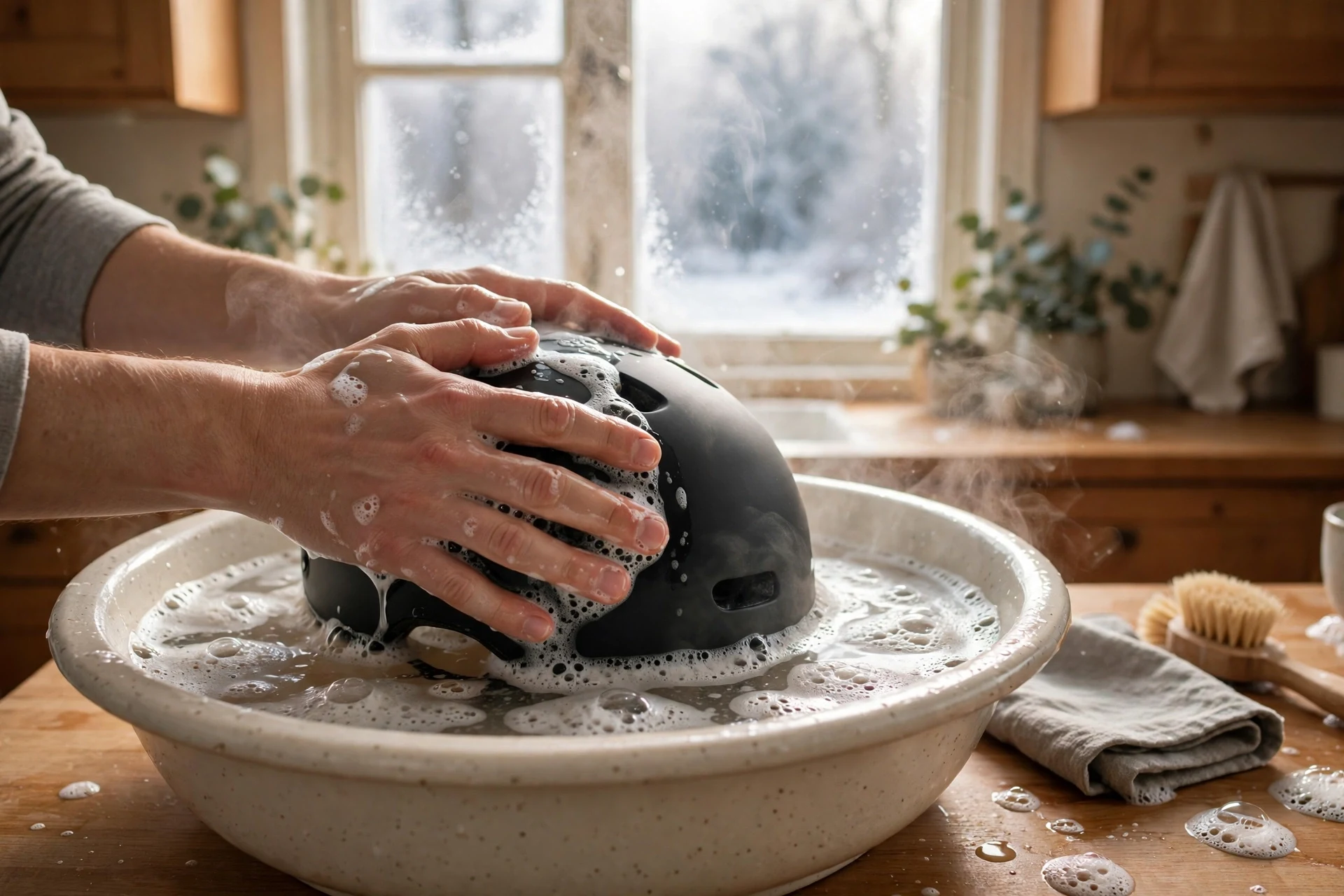
Remove the liner and pads if they come out, and wash them by hand in a basin of lukewarm water with a little mild soap. Squeeze the foam gently so the soapy water works through it, then rinse in clean lukewarm water until no soap remains. Press the water out with a towel rather than wringing the foam hard.
If the liner is very salty or dirty, let it soak for twenty or thirty minutes before you rinse it. Salt dissolves in water, so a soak will lift most of it out. Rinse well, because soap or salt left in the foam can irritate your skin on your next ride.
Let the liner dry indoors at room temperature. Lay it on a towel with good air around it, and turn it over once or twice. In winter this can take a full day or longer, so plan ahead and wash the liner when you have a day off the bike.
How do you clean the shell and vents?
Wipe the outside of the shell with a soft cloth, lukewarm water, and mild soap. Pay attention to the lower edge and the back, where salt spray and mud collect. Rinse the cloth often, so you are not rubbing grit across the shell and scratching it.
Clean the vents with a soft brush. Salt and grit can block the vents and reduce airflow, so clear each vent gently. Do the same for the visor: rinse it with clean water first to wash off grit, then wash it with mild soap and a soft cloth, and let it air-dry.
Wipe the straps and buckles too. Salt can make buckles stiff, so rinse them with clean water and work them open and closed a few times. Check the straps for fraying while you clean them. Some modern helmets use a slip layer similar to MIPS inside the shell; wipe it gently and let it dry before you put the liner back. Let everything dry before you put the helmet back together.
How do you dry a helmet in cold weather?
Dry the helmet slowly at room temperature. Leave it in a ventilated room with the vents open, and keep the liner out of the shell until both are fully dry. A gentle airflow from an open door or a fan on a low setting can help, but do not use a heater, a radiator, or a hair dryer on a hot setting.
Heat is the main thing to avoid. A radiator can warp the foam liner and weaken the shell, and the damage may not be visible. A helmet left on a radiator overnight can come back misshapen or brittle. Room-temperature air is slower, but it is safe.
Do not store the helmet in a cold garage or a shed while it is still damp. Cold, damp air slows drying even further, and if the temperature drops below freezing, water in the foam can freeze and expand, which can damage the liner. Dry the helmet indoors, and only move it to cold storage once it is fully dry.
How often should you clean a helmet in winter?
In general terms, wipe the shell and visor after each winter ride, and wash the liner every few weeks, or more often if you ride daily. Salt and sweat build up fast in winter, and a quick wipe after a ride takes only a minute but stops salt from sitting on the helmet overnight.
A full deep clean is worth doing at least once a month in winter, and always after a ride in heavy rain or on heavily gritted roads. If the liner starts to smell, or if the buckles feel stiff, it is time for a wash even if you cleaned it recently.
At the end of winter, give the helmet a thorough clean before you store it or move into spring riding. Wash the liner, clean the shell and vents, and check the whole helmet for wear. A clean helmet at the start of spring is a good habit, and it helps the helmet last longer.
Can I dry my helmet on a radiator in winter?
No. Direct heat from a radiator can warp the foam liner and weaken the shell. Dry the helmet slowly at room temperature, away from radiators and heaters.
Does road salt damage a helmet?
Yes, in general terms, road salt can corrode metal buckles and vents if it is left on the helmet. Rinse the shell and metal parts after winter rides to stop corrosion.
Can I wash my helmet outside in winter?
It is better to wash it indoors. Lukewarm water and room-temperature air clean better and dry the helmet safely, while cold outdoor air slows drying and can freeze water in the foam.

Olivia
Writer at Helmet Today, covering helmet reviews, fit and riding safety.