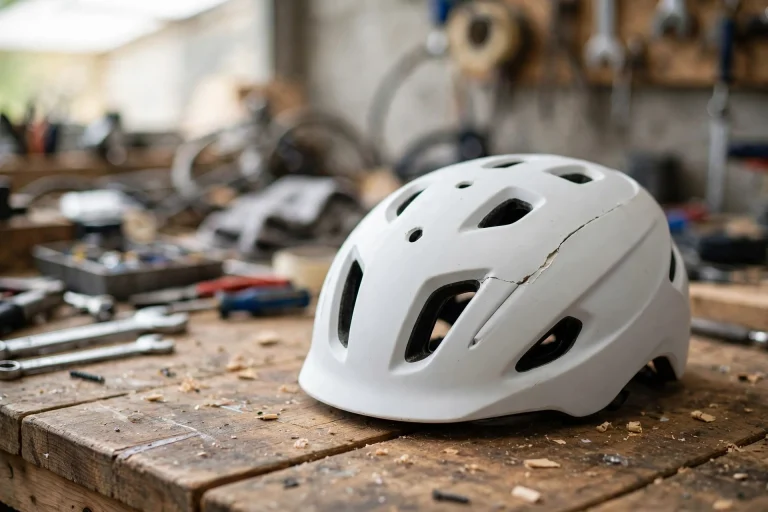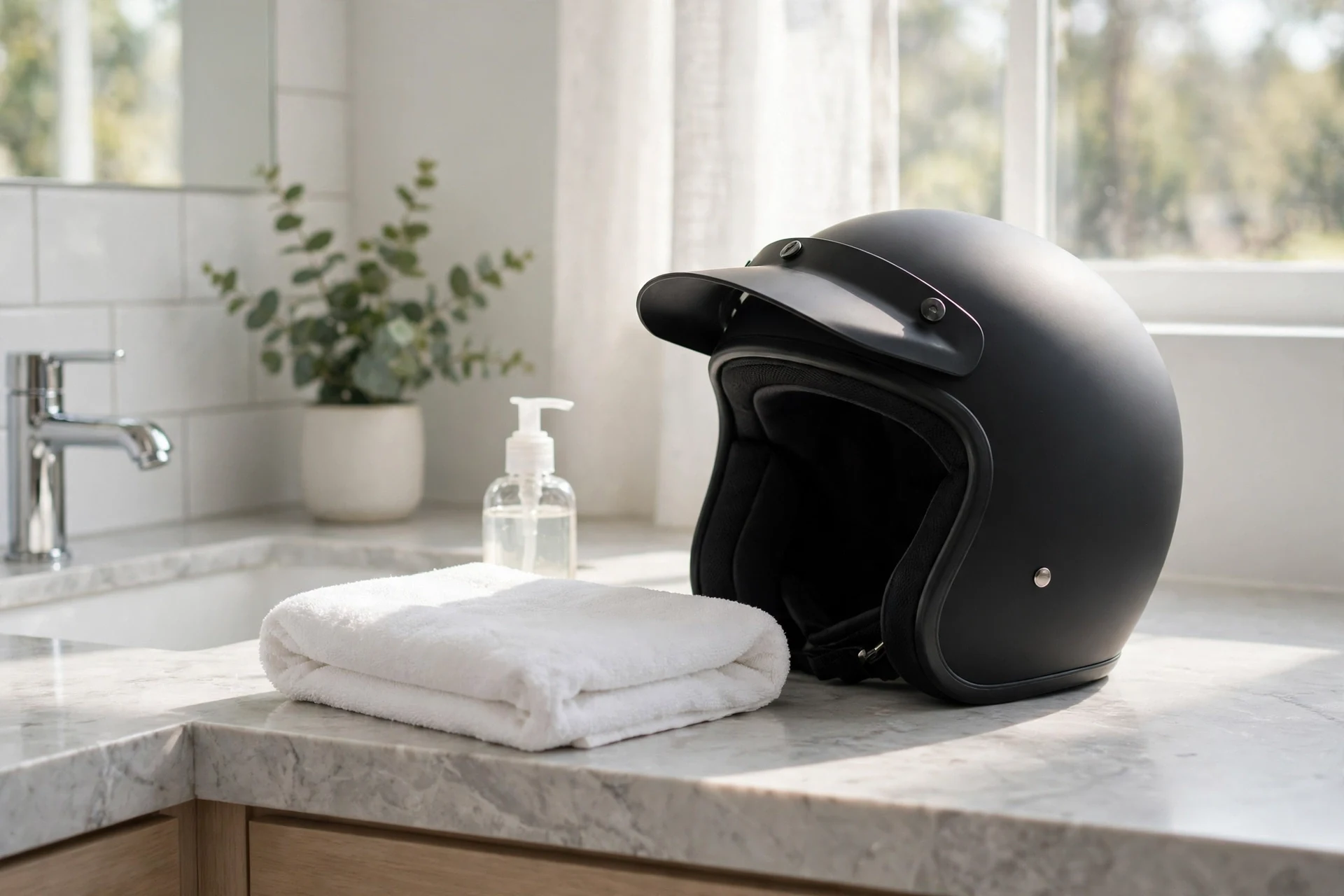
No, a helmet does not protect against ear infections, and in general terms a dirty or damp helmet can make ear irritation more likely rather than less. Ear infections are caused by germs and by conditions inside the ear, not by impacts, so a helmet shell cannot prevent them. What a helmet can do is trap sweat, warmth, and moisture around your ears, which is why keeping it clean and dry matters.
This is a common question because helmets sit close to the ears, and many riders notice ear discomfort after long rides. It is easy to assume the helmet is either protecting the ears or causing the problem. In general terms, the truth is in the middle: a helmet does not cause an infection on its own, but poor hygiene around the ears and a helmet that stays damp can create conditions where irritation is more likely. If you have ear pain, discharge, or hearing problems, see a clinician rather than trying to diagnose it yourself.
Can a helmet cause an ear infection?
A helmet does not directly cause an ear infection, but it can add to the conditions that make irritation more likely. When you ride, you sweat, and the pads and liner around your ears soak up that sweat. Warmth and moisture are the conditions germs like, and a helmet that is rarely cleaned can hold bacteria and fungi in the padding.
Ear infections themselves usually start inside the ear canal or the middle ear, often after water gets trapped in the ear, after a cold, or after the skin inside the ear is scratched. A helmet does not reach inside the ear, so it cannot start that process by itself.
Why can a dirty helmet irritate your ears?
The padding around your ears is in contact with your skin for hours at a time. Sweat, skin oils, sunscreen, and hair products all collect in that padding. Over time, the liner can develop a smell, and the surface can feel sticky or rough. That build-up can irritate the skin around the ears, especially if you have sensitive skin.
A damp helmet is worse than a dry one. If you put a helmet away wet after a ride, or store it in a closed bag, moisture stays trapped inside. That damp, warm space is where germs and mould can grow. The next time you wear the helmet, that growth is pressed against your skin and hair.
Scratches and small cuts around the ear can also let germs in. If your helmet fits badly and rubs the same spot every ride, it can chafe the skin behind the ear. A well-fitting helmet should sit snugly without pressing hard on any one point, and the straps should not dig in.
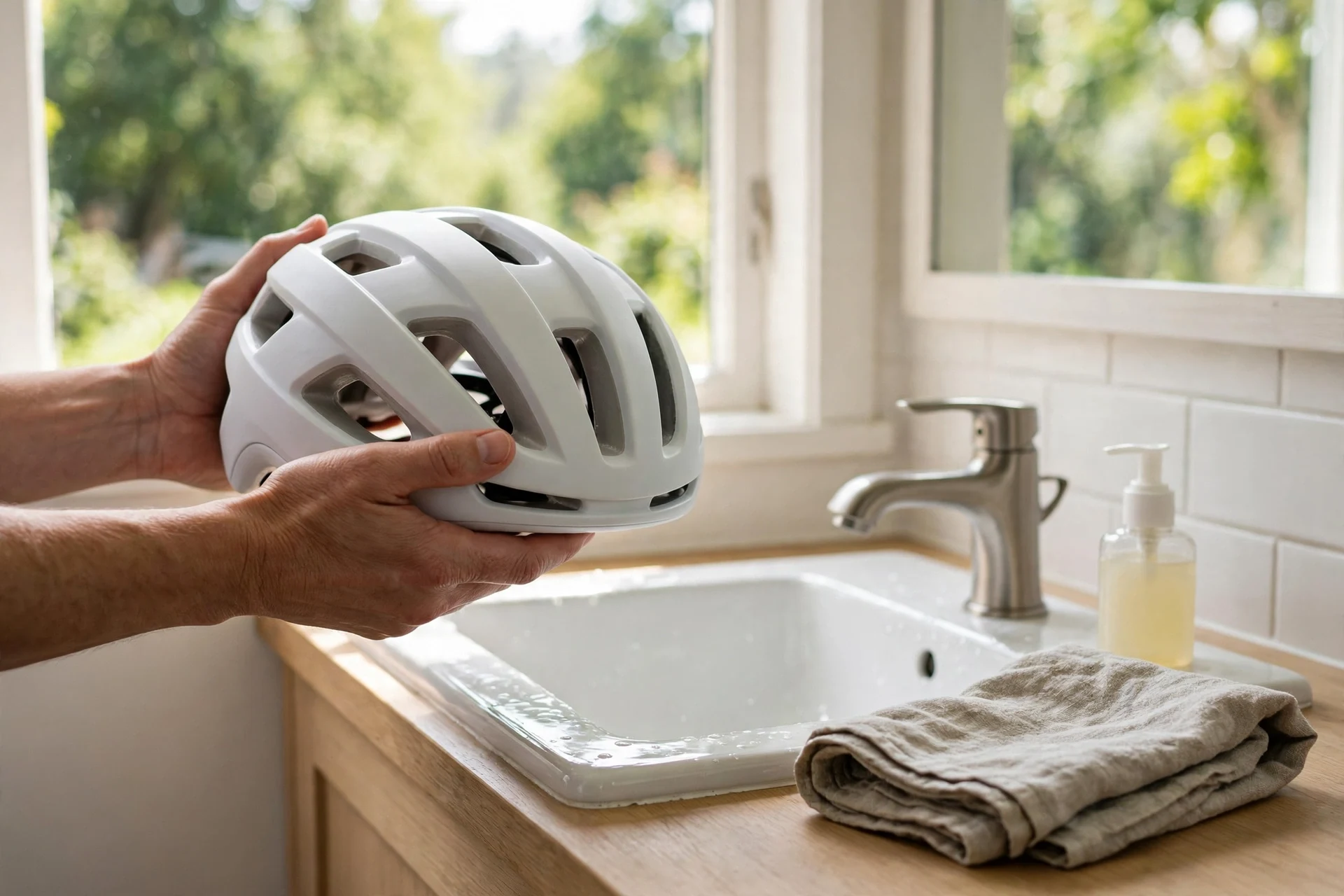
How should you clean the parts near your ears?
The ear pads and the liner around the ears need regular cleaning. Most helmets have a removable liner, and the ear pads can usually be taken out too. Check your helmet manual first, because some liners are hand-wash only and some can go in a washing machine on a gentle cycle.
Wash the liner with lukewarm water and a mild soap, rinse it well, and let it air-dry fully before you put it back. Do not use strong cleaners, bleach, or solvents, because these can damage the foam and irritate your skin. If the ear pads are not removable, wipe them gently with a damp cloth and mild soap, then let the helmet dry with the vents open.
Clean the shell and the straps as well, because sweat runs down from the liner onto the straps. Wipe the straps with a damp cloth, and check the buckles for a build-up of grime. Let everything dry completely before you store the helmet.
Can earbuds or earplugs under a helmet help?
Earbuds and earplugs do not protect against ear infections, and in some cases they can make ear problems more likely. Earbuds sit inside the ear canal, where they can trap moisture and push wax further in. If they are not cleaned, they can carry germs into the ear each time you use them.
Earplugs are a different case. Foam or silicone earplugs can protect your hearing from wind noise on long rides, which is a real benefit. But they also sit inside the ear, and dirty or worn earplugs can irritate the canal. If you use earplugs, use clean ones, replace foam plugs often, and wash reusable plugs after each use.
Some helmets have built-in speakers or communication systems, which avoid the need for earbuds. If you ride with sound, a helmet speaker system can be a cleaner option, because nothing sits inside your ear canal. Whatever you use, keep it clean and do not share earbuds or earplugs with other people.
What if your ears hurt after wearing a helmet?
Ear pain after a ride can have many causes, and a helmet is only one of them. Pressure from a tight helmet, a strap pressing on the ear, or a long ride in cold wind can all make ears ache. But ear pain can also be a sign of an infection or another ear problem, and only a clinician can tell the difference.
If the pain is mild and fades quickly after you take the helmet off, the cause may be pressure or fit. Check that the helmet sits level and that the straps are not pressing directly on your ears. A helmet that is too small can squeeze the sides of your head, and one that is too large can shift and rub.
If the pain lasts more than a day, if you notice discharge, swelling, or hearing loss, or if the pain keeps coming back, see a clinician.
How can you keep your helmet fresh between rides?
Good habits between rides make the biggest difference. After each ride, leave your helmet out in a ventilated spot with the vents open so it can dry. Do not put it straight into a closed bag or a sealed box while it is still damp with sweat.
Wipe the inside of the helmet with a clean, dry cloth after a hot or sweaty ride. This removes some of the moisture before it soaks into the liner. If your helmet has a removable liner, take it out to dry separately on warm days.
Store your helmet somewhere cool and dry, away from direct sunlight and damp. A helmet bag can protect it from dust, but only use the bag once the helmet is fully dry. Wash the liner regularly, especially in summer or if you ride every day. Some modern helmets use a slip layer similar to MIPS inside the shell; wipe it gently when you clean the liner. A clean, dry helmet is more comfortable, lasts longer, and is kinder to the skin around your ears.
Can wearing a helmet give you an ear infection?
No, a helmet does not directly cause an ear infection. But a dirty or damp helmet can irritate the skin around your ears, and trapped moisture can make ear problems more likely. Keep the liner clean and dry.
Should I see a doctor if my ears hurt after riding?
Yes, if the pain lasts more than a day, keeps coming back, or comes with discharge, swelling, or hearing loss, see a clinician. Ear problems need proper assessment, not guesswork.
How often should I clean the ear pads in my helmet?
In general terms, clean the ear pads and liner every few weeks if you ride regularly, and more often in hot weather or after sweaty rides. Wash them with mild soap and let them air-dry fully.

Olivia
Writer at Helmet Today, covering helmet reviews, fit and riding safety.