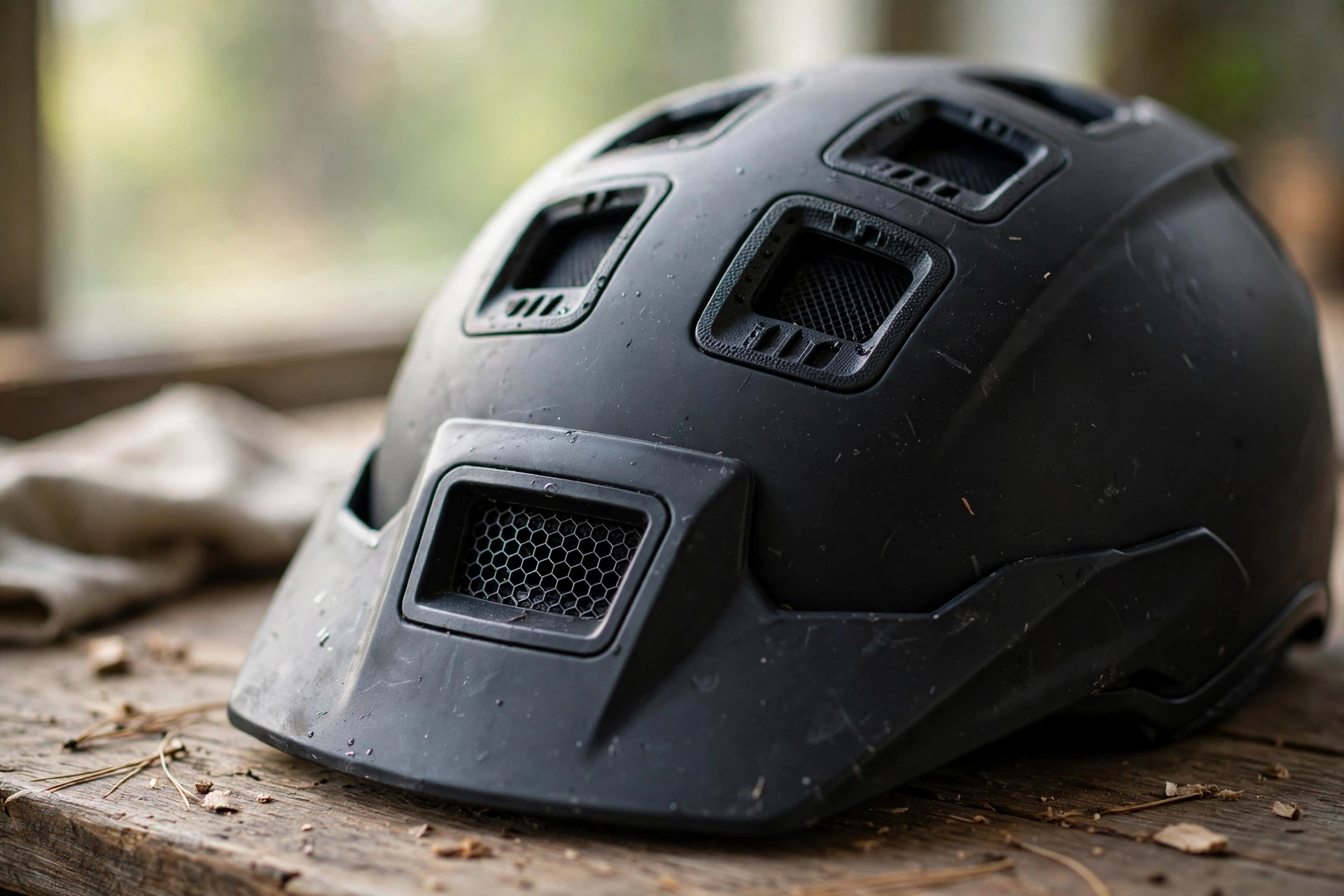
The trade-off between helmet vents and aerodynamics is simple: more vent openings mean better cooling but more drag and noise, while a smoother shell means less drag but a hotter head. In general terms, every vent is a hole in the helmet’s smooth surface, and air passing over it creates turbulence. The challenge for helmet makers — and for riders choosing a helmet — is finding the balance that suits the riding: enough airflow to stay cool, without giving up too much speed or quiet.
Vents exist for one reason: to keep the rider cool. Riding is physical work, and the head produces a great deal of heat. Without airflow through the helmet, sweat builds up, the lining gets damp, goggles and visors fog, and concentration drops. Aerodynamics exists for a different reason: to let the helmet slip through the air with as little resistance as possible. These two goals pull in opposite directions, and every helmet is a compromise between them. This guide explains how the trade-off works and how to choose the right balance for your riding.
How Do Vents Create Drag?
A smooth helmet shell lets air flow over it in an even stream, with little disturbance. A vent breaks that surface. As air passes over the opening, it dips into the hole, swirls around, and creates a small pocket of turbulence. Each vent adds a little drag, and a helmet with many large vents adds noticeably more drag than a smooth helmet with few vents.
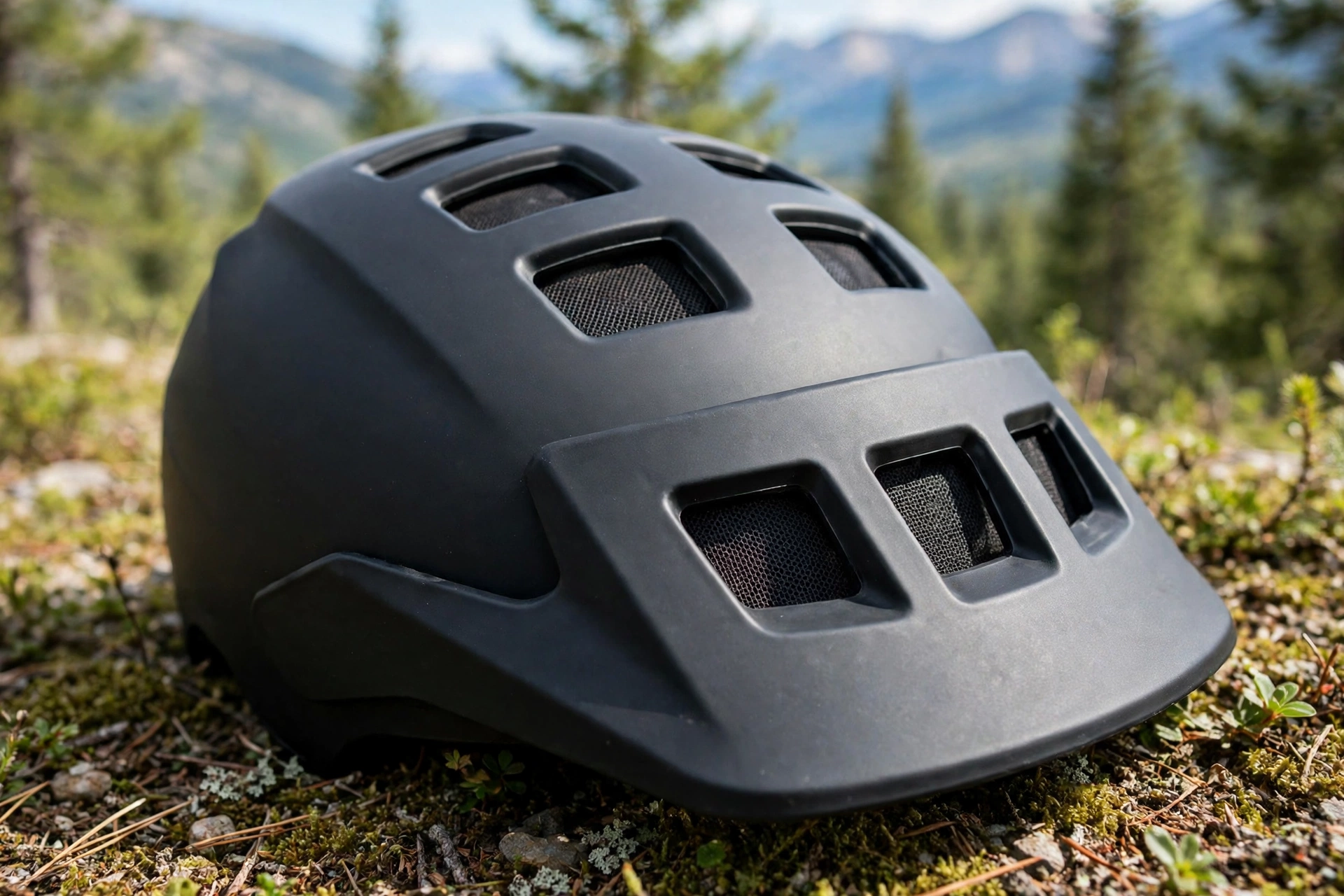
The shape of the vent matters. A vent with a sharp edge or a raised lip creates more turbulence than a vent with a smooth, rounded opening that sits flush with the shell. Some makers use internal channels that guide air through the helmet without a large external opening, which keeps the outer surface smoother. Others use mesh covers that keep out debris while letting air through, which also smooths the airflow.
Position matters too. Vents on the front of the helmet, where the air hits first and fastest, create more drag than vents on the sides or the rear. This is why many helmets have larger vents at the front for cooling, and smaller, carefully shaped exhausts at the rear. The front vents do the work of letting air in; the rear vents let it out without adding much drag.
How Much Cooling Do Vents Actually Provide?
Vents work by drawing air through the helmet as the rider moves. Cool air enters through the front vents, passes over the head through internal channels, and leaves through the rear exhausts, carrying heat and moisture with it. The faster the rider goes, the stronger this flow becomes. At high speed, even small vents can move a lot of air.
At low speed, the picture changes. When the rider is climbing slowly, waiting at a junction, or picking through a technical section, there is little airflow to drive the ventilation. In these conditions, the size and number of the vents matter more than their shape. Large, open vents let what little air there is pass through, while small vents can feel stuffy and hot.
Internal channels are just as important as the vents themselves. A helmet with large vents but no channels to guide the air will cool only the spots directly under the vents, leaving the rest of the head hot. A helmet with well-designed channels spreads the airflow across the whole head, so the cooling is even. When trying on a helmet, ask whether the vents connect to channels inside, or whether they are just holes in the shell.
How Do Vents Affect Wind Noise?
Vents are a common source of wind noise. Air rushing past an open vent creates a whistling or roaring sound, especially if the vent has a sharp edge or a loose cover. The noise is loudest when the vent is open at speed, and it usually drops when the vent is closed.
The noise depends on the vent’s design. A vent with a smooth internal channel and a cover that sits flush when closed adds little noise. A vent with a raised lip, a rattling cover, or a rough edge can whistle loudly. Some helmets let the rider adjust the vent opening in small steps, so the airflow can be tuned to the conditions — a little open for a little cooling, fully open for maximum airflow on a hot climb.
Noise and cooling are linked to the same trade-off as drag. A helmet with many large vents will be cooler but noisier; a smooth helmet with few vents will be quieter but hotter. Riders who value quiet — for example, touring riders on long motorway days — often choose fewer vents and accept a warmer head. Riders who value cooling — for example, off-road riders working hard at low speed — accept the extra noise.
How Do Different Types of Riding Change the Balance?
Motorcycle touring sits at the other end. Touring riders spend hours at steady speed in all weathers, so they need a helmet that is quiet and aerodynamic, with enough ventilation to stay comfortable. A touring helmet usually has a moderate number of vents, placed where they catch clean air, with covers that close flush. The balance is tilted towards quiet and smooth, with cooling as a secondary concern.
How Do You Choose the Right Balance for Your Riding?
Start by thinking about how you ride. If you ride fast on open roads in warm weather, you need strong ventilation and you can accept some drag. If you ride long distances at steady speed, you need a smooth, quiet helmet with moderate ventilation. If you ride off-road at low speed, you need maximum airflow and drag hardly matters. Match the helmet to the riding, not to the most extreme feature on the shelf.
Next, look for adjustability. A helmet with vents that can be opened and closed, or adjusted in steps, lets you change the balance as conditions change. Close the vents on a cold motorway morning for quiet and warmth; open them on a hot climb for cooling. An adjustable helmet is more versatile than one with fixed vents, and it suits riders who do more than one kind of riding. If you are learning about the safety technology inside the helmet itself, reading about what MIPS is for helmets can help you understand how modern helmets handle rotational forces in a crash.
Frequently Asked Questions
Q: Do more vents always mean a cooler helmet?
A: Not always. The size, position and internal channels matter as much as the number of vents. A helmet with a few well-placed vents and good channels can cool better than one with many vents and no channels.
Q: Can I close my vents to reduce drag and noise?
A: Yes, if your helmet has adjustable vents. Closing them makes the shell smoother, which reduces drag and noise, but it also reduces cooling. Open them again when you need airflow.
Q: Are vented helmets weaker than smooth helmets?
A: In general terms, no. Vents are designed into the shell and the helmet is tested to the same standards. A vented helmet that meets the right standard protects just as well as a smooth one.

Olivia
Writer at Helmet Today, covering helmet reviews, fit and riding safety.