Yes, helmet aerodynamics matter in ski racing — a smooth, close-fitting helmet with a well-shaped visor can cut drag and help a racer hold speed down the course, especially in downhill and super-G, where racers spend a long time at high speed in a tucked position. The gain from any single piece of kit is small, but ski racing is decided by tiny margins, so racers pay close attention to anything that shapes the airflow around their head.
In ski racing, the helmet is part of a system that includes the suit, the boots, and the tucked position the racer holds for much of the run. The head sits at the front of that system, so the shape of the helmet affects how cleanly the air flows over the whole body. This guide explains how ski racing helmets are shaped, why the visor matters, and what the trade-offs are.
How Does a Ski Racing Helmet Reduce Drag?
A ski racing helmet is smooth, hard, and close-fitting, with very few openings on the outside. The shell is shaped to let air flow over the top and sides without catching, and it tapers gently towards the back so the airflow can close behind the head rather than tumbling into a wake. In general terms, the smoother the surface, the less the air is disturbed as it passes.
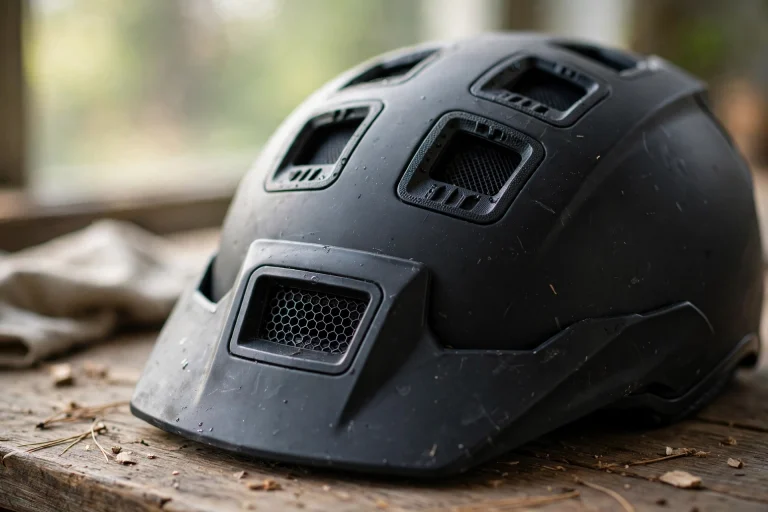
Many racing helmets have few or no vents on the outside, or vents that can be closed. This is different from a recreational ski helmet, which often has open vents for cooling on a long day on the slopes. A racer only wears the helmet for a short, intense run, so cooling matters less than a clean shape, and the lack of vents helps keep the surface smooth.
Why Does the Visor Matter for Aerodynamics?
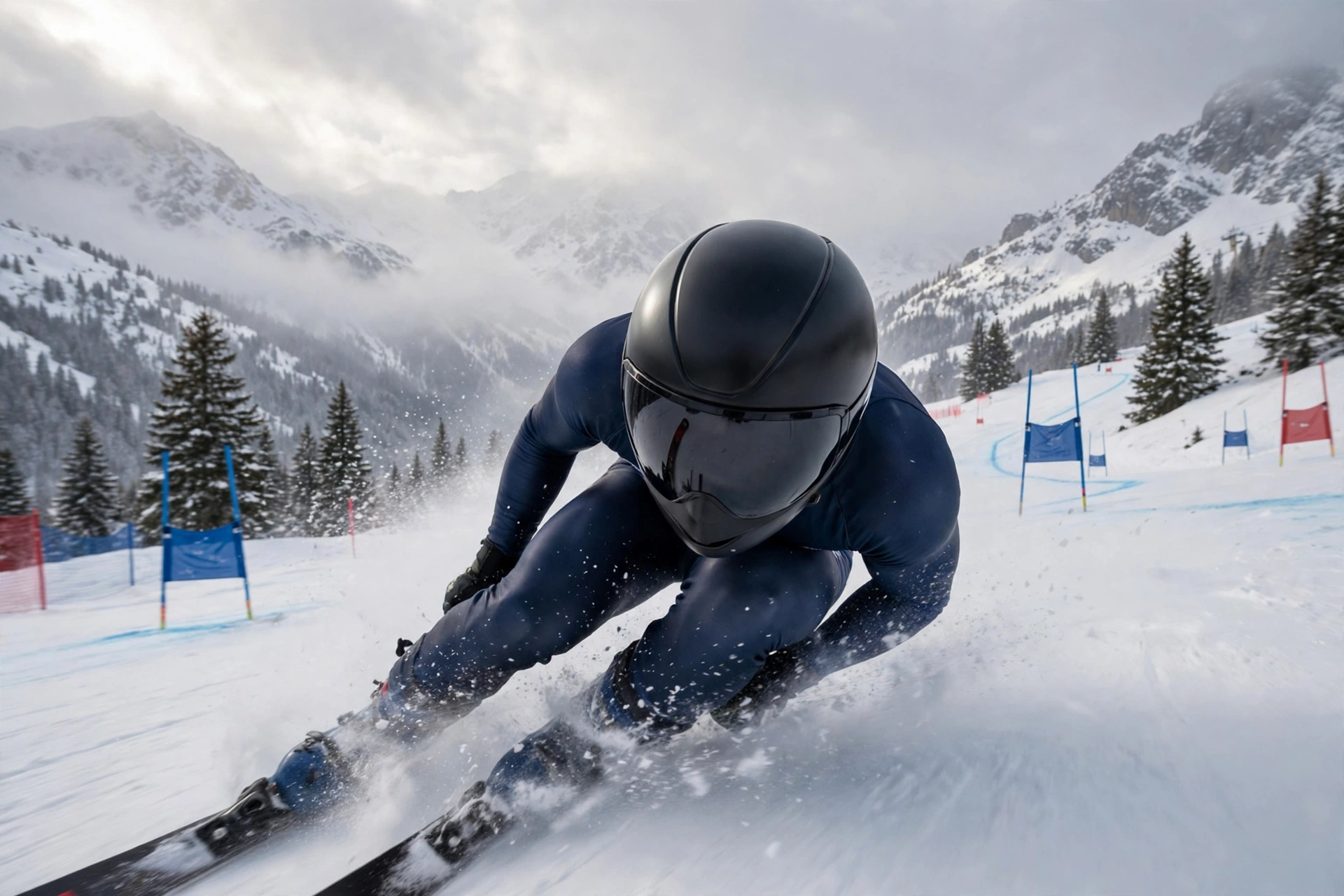
The visor on a ski racing helmet is part of the aerodynamic shape, not just a shield for the eyes. A visor that sits close to the face and curves smoothly into the shell presents a clean surface to the wind, while a visor that sticks out or sits at an angle can catch the air and create drag. In general terms, the best racing visors blend into the helmet shape.
The visor also protects the eyes from wind, snow spray, and cold air at high speed. Without it, a racer’s eyes would water constantly, and that would make it hard to read the course ahead. A clear view matters as much as low drag, because a racer who cannot see the next gate clearly will lose far more time than a smooth helmet can save.
Visors come in different tints for different light conditions. A clear visor suits dull days and flat light, while a tinted visor can cut glare on a bright, sunny day. Racers choose the tint that gives them the clearest view of the snow, because reading the surface — the bumps, the ice, and the ruts — is part of skiing the course well.
How Does the Tucked Position Change What the Helmet Does?
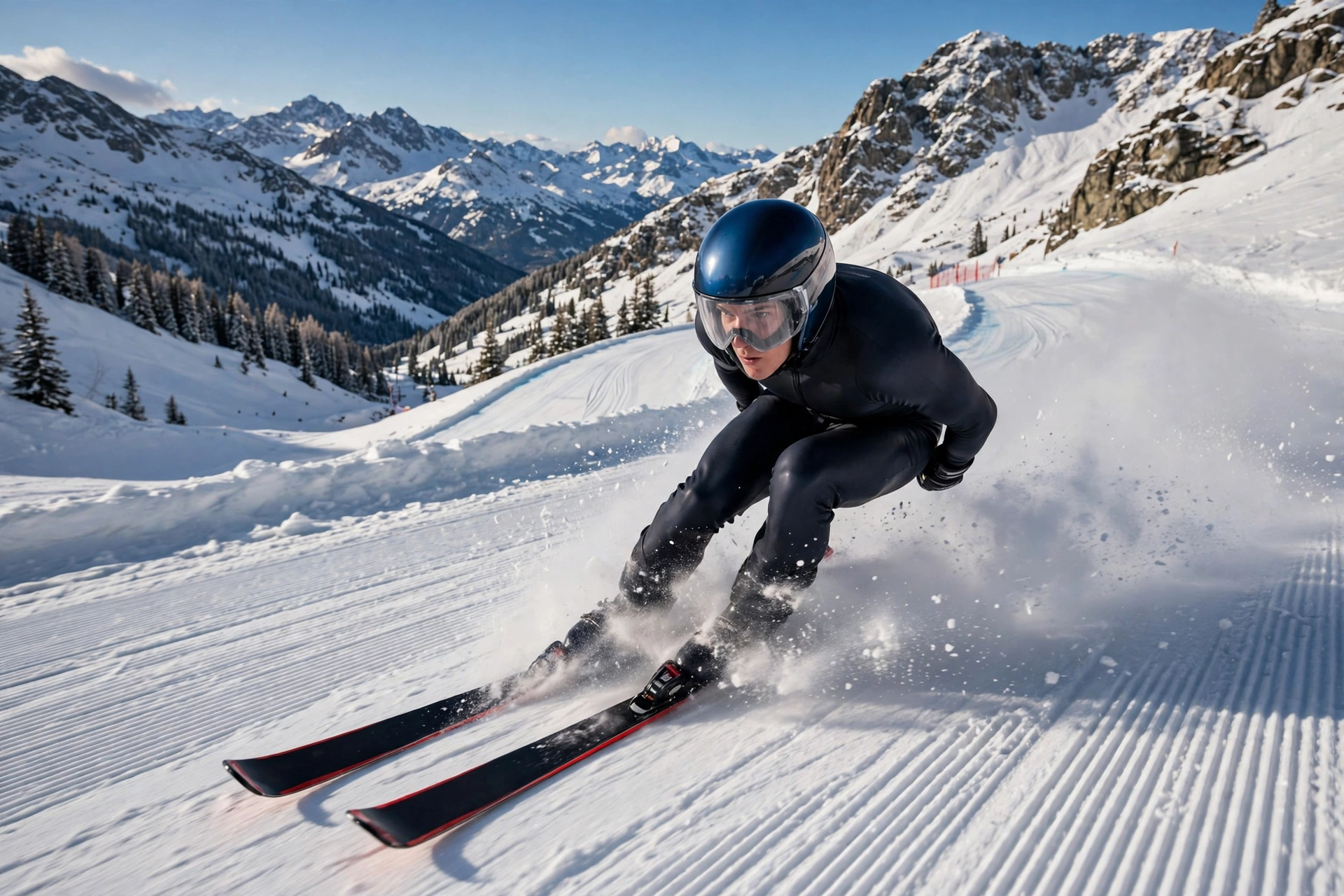
In downhill and super-G, racers spend much of the run in a tuck: knees bent, back low, hands forward, and head held just high enough to see the course. In that position, the top and back of the helmet face the wind, and the shape of the crown matters more than the shape of the front. A helmet that is smooth over the top and tapers at the back helps the air flow over the racer’s head and down their back.
The tucked position also means the helmet works together with the suit and the shoulders. If the helmet sits too high or too far forward, it can break up the airflow over the shoulders and create a larger wake behind the racer. A helmet that sits low and close, with a shape that lines up with the shoulders, helps the whole body present a smaller, smoother shape to the wind.
In slalom and giant slalom, racers tuck less and turn more, so the helmet spends more time moving through turns and changing angle. In those events, a helmet that is stable and does not shift during quick head movements matters a great deal. The aerodynamic gain is smaller than in downhill, but a helmet that stays put lets the racer focus on the gates rather than on their kit.
What Is the Difference Between a Racing Helmet and a Recreational Ski Helmet?
A racing helmet is built for speed and a snug, precise fit, while a recreational ski helmet is built for comfort, warmth, and ventilation over a full day on the slopes. Racing helmets often have a harder shell, fewer vents, and a visor fitted as part of the helmet, while recreational helmets usually have open vents, softer ear pads, and room for goggles rather than a fixed visor.
Recreational helmets also tend to be a little roomier, so they feel comfortable for hours, and they often have features such as adjustable ventilation and removable liners that racers do not need. A racing helmet, by contrast, is worn for a short run and then taken off, so a firm, close fit is acceptable and even welcome.
That does not mean a recreational skier should buy a racing helmet. The snug fit and lack of vents can feel hot and uncomfortable on a long day, and the fixed visor may not suit every face shape or pair of goggles. Choose the helmet that matches how you actually ski, not the one that looks fastest on television.
What Should You Look for in a Ski Racing Helmet?
Fit comes first. A ski racing helmet should sit level, feel snug all round, and stay put when you shake your head. It should not press hard on your forehead or temples, and the visor should sit comfortably in front of your eyes without fogging up too quickly. Because the helmet is worn for short, intense runs, a firm fit matters more than plush comfort.
Next, check the visor. It should be clear, scratch-free, and easy to see through in the conditions you will race in. Some helmets allow the visor to be swapped for a different tint, which is useful if you race in changing light. Also check the strap and the chin guard if your helmet has one: both should fasten securely and hold the helmet firmly in place.
If you are learning about how helmets handle different kinds of impact, reading about what MIPS is for helmets can help you understand one of the technologies used in modern helmet design. As with any helmet, make sure it meets the standard required by your race organisation before you buy.
Frequently Asked Questions
Q: Does a ski racing helmet make a noticeable difference to speed?
A: In general terms, the gain is small but real at high speed. A smooth helmet and visor can reduce drag, but technique, line choice, and the tuck matter far more than the helmet alone.
Q: Can I use a ski racing helmet for recreational skiing?
A: You can, but it may feel hot and very snug over a full day. A recreational helmet with vents and room for goggles is usually more comfortable for all-day skiing.
Q: Why do some ski racers wear a chin guard?
A: In slalom, racers often brush the gates with their hands and face, so a chin guard protects the chin and jaw. It is part of the racing setup rather than an aerodynamic feature.

Olivia
Writer at Helmet Today, covering helmet reviews, fit and riding safety.