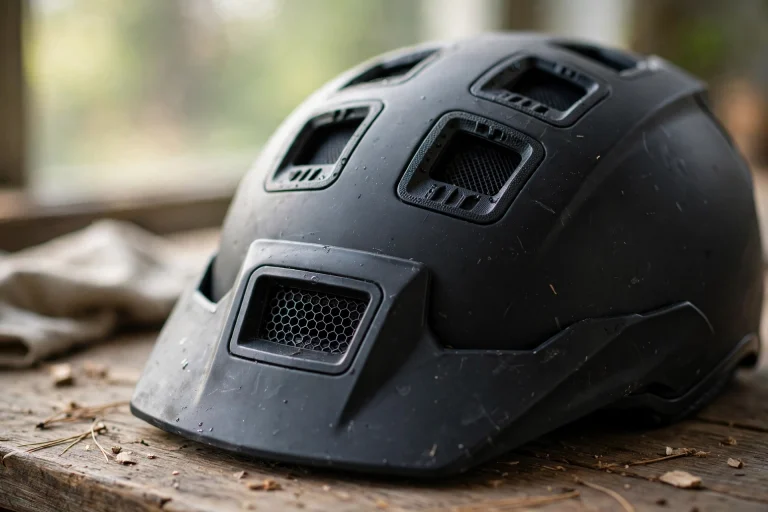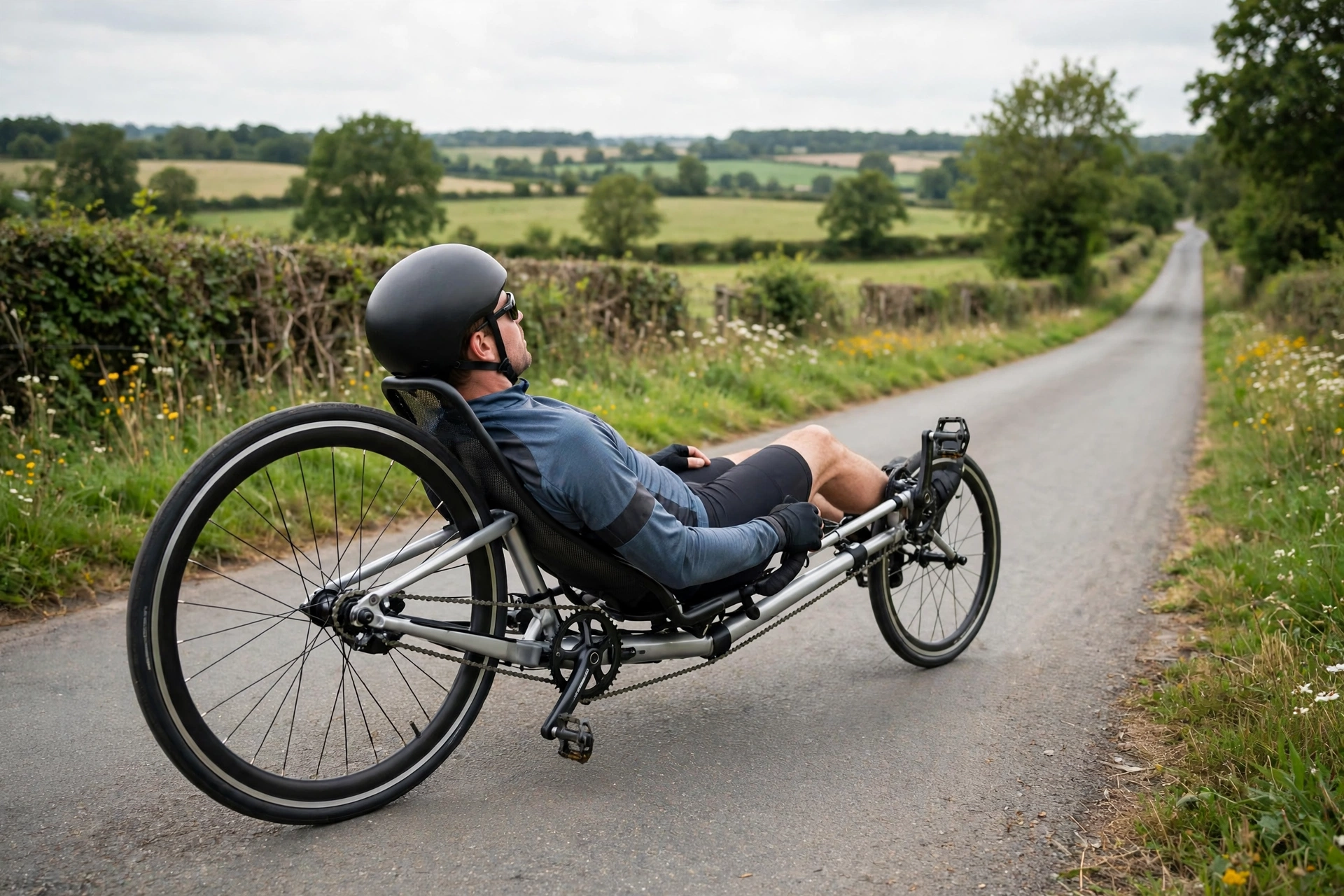
Yes, helmet aerodynamics work differently for recumbent riders — because you ride lying back with your head held higher than your chest, the airflow meets your helmet from a different angle, so a helmet that is fast on an upright bike may not be the best choice on a recumbent. The laid-back position changes which part of the helmet faces the wind, how the air flows over your body, and where wind noise comes from.
Recumbent bikes and trikes put the rider in a reclined seat, with the legs out in front and the head resting against a headrest or held just above it. That position is already more aerodynamic than sitting upright, because the body presents a smaller area to the wind. This guide explains how that position changes helmet choice, and what recumbent riders should look for.
How Does the Recumbent Position Change Airflow Around the Helmet?
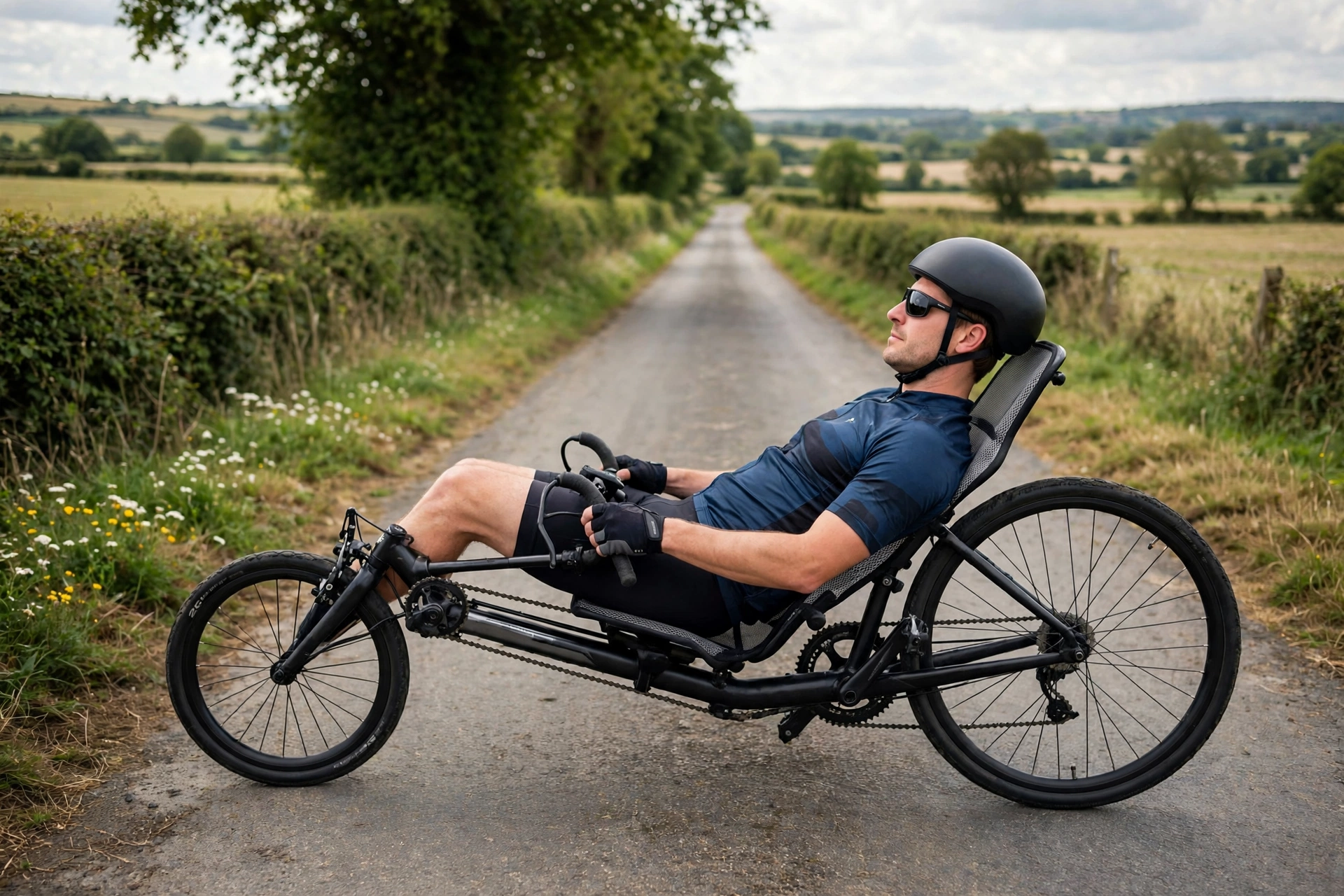
On an upright bike, the rider leans forward and the top of the helmet faces the wind. On a recumbent, the rider lies back, so the front and the underside of the helmet can face the wind instead. Air that would flow smoothly over the crown of an upright rider’s helmet may hit the front of a recumbent rider’s helmet first, and that changes how drag is created.
The headrest matters too. Many recumbents have a headrest that supports the back of the head, and the helmet sits just in front of it. If the helmet is very long at the back, it can press against the headrest or push the head forward, which is uncomfortable and can change the airflow. A shorter, more compact helmet often sits better against a headrest than a long-tailed aero helmet.
In general terms, the recumbent position already gives a large aerodynamic gain from the body position alone, so the helmet is a smaller part of the total drag than it is for an upright rider. That means comfort, cooling, and a good fit with the headrest often matter more than chasing the most aerodynamic helmet shape.
What Helmet Shape Suits a Recumbent Rider Best?
In general terms, a compact, rounded road helmet suits most recumbent riders well. The rounded shape is smooth from several angles, not just from the front, so it copes better with the changed airflow of the reclined position. A helmet with a very long tail, designed for a tucked racing position, can feel awkward on a recumbent and may catch the headrest.
Vents matter as well. Because a recumbent rider lies back, the head is often more exposed to the sun, and the helmet can feel hot on a warm day. A helmet with good airflow through the front vents helps keep the head cool, and the reclined position does not reduce that cooling much, because the vents still face into the wind.
Fit is especially important on a recumbent. The helmet should sit level and stable when your head is resting back, not just when you are sitting upright. Try the helmet on while seated in your riding position, if you can, and check that it does not rock forward or press on the back of your head against the headrest. A helmet that feels fine standing up can feel different when you lie back.
Does a Visor or Peak Help or Hurt on a Recumbent?
A peak or visor can be useful on a recumbent, because the reclined position leaves the face more exposed to the sun and to rain. A small peak can shade the eyes and keep rain off the face, which is welcome on a long ride. But a large peak can also catch the wind from below, because the airflow meets the helmet at a different angle than on an upright bike.
In general terms, a short, low peak is a better compromise than a long, wide one. It gives some shade without acting like a sail, and it is less likely to lift the front of the helmet in a gust. Some recumbent riders prefer a helmet without a peak and use sunglasses and sunscreen instead, which keeps the helmet shape as smooth as possible.
If your helmet has a removable peak, try riding with it on and off to see which feels better. Pay attention to wind noise as well as drag: a peak that whistles or buffets in the wind can be tiring on a long ride, even if the drag itself is small. Comfort over hours matters more than a tiny change in speed.
How Do You Reduce Wind Noise on a Recumbent?
Wind noise is a common complaint for recumbent riders, because the ears sit close to the airflow and the helmet straps can channel wind past them. A helmet that fits snugly, with straps that sit flat against the head rather than flapping loose, tends to be quieter. Some riders find that a helmet with ear covers or a close-fitting shape reduces noise, though it can also run warmer.
The headrest can also affect noise. If the helmet touches the headrest, vibrations can travel through the helmet and make the ride feel noisier. Check that there is a small gap, or that the contact is soft and stable, rather than a hard edge pressing against the shell. Adjusting the headrest angle slightly can sometimes make a big difference.
Ear plugs designed for cycling can help on long, fast rides, but make sure you can still hear traffic and other road users. In general terms, the goal is to reduce the roar of the wind without losing the sounds you need for safety. Try any change on a quiet road first, before you use it in traffic.
What Should Recumbent Riders Check Before Choosing a Helmet?
Start with the headrest. Sit on your recumbent in your normal riding position, wearing the helmet, and check that the back of the helmet clears the headrest without pushing your head forward. Then check the fit: the helmet should sit level, feel snug, and stay put when you shake your head gently from side to side.
Next, think about cooling and sun protection. A helmet with good vents will keep you comfortable on warm days, and a light-coloured shell can feel cooler in strong sun. If you ride in rain, check that the vents do not let too much water in, or consider a helmet cover for wet days.
If you are learning about how helmets handle different kinds of impact, reading about what MIPS is for helmets can help you understand one of the technologies used in modern helmet design. As with any helmet, protection and a comfortable, stable fit should come before aerodynamics.
Frequently Asked Questions
Q: Is an aero time trial helmet a good choice for a recumbent?
A: In general terms, no. The long tail is shaped for a tucked upright position and can press against the headrest on a recumbent. A compact rounded helmet usually fits better.
Q: Why is wind noise louder on a recumbent?
A: The reclined position puts your ears closer to the airflow, and the straps can channel wind past them. A snug fit with flat straps usually helps reduce the noise.
Q: Does helmet aerodynamics matter less on a recumbent?
A: In general terms, yes. The reclined body position already cuts drag a great deal, so the helmet is a smaller share of total drag — comfort and headrest fit matter more.

Olivia
Writer at Helmet Today, covering helmet reviews, fit and riding safety.