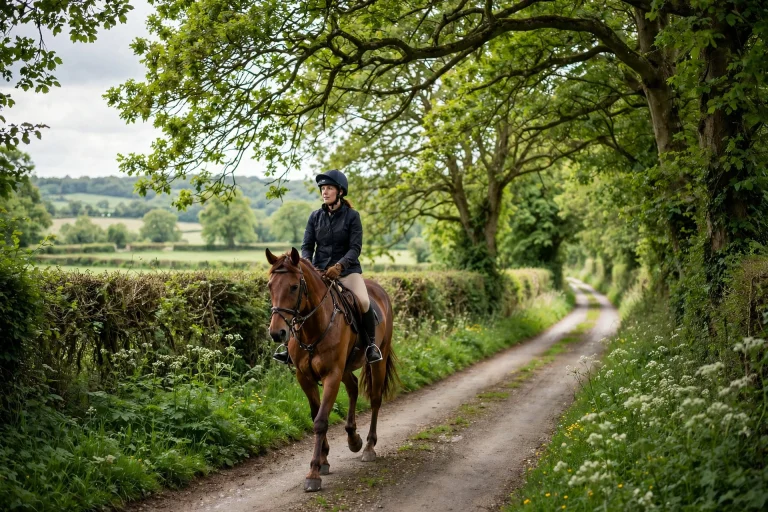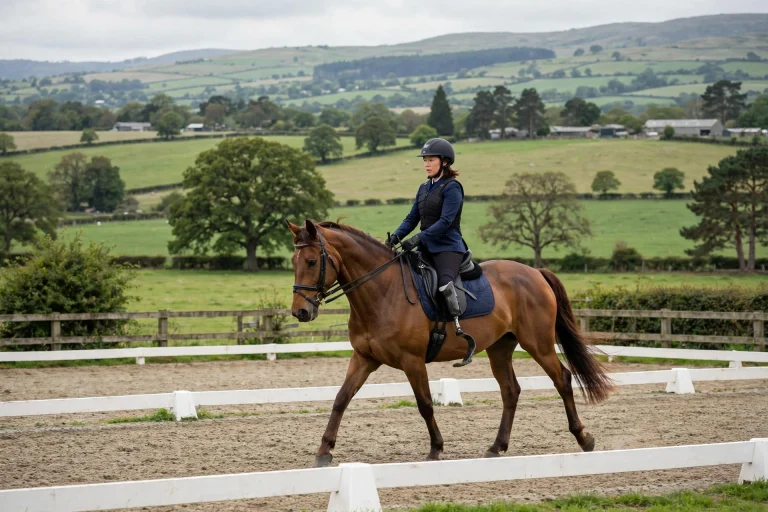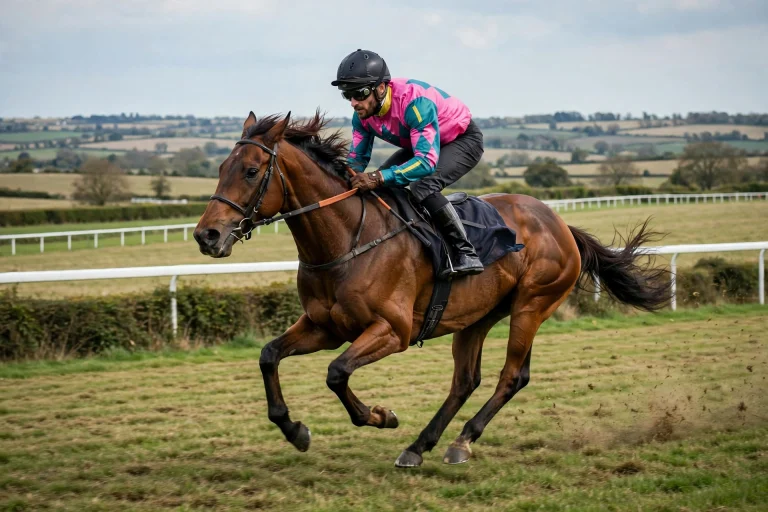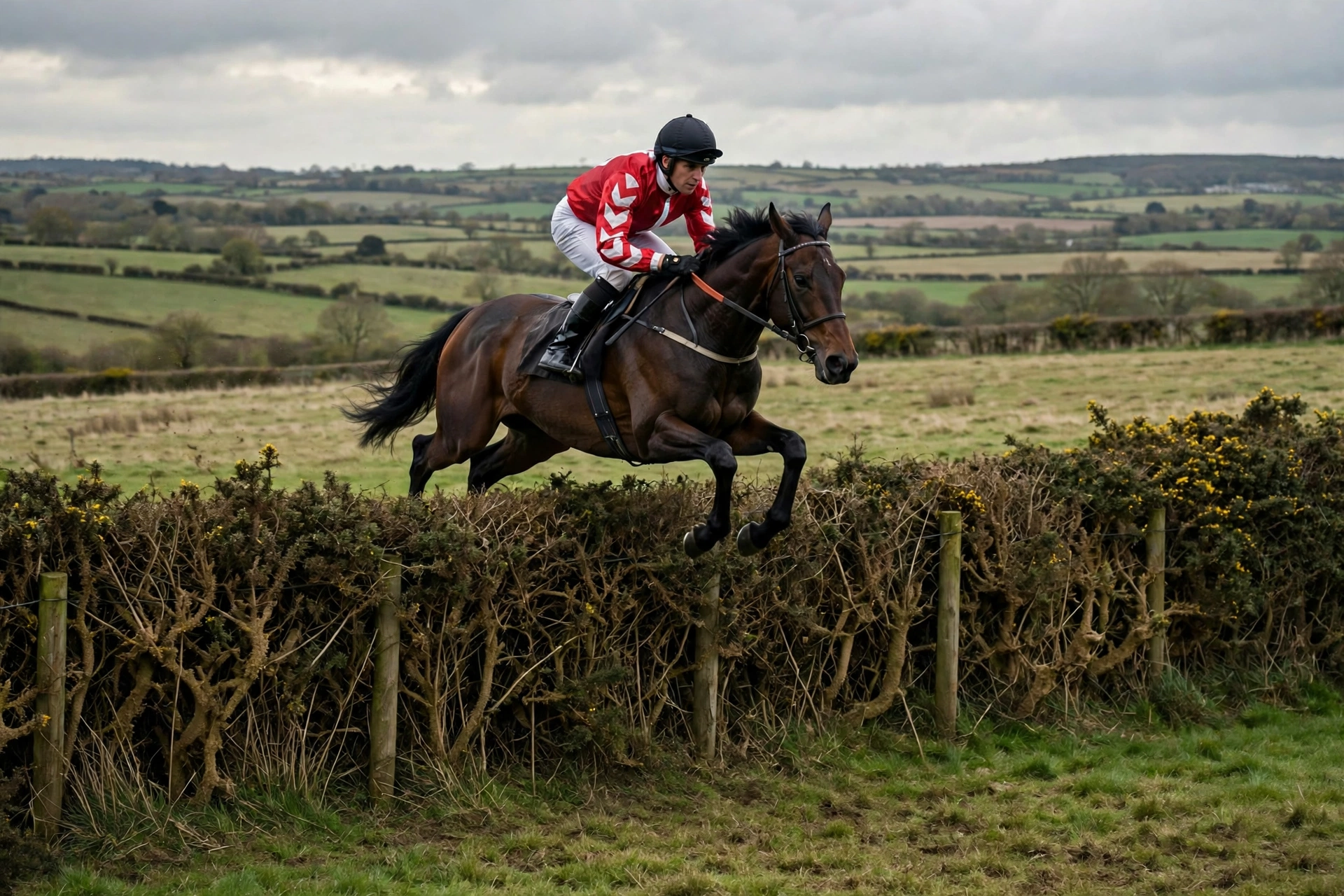
A steeplechase helmet is a jockey’s skull cap helmet, worn for steeplechase racing over fences, where horses jump large, fixed fences at speed over a long distance. It is the same kind of close-fitting, peakless helmet worn in flat racing, covered by a silk in the owner’s colours. The difference is in the race itself: steeplechase is longer, the fences are bigger, and the risk of a fall is higher, so the helmet is even more important.
Steeplechase racing, also called jump racing in some countries, takes place over a course of fences, ditches, and water jumps. A race can last for several minutes and cover a long distance, with the horse jumping many fences along the way. The jockey rides in a crouched position, as in flat racing, but must also balance over each fence and cope with a horse that may peck on landing or lose its footing.
What Is Steeplechase Racing?
Steeplechase racing began as a race from one church steeple to another, across country, and it still keeps that cross-country feel. The modern race is run on a racecourse, over a set course of fences that are larger and more solid than the hurdles used in hurdle racing. The fences may be made of birch, brush, or other material, and they do not fall down easily, so a horse that hits a fence hard may fall.
The races are longer than flat races, and the pace is different. The horse and jockey must keep going over many fences, saving energy for the finish while still jumping cleanly. The jockey must judge the pace, pick a line to each fence, and stay balanced on landing. It is a demanding test for both horse and rider, and falls are a known part of the sport.
What Does a Steeplechase Helmet Look Like?
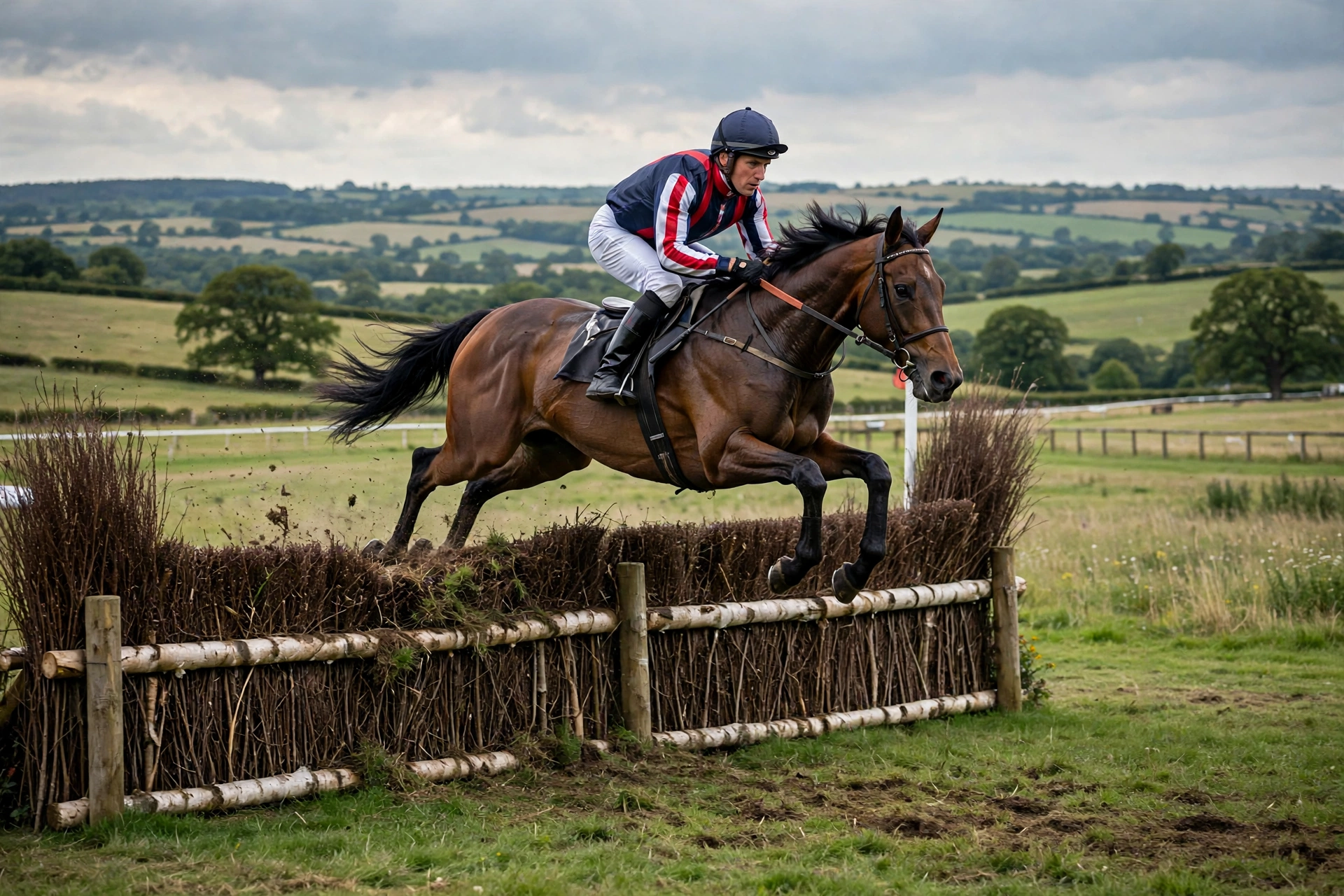
A steeplechase helmet looks just like a flat racing helmet: a smooth, low-profile skull cap with no fixed peak, worn under a silk cap in the owner’s colours. The shell sits close to the head, the lining holds it firmly in place, and the slim harness fastens under the chin. The silk gives the rider’s colours, and its small, soft peak gives a little shade.
The helmet is light, because weight matters in racing and because the race is long. A heavy helmet would tire the rider’s neck over several minutes of jumping, and it would be harder to wear in the crouched position. Ventilation also matters, because the rider is working hard for a long time, and a helmet with a washable lining is easier to keep fresh between race days.
In general terms, there is no separate steeplechase helmet design. The same skull cap is used for flat racing, hurdle racing, and steeplechase racing, as long as it meets the standard required by the racing authority. What changes is the race, not the helmet, and the helmet must be in good condition and fitted well for every race.
Why Is a Helmet So Important in Steeplechase?
A fall in steeplechase can happen at speed and over a solid fence. The horse may fall on landing, the jockey may be thrown forward over the fence, or the horse may slip on the ground after a fence. In each case the jockey may hit the ground hard, and may also be at risk from the horse or from other horses following behind. A helmet helps protect the head in that impact.
The fences in steeplechase are solid, so they do not give way when a horse hits them. That makes the fall different from a fall over a show jumping fence, which usually falls down. A jockey who falls at a steeplechase fence may land on hard ground, on the fence itself, or in front of the next horse. For that reason, jockeys also wear a body protector, and the helmet and body protector are checked together as part of the race-day kit.
Steeplechase jockeys also ride in all weather, over ground that can be soft, heavy, or firm. Wet ground can be slippery on landing, and firm ground can be hard to fall on. The helmet is worn for every race, for schooling over fences, and for fast work on the gallops, because the risk is present in training as well as in racing.
What Standards Apply to Steeplechase Helmets?
Steeplechase helmets must meet the standard set by the racing authority in the country where the jockey rides. The standard is the same as for other forms of racing, and the helmet is checked before racing. The label inside the helmet shows which standard it meets, and the racing authority may keep a list of approved helmets. A helmet that does not meet the required standard cannot be used in a race.
The rules can change over time, as new standards are introduced and old ones are phased out. Jockeys, trainers, and owners need to keep up with the current rules, because a helmet that was accepted last season may not be accepted this season. Checking the racing authority’s current list before buying a new helmet is the safest way to avoid a problem on race day.
If you are learning about how helmets handle different kinds of impact, reading about what MIPS is for helmets can help you understand one of the technologies used in modern helmet design. Some skull caps include this kind of system, and knowing about it can help when comparing helmets for jump racing.
How Do You Care for a Steeplechase Helmet?
Store the helmet in a cool, dry place, in a helmet bag, away from sunlight and heat. Do not leave it in a hot car or in a damp changing room, and keep the silk cap clean and dry. Wash the silk according to its care label, and keep a spare silk in case one is damaged or dirty on race day.
Clean the helmet shell gently with a soft, damp cloth, and let it dry naturally. If the lining is removable, wash it according to the maker’s instructions and let it dry fully before you put it back. Do not use harsh cleaners, and do not put the helmet in a washing machine. Check the strap and buckle regularly to make sure they still fasten firmly.
After any fall, have the helmet checked and, in general terms, replace it, even if the damage is not visible. The liner inside can be damaged in ways you cannot see, and a damaged liner may not protect as well in a second fall. Check the shell for cracks or dents before every race day, and replace the helmet if you find any damage.
Frequently Asked Questions
Q: Is a steeplechase helmet different from a flat racing helmet?
A: In general terms, no. The same skull cap helmet is used for flat racing and steeplechase, as long as it meets the racing authority’s standard and fits well.
Q: Why do steeplechase jockeys wear a body protector as well as a helmet?
A: The body protector helps protect the chest and back in a fall, while the helmet protects the head. Both are part of the standard kit for jump racing, where falls over solid fences are a known risk.
Q: Can a steeplechase helmet be used for everyday riding?
A: In general terms, a skull cap can be worn for everyday riding, but most riders prefer a helmet with a fixed peak for hacking and schooling. Check the rules for your riding school or club before you use it.

Olivia
Writer at Helmet Today, covering helmet reviews, fit and riding safety.