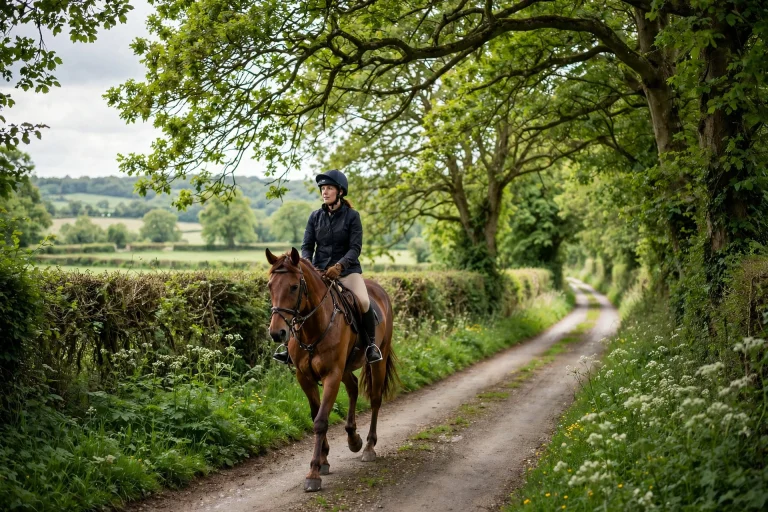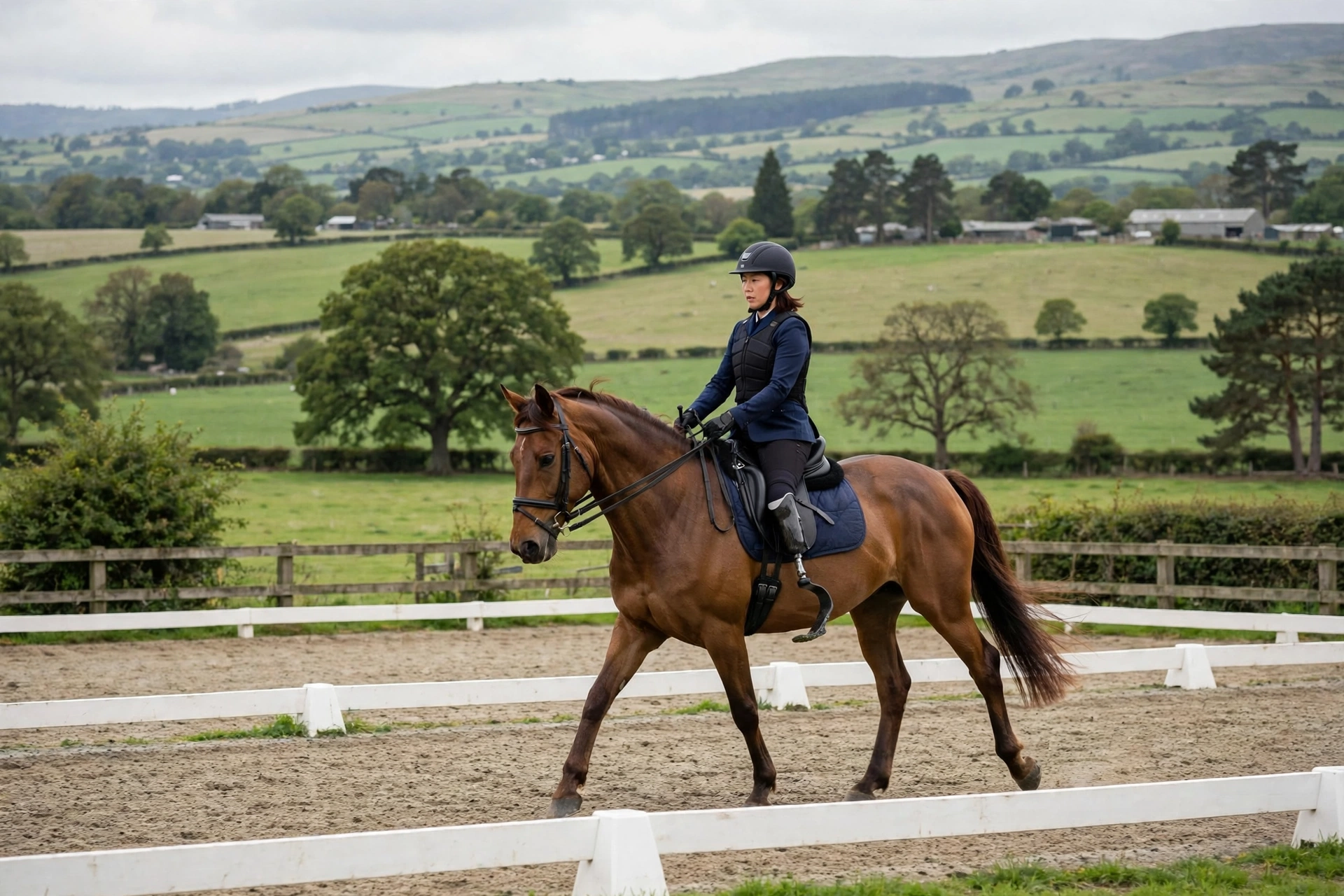
A para-equestrian helmet is a standard riding helmet worn by a para-equestrian rider, a rider with a physical impairment who competes in dressage or other equestrian sport under para rules. It is not a different kind of helmet in most cases. It has the same hard shell, liner, and chin strap as any riding helmet, but it is chosen with the rider’s individual needs in mind, so that it fits well, stays in place, and can be put on and fastened comfortably.
Para-equestrian sport includes dressage, and in some programmes driving and other disciplines as well. Riders are graded according to their impairment, so that riders with similar levels of function compete together. The riding itself follows the same principles as any dressage test: the horse and rider work through a set pattern of movements, judged on accuracy, balance, and harmony. The helmet is worn for every test, for warm-up, and for training.
What Is Para-Equestrian Riding?
Para-equestrian riding is equestrian sport for riders with a physical impairment. That may include riders who use a wheelchair, riders with a limb difference, riders with reduced strength or coordination, or riders with a visual impairment. Each rider is classified by a system that looks at how their impairment affects their riding, and they compete in a grade that matches their function.
The horses are trained to suit the rider, and the rider may use adapted equipment, such as a different saddle, adapted reins, or a whip held in a different way. The rules allow for these adaptations, so that the rider can ride safely and effectively. The helmet rules, though, are the same as for other riders: a helmet that meets the required standard, fitted well, and fastened for every ride.
How Do Para Riders Choose a Helmet?
Fit is the first thing to check, and it matters even more when a rider has limited movement or strength. A helmet should sit level, feel snug all round, and stay in place when the rider turns their head or moves in the saddle. It should not press hard on one spot, and it should not need constant adjustment during a ride. A rider who cannot easily reach up to adjust a helmet needs one that stays put on its own.
Ease of fastening is the second thing to check. Some riders have reduced grip or limited use of one hand, so a buckle that is easy to fasten and unfasten with one hand, or a fitting dial that can be turned easily, can make a real difference. A helmet with a simple, smooth buckle and a strap that does not twist is easier to use, and a helper or groom can also fasten it if needed.
Weight and comfort come next. A light helmet is easier to wear for a long test or a training session, and a soft, washable lining helps the helmet feel comfortable against the skin. Some riders wear a helmet with extra padding in one area to suit their head shape, and a fitter or instructor can help with that. The goal is a helmet that feels like part of the turnout, not a distraction.
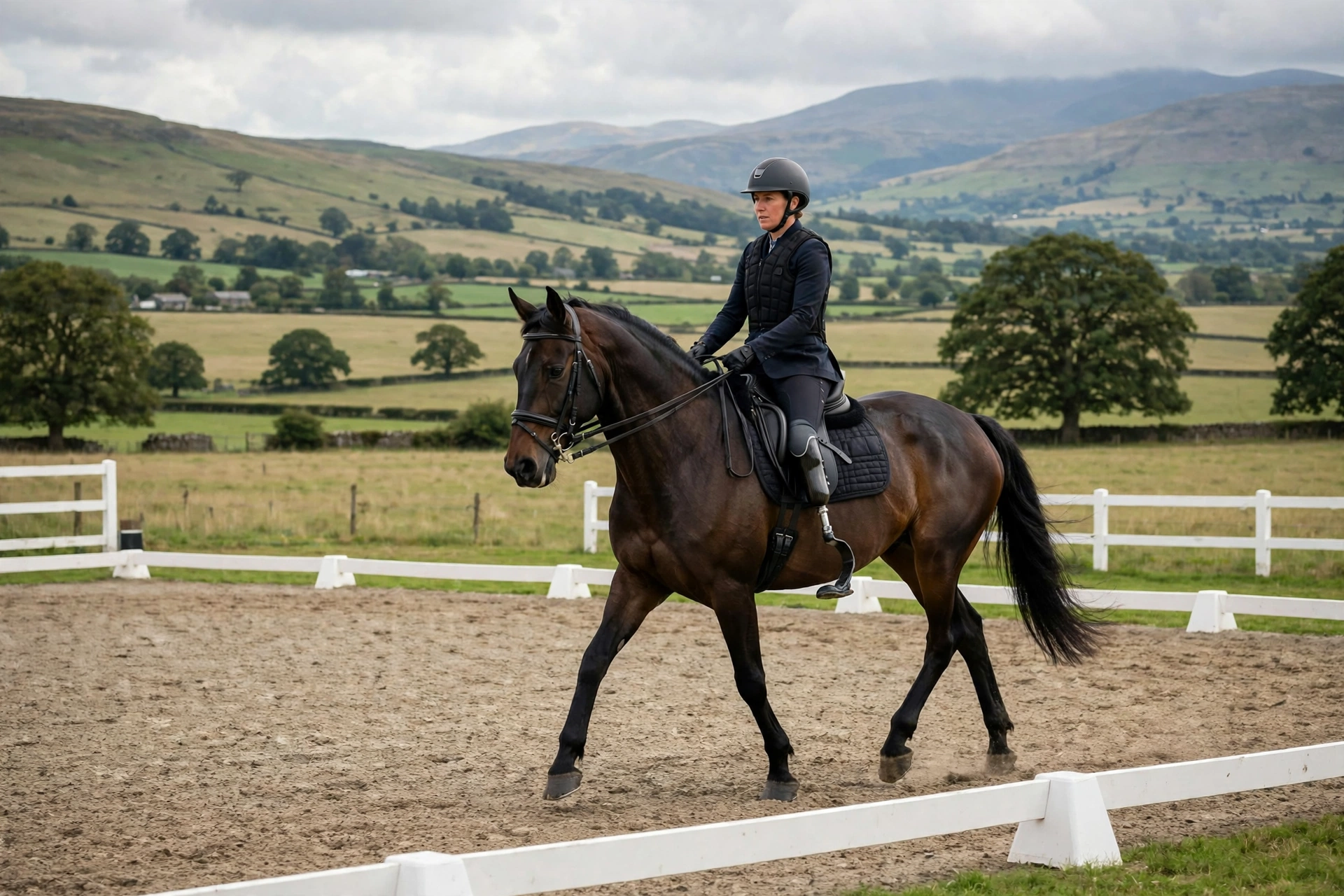
Are There Special Helmets for Para-Equestrian Riders?
In general terms, no — most para-equestrian riders wear a standard riding helmet, and there is no separate para helmet design. The same helmets used for dressage, hacking, and schooling are used in para sport, as long as they meet the required standard and fit the rider. The adaptations are in the fit, the fastening, and the way the helmet is put on, not in a special shell.
Some riders do use a helmet with a particular feature that suits them. A rider with a hearing aid may need a helmet that does not press on the aid, and a rider with a head shape that is different after an injury may need extra pads or a different size. A helmet fitter can help find a model that suits the rider’s head and their equipment, and a riding instructor can check the fit in the saddle.
In some cases, a rider may need a helmet that can be put on while seated in a wheelchair, or a helmet that a helper can fasten from the side. These are practical points, and they are best worked out with the rider, the instructor, and the fitter together. The aim is always the same: a helmet that is comfortable, secure, and worn for every ride.
What Standards and Rules Apply?
Para-equestrian helmets must meet the standard required by the competition or the riding body, just as for other riders. The label inside the helmet shows which standard it meets, and the competition rules say which standards are accepted. The rules can vary between countries and between organisations, so riders should check the rules for the events they plan to enter.
The rules for para sport also allow for adapted equipment, but the helmet itself is not usually adapted in a way that changes its protection. A rider should not drill holes in a helmet, remove the liner, or change the strap in a way that could weaken it. Any adaptation should be checked with the helmet maker or a qualified fitter, to make sure the helmet still protects as it should.
If you are learning about how helmets handle different kinds of impact, reading about what MIPS is for helmets can help you understand one of the technologies used in modern helmet design. Some riding helmets include this kind of system, and knowing about it can help when comparing helmets for para-equestrian riding.
How Do You Care for a Para-Equestrian Helmet?
Store the helmet in a cool, dry place, in a helmet bag or a box, away from sunlight and heat. Do not leave it in a hot car or in a damp tack room, and do not hang it by its chin strap. A helmet that is looked after lasts longer and keeps its fit, and it looks smarter for competition as well.
Clean the shell gently with a soft, damp cloth, and let it dry naturally. If the lining is removable, wash it according to the maker’s instructions and let it dry fully before you put it back. A clean lining is more comfortable, especially for a rider who wears the helmet for long sessions. Do not use harsh cleaners, and do not put the helmet in a washing machine.
Check the helmet regularly for damage. Look for cracks, dents, or soft spots in the shell, and check that the strap, buckle, and fitting system still work smoothly. After any fall where the head hits the ground, have the helmet checked and, in general terms, replace it, even if the damage is not visible. The liner inside can be damaged in ways you cannot see from the outside.
Frequently Asked Questions
Q: Do para-equestrian riders have to wear a helmet?
A: Yes, in general terms. Helmets are required for para-equestrian competition and training, just as they are for other riders, and they must meet the standard set by the competition rules.
Q: Can a para rider use a normal riding helmet?
A: Yes, in general terms. Most para riders wear a standard riding helmet, chosen for fit, comfort, and ease of fastening, as long as it meets the required standard.
Q: What if a rider cannot fasten the chin strap alone?
A: A helper, groom, or instructor can fasten the strap, and a helmet with a simple, easy-to-use buckle can help. The strap must be fastened for every ride, even if someone else fastens it.

Olivia
Writer at Helmet Today, covering helmet reviews, fit and riding safety.