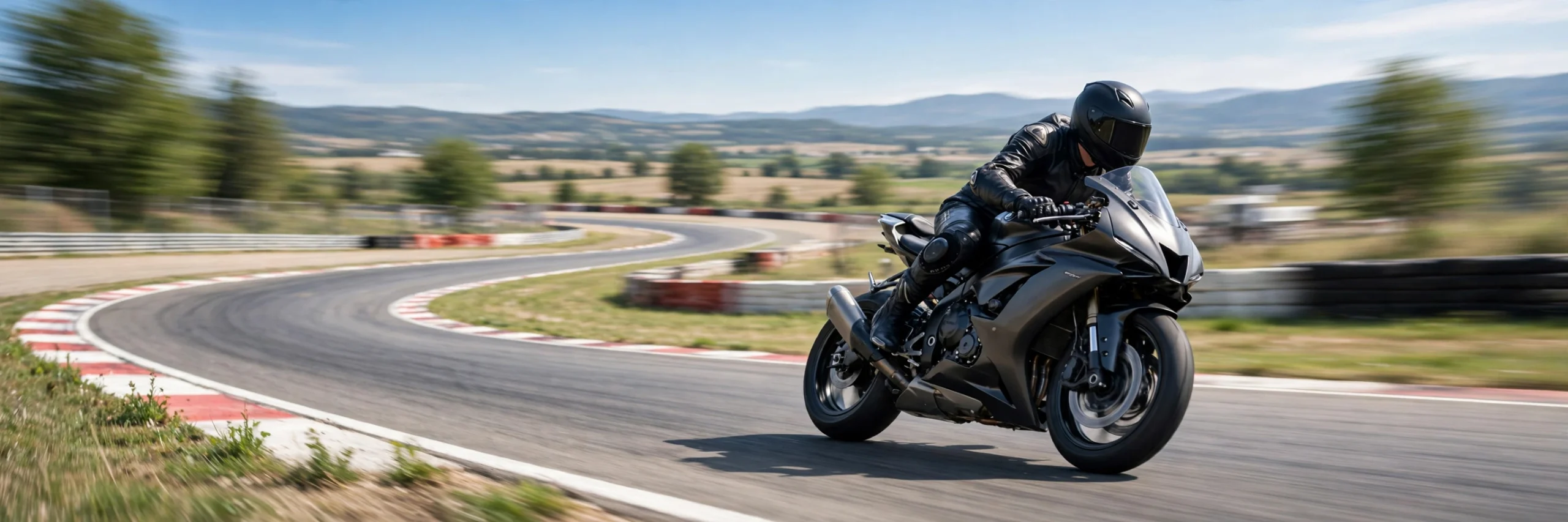
In general terms, the helmet that matters most for a racer is one that fits perfectly, is as light as practical, and meets the safety standard your racing organisation requires — because on a race track, small differences in weight, vision, and comfort add up over every lap. Racing puts demands on a helmet that everyday riding does not. Speeds are higher, the riding position is more tucked in, and a race can last long enough for a heavy or poorly ventilated helmet to become a real distraction. The right race helmet protects you, but it also gets out of your way so you can focus on the track.
This guide looks at what matters most when a racer chooses a helmet: the safety rules that apply to racing, the fit and weight that make a helmet work at speed, and the features worth paying for. Whether you are entering your first race or upgrading after a season or two, the same priorities apply: the rules first, then fit, then weight and vision, and only then the extras.
What Safety Standard Does Your Racing Organisation Require?
The first thing any racer must check is the rulebook. Racing organisations set their own helmet requirements, and a helmet that is fine for the road may not be accepted on the track. Some organisations require a particular certification, and some require a helmet to be within a certain age. Always check the current rules for the series you plan to enter before you spend any money.
In general terms, a helmet built for racing is designed and tested with track use in mind. It will usually carry a recognised certification mark, and the maker will state clearly whether it is intended for competition. Keep the certification label and any paperwork that came with the helmet, because scrutineers at a race meeting may ask to see them.
Why Does Fit Matter Even More for Racers?
Fit matters for every rider, but for a racer it matters even more. At race speeds, a helmet that moves around on your head will blur your vision, distract you, and tire your neck. A helmet that fits properly stays still, seals against the wind, and lets you keep your eyes on the track rather than on the helmet.
A race helmet should feel snug all the way around, with even pressure and no loose spots. Try it on in your normal riding position, leaning forward as you would on the bike, because a helmet that feels fine while you are standing up may press on your forehead or lift at the back when you are tucked in. Wear it for at least fifteen minutes before you decide, and if you wear a race suit or a back protector, try the helmet with those on as well so you can check that nothing catches or pushes the helmet forward.
Different makers shape their helmets differently, and head shapes vary from rider to rider. One maker’s medium may fit you perfectly while another’s feels wrong in every size. Do not assume your size from one brand carries over to another. Try on as many helmets as you can, and choose the one that fits your head, not the one with the most impressive name on the side.
How Much Does Weight Matter at Race Speed?
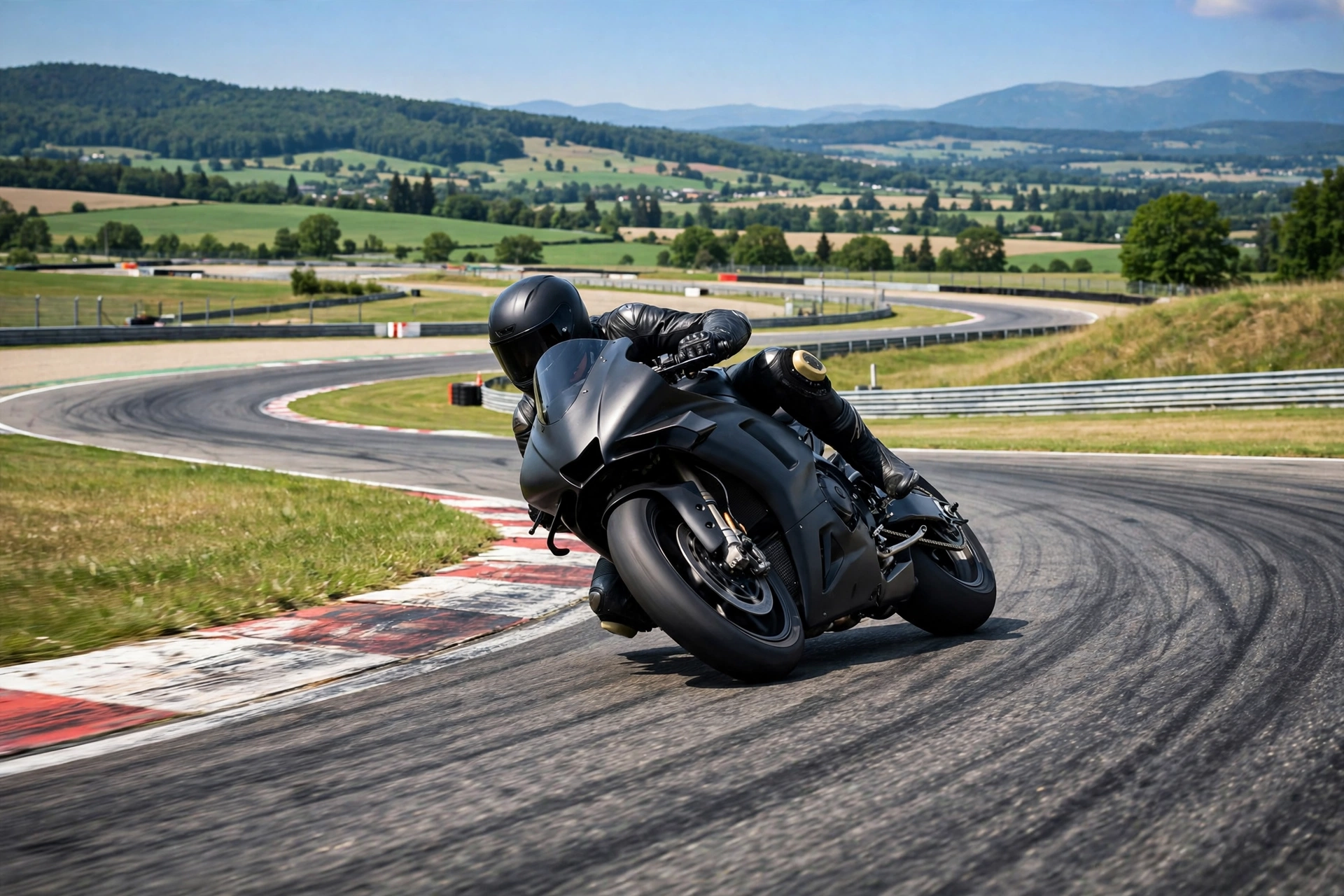
Weight matters more in racing than in almost any other kind of riding. A helmet that feels light in the shop can feel heavy after twenty laps, especially under braking and through fast corners, when your neck is working hard to hold your head steady. A lighter helmet reduces that strain, which helps you stay sharp late in a race when tiredness starts to creep in.
That said, weight is not the only thing that matters, and the lightest helmet is not automatically the best. A very light helmet that does not fit well will still move around and distract you. In general terms, look for a helmet that balances low weight with a secure fit and good aerodynamics, rather than chasing the lowest weight figure on its own.
Materials play a part here. Helmets made with advanced shell materials tend to be lighter than basic ones, which is one reason they cost more. For a racer, that extra cost can be justified, because the weight saving is real and it is felt on every lap. But do not pay for lightness at the expense of a proper fit or the certification your racing organisation requires.
What About Vision, Ventilation, and Aerodynamics?
Vision is one of the most important features of a race helmet. You need a wide, clear view of the track ahead and of the riders around you, and a visor that stays clear in changing conditions. Check that the visor opens and closes smoothly, seals well when closed, and gives a distortion-free view. A visor that fogs up or lets in a draught will cost you concentration when you can least afford it.
Ventilation matters too, because racing is hard physical work. A helmet that moves air well keeps you cooler and helps prevent the visor from fogging. Look for vents you can operate with gloves on, and check that the airflow works in a tucked riding position, not just when you are sitting upright. Some helmets are shaped to work best at speed, with vents and spoilers that only come into their own on the track.
Aerodynamics is the third piece of the puzzle. A well-shaped race helmet cuts through the air cleanly, reduces buffeting at speed, and stays stable when you turn your head to check for other riders. A helmet with poor aerodynamics can lift or pull at speed, which is tiring and distracting.
Should Racers Pay Extra for Rotational Impact Protection?
Many modern race helmets include technology designed to help manage rotational forces in a crash, and it is worth understanding what that technology does before you decide whether to pay extra for it. In a crash, the head often twists as well as hitting the surface, and systems that allow a small amount of movement between the helmet and the head are designed to reduce the force passed to the brain in that kind of impact.
If you are comparing helmets and see this kind of system listed, reading about what MIPS is for helmets can help you understand how one of the best-known systems works. In general terms, it is a useful feature for a racer, because the speeds involved mean the forces in a crash can be high. But it is an addition to the basics, not a replacement for them: fit, certification, and condition still come first.
Other features worth considering include a quick-release visor system, which makes it easy to change visors between sessions, and a removable, washable liner. Emergency release cheek pads, which let medics remove the helmet safely after a crash, are also worth having.
Frequently Asked Questions
Q: Can I use my road helmet for racing?
A: Sometimes, but only if it meets your racing organisation’s rules. Always check the rulebook first, because some series require a particular certification or a helmet within a certain age.
Q: How tight should a race helmet feel?
A: It should feel snug all the way around, with even pressure and no loose spots, and it should stay still when you shake your head gently. Try it on in a tucked riding position for at least fifteen minutes, because pressure points can take a while to show up.
Q: Is a lighter race helmet always better?
A: Not always. A lighter helmet reduces neck strain over a race, but a slightly heavier helmet that fits perfectly and gives a clear, stable view will serve you better than a very light one that moves around.

Olivia
Writer at Helmet Today, covering helmet reviews, fit and riding safety.