Detachable chin bar ski helmets have a removable bar across the lower face that adds protection for racing, and the key point is that the bar must be fitted correctly and used only for the kind of skiing it is made for. A chin bar is the curved bar that runs in front of the mouth and chin, like the bar on a full-face mountain bike helmet. On a detachable model it can be taken off for normal skiing and clipped on for race training and competition, when the risk of hitting a gate is higher. It is a specialist piece of equipment, and understanding how it works matters before a racer relies on it.
Chin bars are not for every skier. They add weight, reduce airflow around the mouth, and change how the helmet fits with goggles. They are used mainly by ski racers — slalom and giant slalom in particular — where the skier passes close to hard gates at speed. This guide explains what a detachable chin bar does, how it attaches, when it should and should not be used, and how to look after one so it works when it is needed.
What Is a Detachable Chin Bar on a Ski Helmet?
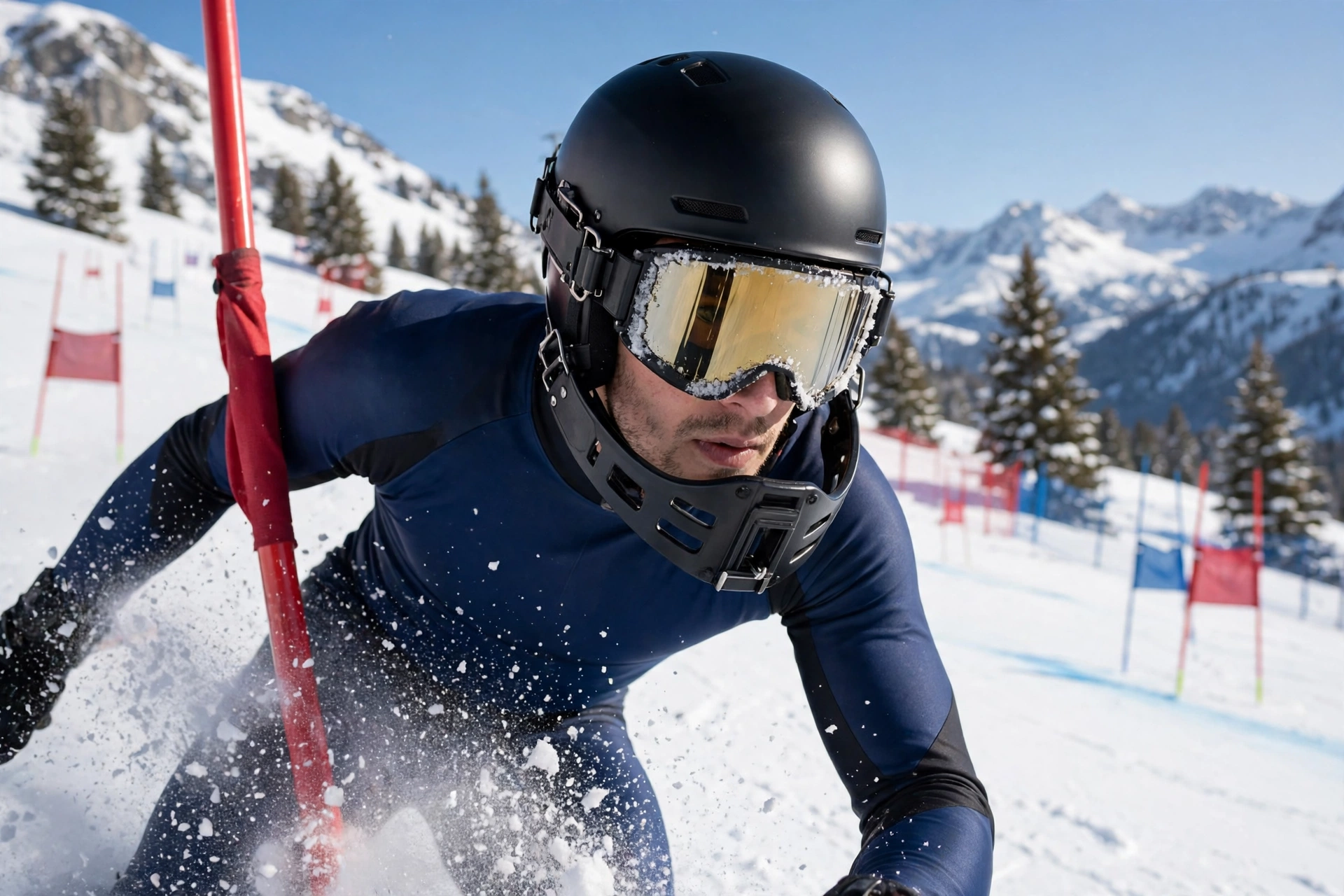
A detachable chin bar is a rigid bar that mounts to the front of a ski helmet and extends across the lower face, in front of the chin and mouth. It is usually made from the same kind of material as the helmet shell, or from a strong, lightweight plastic, and it is shaped to curve around the face without touching the mouth or the chin. When it is fitted, it turns an open-face ski helmet into something closer to a full-face helmet, at least for the lower part of the face.
The word detachable is the important part. The bar is designed to be taken on and off without tools, or with a simple tool, by clipping or screwing it into mounts on the sides of the helmet. That means a racer can train without it on a free-skiing day and put it on for gate training or a race, without needing a second helmet. The mounts are built into the helmet shell, so a chin bar made for one helmet model will not necessarily fit another — the mounting points, the curve, and the size are all specific to the helmet it was made for.
Why Do Ski Racers Use Chin Bars?
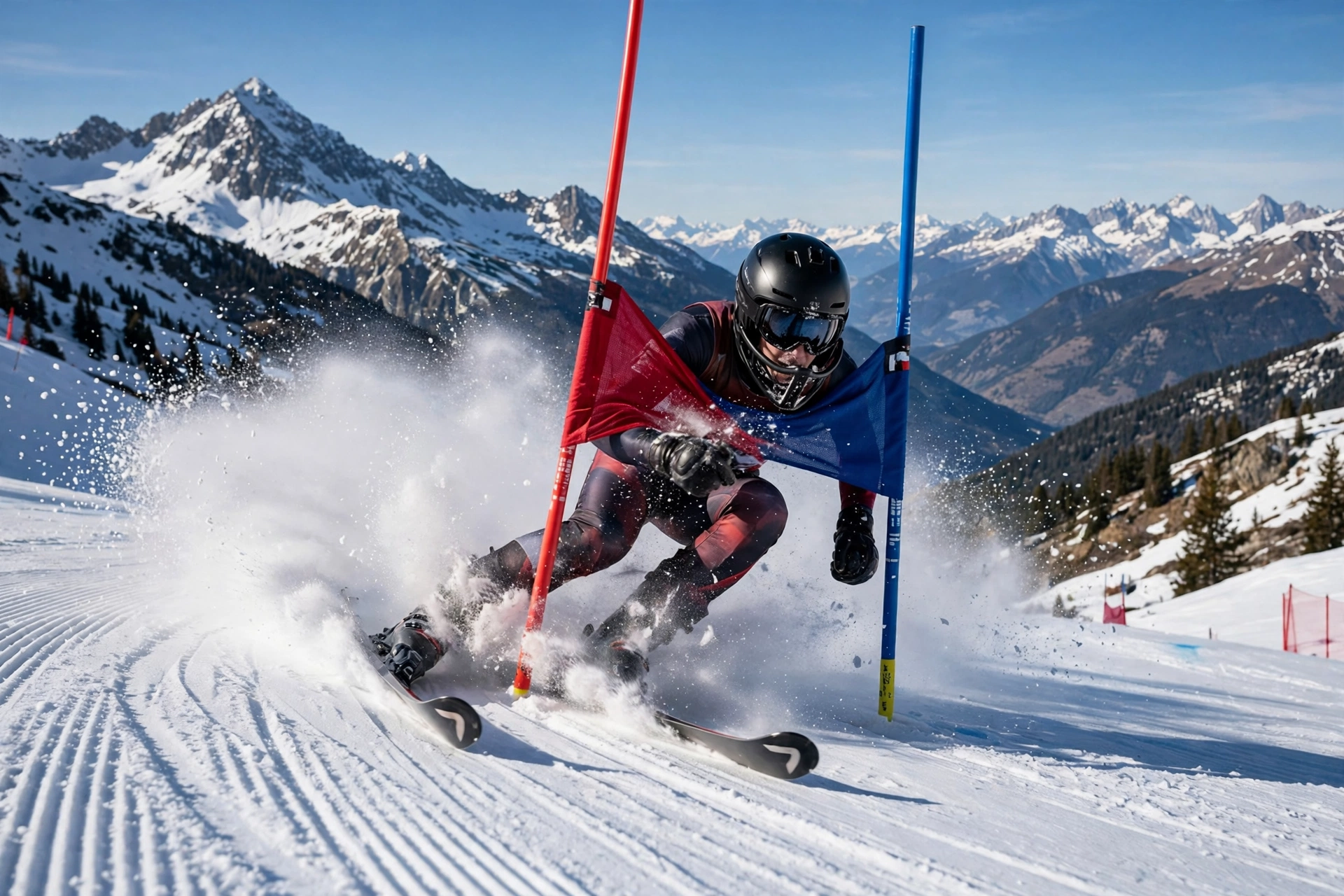
Ski racers use chin bars because of the gates. In slalom, and to a lesser extent in giant slalom, the skier passes very close to the gates and often pushes them aside with the hands, the arms, or the body. A gate is a hard, stiff pole, and if the skier’s line is slightly wrong, the gate can spring back and strike the face. A chin bar stands in the way of that strike and spreads the force across the helmet rather than letting it land on the mouth or chin.
The risk is highest in slalom, where the gates are close together and the turns are tight, so the skier is constantly near the poles. In giant slalom the gates are further apart and the skier has more room, but a chin bar is still commonly used. In speed events like downhill and super-G, the gates are not struck in the same way, so chin bars are less common — the helmet used there is chosen for aerodynamics and for high-speed protection instead.
How Does a Detachable Chin Bar Attach?
The bar attaches to mounts on the sides of the helmet, usually just in front of the ears. The mounts are part of the helmet’s design, and the bar clips, slides, or screws into them. Most systems use a simple, positive action — a click or a turn — that tells the user the bar is locked in place. The bar should sit firmly, with no wobble or rattle, and it should not be possible to pull it off with a gentle tug. If it moves, it is not fitted correctly.
Removing the bar should be just as deliberate as fitting it. It should be taken off by releasing the mounts properly, not pulled or twisted, because forcing it can damage the mounts and weaken the connection for the next use. Once removed, the bar should be stored safely — not thrown into the bottom of a kit bag where it can be bent or scratched. A damaged bar should not be used, because a crack or a bend can change how it behaves in an impact. If you are learning how modern helmets handle different kinds of impact, reading about what MIPS is for helmets can help you understand one of the technologies used inside the shell.
When Should a Chin Bar Be Used — and When Not?
A chin bar should be used for gate training and racing in slalom and giant slalom, where the risk of a gate strike is real and the bar is made for that job. It should be fitted before the run, checked for a firm lock, and worn with goggles and, in general terms, a mouthguard. Coaches usually require it for young racers in these events, and many race rules expect it.
It should not be used for ordinary recreational skiing. On a normal piste, there are no gates to strike, so the bar adds weight and reduces airflow for no benefit. It also changes how the helmet behaves if the skier falls in soft snow — a bar can catch in the snow and twist the head, which is a risk that does not exist without it. For the same reason, it should not be used for freestyle, park skiing, or backcountry skiing, where the falls are different and the bar is not designed for them.
How Do You Care for a Chin Bar and Its Mounts?
Care starts with inspection. Before each use, the bar should be checked for cracks, bends, or scratches that go deep into the material, and the mounts on the helmet should be checked for wear, loose screws, or dirt. The mounts are small and can collect snow and grit, which can stop the bar from locking properly. A quick wipe with a dry cloth and a check that the locking action feels firm is enough for most days.
Frequently Asked Questions
Q: Does a chin bar turn a ski helmet into a full-face helmet?
A: Not quite. A chin bar protects the chin and mouth from gate strikes, but it does not cover the whole face like a full-face helmet. The eyes are still protected by goggles, not by the bar.
Q: Can I use a chin bar from one helmet on another helmet?
A: In general terms, no. Chin bars are made for specific helmet models, with mounts that match that helmet. Using the wrong bar can mean a poor fit and a bar that does not lock properly.
Q: Do I need a chin bar for recreational skiing?
A: No. Chin bars are for gate training and racing in slalom and giant slalom. For ordinary skiing they add weight and can catch in a fall, so they should be left off.

Olivia
Writer at Helmet Today, covering helmet reviews, fit and riding safety.