For spring skiing, a ski helmet with open vents and a light fit is the right choice in general terms, because warm days and soft snow call for airflow rather than heavy insulation. Spring skiing is a different sport from midwinter skiing: the sun is stronger, the air is warmer, the snow is softer, and a helmet that felt perfect in January can feel hot, heavy, and sweaty by March. The answer is not to ski without a helmet, but to use the vents properly, wear lighter layers underneath, and choose a helmet set-up that matches the season.
Many skiers make one of two mistakes in spring: they keep the helmet fully closed up, as if it were still deep winter, and overheat; or they give up on the helmet altogether and ski bare-headed on a warm day. Both are avoidable. This guide explains how spring conditions change what a helmet needs to do, how to use vents and light layers, and how to stay comfortable and protected from the first lift to the last run.
How Is Spring Skiing Different for Helmets?
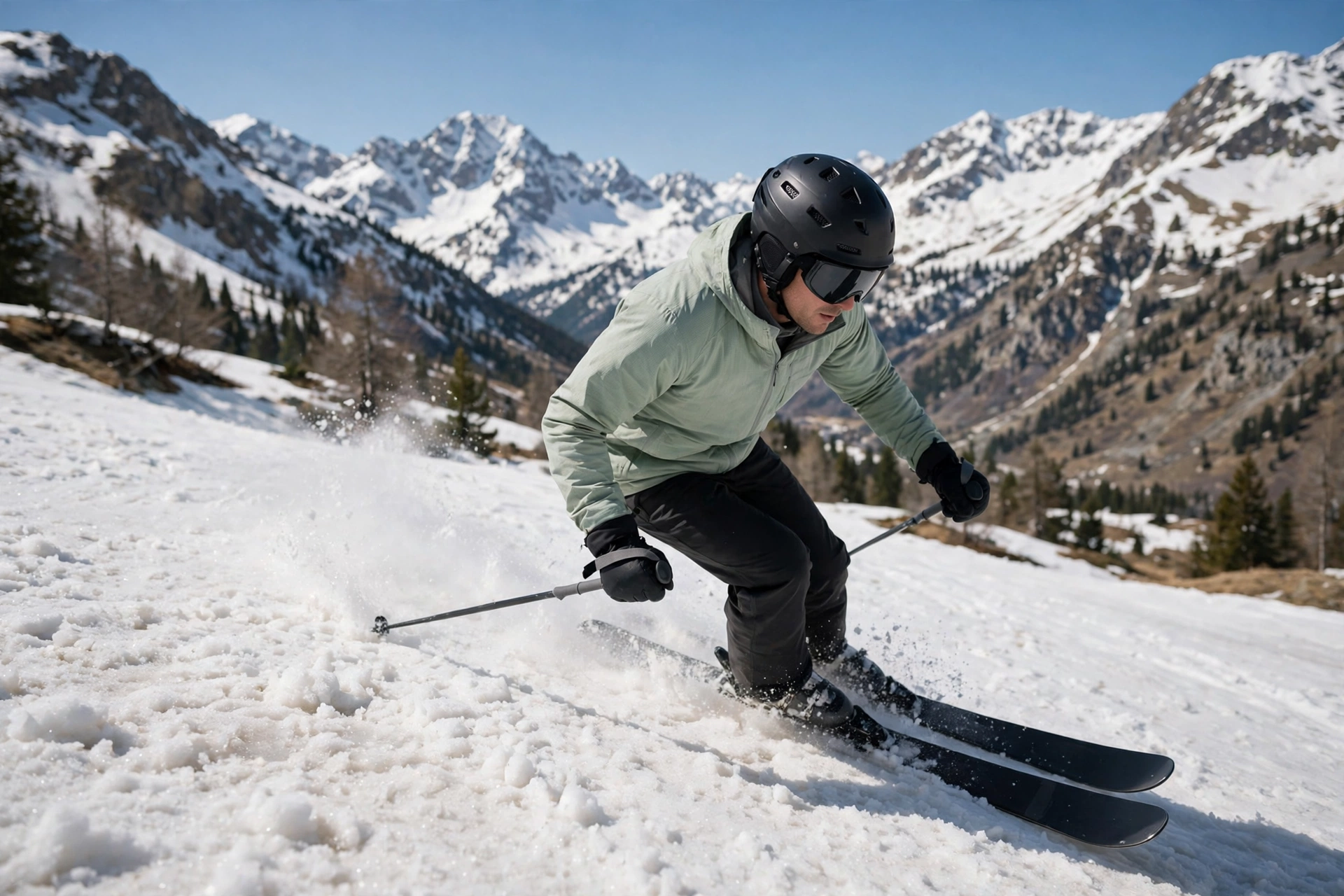
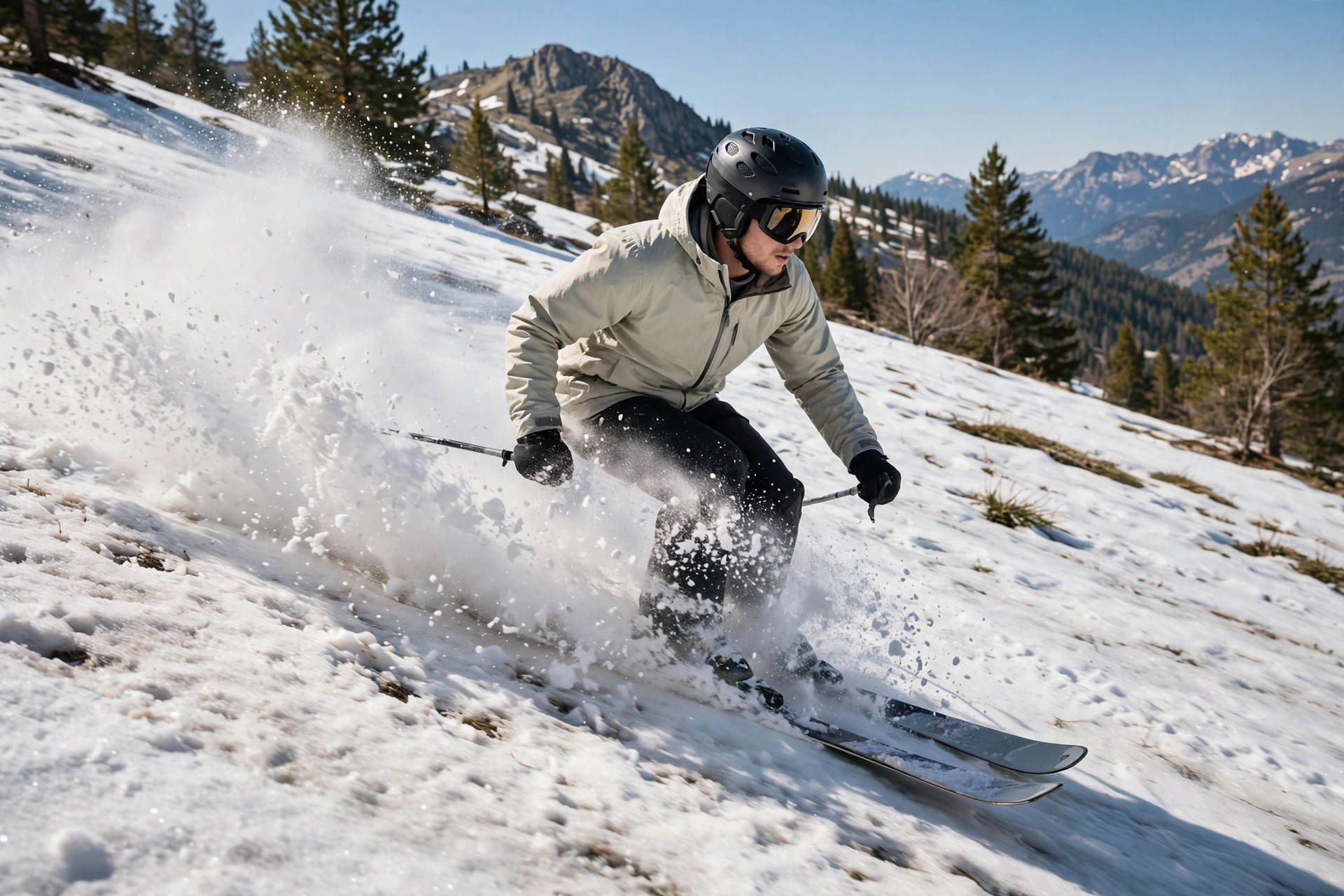
Spring skiing brings warmer air, stronger sunshine, and snow that changes through the day. In the morning the snow can still be firm and fast, but by the afternoon it turns soft and slushy, and the sun reflects off the snow from below as well as shining from above. That means more heat, more sweat, and more glare — three things a helmet has to deal with at once.
A helmet that was ideal in midwinter may be too warm in spring. Winter helmets often have thick padding, ear flaps that cover the ears fully, and vents that are designed to be closed in cold wind. In spring, that same insulation traps heat, and a skier who is working hard on soft snow will sweat heavily inside the helmet. Sweat is not just uncomfortable: it can fog goggles, drip into the eyes, and make the liner damp and cold when the skier stops for a break or rides a lift in the shade.
How Do Helmet Vents Work in Warm Weather?
Ski helmet vents are openings in the shell, usually on the top and the front, that let air flow through the helmet and carry heat and moisture away. Most modern helmets have vents that can be opened or closed, either with a small slider on the shell or with plugs that can be taken out. In winter, skiers often keep the vents closed to stay warm. In spring, the vents should be open — that is what they are for.
It is worth checking the vents before the season’s first spring day. Vents can get clogged with snow, ice, or dirt over the winter, and a slider can stick if it has not been moved for months. A quick check at home — open and close each vent, look through the openings for blockages, and make sure the slider moves freely — takes a minute and saves a sweaty day on the mountain. If the helmet has no adjustable vents at all, it may simply be a winter helmet, and it is worth considering whether it is the right one for spring. If you are comparing how helmets handle different kinds of impact, reading about what MIPS is for helmets can help you understand one of the technologies used in modern helmet design.
What Should You Wear Under a Helmet in Spring?
The layer under the helmet matters as much as the helmet itself. In winter, many skiers wear a thick beanie or a balaclava under the helmet for warmth. In spring, that extra layer traps heat and sweat, and it can also change the fit of the helmet, making it sit too high or too tight. A light, thin liner — or nothing at all — is usually the better choice on a warm day.
A thin, moisture-wicking liner is the most useful spring option. It pulls sweat away from the skin, keeps the helmet’s own liner cleaner, and adds almost no warmth. Some skiers use a thin skull cap made for helmets, while others use a lightweight headband that keeps sweat out of the eyes without covering the whole head. What matters is that the layer is thin, breathable, and does not bunch up inside the helmet, because bunching can create pressure points and change how the helmet sits.
How Do You Stay Comfortable on Warm Spring Days?
Comfort in spring skiing is mostly about managing heat and moisture. The simplest step is to open the vents before the first run and leave them open, rather than waiting until the helmet is already hot and sweaty. It also helps to take the helmet off on the lift when it is safe to do so — on a slow chair in warm sun, a few minutes with the helmet off lets the head cool and the liner air out. The helmet should always be on for the run down, though; the lift is the only place to take a break from it.
Should You Use a Different Helmet for Spring Skiing?
In general terms, most skiers do not need a second helmet just for spring. A good modern helmet with adjustable vents and a removable liner can handle both winter and spring, as long as the vents are opened and the heavy layers are left at home. The key is to check that the helmet actually has the features needed for warm weather: vents that open, a liner that can be removed or swapped for a lighter one, and ear pads that can be taken out or thinned down.
What matters more than the number of helmets is the fit. A helmet that fitted perfectly in winter with a thick beanie underneath may be too loose in spring with nothing under it, and a loose helmet protects less well and moves around on the head. The fit should be checked again at the start of spring, with the spring layers on, and the pads or the fit system adjusted so the helmet is snug. If it cannot be made snug without the winter layers, it may be time for new pads rather than a new helmet.
Frequently Asked Questions
Q: Should I open my ski helmet vents in spring?
A: Yes, in general terms. Open vents let cool air in and warm, damp air out, which keeps the head cooler and the goggles clearer on warm spring days.
Q: What should I wear under a ski helmet in spring?
A: A thin, moisture-wicking liner or nothing at all is usually best. Thick beanies and balaclavas trap heat and can change the helmet’s fit.
Q: Do I still need a helmet for spring skiing on soft snow?
A: Yes. Soft snow is more forgiving than ice, but rocks, bare patches, and awkward falls still happen as the snow melts, so head protection is just as important in spring.

Olivia
Writer at Helmet Today, covering helmet reviews, fit and riding safety.