A skijoring helmet is a snow sports helmet worn for skijoring, a winter sport in which a person on skis is pulled along by a dog, a horse, or a vehicle. It protects the head from falls onto snow and ice at speed, and from collisions with obstacles on the trail. Skijoring blends skiing with being towed, and the extra speed from the pull makes falls harder than in ordinary cross-country skiing. A helmet is a sensible part of the kit, especially as speeds rise and the trail gets busier.
What Is Skijoring?
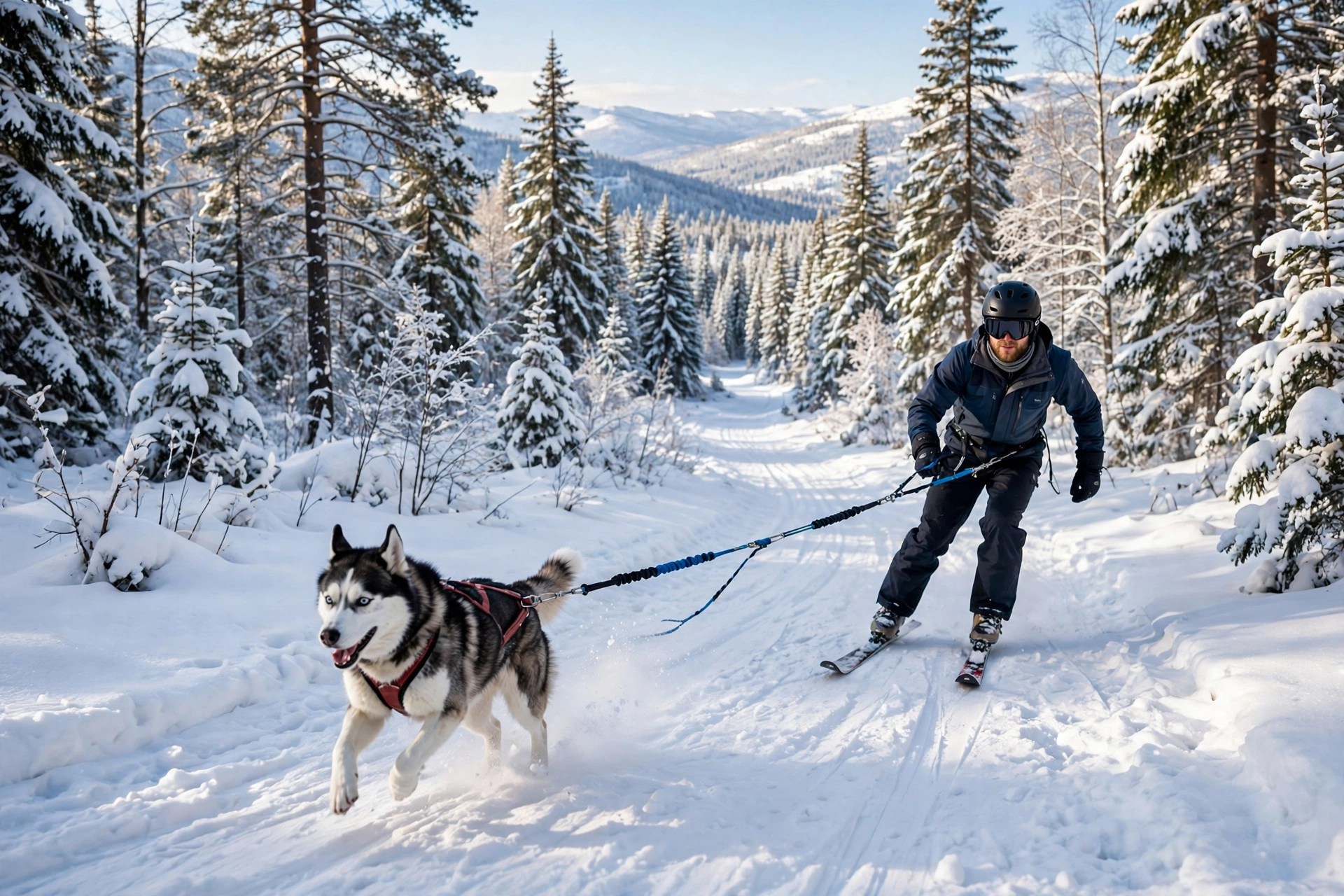
Skijoring is a winter sport in which a skier is pulled by a dog, a horse, or a motor vehicle, using a tow line attached to a harness or a belt. The skier wears cross-country or skate skis and holds the line, steering with the skis while the animal or vehicle provides the power. The sport can be done on groomed trails, on open snowfields, or as a race, and it is popular in snowy regions where dogs and horses are part of everyday life.
The speed of skijoring depends on what is doing the pulling: a single dog gives a gentle tow, while a horse or a vehicle can pull the skier much faster. The skier must balance, steer, and brake while being pulled, which takes practice, especially around corners and over uneven snow. In general terms, the faster the tow, the harder the falls, and the more a helmet matters.
How Is Skijoring Different From Normal Skiing?
Skijoring is different from normal skiing because the skier does not provide all of the power: the pull comes from in front, and the skier must manage the tension of the tow line while staying balanced on the skis. The skier cannot simply stop by ceasing to push, because the dog or horse keeps moving, so braking and steering take more skill and timing. A sudden stop by the animal, a sharp turn, or a tangle in the line can all throw the skier off balance.
The equipment is different too: the skier wears a harness or belt with a tow line, and the skis are often cross-country or skate skis rather than downhill skis. The trail may be shared with other skiers, dogs, and horses, which adds to the need for awareness. In general terms, skijoring asks for the balance of a skier and the awareness of someone being towed, and a helmet helps cover the falls that come with learning that balance.
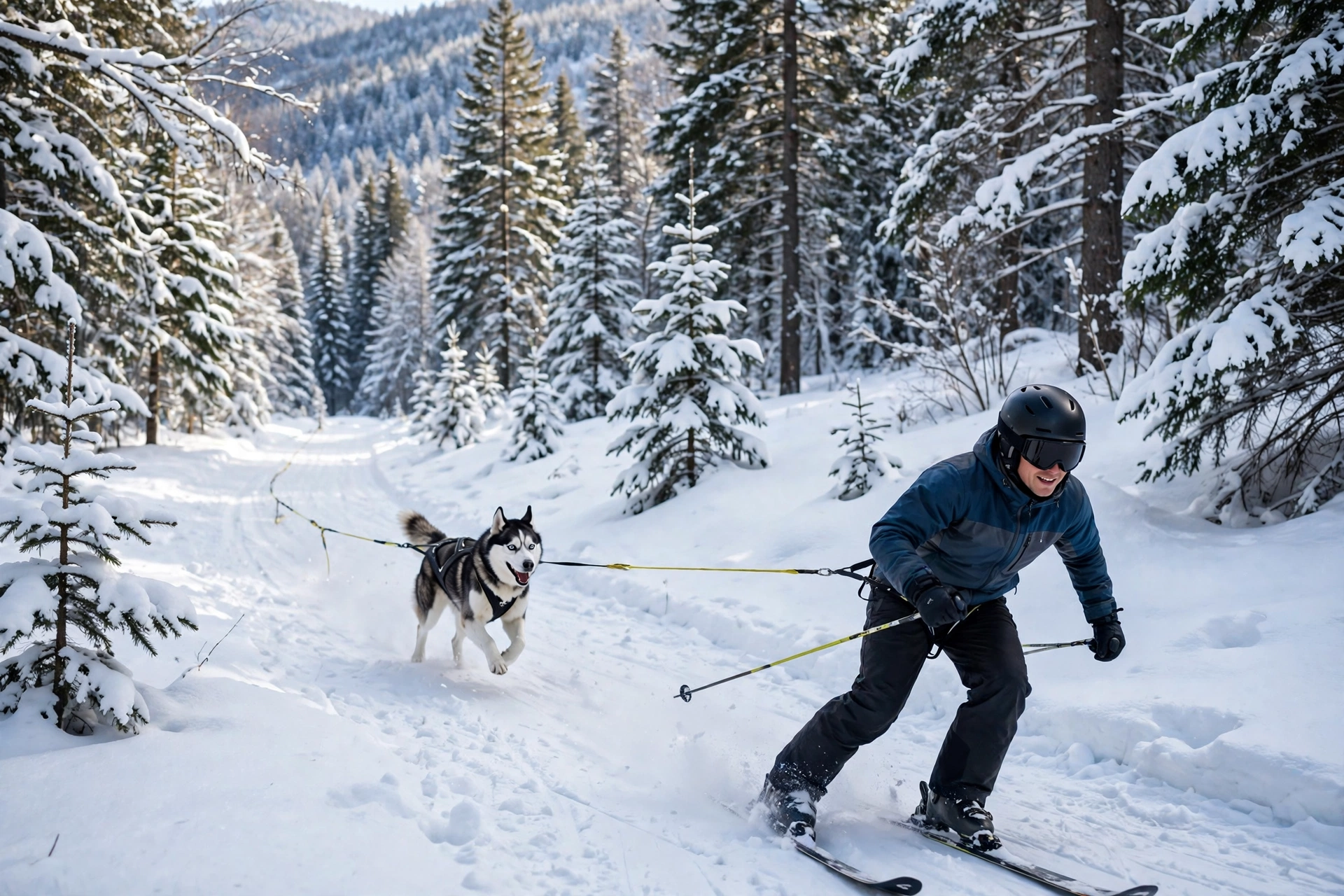
Why Do Skijorers Wear a Helmet?
Skijorers wear a helmet because a fall at towing speed can bring the head down onto snow or ice with real force. The skier may be travelling faster than they could under their own power, and a fall can come without warning if the dog changes direction, the horse shies, or the line goes slack and then snaps tight. The head can strike the snow, a tree root, or a frozen rut before the skier has time to react.
A helmet spreads the force of that impact and absorbs some of it, which can reduce the severity of a head injury. It also helps if the skier collides with another person, a dog, or an obstacle on a shared trail. In general terms, a helmet does not make skijoring safe in every case, and it cannot protect against every kind of fall, but it does lower the force that reaches the head in the kinds of knocks that happen most often in this sport.
What Kind of Helmet Suits Skijoring?
A lightweight snow sports helmet suits skijoring well, because the skier is active and can overheat in a heavy helmet. A ski or snowboard helmet that fits well and meets a recognised safety standard is a reasonable choice, and many skijorers use the helmet they already own for skiing. Good ventilation matters, since the skier is working hard, and a helmet with adjustable vents lets the rider open it up on a warm day and close it down in the wind.
Some skijorers prefer a helmet with a lower profile and less bulk, so it does not catch the wind or throw off balance. Ear coverage is a personal choice: some riders like ear pads for warmth, while others prefer open ears so they can hear the dog or horse and other people on the trail. If you want to understand one of the safety technologies used in modern helmets, reading about what MIPS is for helmets is a good place to start, since that system is found in many snow helmets.
What Should a Skijoring Helmet Fit Like?
A skijoring helmet should fit snugly all round the head, sitting level and covering the forehead without slipping down over the eyes. It should not wobble when the skier shakes the head, and it should not press painfully on any one spot. The back should sit low enough to protect the back of the head, and the helmet should work with any goggles or glasses worn on the trail.
The chin strap should be fastened snugly before setting off, so the helmet stays in place in a fall. It is worth trying the helmet on with the balaclava or thin hat that will be worn underneath, because layers change how the helmet sits. A thick hat under the helmet can make the fit loose or uneven, so a thin layer is a better choice. In general terms, a helmet that fits well is comfortable enough to forget about, and that is exactly what a skier wants while being towed.
When Is a Helmet Most Important in Skijoring?
A helmet is most important in skijoring when the tow is fast, the trail is icy or uneven, or the skier is new to the sport. A horse-drawn skier travels faster than a dog-drawn skier, and a race or a crowded trail adds to the risk of a collision or a sudden fall. Icy trails are harder than soft snow, and a fall onto ice can be a painful knock even at modest speed.
Beginners may want a helmet for every session while they learn to balance, steer, and brake under tow, because falls are more frequent in the early stages. Experienced skiers on a gentle trail behind a single dog may judge the risk to be lower, and that is a personal decision about the conditions. In general terms, the helmet is a sensible default, and it is easiest to wear it every time rather than to guess which session will be the one with a fall.
Do I need a helmet for skijoring?
Yes, in general terms a helmet is a sensible part of skijoring kit. The tow adds speed, and a fall onto snow or ice at speed can cause a head injury that a helmet can help reduce.
Can I use my normal ski helmet for skijoring?
Yes, in general terms a ski or snowboard helmet that fits well and meets a recognised safety standard is suitable for skijoring. A lighter, well-ventilated helmet is a good choice for this active sport.
Is skijoring with a horse faster than with a dog?
Yes, in general terms a horse can pull a skier faster than a dog, which makes falls harder. A helmet matters even more at higher towing speeds.

Olivia
Writer at Helmet Today, covering helmet reviews, fit and riding safety.