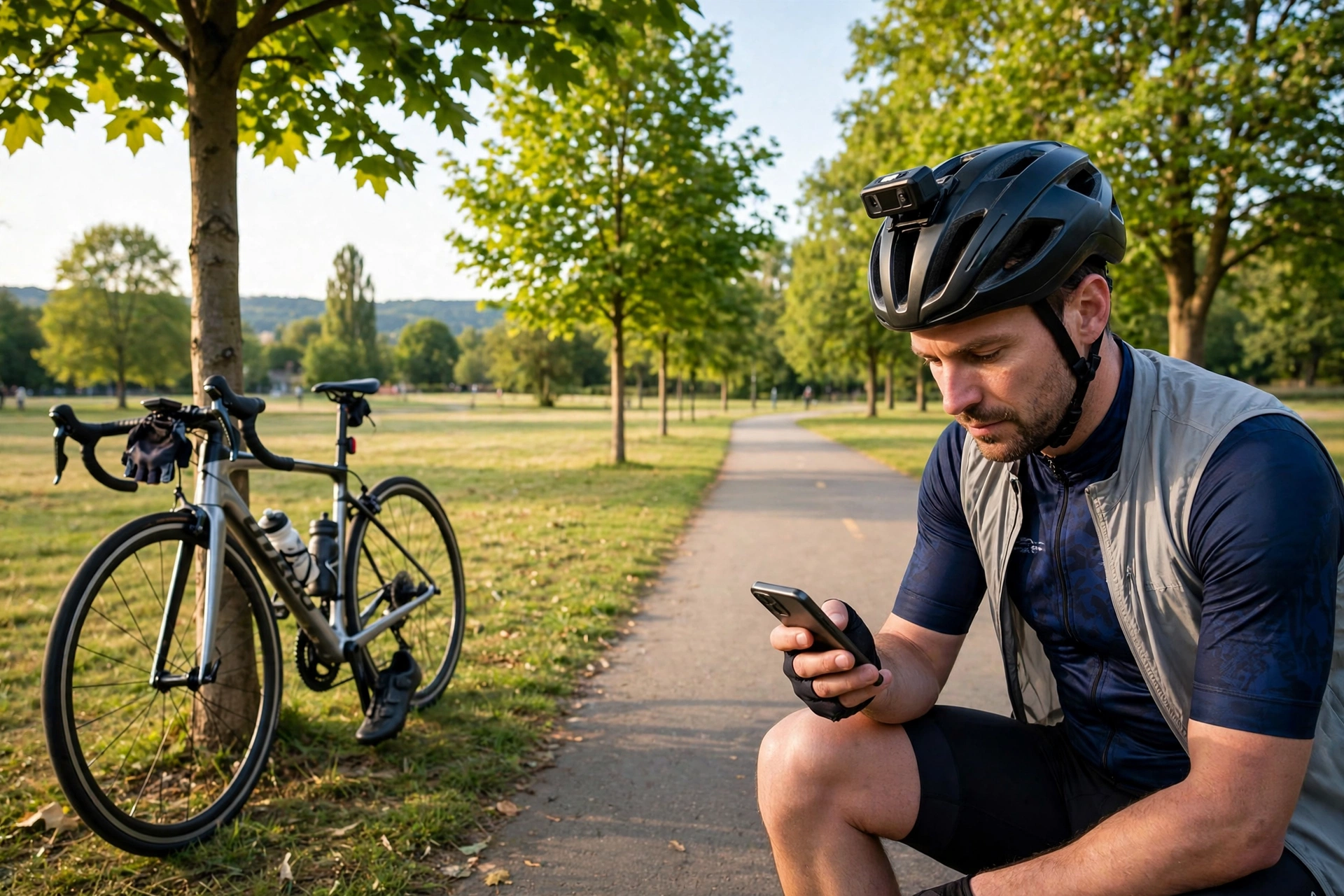
A helmet with a fitness tracker is a helmet that has built-in sensors to record things like your heart rate, calories burned, distance covered, and sometimes your speed and route, while you ride. The idea is simple: instead of wearing a separate fitness watch or chest strap, the helmet itself gathers the data and sends it to an app on your phone. In general terms, these helmets are aimed at cyclists and other riders who already track their workouts and want one less device to think about.
How Does a Helmet with a Fitness Tracker Work?
Most helmets with a fitness tracker use a small sensor module built into the helmet, often near the forehead or at the back of the head. The most common sensor is an optical heart-rate sensor, which shines a light onto the skin and measures the tiny changes in blood flow as your heart beats. This is the same basic technology used in many fitness watches, just moved from the wrist to the head.
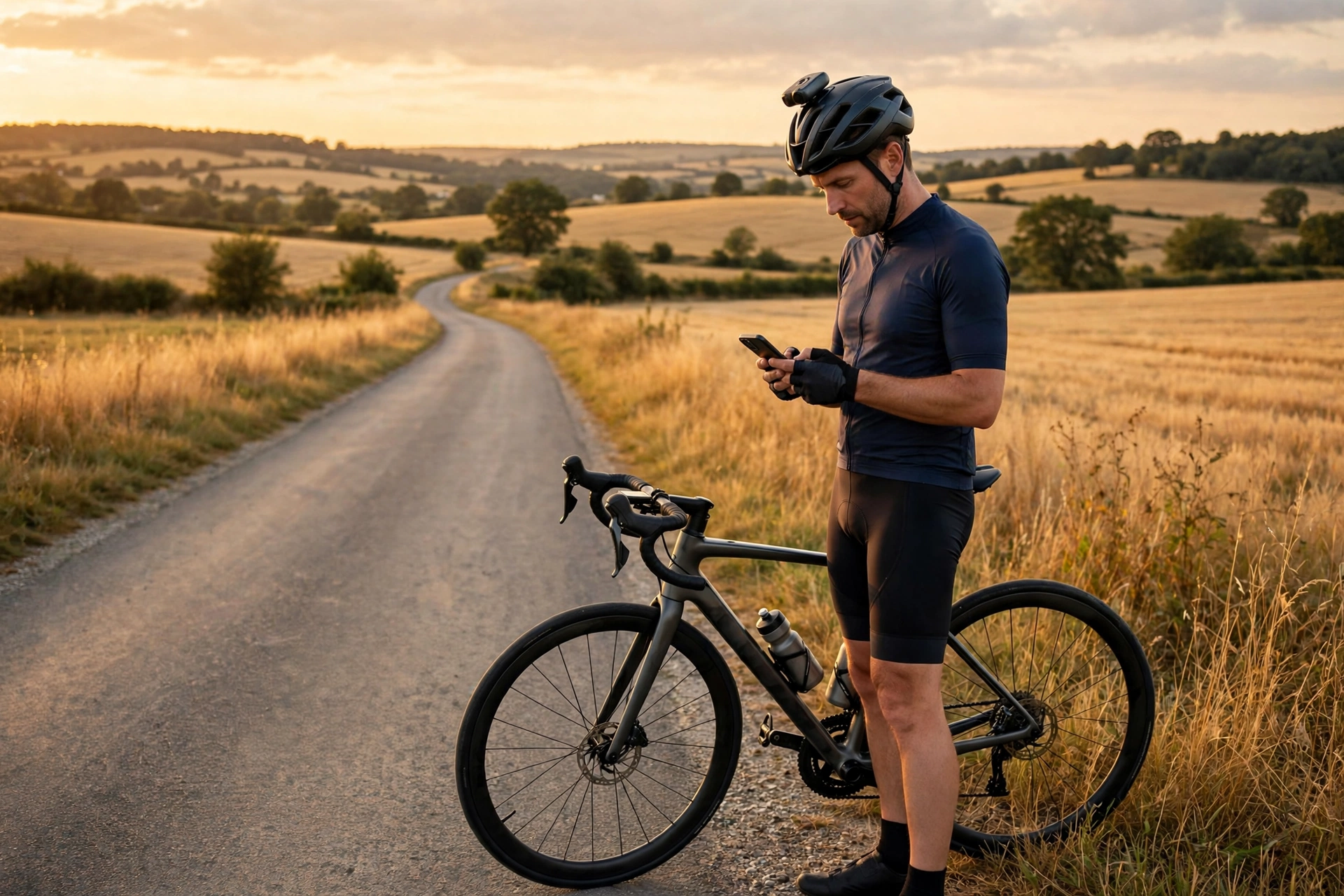
Alongside the heart-rate sensor, the helmet usually carries an accelerometer and sometimes a gyroscope. These motion sensors detect how the helmet moves, which the software turns into estimates of distance, speed, and sometimes cadence. If the helmet has a GPS chip or connects to your phone’s GPS, it can also record your route. The data is sent by Bluetooth to a companion app, where you can see your ride afterwards, along with graphs of your heart rate over time.
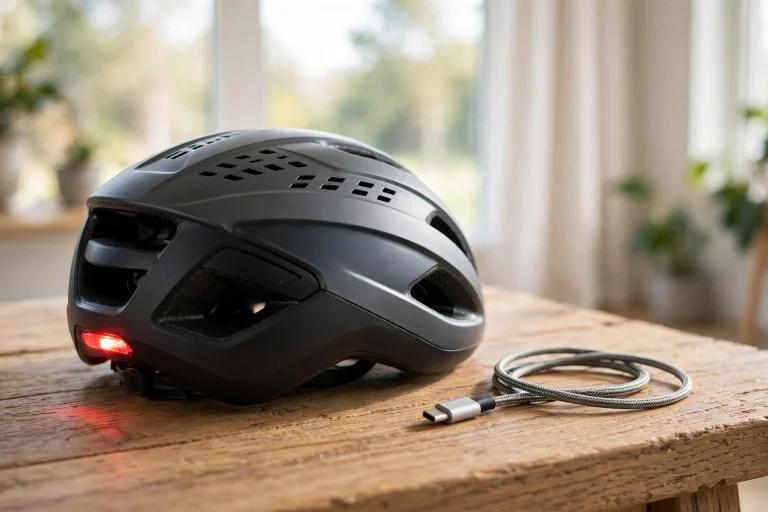
The sensor module needs power, so these helmets have a small rechargeable battery, usually charged through a USB port. Battery life varies a great deal from one design to another, and in general terms you should expect the tracking features to add a regular charging habit to your routine, much like a fitness watch does. Some helmets let you turn the tracking off to save battery, so the helmet still works as an ordinary helmet when you do not need the data.
What Can a Fitness-Tracking Helmet Actually Measure?
The headline measurement is heart rate. A fitness-tracking helmet can show your heart rate in real time, or record it so you can look at it after the ride. This is useful if you train in heart-rate zones, because you can see how hard you were working on climbs or during fast stretches, and whether you were recovering well on the descents.
Distance and speed are usually covered too, either from the helmet’s own motion sensors or from GPS. A helmet with its own GPS can record a route without your phone, which appeals to riders who prefer to leave the phone at home. A helmet without GPS relies on your phone for location, and its own sensors only add movement data. Speed and distance estimates from motion sensors alone tend to be less reliable than GPS-based figures, especially on rides with lots of stops and starts.
Some models go further and try to measure things like head impact or a fall, and can send an alert to an emergency contact if they detect a crash. That is a safety feature rather than a fitness feature, but it often comes bundled in the same app. It is worth checking whether a helmet you are considering includes this, and how it works, because the details vary a lot. If you are curious about the safety technology inside modern helmets more broadly, reading about what MIPS is for helmets can help you understand one of the systems designed to reduce rotational forces in a crash.
Is a Fitness-Tracking Helmet Accurate Enough to Trust?
Accuracy is the question most riders ask first, and the honest answer is that it depends on what you are measuring and how much precision you need. Heart-rate readings from a well-fitted helmet are generally good enough for everyday training — good enough to tell whether you are in an easy zone or working hard, and good enough to track your fitness over weeks and months. They may not match a chest strap beat for beat, especially during very intense efforts or on bumpy roads where the helmet shifts.
Distance and speed are more reliable when GPS is involved. A helmet that pairs with your phone’s GPS will usually give figures very close to what a cycling computer would show. A helmet relying only on motion sensors can drift, especially if the ride includes lots of stopping at junctions or riding slowly uphill. In general terms, GPS-based tracking is the safer bet if accurate distance matters to you.
What Are the Downsides of a Fitness-Tracking Helmet?
The first downside is weight and bulk. Adding sensors, a battery, and electronics to a helmet makes it heavier than a plain helmet, and the extra weight sits on your head for the whole ride. Some riders barely notice it, while others find it tiring on long rides. Comfort is personal, so trying the helmet on before you buy, if you can, is the best way to judge.
The second downside is charging. A fitness-tracking helmet is another device that needs to be kept charged, and if the battery runs flat mid-ride you lose the tracking for that ride. The helmet still protects your head — the safety part does not depend on the battery — but the fitness features do. Getting into the habit of charging it after each ride helps, but it is one more thing to remember.
Cost is another factor. Smart helmets generally cost more than ordinary helmets with the same level of protection, because you are paying for the electronics and the app as well as the helmet itself. Before buying, it is worth asking whether you would get the same data more cheaply from a fitness watch or a chest strap you already own, and whether having the sensor in the helmet is worth the extra price to you.
Who Should Consider a Fitness-Tracking Helmet?
A fitness-tracking helmet suits riders who already track their training and want their data in one place without wearing extra gear. If you ride regularly, follow a training plan, or like to compare your rides over time, having the sensor built into something you already wear can feel natural. It also suits riders who dislike chest straps and find wrist-based trackers uncomfortable or unreliable while gripping handlebars.
It is less suited to riders who only ride occasionally, or who do not care about heart-rate zones and calorie figures. If you just want a helmet for safety, an ordinary well-fitting helmet will protect you just as well for less money and less hassle. The tracking features add nothing to the protection itself.
Frequently Asked Questions
Q: Does a fitness-tracking helmet still protect you if the battery is flat?
A: Yes. The protective shell and padding work without any power, so a flat battery only stops the tracking features. The helmet still protects your head in a crash just like an ordinary helmet.
Q: Is a helmet heart-rate sensor as accurate as a chest strap?
A: In general terms, a chest strap is usually more accurate, especially during intense effort. A well-fitted helmet sensor is good enough for everyday training and zone tracking, but it can lose accuracy if the helmet shifts on your head.
Q: Do I need a phone to use a fitness-tracking helmet?
A: Most helmets need a phone app to show your data, and many rely on your phone for GPS too. Some models have their own GPS and can record a ride on their own, but you still need the app to view the results afterwards.

Olivia
Writer at Helmet Today, covering helmet reviews, fit and riding safety.