A helmet with a rear-view camera is a helmet that has a small camera built in, or mounted on it, that shows the rider what is behind them, usually on a small screen inside the helmet or on a display mounted on the handlebars. It works like a reversing camera in a car, giving the rider a view of traffic coming up from behind without having to turn their head. This guide explains, in general terms, how these helmets work, what they can help with, and what their limits are.
What Is a Helmet with a Rear-View Camera?
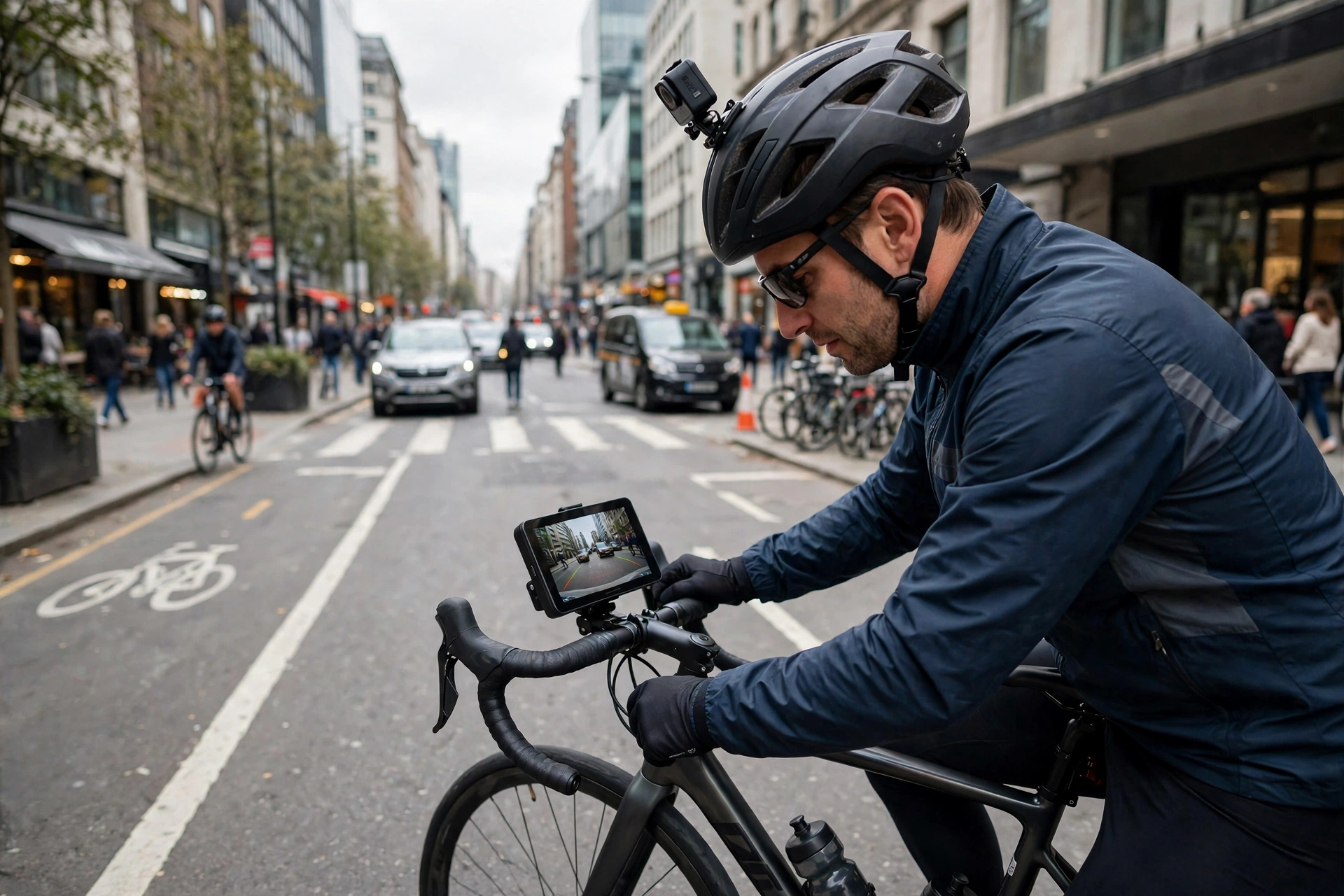
A helmet with a rear-view camera is a helmet that includes a camera pointing backwards, so the rider can see the road behind them without turning around. In most designs, the camera is built into the back of the helmet or mounted on the rear of the shell, and the picture it takes is shown on a small display. Some designs put the display inside the helmet, near the top of the visor, while others send the picture to a phone or a small screen mounted on the handlebars.
The idea is simple: a rider who can see behind them can spot a vehicle approaching from the rear, check whether it is safe to change lanes, and notice a faster rider or vehicle coming up before it overtakes. For cyclists in busy traffic and for motorcyclists on the road, that extra awareness could be useful, because turning the head to look behind takes the eyes off the road ahead and can briefly upset the rider’s balance.
How Does a Rear-View Camera Helmet Work?
A rear-view camera helmet works by combining a small camera, a display, and a battery in a package that fits into or onto a helmet. The camera sits at the back of the helmet and points backwards, capturing a wide view of the road behind. That picture is sent, either by a wire or wirelessly, to a display that the rider can see without turning their head. The display may be a small screen inside the helmet, a section of the visor, or a separate screen on the handlebars.
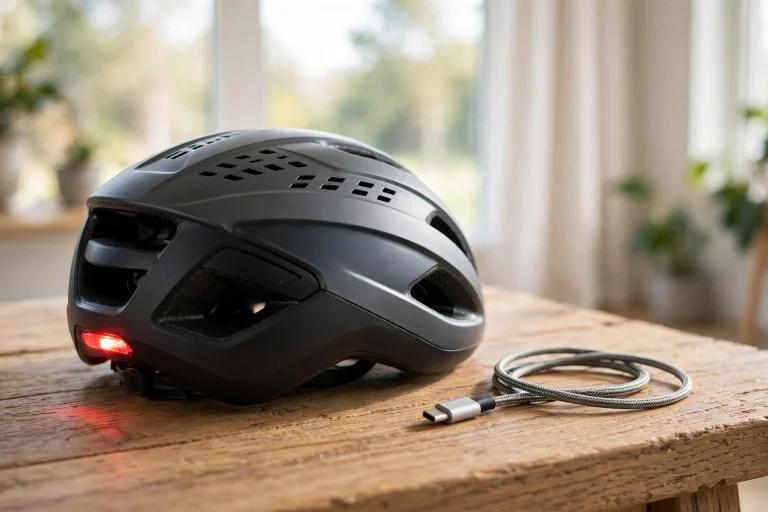
The battery powers both the camera and the display, and it usually needs to be charged between rides, in the same way as a phone or a bike light. Some designs use a rechargeable battery built into the helmet, while others use a removable battery pack that can be swapped for a charged one. Battery life varies by design, and it is one of the practical limits of the idea, because a camera that runs out of power halfway through a ride stops being useful.
Many rear-view camera helmets also include other smart features, such as lights, indicators, or a connection to a phone app. If you are learning about how helmets handle different kinds of impact, reading about what MIPS is for helmets can help you understand one of the technologies used in modern helmet design. The camera itself does not change how the helmet protects the head in a crash — that still depends on the shell, the liner, and the fit — but adding electronics to a helmet does add weight and complexity, and it is worth checking that the helmet still meets a recognised safety standard.
What Are the Benefits of a Rear-View Camera on a Helmet?
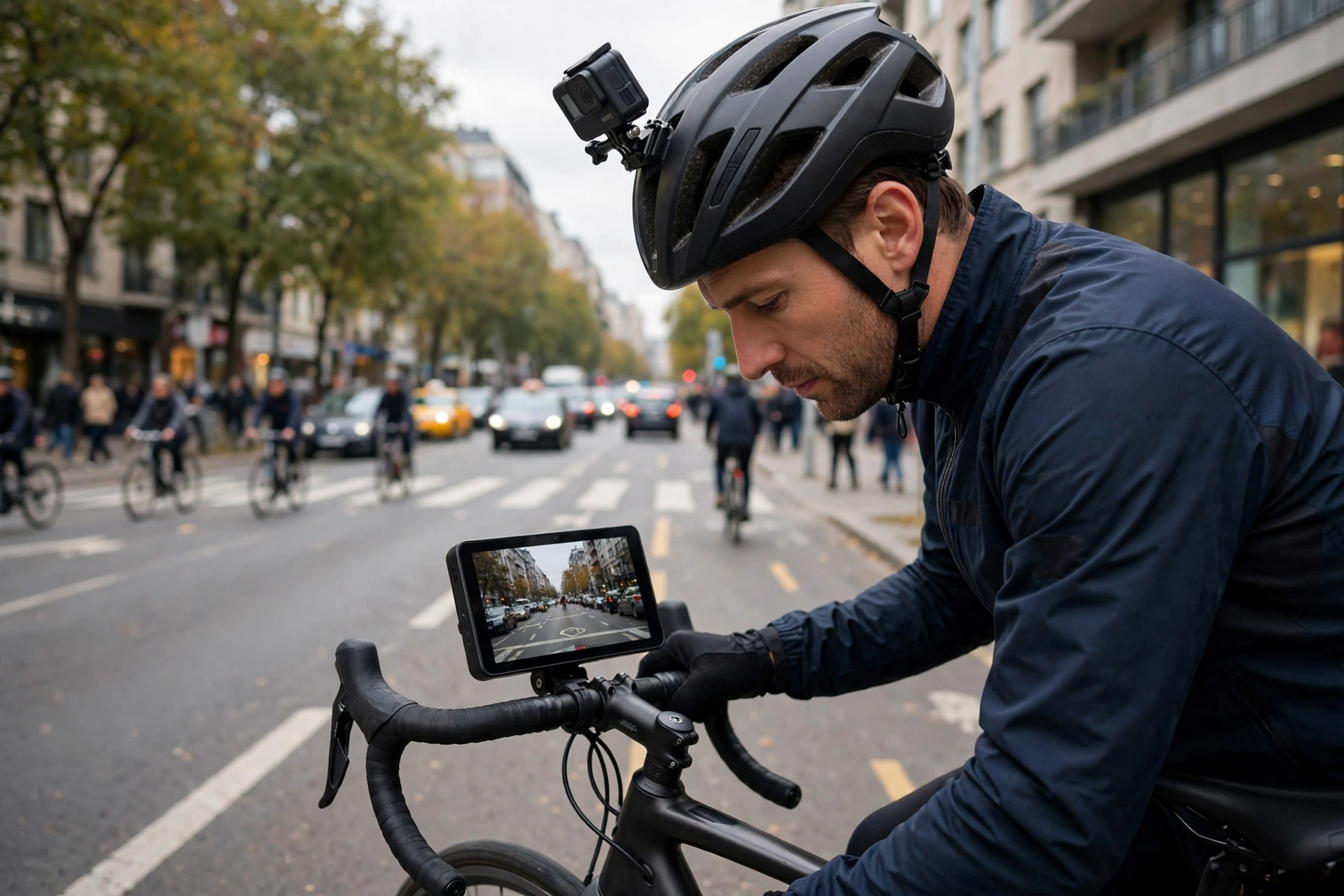
The main benefit of a rear-view camera on a helmet is that it lets the rider see behind without turning their head. Turning to look behind takes the eyes off the road ahead, even if only for a moment, and it can cause the rider to swerve slightly as their shoulders follow their head. A camera view lets the rider keep looking forward while still knowing what is coming up from behind, which can be useful in busy traffic or before changing lanes.
A rear-view camera can also help in situations where a mirror does not work well. Mirrors on a bicycle or motorcycle can vibrate, fog up, or show only a narrow view, and they need to be adjusted carefully to be useful. A camera can offer a wider view and, in some designs, a clearer picture in low light. For riders who find mirrors hard to use, or who ride a bike where fitting a mirror is difficult, a camera can be a practical alternative.
What Are the Limits and Drawbacks to Know About?
The limits of a rear-view camera helmet start with the display itself. A small screen inside a helmet, or a screen on the handlebars, can be a distraction if the rider spends too much time looking at it instead of the road ahead. Learning to glance at the display briefly, in the same way as checking a mirror, takes practice, and a rider who stares at the screen is less safe, not more safe. The camera is meant to support awareness, not to replace looking at the road.
Battery life and weather are practical limits too. A camera and display need power, and if the battery runs out, the rider is left with an ordinary helmet that may be heavier than usual because of the electronics inside it. Rain, dirt, and low light can also affect the camera’s picture, and a lens that is covered in spray or mud will show very little. A camera that works well on a dry, sunny day may be much less useful on a wet evening ride.
Is a Rear-View Camera Helmet Worth Considering?
A rear-view camera helmet is worth considering if you ride regularly in busy traffic and you find it hard to check behind you safely. Commuters, delivery riders, and anyone who changes lanes often on a busy road may find the live rear view genuinely useful, because it lets them check for traffic behind without taking their eyes off the road ahead for as long as a head turn would. If that matches how you ride, a camera helmet could be a useful addition to your kit.
It is less obviously worth it if you mostly ride on quiet roads or off-road trails, where there is little traffic coming up from behind. In those settings, a camera adds weight, cost, and charging without giving you much extra information. It is also worth thinking about whether you are comfortable with the display: if you find screens distracting, or you prefer to keep your helmet simple and light, an ordinary helmet with a mirror may suit you better.
Frequently Asked Questions
Q: Does a rear-view camera replace the need to look behind you?
A: No. A camera gives you a useful view of what is behind you, but it does not replace checking the road and your surroundings. Use it as a quick glance, in the same way as a mirror, and keep looking ahead as your main focus.
Q: Does the camera make the helmet safer in a crash?
A: Not by itself. The camera helps with awareness, but protection in a crash still depends on the helmet’s shell, liner, and fit. Check that any camera helmet you buy meets a recognised safety standard, just as you would for an ordinary helmet.
Q: What happens if the battery runs out during a ride?
A: The camera and display stop working, and you are left with a helmet that may be heavier than an ordinary one. Check before you buy whether the helmet is still comfortable and safe to use without power, and charge it fully before each ride.

Olivia
Writer at Helmet Today, covering helmet reviews, fit and riding safety.