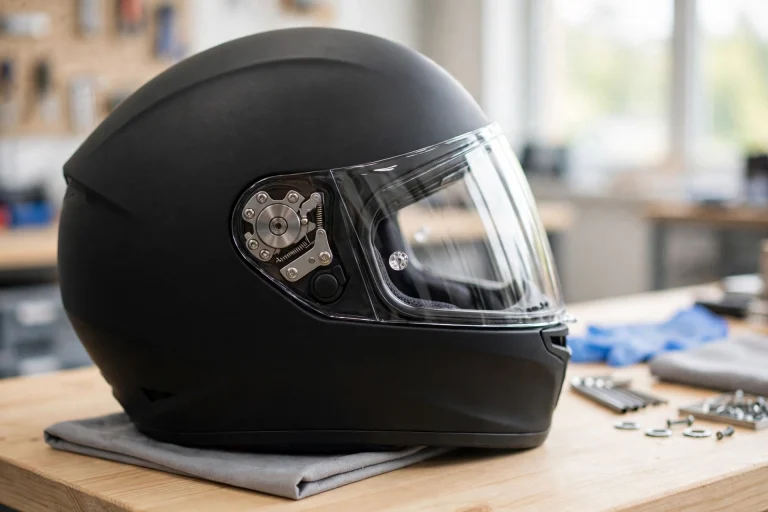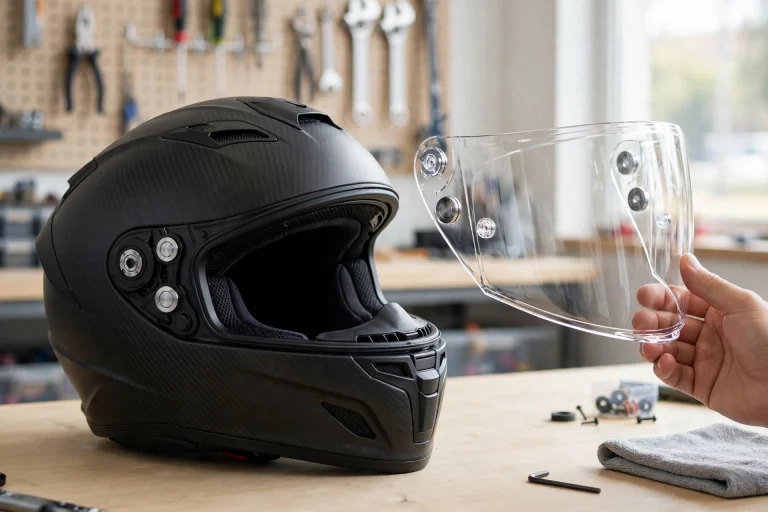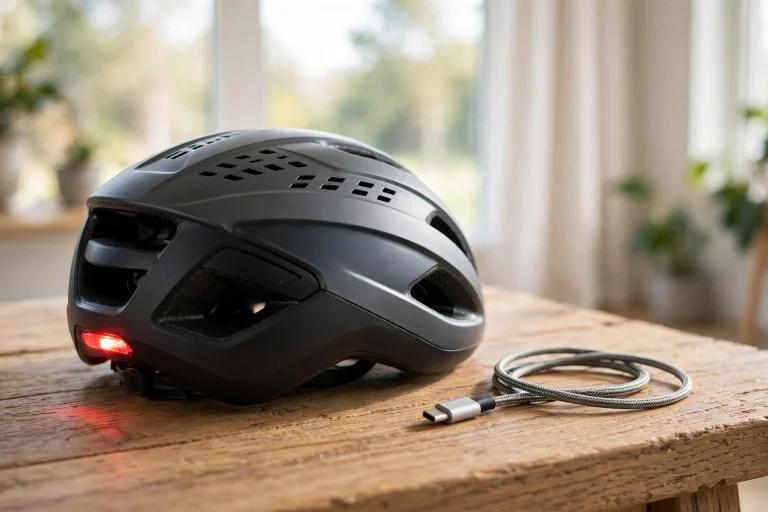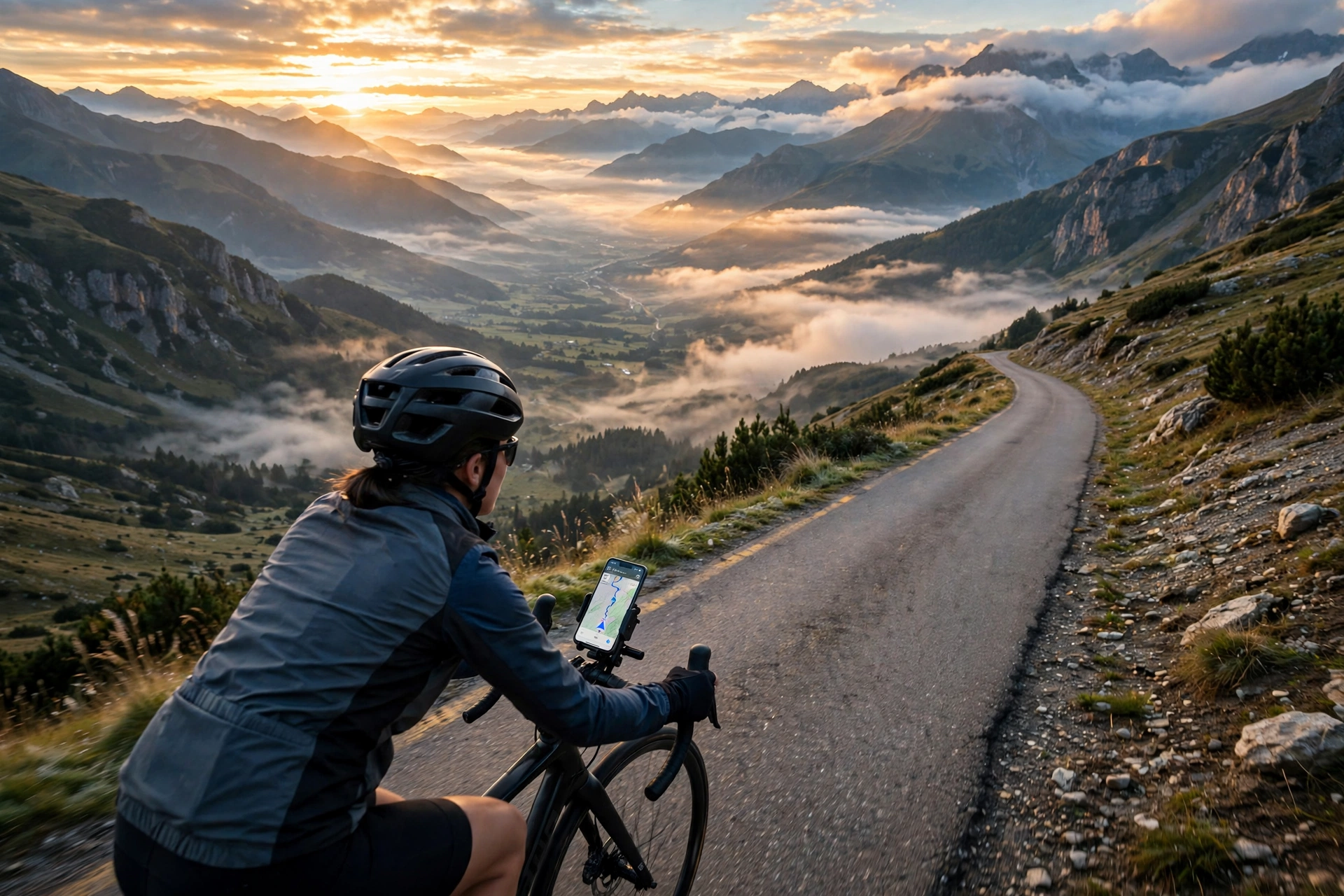
A helmet with GPS tracking is a helmet that can record where you ride, or be located in real time, using a GPS receiver built into the helmet or paired with your phone. The GPS chip picks up signals from satellites to work out your position, and the helmet’s app turns that into a route map, a distance figure, and a speed record. In general terms, these helmets are aimed at riders who want to track their rides, share their location with family, or be able to find their helmet if it is lost or stolen.
How Does GPS Tracking Work in a Helmet?
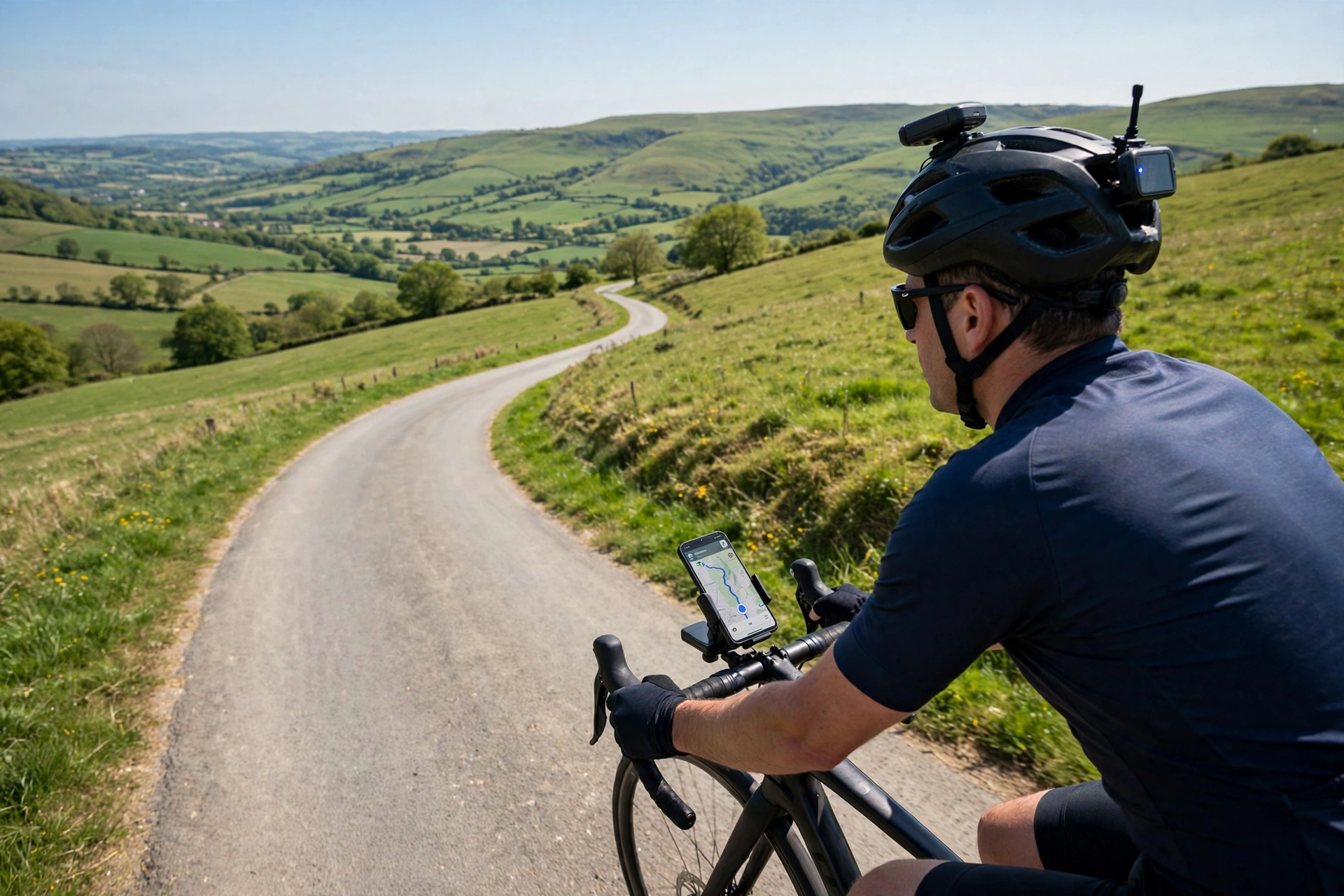
There are two main ways a helmet gets GPS data. The first is a built-in GPS chip inside the helmet itself. The chip receives signals from GPS satellites and works out the helmet’s position, speed, and direction of travel. It stores that data or sends it to your phone by Bluetooth, where the app draws your route on a map. A helmet with its own GPS can record a ride without your phone, which appeals to riders who prefer to travel light.
The second way is to use your phone’s GPS. In this setup, the helmet has no GPS chip of its own — it simply connects to your phone, and the phone does the location work. The app records your route using the phone’s receiver, and the helmet adds whatever its own sensors measure, such as motion or impact. This is simpler and cheaper, and in practice it is how most GPS-tracking helmets work, because nearly every rider carries a phone anyway.
Either way, the data is only as good as the GPS signal. GPS works best with a clear view of the sky. In open countryside it is usually very accurate, but in a city with tall buildings, in a tunnel, or under thick tree cover, the signal can bounce or drop out, and the recorded route can wander or show gaps. This is a limitation of GPS itself, not of the helmet, and it affects phones and cycling computers in the same way.
What Can You Do with GPS Data from Your Helmet?
The most common use is recording your route. After a ride, the app shows where you went on a map, along with distance, average speed, and elevation if the app supports it. This is useful for keeping a log of your rides, comparing the same route over time, and finding new roads or trails. Many riders enjoy looking back at their routes, and sharing them with friends is part of the fun for some.
A third use is finding a lost or stolen helmet. A helmet with its own GPS and a live connection can report its location, which may help you track it down. In practice, this only works if the helmet is switched on and within range of a signal, and if the tracking service is still active. A helmet that is switched off or has a flat battery cannot be found, so this feature is useful but not foolproof. It is also worth remembering that a helmet’s main job is protecting your head, and if you want to learn more about the safety technology inside it, reading about what MIPS is for helmets is a good place to start.
How Accurate Is GPS Tracking in a Helmet?
In open conditions, GPS tracking from a helmet is generally very accurate. On a clear road with a good view of the sky, the recorded route will follow the road closely, and distance and speed figures will match what a cycling computer or a phone app would show. Most riders will find the accuracy more than good enough for logging rides and sharing routes.
Accuracy drops in built-up areas, under bridges, in tunnels, and under heavy tree cover. The GPS signal can bounce off buildings or be blocked entirely, and the app may fill in the gaps by drawing a straight line between the last known position and the next one. That can make a route look odd — a straight line across a block, or a sudden jump — and it can add a small error to the total distance. This is normal for GPS and not a fault in the helmet.
What Are the Downsides of a GPS Tracking Helmet?
The first downside is battery life. A GPS chip draws power constantly while it is running, and a helmet’s small battery can only last so long. On a long ride, the GPS may run flat before you get home, which means the second half of your route goes unrecorded. A phone-based setup has the same problem in reverse: your phone’s battery drains faster with GPS running, and a flat phone means no route and no way to call for help. Carrying a small power bank is a sensible habit for long rides.
Privacy is another consideration. GPS tracking records where you go, and that data is stored in an app, often on a company’s servers. Most riders are happy to share their routes, but it is worth checking what a helmet’s app does with your location data, whether it is shared with anyone else, and whether you can delete it. If you share your live location with family, make sure only the people you trust can see it.
Who Should Consider a Helmet with GPS Tracking?
Solo riders who want their family to know where they are will get the most from GPS tracking. Live location sharing gives your family a way to follow your ride and check on you if you stop, which is reassuring for everyone. If you ride alone on long or remote routes, that peace of mind is worth a lot.
Riders who like to log and compare their rides will also enjoy it. If you keep a record of your routes, track your distance over the season, or enjoy exploring new roads and looking back at where you have been, a GPS-tracking helmet makes that easy. It suits riders who already use a cycling app and want the data to come from the helmet rather than from a phone in a pocket.
Commuters may find GPS less essential. A regular commute is the same route every day, so recording it adds little, and live location sharing matters less on a short familiar ride. If you commute through busy traffic, a helmet that focuses on visibility or impact detection may be a better use of the extra money than one that tracks your route.
Frequently Asked Questions
Q: Does a GPS tracking helmet work without my phone?
A: It depends on the model. A helmet with its own GPS chip can record a route without a phone, though you still need the app to view the route afterwards. A helmet that relies on your phone’s GPS needs the phone with you for the whole ride.
Q: Will GPS tracking drain my phone battery quickly?
A: GPS does use extra battery, so a long ride can drain your phone noticeably faster than usual. Keeping your phone charged before you set off, and carrying a small power bank on long rides, helps avoid a flat battery.
Q: Can GPS tracking help find a stolen helmet?
A: Sometimes. A helmet with its own GPS and a live connection can report its location, but only while it is switched on and has a signal. A switched-off helmet or one with a flat battery cannot be tracked, so the feature is useful but not a guarantee.

Olivia
Writer at Helmet Today, covering helmet reviews, fit and riding safety.