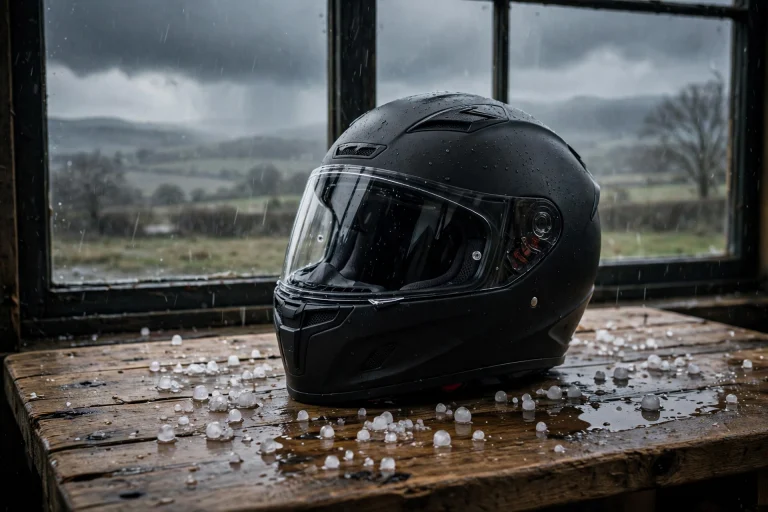
Yes, helmets still work in the rain — getting wet does not stop a helmet from protecting your head, though rain does make riding itself more hazardous. A helmet’s shell and foam liner are designed to absorb impact, and water does not change how they do that job. The main problems in the rain are visibility, slippery roads, and a soggy helmet, not a loss of protection.
This is a fair question, because a helmet soaked through in heavy rain feels very different from a dry one. It is heavier, the padding is wet against your skin, and water can run down into your eyes. But none of that affects the helmet’s ability to protect you in a crash. This guide explains why helmets keep working in the rain in general terms, what rain does change, and how to ride and care for a wet helmet.
Does Water Damage a Helmet’s Protection?
In general terms, no. The outer shell of a helmet is waterproof or close to it, and the foam liner inside is made of materials that do not dissolve or weaken in water. The liner is designed to crush on impact, and being wet does not stop it from crushing. A helmet that has been rained on is still a working helmet, and you do not need to replace it just because it got wet.
That said, repeated soaking without proper drying can cause other problems over time. Damp padding can develop a smell, and mould can grow if a helmet is stored wet in a dark place. The straps can also take longer to dry, and metal fittings may show signs of surface rust if they stay damp for a long time. These are comfort and hygiene issues, not safety failures, but they are worth avoiding by drying the helmet properly after a wet ride.
One thing to avoid is drying a wet helmet with strong heat, such as placing it on a radiator or using a hairdryer on a hot setting. High heat can damage the foam liner and the shell, so let the helmet dry naturally in a ventilated place, with the padding removed if possible.
What Does Rain Change About Riding with a Helmet?
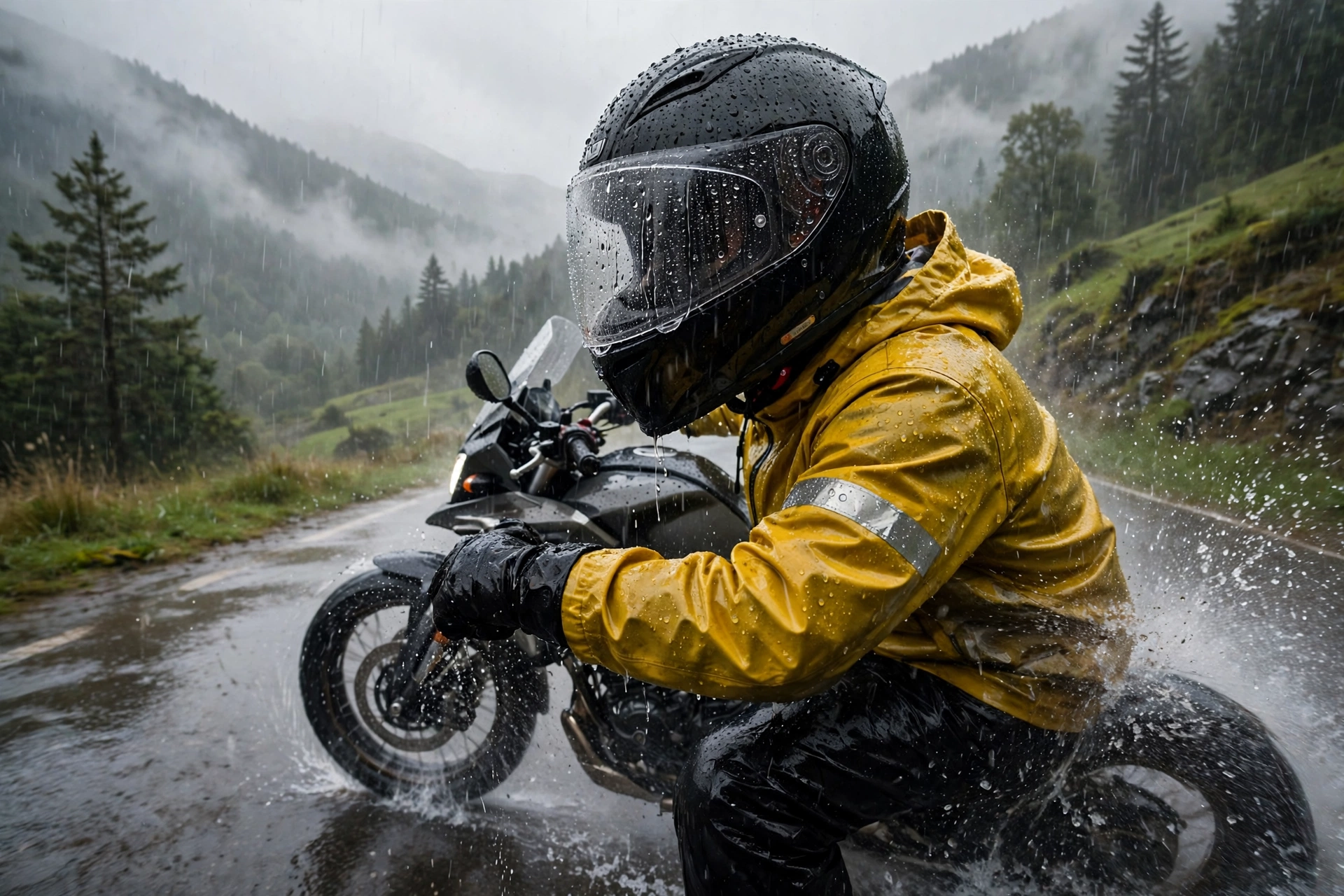
The biggest change is visibility. Rain on a visor or glasses blurs your view, and spray from other vehicles makes it worse. Keep your visor clean, use an anti-fog treatment if you have one, and wipe the visor when you stop. Some riders lift the visor slightly at low speed to let air in and reduce fogging, but that lets rain in too, so it is a trade-off.
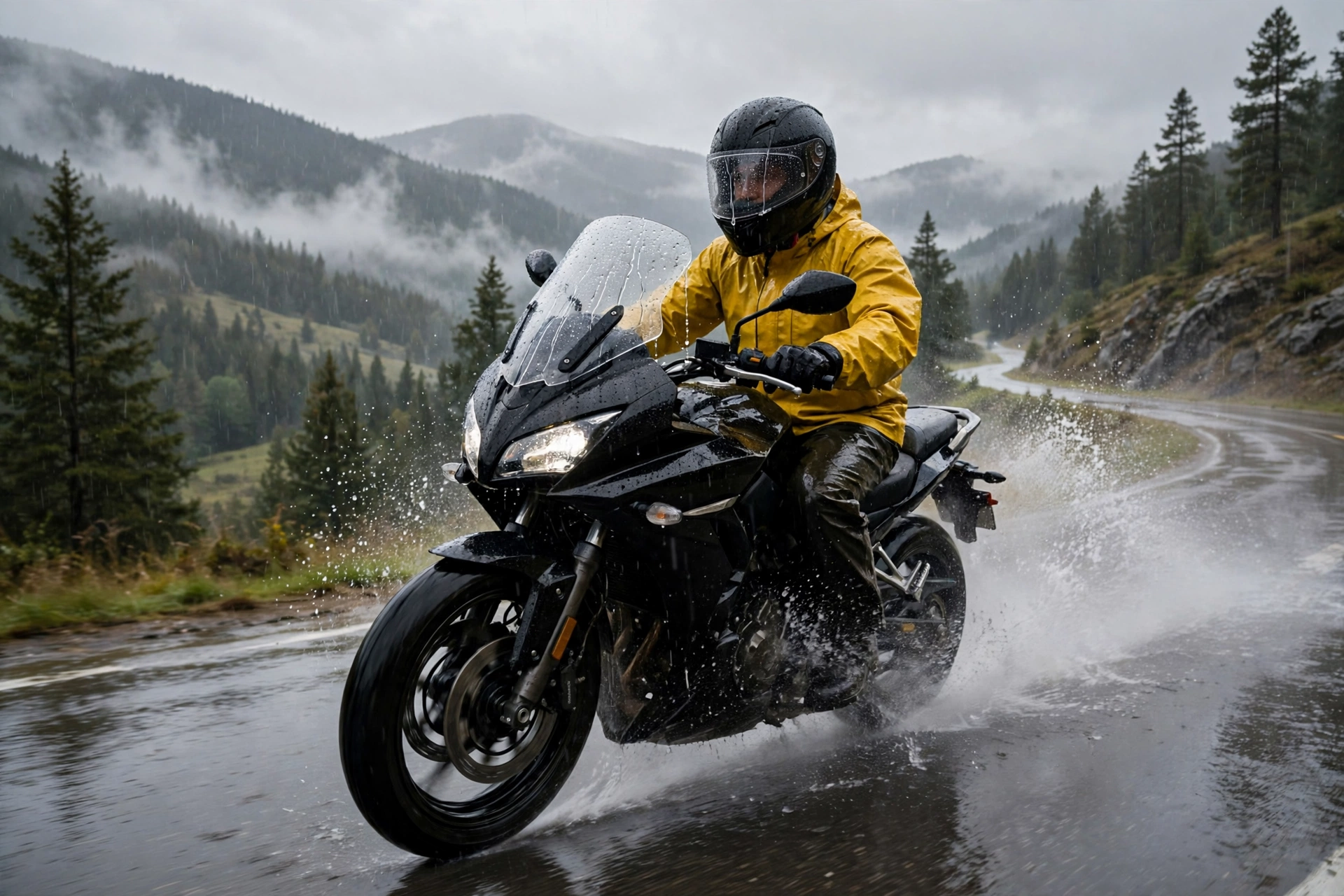
Roads are also more slippery in the rain, especially in the first few minutes of a shower, when rain mixes with oil and dust on the road surface. Braking distances get longer, and painted lines, metal covers, and leaves become very slippery. Slow down, brake earlier and more gently, and leave a bigger gap to the vehicle in front. The helmet protects you if you fall, but it cannot stop the fall from happening.
Rain also makes you colder, and a cold, wet rider is a distracted rider. Water running down your neck and into your jacket is miserable on a long ride, so a waterproof jacket with a high collar and a neck gaiter makes a big difference to comfort.
How Should You Dry a Wet Helmet?
Take the helmet indoors and let it air dry in a ventilated room. Remove the padding and liner if they come out, and let them dry separately — they dry faster apart than inside the shell. Stuffing the helmet loosely with a dry towel or newspaper can help draw moisture out of the padding, but replace the towel once it gets damp.
Do not store a wet helmet in a sealed bag or a closed cupboard, because trapped moisture encourages mould and bad smells. Leave it somewhere air can circulate around it, and do not put it away until it feels dry to the touch inside and out. A small fan nearby can speed the process without any risk of heat damage.
If the padding has picked up a smell, wash it according to the maker’s instructions, usually with mild soap and water, and let it dry fully before putting it back. A helmet that smells fresh is also a helmet you will be happier to wear, and that matters more than it sounds — a helmet left unworn because it smells is no use to anyone.
Do You Need a Special Rain Helmet?
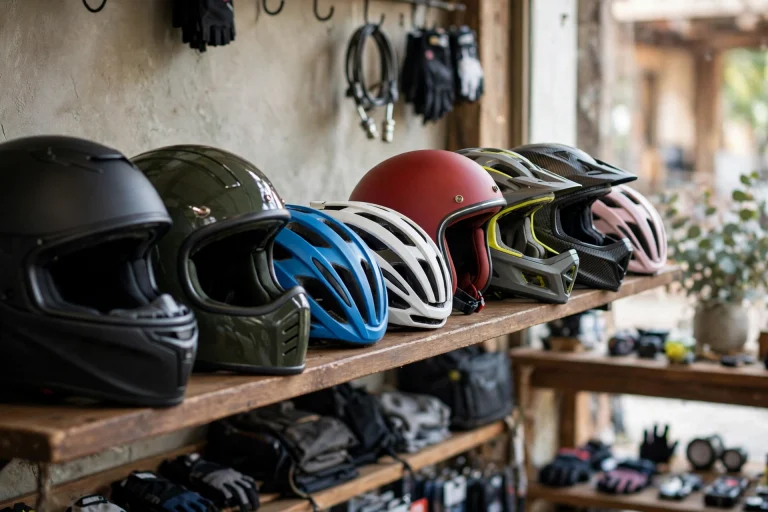
In general terms, no. Most standard helmets cope with rain perfectly well, and there is no need to buy a separate helmet for wet weather. Some helmets have better-sealed vents or a visor that sheds water more easily, and these can be more comfortable in heavy rain, but they are a convenience rather than a necessity.
What helps more than a special helmet is a good visor and good rain gear. A clean visor with a water-repellent treatment lets rain bead and roll off instead of smearing across your view. A waterproof jacket and gloves keep you dry and warm, which helps you stay focused on the road. If you are learning how helmet design affects protection in different conditions, reading about what MIPS is for helmets can help you understand one of the technologies used in modern helmet design.
Some riders also fit a small visor peak or use a helmet cover in heavy rain. A cover keeps the shell and vents drier, but it can also trap moisture inside, so it is worth trying one on a short ride before relying on it for a long journey.
Is It Safe to Ride in Heavy Rain?
It is safer to avoid riding in very heavy rain if you can, not because of the helmet, but because of the road. Standing water can hide potholes, spray from large vehicles can blind you for a moment, and strong wind can push you across the lane. If the rain is so heavy that you cannot see clearly, pull over somewhere safe and wait for it to ease.
If you must ride in the rain, slow down, keep your distance, and use your lights so other road users can see you. Bright or reflective rain gear helps too. Remember that your helmet is still doing its job — the rain has not weakened it — but the conditions around you have changed, and your riding should change with them.
In general terms, rain is a challenge to be managed, not a reason to stop wearing a helmet. A wet helmet still protects your head, and a dry, comfortable rider is a safer one, so look after both.
Frequently Asked Questions
Q: Do helmets still work in the rain?
A: Yes. Water does not stop a helmet’s shell and foam liner from absorbing impact. The main problems in the rain are visibility and slippery roads, not a loss of protection.
Q: How do I dry a wet helmet?
A: Let it air dry in a ventilated room, with the padding removed if possible. Do not use strong heat such as a radiator or a hot hairdryer, and do not store it wet in a sealed bag.
Q: Do I need a special helmet for rainy weather?
A: No. A standard helmet works fine in the rain. A clean visor with water-repellent treatment and good waterproof gear will do more for comfort than a separate rain helmet.

Olivia
Writer at Helmet Today, covering helmet reviews, fit and riding safety.