Yes, helmets bought online can protect just as well as shop-bought ones — the protection comes from the helmet’s design and standard, not from where you bought it. An online helmet from a reputable seller, meeting the same safety standard as a shop helmet, is the same helmet. The real difference is not protection, but fit: in a shop you can try the helmet on, while online you have to get the size right yourself.
This is an important question because online shopping is now the normal way many people buy helmets, and the price differences can be large. This guide looks at what actually determines a helmet’s protection in general terms, where online buying carries risks, and how to buy online safely.
What Determines Whether a Helmet Protects You?
Protection comes from the helmet itself: the strength of its shell, the quality of its foam liner, and the safety standard it meets. None of those things depends on the shop it was sold in. A helmet bought online from the maker’s own store or an authorised retailer is the same product, made in the same factory, tested to the same standard as the one on a shop shelf.
What does matter is that the helmet is genuine, undamaged, and the right size. A genuine helmet from a trusted seller meets the standard printed on its label. A counterfeit helmet, or one that has been damaged in storage or transit, may not — and that risk is higher when buying from unknown sellers on marketplace sites, where the source of the helmet is unclear.
Age matters too. A helmet that has sat in a warehouse for years may have a liner that has started to degrade, even if it has never been worn. Check the manufacturing date when the helmet arrives, and buy from sellers who turn over stock regularly rather than from a listing that looks too cheap to be true.
What Is the Main Risk of Buying a Helmet Online?
The main risk is fit. Head shapes vary, and two helmets in the same size from different makers can fit very differently — one may press on your forehead while the other feels loose at the sides. In a shop, you can try several helmets and find the one that fits your head shape. Online, you are guessing from a size chart, and a size chart cannot tell you about head shape.
A badly fitting helmet protects less well, because it can shift in a crash or come off entirely. It is also less comfortable, which makes you less likely to wear it. That is why fit is the single most important factor after the safety standard, and it is the one thing online shopping makes harder.
The fix is to measure your head carefully, read reviews from people with a similar head shape, and buy from a seller with a free and easy returns policy. If the helmet does not fit when it arrives, send it back and try another size or model — do not settle for a poor fit because returning it feels like a hassle.
How Can You Buy a Helmet Online Safely?
Start by buying from a reputable seller: the maker’s own website, a well-known retailer, or an authorised dealer. Avoid marketplace listings from unknown sellers, especially if the price is far below the usual price, because that is a common sign of a counterfeit. Check that the listing names the safety standard the helmet meets, and that the helmet arrives with its certification labels intact.
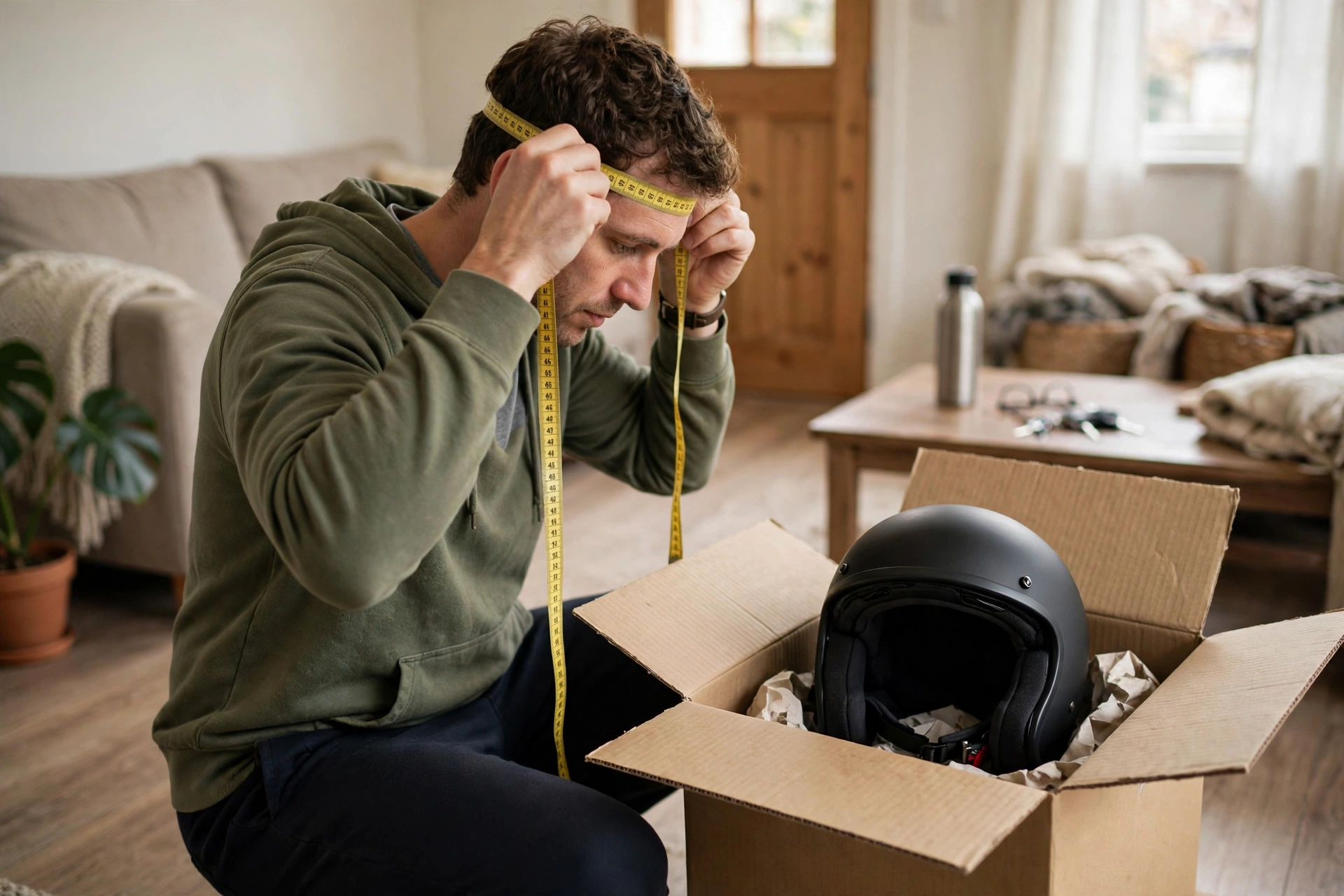
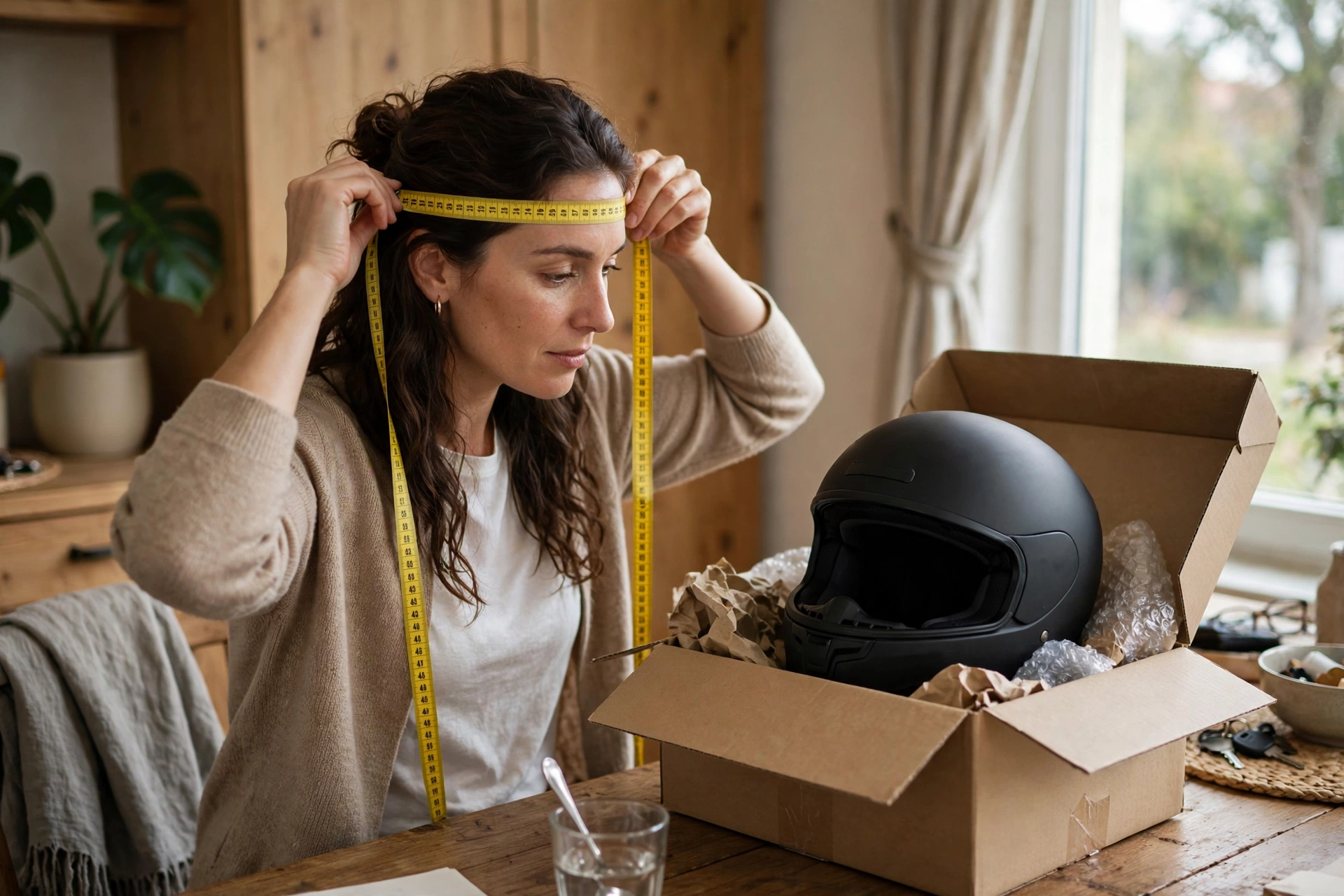
Measure your head with a soft tape measure, just above your eyebrows and ears, and compare the measurement to the maker’s size chart — not a generic chart, because sizes vary between makers. If you are between sizes, check the maker’s guidance, and consider ordering two sizes if the returns policy allows it, so you can compare them at home.
When the helmet arrives, inspect it carefully. Check the shell for cracks or dents, check that the liner is firm and even, and check that the straps and buckle work properly. If anything looks wrong, or the packaging looks tampered with, return it. A genuine helmet should arrive in proper packaging with its labels, manual, and certification marks.
Is a Shop-Bought Helmet Ever Better?
A shop has one clear advantage: expert fitting. A good shop assistant can help you find the right size and shape, check the fit, and adjust the straps for you. That hands-on help is valuable, especially for a first helmet or for a child, whose head is still growing and whose fit needs checking regularly.
A shop also lets you compare helmets side by side, feeling the weight, the ventilation, and the padding of each one. That is hard to do online, where you rely on descriptions and photos. For some buyers, that experience is worth the higher price of a shop helmet.
But the helmet itself is the same. A shop helmet is not made to a higher standard, and it does not protect better than the identical model bought online. The difference is the service around the purchase, not the product. If you are learning about what goes into a helmet’s protection, reading about what MIPS is for helmets can help you understand one of the technologies used in modern helmet design.
Should You Buy Your Next Helmet Online?
In general terms, yes — if you buy carefully. Choose a reputable seller, measure your head properly, check the safety standard and the manufacturing date, and make sure you can return the helmet if it does not fit. If you already know the model and size that fits you, buying the same one online is low risk.
If it is your first helmet, or you are unsure of your size, a shop visit is worth it. Try helmets on, find the model that fits, and then you can buy that exact model online in future with confidence. That combination — a shop fitting first, online buying later — gives you the best of both.
Either way, the protection is the same. What matters is that the helmet is genuine, meets the standard, fits well, and is worn every time you ride.
Frequently Asked Questions
Q: Do helmets bought online protect as well as shop-bought ones?
A: Yes. Protection comes from the helmet’s design and safety standard, not the shop. The same model from a reputable online seller protects just as well as the same model from a shop.
Q: What is the main risk of buying a helmet online?
A: Fit. You cannot try the helmet on before buying, and head shapes vary between makers. Measure carefully, read reviews, and buy from a seller with easy returns.
Q: How can I tell if an online helmet is genuine?
A: Buy from a reputable seller, check the safety standard and certification labels, and inspect the helmet when it arrives. A price far below the usual price from an unknown seller is a warning sign.

Olivia
Writer at Helmet Today, covering helmet reviews, fit and riding safety.