To replace a helmet buckle, you remove the old buckle from the chin strap, fit a new buckle of the same type, and check that it clicks shut and holds firmly before you ride. In most cases the job is straightforward and needs only basic tools, but the exact steps depend on whether the buckle is sewn, riveted, or clipped onto the strap. A buckle that slips, cracks, or will not stay closed should be replaced rather than repaired.
The buckle is a small part, but it does an important job: it keeps the helmet on your head. If it fails while you are riding, the helmet can come loose at the worst possible moment. This guide explains in general terms how to replace a helmet buckle, how to choose the right replacement, and how to check that the new buckle is fitted safely.
What Kinds of Helmet Buckles Are There?
Most helmets use one of a few common buckle designs. The double D-ring is the classic motorcycle helmet fastener: the strap threads through two metal rings and is pulled tight. It has no moving parts to break, so it rarely needs replacing, though the rings themselves can wear or corrode over time.
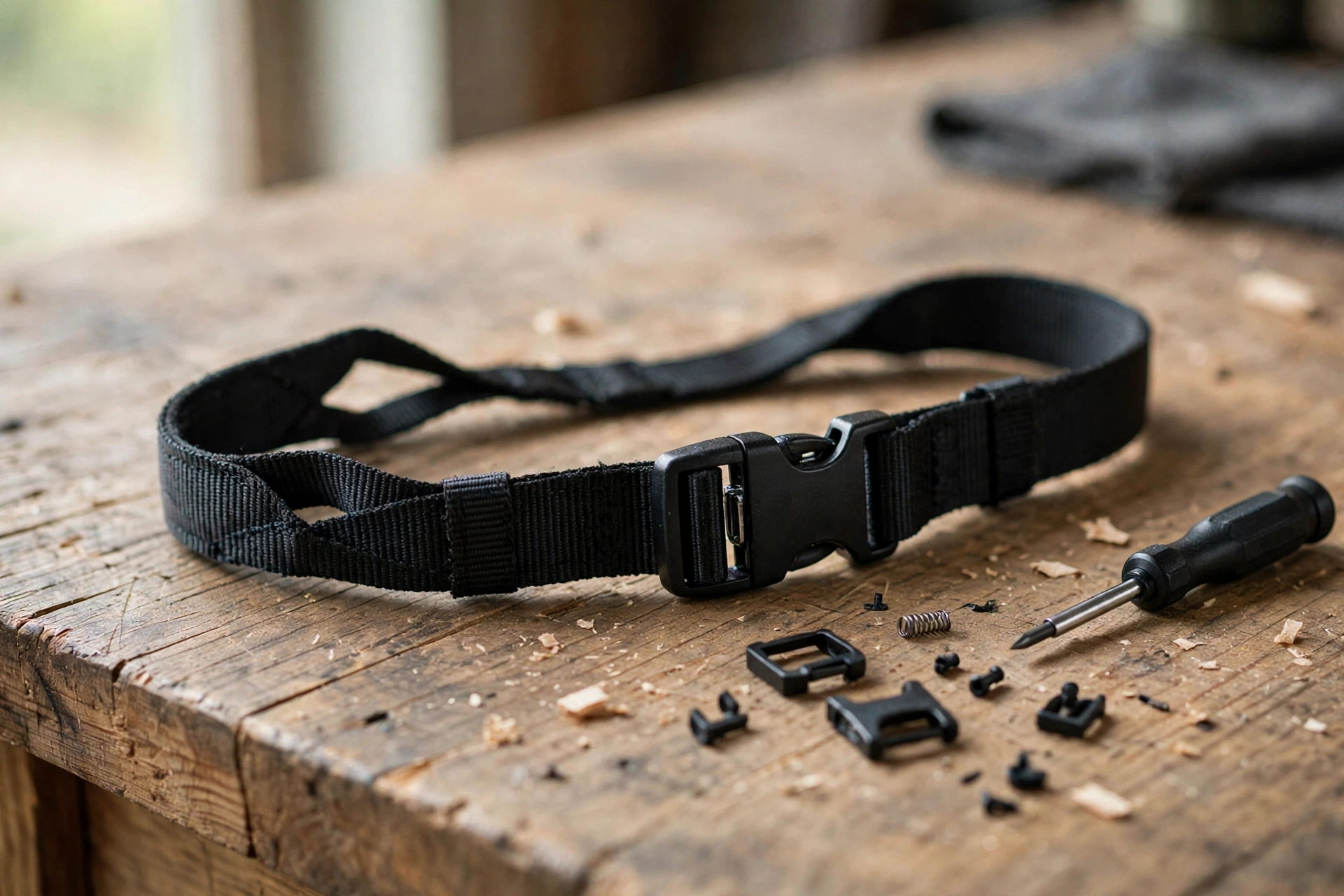
Quick-release buckles are more common on cycling, ski, and children’s helmets. These are usually made of plastic and click together with a squeeze or a press. They are convenient, but the plastic can crack with age or after a hard knock, and the spring inside can weaken. Micrometric buckles, found on many motorcycle helmets, use a ratchet that tightens in small steps and releases with a pull tab. They are durable, but the ratchet teeth can wear down.
Before you buy a replacement, work out which type your helmet uses and how it is attached. A quick-release buckle that is sewn to the strap needs a different approach from one that clips on, and a micrometric buckle is often a complete unit that bolts or rivets to the strap. Taking a photo of the old buckle before you start will help you match it later.
How Do You Remove the Old Buckle?
Start by laying the helmet on a stable surface and opening the buckle fully so the strap is slack. If the buckle is held on with a screw or a rivet, undo the screw or drill out the rivet carefully, taking care not to damage the strap itself. Keep the old hardware, since it can help you match the size of the replacement.
If the buckle is sewn onto the strap, the stitching will need to be cut. Use a seam ripper or a small pair of scissors and work slowly, cutting only the thread that holds the buckle and not the strap webbing. Once the stitches are out, the buckle should slide off the end of the strap. Check the strap for fraying or wear while it is exposed, because a worn strap should be replaced at the same time as the buckle.
How Do You Fit the New Buckle?
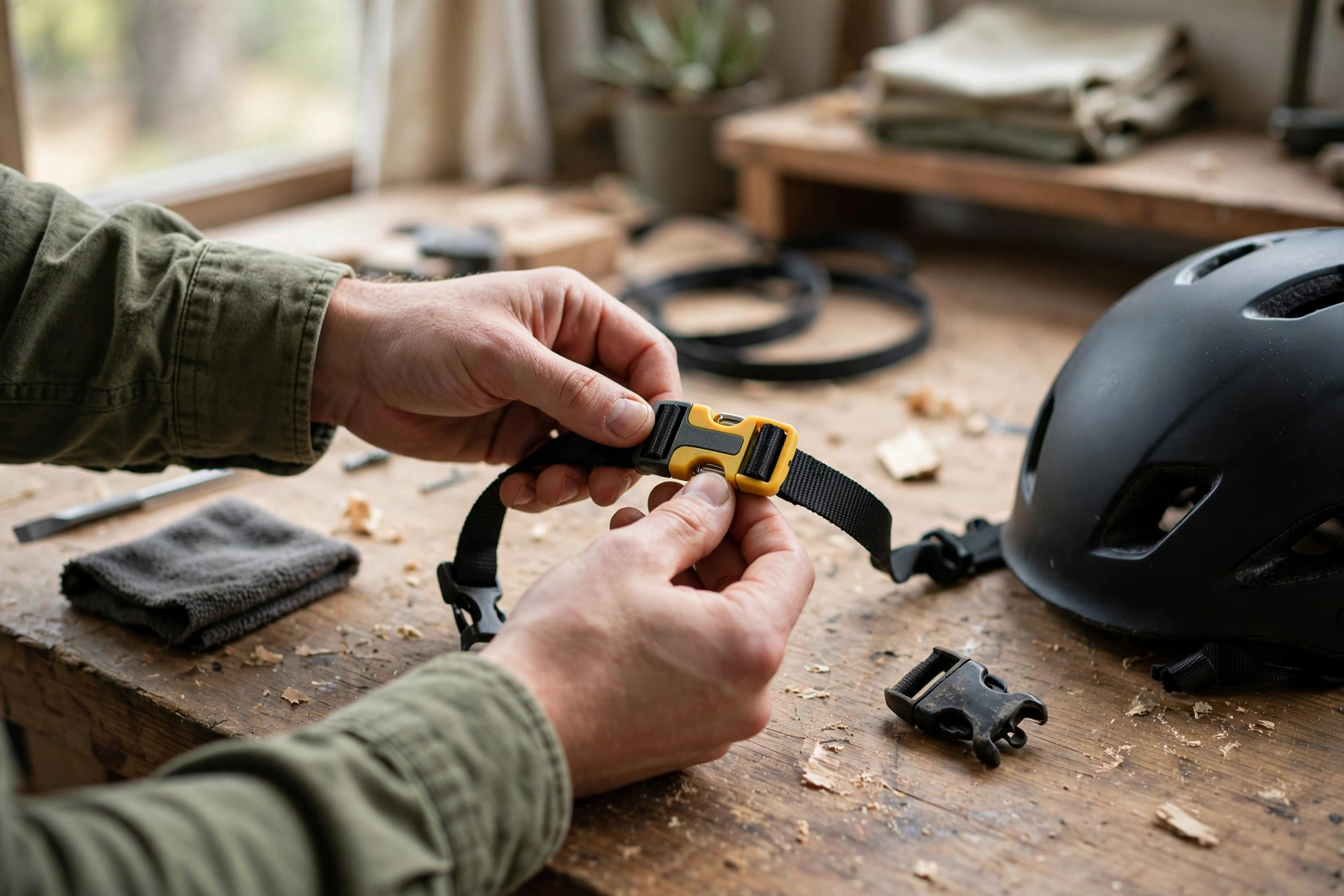
Thread or attach the new buckle exactly as the old one was fitted. If it is a sewn type, fold the strap end over and stitch it firmly with strong thread, making several rows of stitching so the joint is secure. The stitching is what holds the buckle to the strap, so it needs to be neat, tight, and strong. If you are not confident with a needle, a saddler or a gear repair shop can do this for you.
If the buckle uses screws or rivets, fit it with the same type of fixing and tighten it firmly, but do not over-tighten a screw in plastic, since that can crack the buckle. Check that the buckle sits flat against the strap and that nothing twists or folds when the strap is pulled. A buckle that sits at an angle can be uncomfortable and may not close properly.
Once the buckle is on, thread the strap through it in the correct way and test it. A quick-release buckle should click shut with a clear snap and should only open when you squeeze or press the release as designed. A double D-ring should hold the strap without slipping when you pull on it. If anything feels loose or uncertain, do not use the helmet until the buckle is sorted.
How Do You Choose the Right Replacement Buckle?
The most important rule is to match the type and size. A buckle made for a narrow cycling strap will not fit a wide motorcycle chin strap, and a quick-release buckle will not work on a helmet designed for D-rings. Measure the width of the strap and check the thickness of the webbing, since a buckle made for thin webbing may not close properly on a thicker strap.
Where possible, buy a replacement from the helmet maker or a part made for your exact helmet model. This is the safest option, because the part is designed to work with that helmet. Universal buckles can work well, but they need to be checked carefully for fit and strength, and they should be made from good-quality materials rather than the cheapest option available.
In general terms, metal buckles last longer than plastic ones, but they are heavier and can feel cold against the skin. Plastic buckles are lighter and more comfortable, but they need to be checked for cracks and wear more often. Whichever you choose, it should feel solid and well made, with no rough edges or flexing when you squeeze it. If you want a broader view of helmet safety technology, reading about what MIPS is for helmets is a useful background read.
When Should You Replace the Buckle Instead of Repairing It?
A buckle that has cracked, bent, or lost its spring should always be replaced, not repaired. Glue or tape will not restore the strength of a cracked buckle, and a bent metal buckle that has been straightened may be weaker than it looks. The buckle is a safety-critical part, so a repair that might fail is not worth the risk.
You should also replace the buckle if it slips under load. A quick-release buckle that pops open when you pull the strap, or a micrometric buckle whose ratchet no longer holds, has reached the end of its useful life. The same applies if the release button sticks or feels gritty, since a buckle that is hard to open can be a problem in an emergency.
In general terms, it is better to replace a buckle early than to wait for it to fail. Check the buckle as part of your regular helmet inspection, and replace it at the first sign of damage. A new buckle costs far less than a new helmet, and a working buckle is what keeps the helmet where it belongs.
Frequently Asked Questions
Q: Can I replace a helmet buckle myself?
A: In general terms, yes, if the buckle clips or screws on. If it is sewn to the strap, you can still do it yourself with strong stitching, but a repair shop is a good option if you are not confident the stitching will hold.
Q: How do I know if my helmet buckle needs replacing?
A: Look for cracks, bent parts, a weak spring, or a buckle that slips or pops open under a firm pull. Any of these signs means the buckle should be replaced before the helmet is used again.
Q: Do I need the same brand of buckle as my helmet?
A: It is safest to use a replacement made for your helmet model, but a universal buckle can work if it matches the strap width and the buckle type. Always test the fit and the locking action before you ride.

Olivia
Writer at Helmet Today, covering helmet reviews, fit and riding safety.