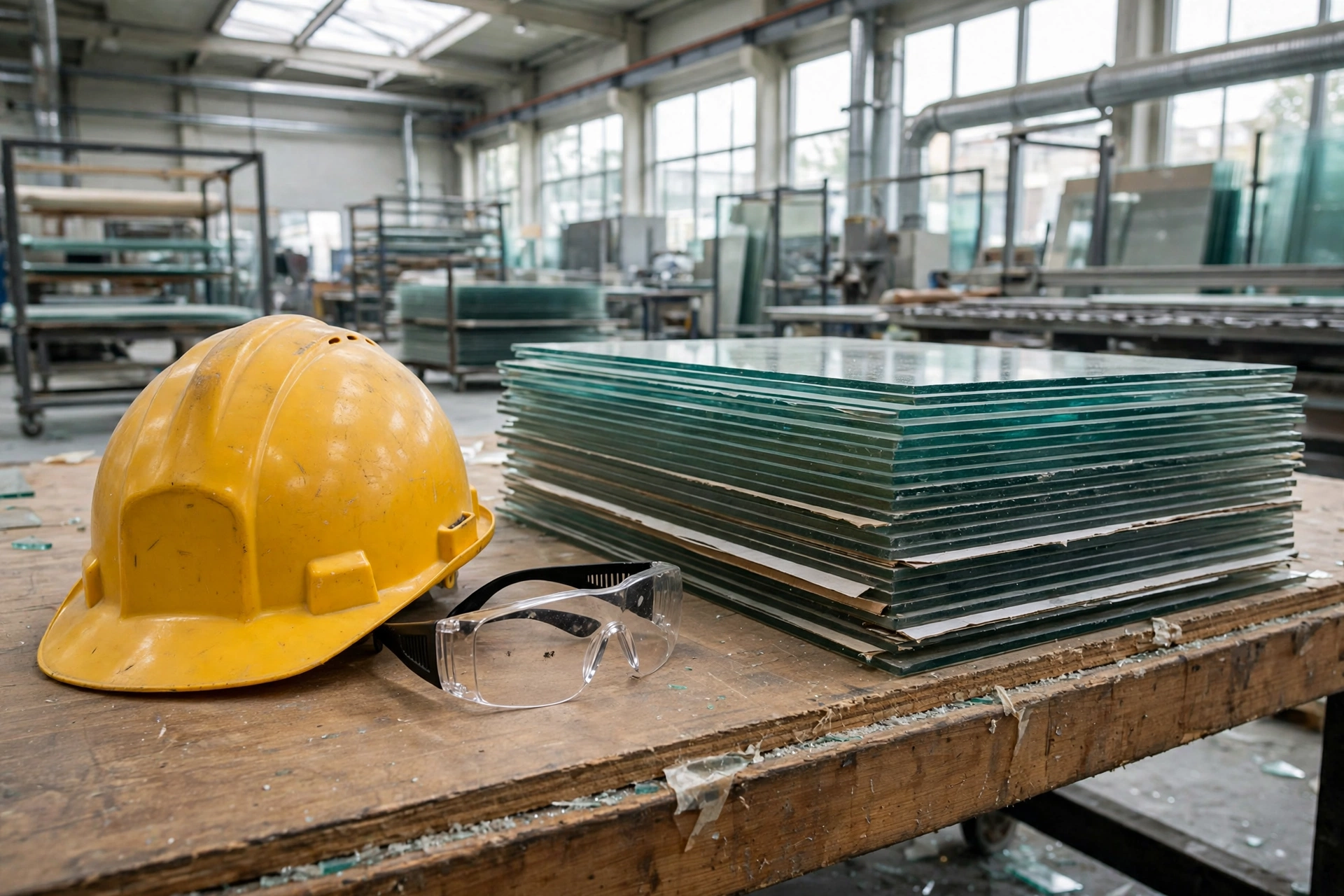
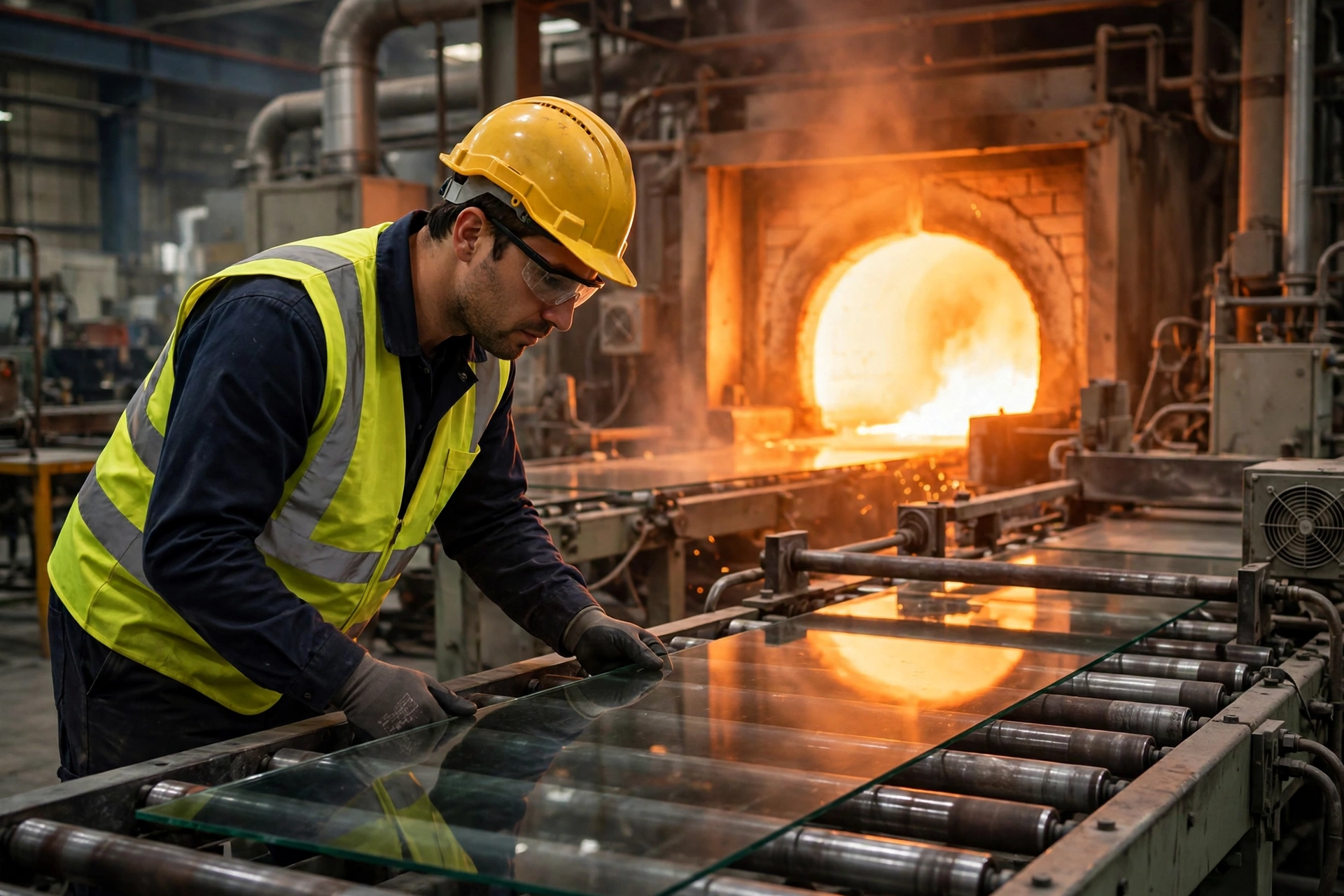
A glass manufacturing helmet is, in general terms, a hard hat that protects the head from falling glass, hot fragments, knocks against machinery and the everyday hazards of a glass factory floor. Glass manufacturing involves molten glass, heavy sheets and bottles, moving machinery and hot surfaces, and a worker’s head is exposed to all of these. A helmet is a basic part of the protective gear worn on the factory floor, alongside safety glasses, gloves and heat-resistant clothing.
Glass is made by melting raw materials at very high temperatures and then forming, cutting and finishing the result. At every stage there are risks to the head: a shard can fly from a cutting line, a piece can fall from a stack or a conveyor, and a worker can bump their head on a mould, a frame or a low pipe. This guide explains what a glass manufacturing helmet needs to do, how heat and fragments shape the choice, and how to look after one, all in general terms.
What Hazards Does Glass Manufacturing Present?
The most obvious hazard is the glass itself. Glass can break into sharp pieces, and those pieces can fall from a stack, fly from a cutting or grinding machine, or be thrown up when a sheet is handled. Even a small shard can cause a cut, and a larger piece falling from a height can cause a serious head injury. Workers who handle, stack or inspect glass are exposed to this risk throughout the shift.
The factory environment adds further risks. Conveyors, cranes, forklifts and trolleys move heavy loads around the floor, and a worker can bump their head on machinery, racking or a low beam. Noise, dust and bright light are part of the job too, and the helmet has to work alongside the ear protection, eye protection and other gear that workers wear.
What Kind of Helmet Is Used in Glass Manufacturing?
In general terms, the helmet for this work is a hard hat of the kind used across heavy industry. It has a rigid outer shell that spreads the force of an impact, and an inner suspension or padding system that holds the shell away from the head and absorbs some of the shock. This is the basic design that has protected industrial workers for many years, and it suits glass manufacturing well.
The shell material matters in a hot environment. Some hard hats are made from materials that cope better with heat than others, and the maker’s guidance on heat resistance should be checked before choosing. A helmet that softens or warps in heat will not protect as it should, so it is worth choosing a model that is rated for the temperatures found near furnaces and forming lines.
Fit is adjusted with a simple system at the back or sides of the helmet, often a dial or a sliding strap. The helmet should sit level on the head and feel snug without pressing painfully anywhere. It should not wobble when the wearer bends down or moves quickly, because a helmet that shifts around is a distraction on a busy factory floor. If you are learning about how helmets handle different kinds of impact, reading about what MIPS is for helmets can help you understand one of the technologies used in modern helmet design.
How Do Heat and Flying Fragments Shape the Choice?
Heat shapes the choice in two ways. First, the shell needs to resist heat without softening, and the inner parts need to stay comfortable when the air around them is hot. A helmet with good ventilation helps here, because it lets heat escape from the head and keeps the wearer cooler. Vents that can be opened and closed are useful, since they can be shut when flying fragments are a bigger concern than heat.
Flying fragments call for a shell that covers the head well. A helmet with a slightly longer brim gives more protection from fragments falling from above, and it also helps keep small pieces of glass out of the hair and off the neck. A peak at the front helps keep fragments and bright light out of the eyes, and it works well with safety glasses worn underneath.
What About Comfort on Long Shifts?
Comfort is not a luxury on a long, hot shift: a helmet that is uncomfortable will be taken off, and a helmet that is taken off protects no one. Good ventilation matters most in a glass factory, where the air is often hot and still. Vents in the shell let heat escape, and a sweatband or soft padding inside the helmet helps manage sweat. The sweatband should be easy to remove and wash or replace, because it will need cleaning often.
Weight is worth considering too. A lighter helmet is easier to wear for a full shift, and it puts less strain on the neck. In general terms, helmets made with lighter materials tend to cost more, but even a modest reduction in weight can be noticeable over eight hours. Try a few helmets on and notice how each one feels after several minutes, not just at first.
How Should the Helmet Be Looked After?
A work helmet needs regular care if it is to keep doing its job. It should be cleaned often, because glass dust and grime can build up on the shell and the padding. Warm water and mild soap are usually enough, and the helmet should be left to dry naturally rather than placed near a furnace or a heater. Harsh chemicals and solvents should be avoided, as they can damage the shell.
The inside of the helmet deserves attention too. The sweatband and padding absorb sweat and dust, and they should be cleaned or replaced regularly. A worn-out sweatband is uncomfortable, and padding that has gone flat does not cushion the head as well. Most helmets have replacement parts available, and swapping a sweatband is a simple job that makes a real difference to comfort.
- Inspect the shell and suspension before each shift for cracks, dents or heat damage.
- Replace the helmet after any heavy impact, even if no damage is visible.
- Clean the shell and padding regularly with warm water and mild soap.
- Store the helmet away from direct heat, sunlight and chemicals.
- Follow the maker’s guidance on heat resistance and working life.
A helmet that has taken a heavy knock, been dropped from a height, or shows cracks, dents or signs of heat damage should be taken out of service. Even if the damage looks minor, the shell may have been weakened in a way that is hard to see, and it may not protect as well in a second impact.
Frequently Asked Questions
Q: Does a glass factory worker need a helmet?
A: In general terms, yes. Glass manufacturing involves falling and flying glass, hot fragments, moving machinery and regular knocks, so head protection is a sensible part of the factory’s protective gear, alongside safety glasses and gloves.
Q: Can any hard hat be used in a glass factory?
A: Not quite. The helmet should be suited to the heat near furnaces and forming lines, so its heat resistance should be checked against the maker’s guidance. It should also work with the safety glasses, face shield and ear protection the worker needs.
Q: How often should a glass manufacturing helmet be replaced?
A: It should be replaced after any heavy impact, visible damage or sign of heat damage, and after the working life given in the maker’s guidance. In general terms, a hard hat in daily use is replaced after a number of years even if it looks fine, because the materials can weaken over time.

Olivia
Writer at Helmet Today, covering helmet reviews, fit and riding safety.