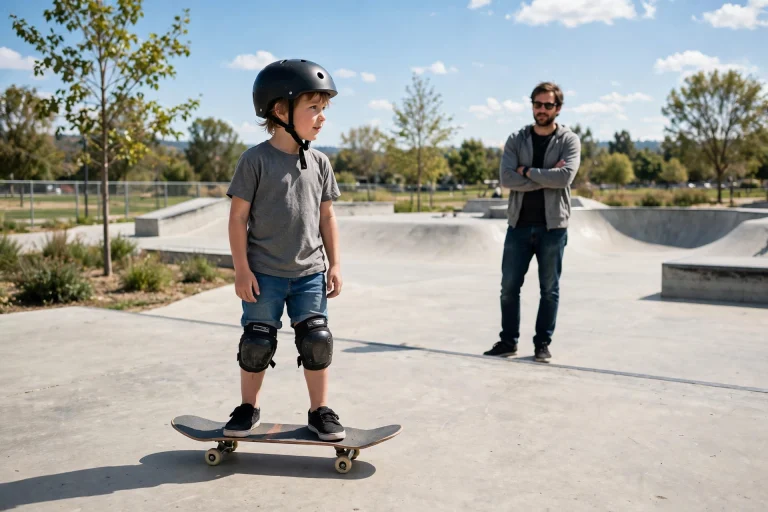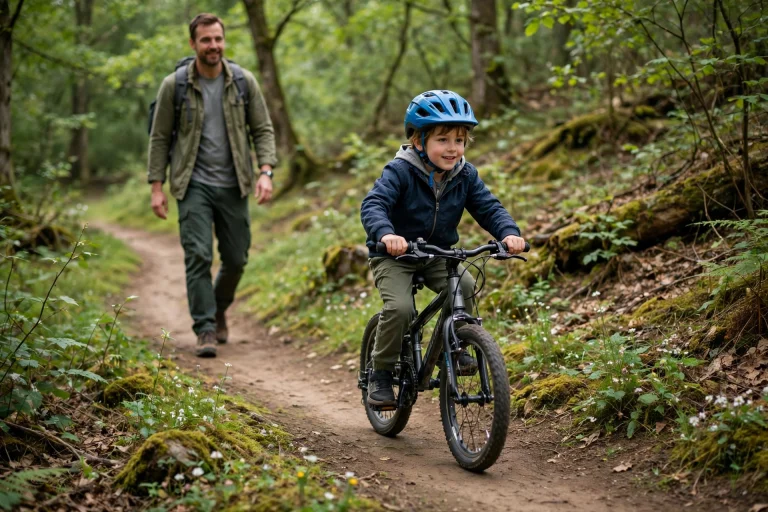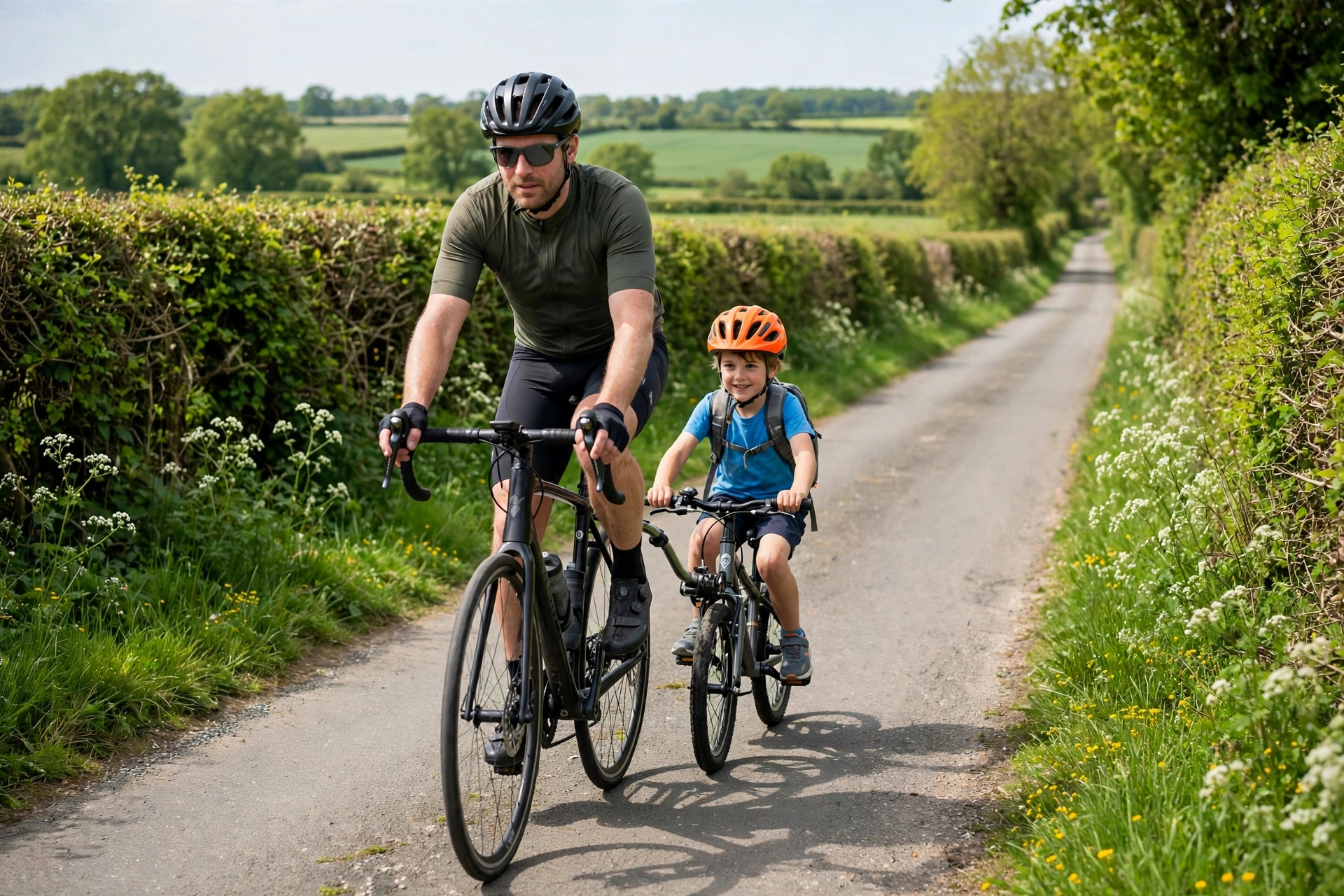
A kids helmet for riding a tag-along bike is a lightweight cycling helmet that fits snugly and sits level, protecting a young passenger who pedals on a tag-along attached to an adult’s bike. A tag-along, also known as a trailer bike, lets a child pedal along behind an adult, sharing the ride without having to balance or steer. In general terms, the child still needs a proper helmet every time, because they can fall if the tag-along tips, stops suddenly, or hits a bump — and adult supervision and a careful route matter just as much as the helmet itself.
Tag-along bikes are a lovely way to enjoy family rides with a child who is too young or too small to ride their own bike on the road. The child sits on a small saddle, holds handlebars, and pedals, while the adult does the steering and braking. It feels safe, and for the most part it is, but the child is still on a moving bike, and a helmet is essential. A helmet cannot guarantee safety, and it does not replace an adult riding carefully, choosing a safe route, and checking the tag-along before every ride. This guide explains what to look for in a helmet for tag-along riding and how to keep family rides safe.
What Makes a Good Helmet for Tag-Along Riding?
A good tag-along helmet is a standard children’s cycling helmet: light, well ventilated, and shaped to cover the top, sides, and back of the head. The child will be pedalling and moving, so ventilation matters — a hot, uncomfortable helmet is one a child will want to remove. Look for plenty of vents, soft inner padding, and a weight that suits a small rider, so the helmet does not tire their neck on a longer ride.
Fit is more important than brand or style. Measure your child’s head with a soft tape around the widest part, just above the eyebrows and ears, and use the maker’s size chart to choose the right size. The helmet should be snug all the way around, without pressing hard in one spot, and it should stay in place when the child shakes their head gently. Check the manufacturer’s guidance on sizing and adjustment, and re-check the fit regularly, because children grow quickly.
How Should the Helmet Fit a Tag-Along Rider?
The helmet should sit level on the head, about two fingers’ width above the eyebrows, covering the forehead without sliding down over the eyes. It should feel snug, and when you push it gently from the front, back, and sides, it should move the skin of the forehead rather than sliding freely. If it rocks or slides, it is too big; if it leaves red marks quickly, it may be too small.
The straps are just as important as the shell. The side straps should meet in a V shape just below each ear, and the chin strap should be snug enough for only one or two fingers between strap and chin. The buckle should close firmly. An adult should check the fit before every ride — a child should not be expected to fit their own helmet. Also check that the helmet does not clash with the tag-along’s backrest or the child’s seating position, and adjust the straps so the helmet stays level while the child pedals.
Remember that a helmet is only part of the safety picture. If you are learning about how helmets handle different kinds of impact, reading about what MIPS is for helmets can help you understand one of the technologies used in modern helmet design.
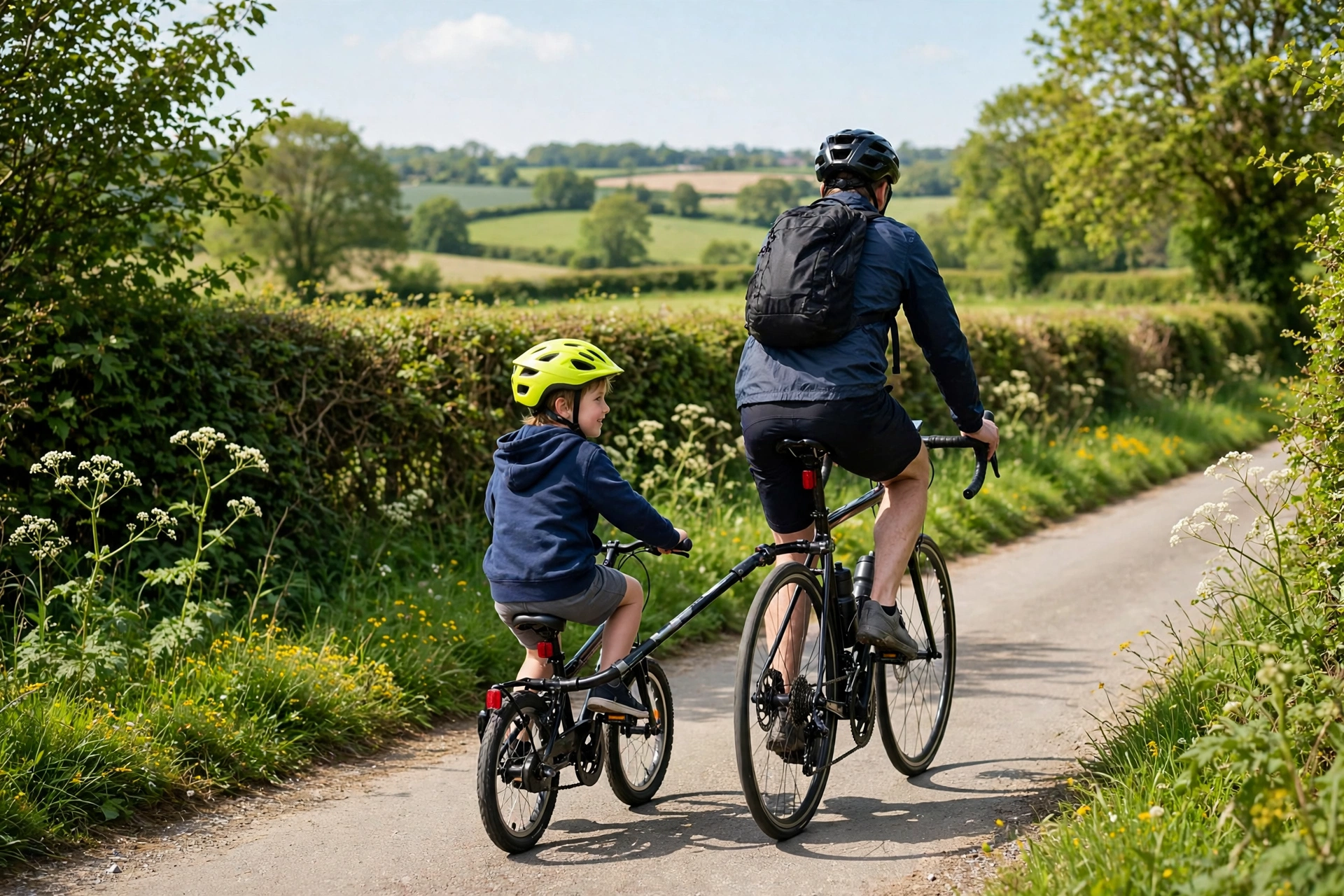
What Should Adults Check Before a Tag-Along Ride?
Before every ride, check the tag-along itself. The hitch that connects it to the adult’s bike must be secure, the wheels should spin freely, the tyres should be firm, and the brakes — if the tag-along has them — should work. Check that the child’s saddle and handlebars are at the right height, and that the safety flag, if fitted, is visible. A loose hitch or a wobbly wheel is a reason to stop and fix the problem before riding.
Plan a safe route. Quiet cycle paths, park trails, and country lanes with little traffic are ideal. Avoid busy roads, steep hills, and rough surfaces, especially on the first rides. Ride at a speed that suits the child, slow down for corners and bumps, and warn the child before you brake or turn, so they can hold on and brace. The adult sets the pace, and the child depends on it.
- Hitch: secure, with no play or looseness at the connection.
- Wheels and tyres: spinning freely, tyres firm, nothing loose.
- Child’s position: saddle and handlebars at a comfortable height.
- Route: quiet paths and lanes, avoiding busy roads and steep hills.
- Communication: agree simple words for slowing down, stopping, and bumps.
How Do You Keep Tag-Along Rides Fun and Safe?
Talk to your child throughout the ride. Tell them when you are about to turn, brake, or go over a bump, so they are ready and holding on. Agree simple words in advance — “slowing down”, “bump ahead”, “stopping” — so the child knows what is coming. This helps them feel part of the ride rather than just a passenger, and it keeps them alert and engaged.
Keep rides at a length that suits the child. A young rider may enjoy a short ride and tire on a long one, so start with easy distances and build up gradually. Bring water and a snack, and plan a stop somewhere fun, like a playground or a café. A helmet, comfortable clothes, and closed shoes complete the kit. In general terms, a tag-along ride that ends with a smiling child is a successful ride, whatever the distance.
When Is a Child Ready to Move from a Tag-Along to Their Own Bike?
There is no set age, and every child is different. In general terms, a child is ready to ride their own bike on family rides when they can pedal confidently, steer in a straight line, brake safely, and stay aware of what is around them. Confidence matters as much as ability: a child who is nervous on their own bike will not enjoy the ride, even if they can manage the pedalling.
Frequently Asked Questions
Q: Does my child need a helmet on a tag-along bike?
A: Yes. A child on a tag-along can fall if it tips, stops suddenly, or hits a bump, so a well-fitting cycling helmet should be worn on every ride, with adult supervision and a safe route.
Q: How do I check the helmet fits before a ride?
A: The helmet should sit level, about two fingers above the eyebrows, feel snug all around, and not slide freely when pushed. The side straps should meet below the ears and the chin strap should allow only one or two fingers underneath.
Q: What should I do if the tag-along feels wobbly during a ride?
A: Stop in a safe place and check the hitch, wheels, and tyres before continuing. Do not carry on with a loose hitch or a wobbly wheel. If you cannot fix it, end the ride and check it properly at home.

Olivia
Writer at Helmet Today, covering helmet reviews, fit and riding safety.