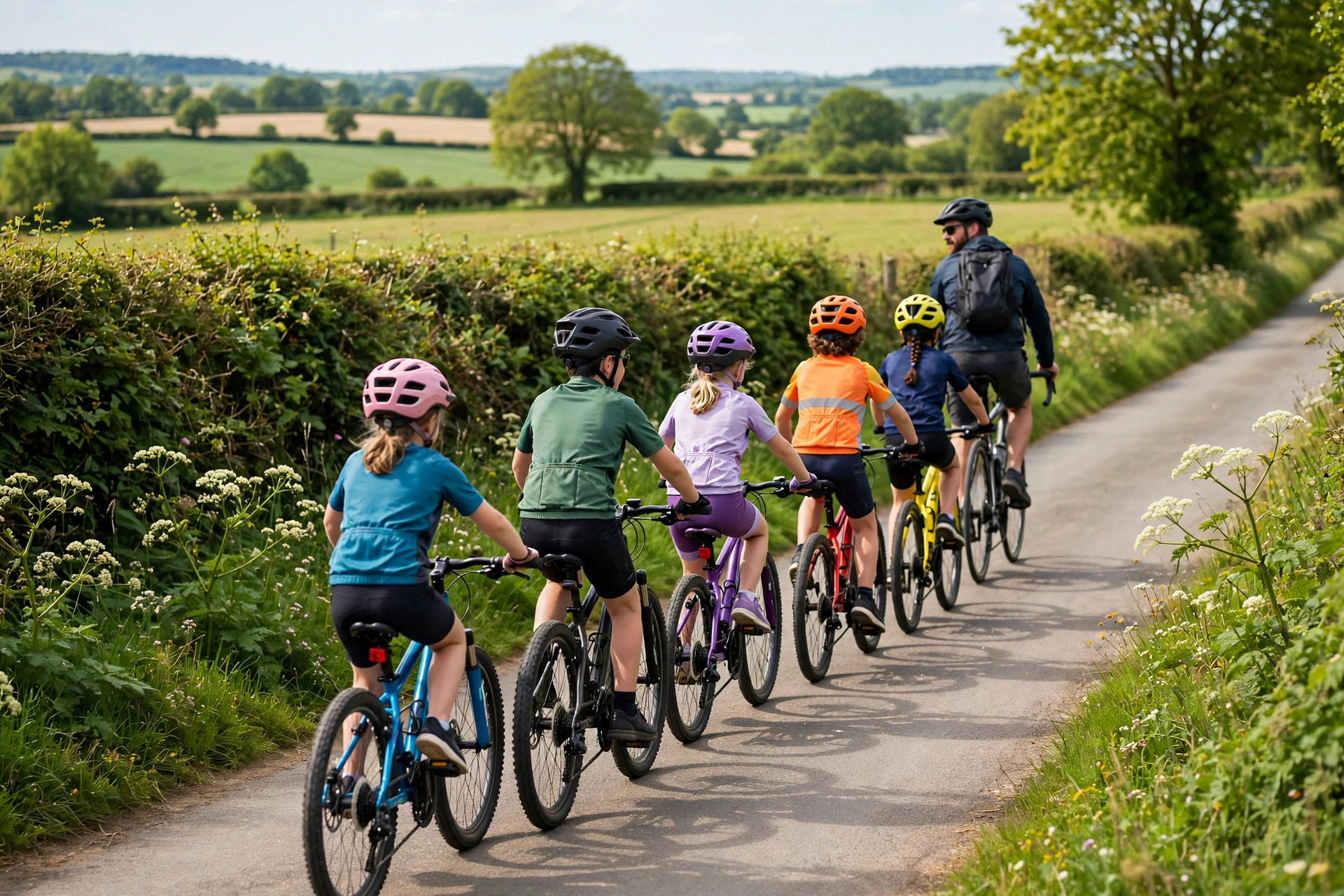
A kids helmet for cycling club rides is a lightweight, well-fitting cycling helmet that protects a young rider on group rides with a club, and it should fit snugly, sit level, and be checked by an adult before every ride. Club rides are a wonderful next step for a child who can already ride confidently: they offer coaching, friendship, and the fun of riding with others. In general terms, the right helmet is one that fits the child today, is comfortable for a longer group ride, and is worn every time — because group riding adds new challenges, including riding close to others and following a route.
Cycling clubs for children usually run organised rides on quiet roads, cycle paths, and trails, with trained coaches and a set of safety rules. Children learn to ride in a group, to signal, to call out hazards, and to look after each other. A helmet cannot guarantee safety, and it does not replace adult supervision, good coaching, and following the club’s rules. But it is the most important piece of protective gear a young club rider wears, and most clubs require one. This guide explains what to look for in a helmet for club rides, how to fit it, and how to help your child enjoy group riding safely.
What Makes a Good Helmet for Cycling Club Rides?
A good club ride helmet is a standard children’s or youth cycling helmet: light, well ventilated, and shaped to cover the top, sides, and back of the head. Club rides can last an hour or more, so ventilation and comfort matter more than on a short ride around the park. Look for plenty of vents, soft inner padding, and a weight that suits the child, so the helmet does not tire their neck on a longer ride.
Check the club’s rules before buying, because some clubs set out what kind of helmet is required, and coaches can advise on what suits the rides your child will join. The helmet should match the child’s head size, not just their age, so measure with a soft tape around the widest part of the head, just above the eyebrows and ears, and compare the result with the maker’s size chart. Check the manufacturer’s guidance on sizing and fitting as well.
How Should the Helmet Fit?
Fit is the most important part of helmet safety. The helmet should sit level on the head, about two fingers’ width above the eyebrows, covering the forehead without sliding down over the eyes. It should feel snug all the way around, without pressing hard in one place. When you push the helmet gently from the front, back, and sides, it should move the skin of the forehead a little rather than sliding freely over the head.
The straps need attention too. The side straps should form a V shape just below each ear, and the chin strap should be snug enough that only one or two fingers fit between the strap and the chin. The buckle should close firmly and stay closed. Check the fit before every ride, because straps loosen, children grow, and a helmet that fitted last month may need adjusting today. An adult should always check the fit, and coaches will often check it at the start of a ride too.
Never choose a helmet to grow into. A helmet that is too big today is a helmet that may not protect properly in a fall. If you are learning about how helmets handle different kinds of impact, reading about what MIPS is for helmets can help you understand one of the technologies used in modern helmet design.
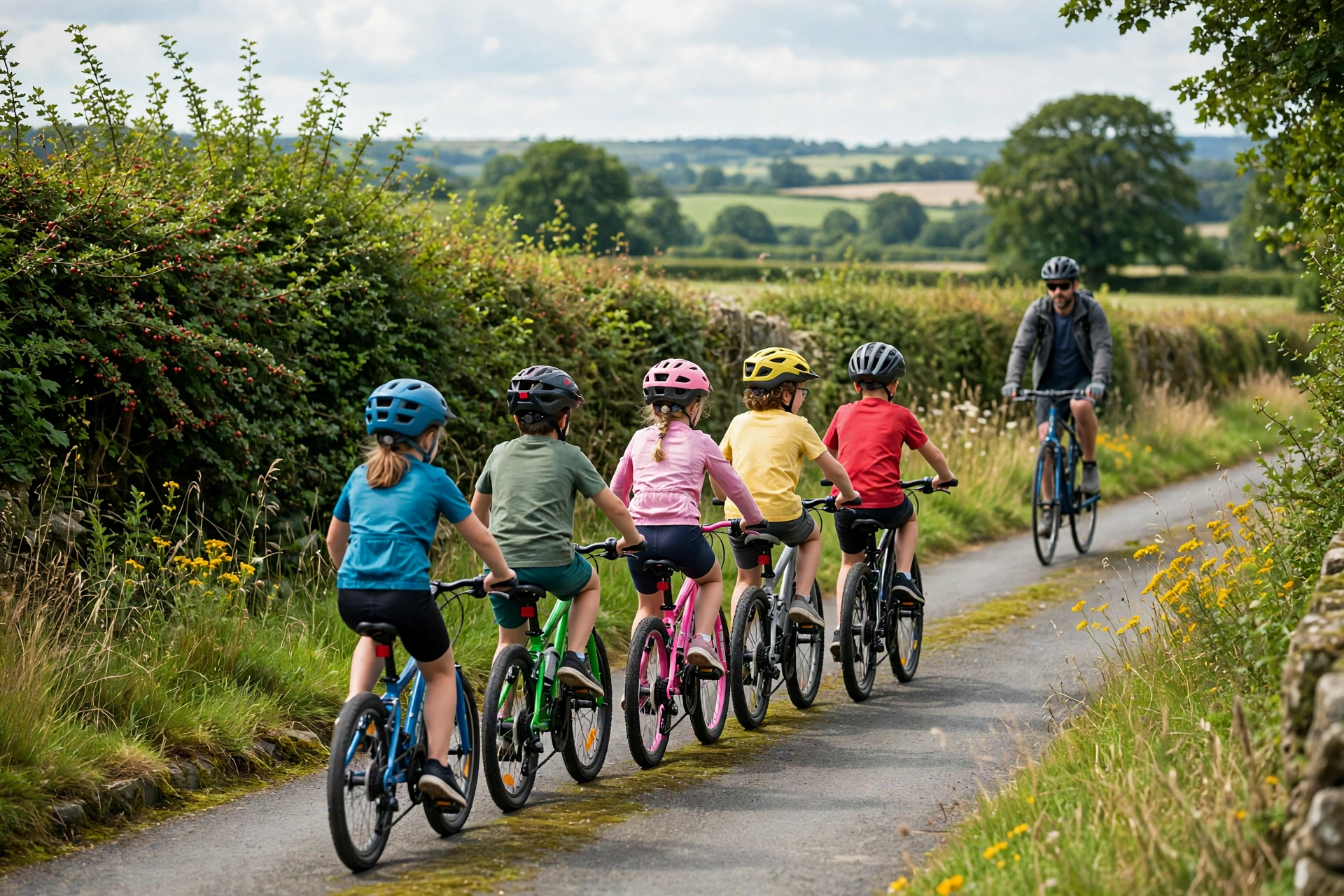
What Should Parents and Children Know About Group Riding?
Group riding is different from riding alone. Children ride close together, follow the rider in front, and need to signal and call out hazards such as potholes, parked cars, and junctions. Clubs teach these skills gradually, starting with short, easy rides and building up to longer routes. Parents should make sure their child understands the club’s rules before the first ride, and that they know to tell a coach straight away if they feel tired, unwell, or unsure.
Adult supervision is built into club rides through coaches and ride leaders, but parents still have a role: check the helmet and the bike before the ride, make sure your child has water, a snack, and suitable clothing, and be on time for drop-off and pick-up. Check the bike too — the brakes should work, the tyres should be firm, and nothing should be loose or broken.
- Helmet check: level, snug, straps done up, checked by an adult.
- Bike check: brakes working, tyres firm, nothing loose.
- Kit: water, snack, gloves, and clothing suited to the weather.
- Rules: child knows the club’s signals, calls, and safety rules.
- Pick-up: parent on time at the agreed meeting point.
How Do You Help a Child Enjoy Cycling Club Rides?
Encourage your child without putting pressure on them. Club rides should be fun first: the friendship, the fresh air, and the feeling of riding with others matter more than speed or distance. Praise effort and improvement, not results, and let your child ride at their own pace. If they are nervous before the first ride, talk to the coach, who will know how to settle new riders in.
Keep the helmet habit strong. Put the helmet on before the ride, check the fit together, and treat it as simply what cyclists do. Children copy adults and each other, so a club where every rider wears a helmet properly is the best example of all. In general terms, a child who enjoys club rides and wears their helmet without fuss is a child who will keep cycling as they grow.
When Should a Club Ride Helmet Be Replaced?
In general terms, replace the helmet when your child outgrows it, when it has been involved in a crash, or when it shows signs of damage such as cracks, loose straps, or foam that has gone soft or compressed. Children grow quickly, so check the fit regularly — a helmet that was snug at the start of the season may be too small by the end of it. Follow the manufacturer’s guidance on replacement, and do not keep using a helmet that no longer fits properly.
Frequently Asked Questions
Q: Does my child need a special helmet for cycling club rides?
A: In general terms, a standard children’s or youth cycling helmet that fits well is suitable for club rides. Check the club’s rules and the manufacturer’s guidance, and choose a helmet that is comfortable for longer group rides.
Q: How do I know if the helmet fits my child correctly?
A: The helmet should sit level, about two fingers above the eyebrows, feel snug all around, and not slide freely when pushed. The side straps should meet below the ears and the chin strap should allow only one or two fingers underneath.
Q: What if my child forgets their helmet on club day?
A: Do not let them ride without it. Most clubs require a helmet, and a child without one should not join the ride. Keep the helmet in the same place after every ride so it is easy to find on club day.

Olivia
Writer at Helmet Today, covering helmet reviews, fit and riding safety.