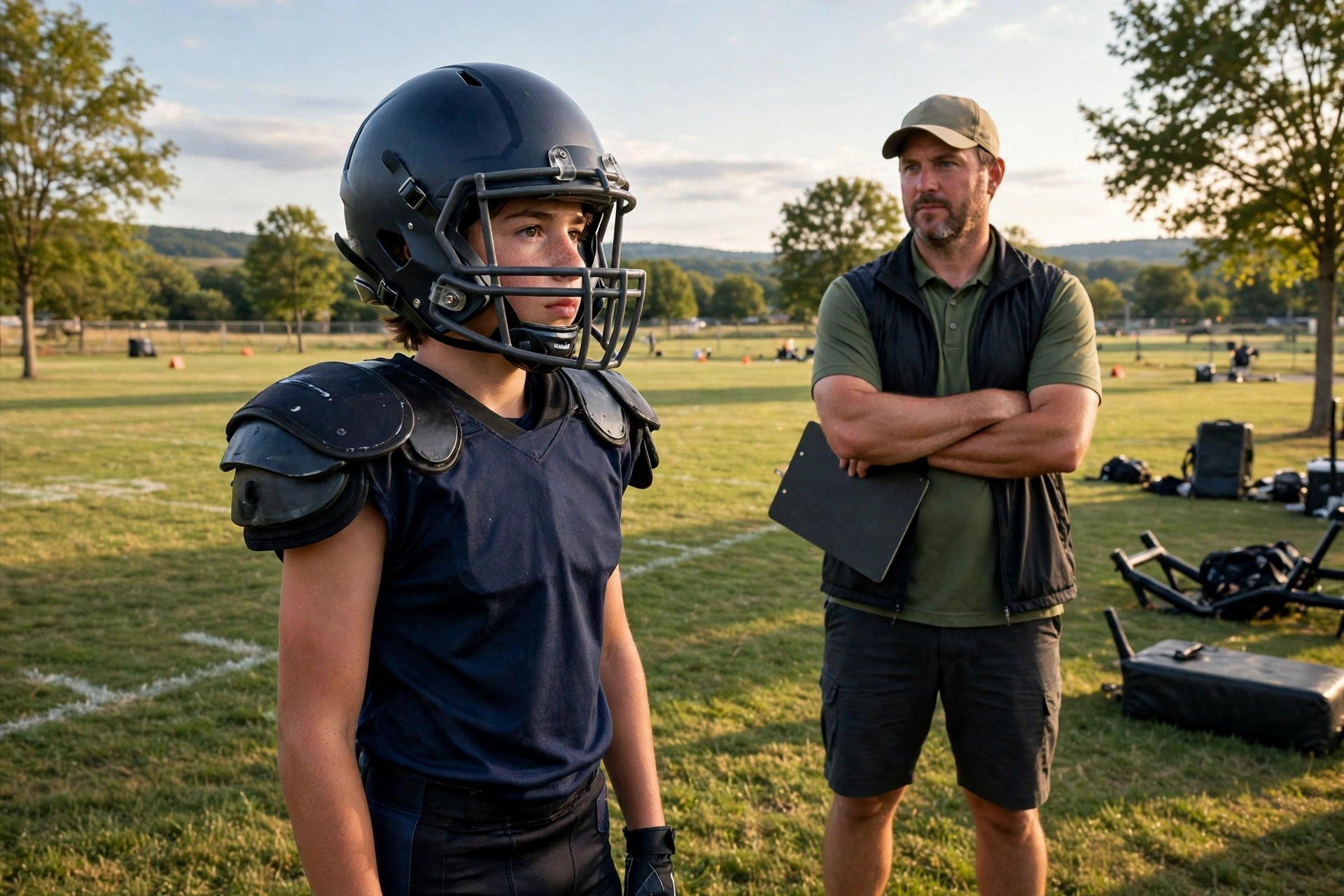
A kids helmet for a first football season is a properly fitted youth football helmet, chosen for the child’s age and head size, that helps protect the head during practice and games — and it should be fitted by an adult, checked before every session, and worn with adult supervision at all times. A first season is exciting, and it is also the time when good habits are formed. In general terms, the right helmet is one that fits snugly, is comfortable enough to wear for a full practice, and is checked regularly as the child grows and the season goes on.
Football involves running, tackling, blocking, and falling, and young players are still learning how to move safely and how to take a hit. A helmet is part of the protective kit, along with shoulder pads and a mouthguard where required, but it cannot guarantee safety, and it does not replace good coaching, fair play, and adult supervision. Parents should also check the manufacturer’s guidance and the league or school’s rules, because requirements can vary. This guide explains how to choose and fit a helmet for a child’s first football season, and how to look after it through the season.
What Kind of Helmet Does a Young Football Player Need?
A young football player needs a helmet made for youth football, not an adult helmet and not a helmet made for another sport. Youth football helmets are made in smaller sizes with padding and shell shapes suited to a child’s head, and they are designed for the kind of contact young players experience. Check the manufacturer’s guidance on age and head size, and follow the rules of your child’s league or school, which may set out what kind of helmet is allowed.
Look for a helmet with a comfortable interior, a facemask suited to the child’s position, and a chin strap that holds the helmet firmly in place. The helmet should feel balanced on the head, not heavy at the front or back, and the padding should sit evenly all the way around. A helmet that is comfortable is one a child will wear properly, with the chin strap done up, for the whole practice or game.
How Should a Youth Football Helmet Fit?
Fit is the most important part of helmet safety in football. Measure your child’s head with a soft tape around the widest part, just above the eyebrows and ears, and compare the result with the maker’s size chart. The helmet should sit level, about two fingers’ width above the eyebrows, and feel snug all the way around without pressing hard in one place. The front of the helmet should cover the forehead, and the back should cover the back of the head.
The chin strap should be snug and centred, holding the helmet firmly so it does not shift when the child shakes their head or moves quickly. The jaw pads should sit against the cheeks, and the helmet should not rock forward, backward, or sideways when pushed gently. A helmet that moves easily is too big, and a helmet that leaves deep red marks quickly may be too small. Fitting should be done with an adult present, and the coach can often help check the fit at the first practice.
Never buy a helmet to grow into. A helmet that is too big today will not protect properly, and it will move during play. If you are learning about how helmets handle different kinds of impact, reading about what MIPS is for helmets can help you understand one of the technologies used in modern helmet design.
What Should Parents Check Before the First Practice?
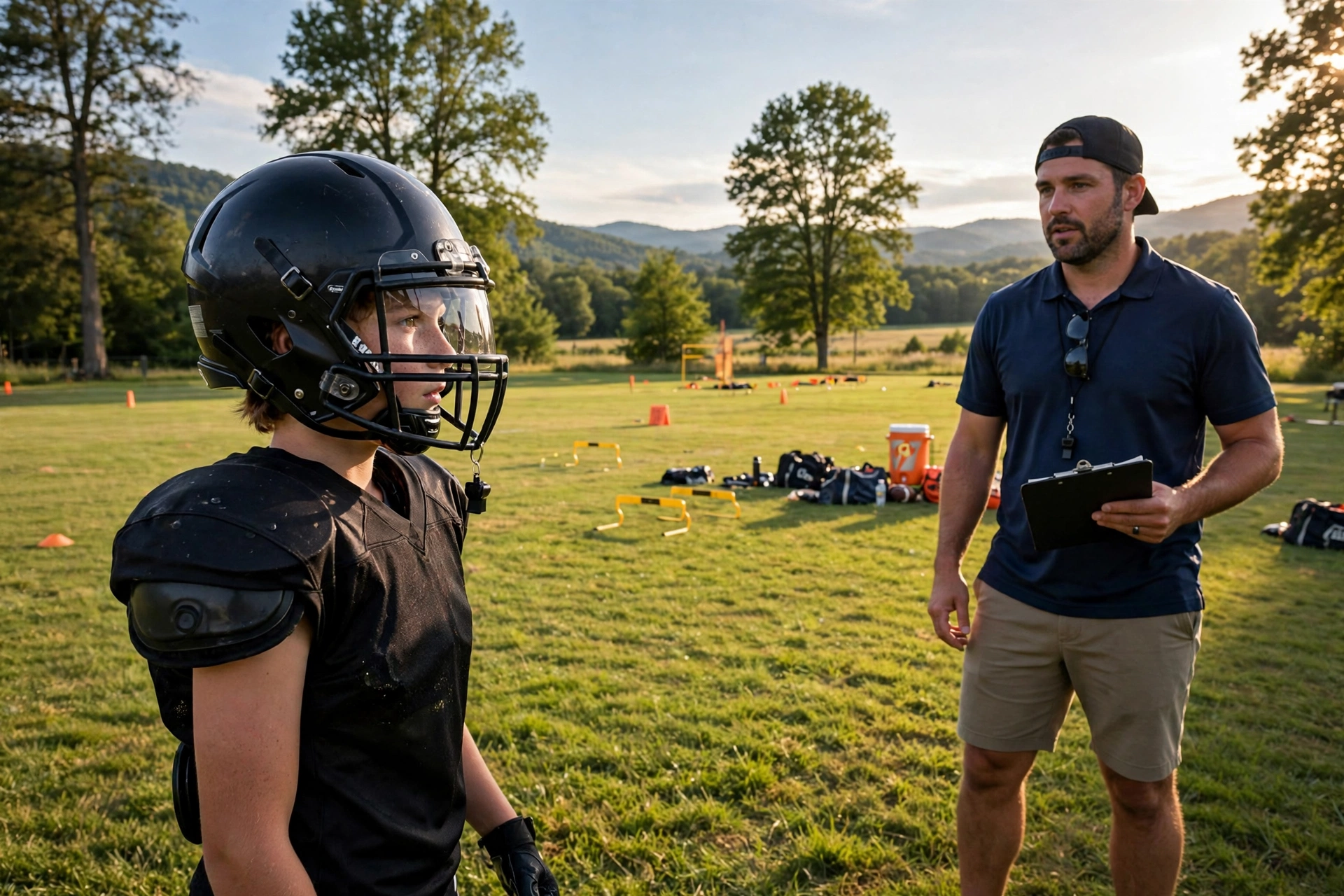
Before the first practice, check the helmet carefully. Look for cracks in the shell, loose or missing padding, a facemask that is bent or loose, and a chin strap and buckle that work firmly. Check that all the padding is in place and that nothing inside the helmet is worn or compressed. If anything looks damaged, do not use the helmet — check the manufacturer’s guidance and speak to the coach or a specialist fitter.
Also check the rest of the kit. Shoulder pads should fit properly, footwear should suit the surface, and a mouthguard should be used where the league requires it. Make sure your child knows the basic rules of safe play: keep the head up, do not lead with the head, and tell the coach straight away if they feel unwell or have taken a knock. Adult supervision is essential at every practice and game.
- Shell: no cracks, dents, or damage to the outer surface.
- Padding: complete, firm, and sitting evenly inside the helmet.
- Facemask: straight, secure, and suited to the child’s position.
- Chin strap: snug, centred, and closing firmly.
- Fit: level, snug, and checked by an adult before every session.
How Do You Look After a Football Helmet During the Season?
Clean the helmet regularly, following the manufacturer’s guidance. Wipe the shell with a damp cloth, air out the padding after each session, and let the helmet dry fully before storing it. Do not use harsh chemicals, and do not leave the helmet in a hot car or in strong sunlight for long periods, because heat can damage the materials inside. Store it somewhere cool and dry, with nothing heavy pressing on it.
Check the fit regularly through the season. Children grow, padding settles, and straps loosen, so a helmet that fitted perfectly at the start of the season may need adjusting a few weeks later. Re-check the fit before every practice, and ask the coach to check it too. In general terms, a helmet that is looked after and checked often will serve a young player well for the whole season.
When Should a Youth Football Helmet Be Replaced?
In general terms, replace the helmet when your child outgrows it, when it has taken a hard impact, or when it shows signs of damage such as cracks, loose padding, or a facemask that no longer sits straight. Follow the manufacturer’s guidance on replacement and reconditioning, and follow the league’s rules, which may set limits on how long a helmet can be used. A helmet that no longer fits properly should not be used, even if it looks fine from the outside.
Frequently Asked Questions
Q: Can my child use an adult football helmet for their first season?
A: No. Adult helmets are made for larger heads and different proportions, so they will not fit a child properly. Choose a youth football helmet matched to your child’s head size, following the maker’s size chart and the league’s rules.
Q: How do I know if the helmet fits my child correctly?
A: It should sit level, about two fingers above the eyebrows, feel snug all around, and not rock or slide when pushed gently. The chin strap should be snug and centred, and an adult or coach should check the fit before every session.
Q: What should I do if my child’s helmet is damaged?
A: Stop using it and check the manufacturer’s guidance. Do not keep playing in a damaged helmet. Speak to the coach or a specialist fitter about repair, reconditioning, or replacement.

Olivia
Writer at Helmet Today, covering helmet reviews, fit and riding safety.