A kids helmet for a first pedal bike is a lightweight children’s cycling helmet that fits snugly and sits level on the head, protecting a young rider as they learn to pedal, balance, and steer on their own for the first time. A first pedal bike is a huge milestone, and it is also the moment when good helmet habits are formed for life. In general terms, the right helmet is one that fits the child today, is comfortable enough to wear for every ride, and is checked by an adult before every outing.
Learning to ride a pedal bike takes practice, and falls are a normal part of that learning. A child may wobble, stop suddenly, or tip over sideways, especially in the first weeks. A helmet cannot guarantee safety, and it does not replace adult supervision, a safe place to practise, and a bike that fits the child. But it is the single most important piece of protective gear a young cyclist wears, and wearing it from the very first ride teaches a child that helmets are simply part of cycling. This guide explains how to choose and fit a helmet for a first pedal bike, and how to make those first rides safe and joyful.
What Kind of Helmet Suits a First Pedal Bike?
A standard children’s cycling helmet is the right choice for a first pedal bike. It should be light, well ventilated, and shaped to cover the top, sides, and back of the head. Look for a smooth outer shell and soft inner padding that sits evenly around the head. Some children’s helmets have a little extra coverage at the back, which suits young riders who are still learning and may fall backwards or sideways.
The helmet should match the child’s head size, not just their age. Children’s heads vary, so measure with a soft tape around the widest part of the head, just above the eyebrows and ears, and compare the result with the maker’s size chart. A helmet that is too big will slide around and may not protect properly in a fall, while one that is too small will be uncomfortable and may not cover enough of the head. Check the manufacturer’s guidance on sizing and fitting before you buy.
How Should the Helmet Fit?
Fit is the most important part of helmet safety. The helmet should sit level on the head, about two fingers’ width above the eyebrows, covering the forehead without sliding down over the eyes. It should feel snug all the way around, without pressing hard in one place. When you push the helmet gently from the front, back, and sides, it should move the skin of the forehead a little rather than sliding freely over the head.
The straps need attention too. The side straps should form a V shape just below each ear, and the chin strap should be snug enough that only one or two fingers fit between the strap and the chin. The buckle should close firmly and stay closed. Check the fit every time your child rides, because straps loosen, children grow, and a helmet that fitted last month may need adjusting today. An adult should always do this check — a young child cannot be expected to fit their own helmet correctly.
Never choose a helmet to grow into. A helmet that is too big today is a helmet that may not protect properly in a fall. If you are learning about how helmets handle different kinds of impact, reading about what MIPS is for helmets can help you understand one of the technologies used in modern helmet design.
How Do You Make a First Pedal Bike Ride Safe?
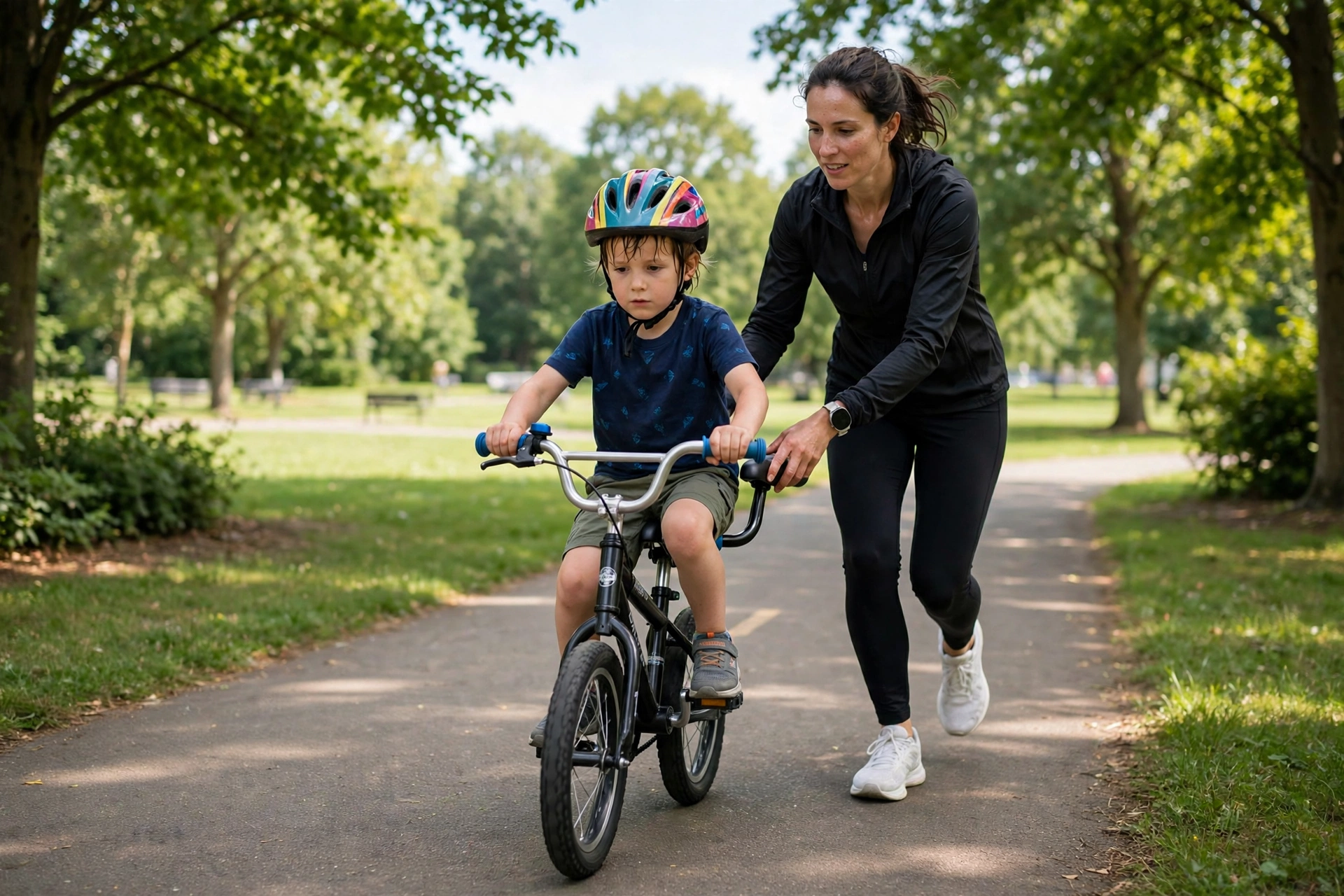
Choose a safe place to practise. A flat, traffic-free area such as a quiet park path, a playground, or a closed driveway is ideal for first rides. Avoid roads, steep slopes, and areas with loose gravel or wet leaves. Check the bike before every ride: the brakes should work, the tyres should be firm, the chain should be in place, and the saddle should be low enough that your child can put both feet on the ground.
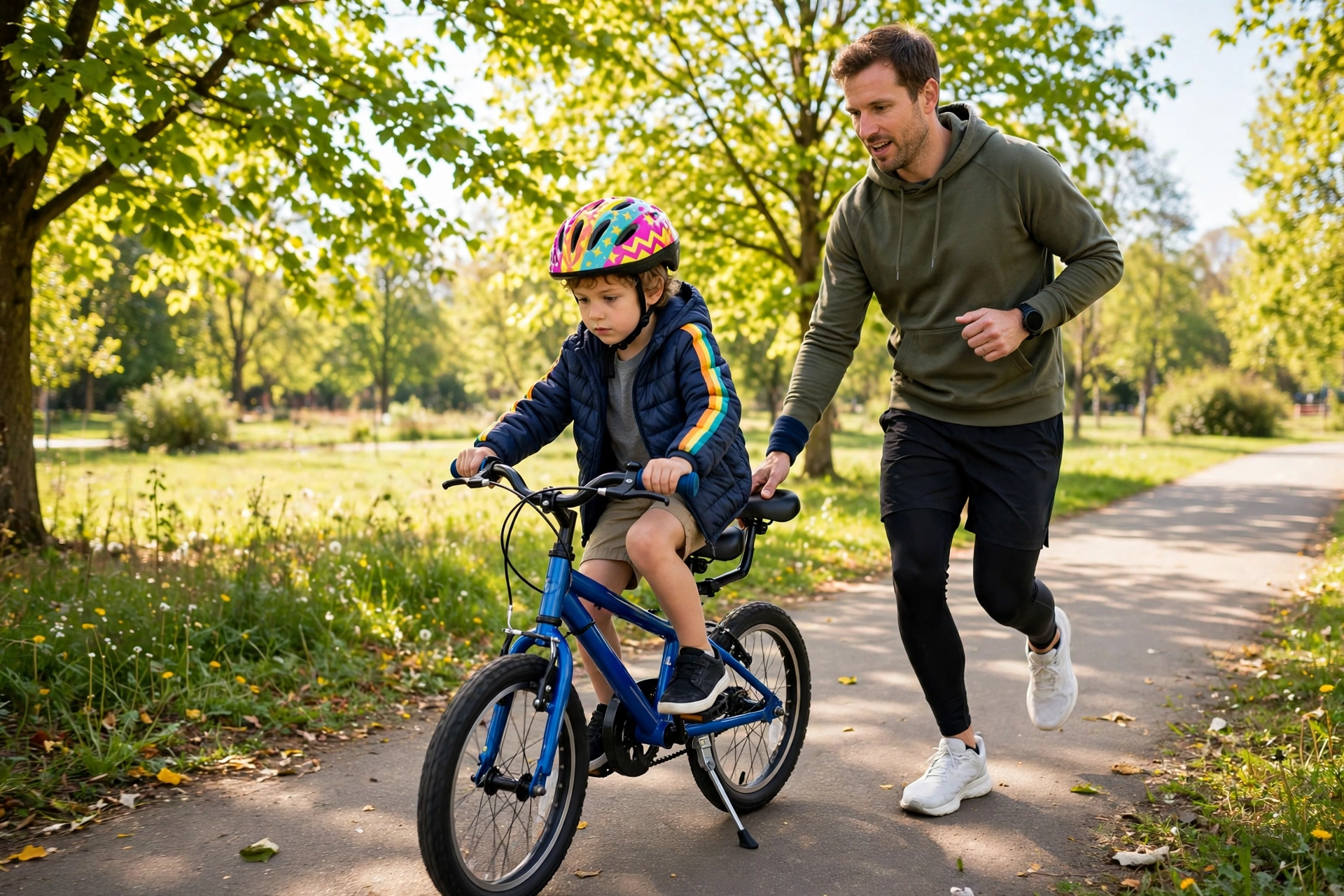
Adult supervision is essential. Walk or jog beside your child on the first rides, holding the back of the saddle if needed, and stay close until they can ride steadily on their own. Teach them to look ahead, to brake gently, and to put a foot down when they stop. Keep early rides short, and stop while the fun is still high — a tired child makes more mistakes.
- Place: flat, smooth, and traffic-free for first rides.
- Bike check: brakes working, tyres firm, saddle at the right height.
- Clothing: closed shoes, no loose scarves or cords near the wheels.
- Supervision: an adult beside the child until they ride steadily.
- Pace: short rides at first, building up gradually.
How Can Parents Make Learning to Ride Fun?
Keep it positive. Praise every small success — pedalling smoothly, steering in a straight line, stopping safely — and treat wobbles and falls as part of learning, not as failure. If your child is nervous, let them scoot along with their feet first, or practise on grass, where a fall is softer. A calm, encouraging adult makes all the difference to a child’s confidence.
Make the helmet part of the routine, not a negotiation. Put the helmet on before the bike comes out, check the fit together, and treat it as simply what cyclists do. Children copy adults, so wearing your own helmet when you ride with them sets a good example. In general terms, a child who sees helmets as normal from their very first ride will keep wearing one as they grow.
When Should a First Bike Helmet Be Replaced?
In general terms, replace the helmet when your child outgrows it, when it has been involved in a crash, or when it shows signs of damage such as cracks, loose straps, or foam that has gone soft or compressed. Children grow quickly, so check the fit regularly — a helmet that was snug in spring may be too small by autumn. Follow the manufacturer’s guidance on replacement, and do not keep using a helmet that no longer fits properly.
Frequently Asked Questions
Q: Does my child need a helmet for their first pedal bike?
A: Yes. A well-fitting cycling helmet should be worn on every ride, from the very first one. Falls are a normal part of learning to ride, and a helmet helps protect your child’s head, with adult supervision and a safe place to practise.
Q: How do I know if the helmet fits my child correctly?
A: The helmet should sit level, about two fingers above the eyebrows, feel snug all around, and not slide freely when pushed. The side straps should meet below the ears and the chin strap should allow only one or two fingers underneath.
Q: Should the helmet be the same one my child used on a balance bike?
A: It can be, as long as it still fits well and is undamaged. Check the fit carefully before the first pedal bike ride, and check the helmet for cracks or worn straps. Follow the manufacturer’s guidance on when to replace it.

Olivia
Writer at Helmet Today, covering helmet reviews, fit and riding safety.