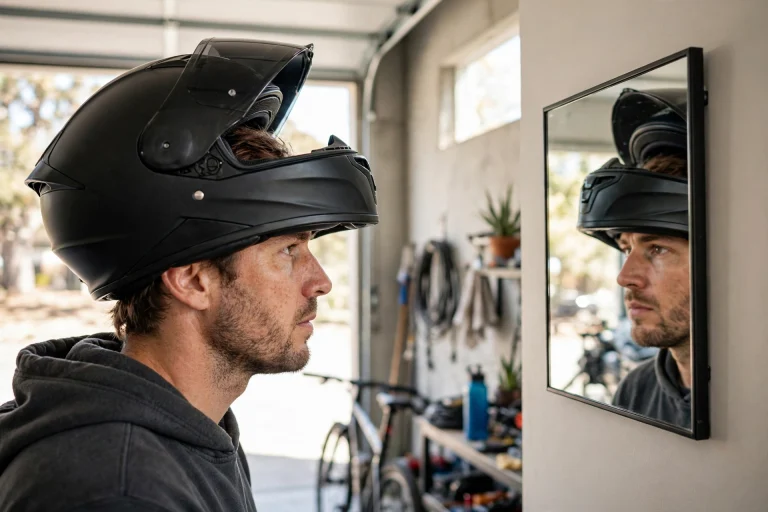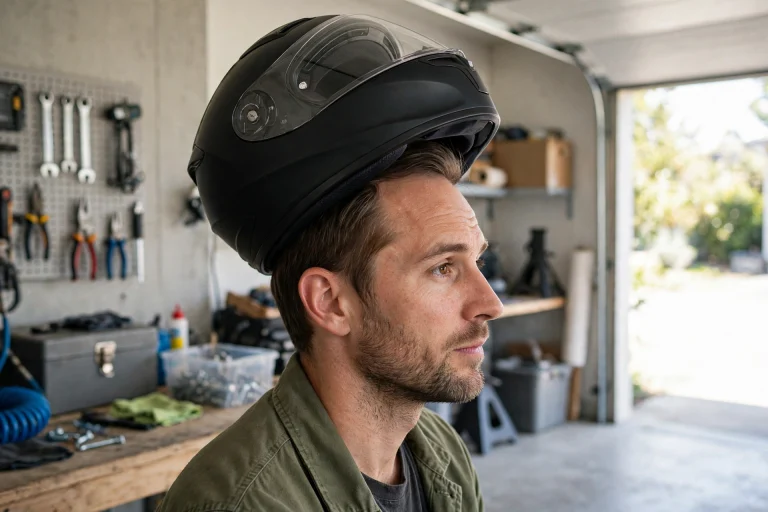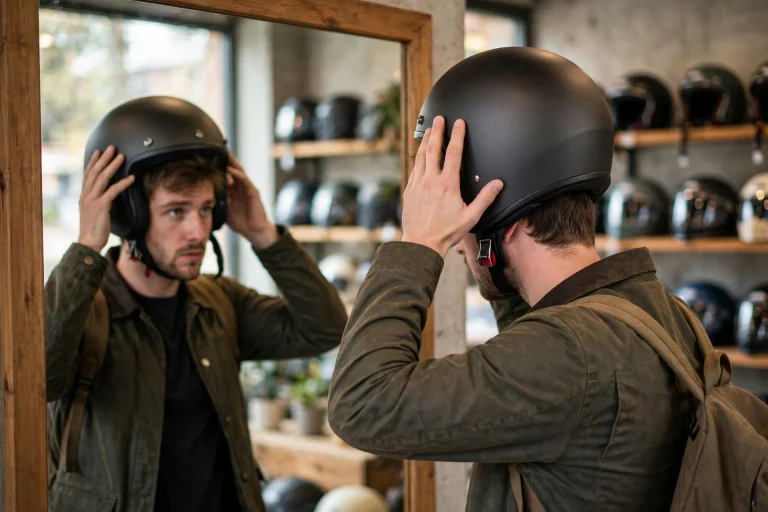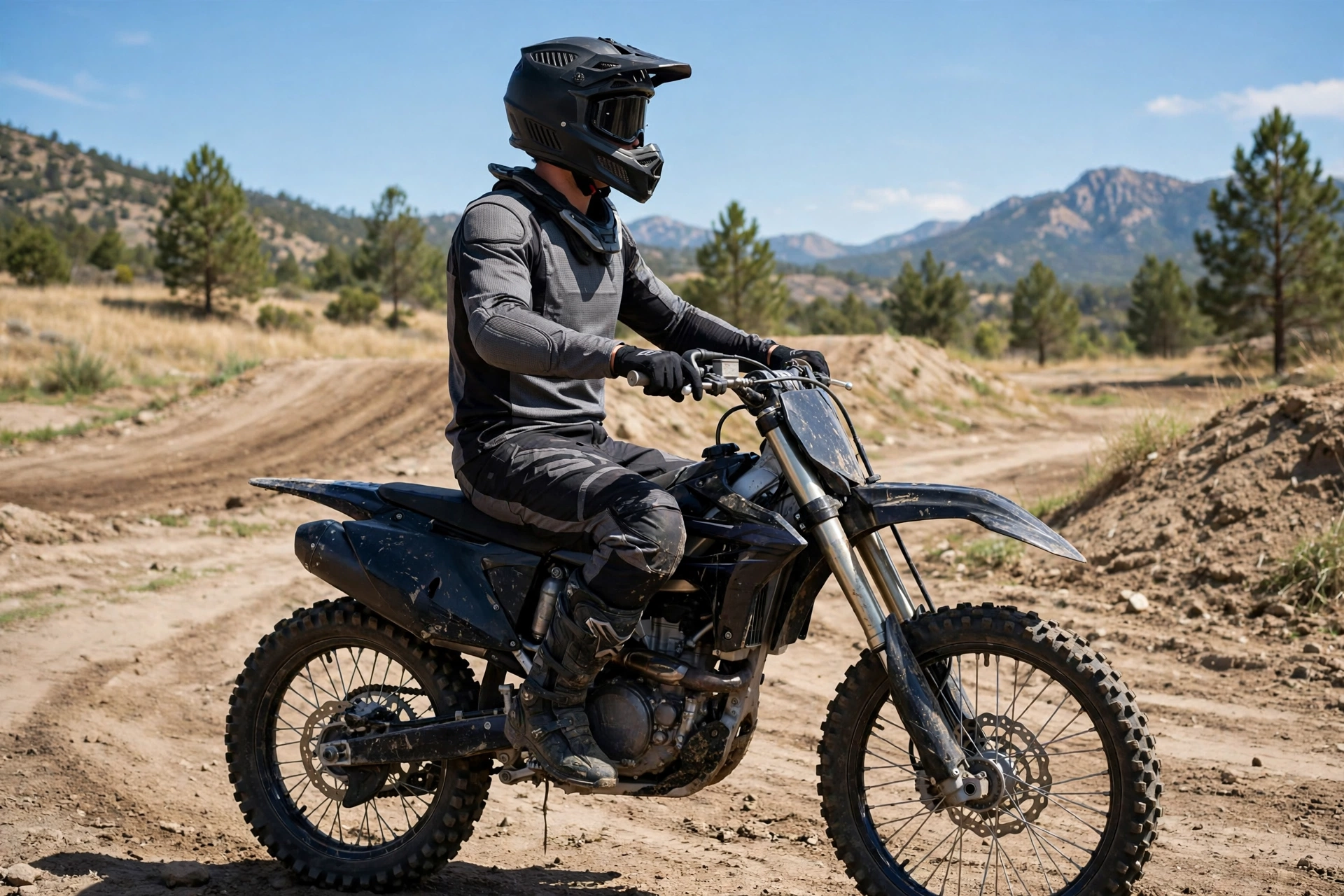
In general terms, a rider who wears a neck brace needs a helmet that fits well with the brace in place, and the two should be checked together — never fitted separately — with the brace maker’s guidance followed for how the helmet and brace should meet. A neck brace changes the shape of the area around the neck and the lower back of the head, so a helmet that fits perfectly without the brace may press, lift, or sit unevenly once the brace is on. The safe approach is to try the helmet and the brace together, before riding.
Neck braces are worn by some motocross, downhill, and adventure riders to limit how far the head and neck can move in a crash. They are specialist equipment, and fitting a helmet around one is not a matter of guesswork. This guide explains how a neck brace changes the fit, what to check when the two are worn together, and when to seek expert help rather than adjusting things yourself.
How Does a Neck Brace Change the Way a Helmet Fits?
A neck brace sits around the base of the neck and the tops of the shoulders, and its upper edge meets the lower edge of the helmet. That meeting point is where most fit problems happen. If the helmet sits too low at the back, it can press down on the brace and push the helmet up at the front, leaving the forehead exposed. If the helmet is too short at the back, a gap can open between the helmet and the brace, which defeats the purpose of wearing both together.
The brace also limits how far you can tilt your head, which changes how the helmet feels when you look around, check over your shoulder, or tuck into a riding position. A helmet that feels fine when you are standing still may press on the brace when you lean forward on the bike, so the fit must be checked in a riding position, not just standing upright in a shop.
How Should You Fit a Helmet with a Neck Brace?
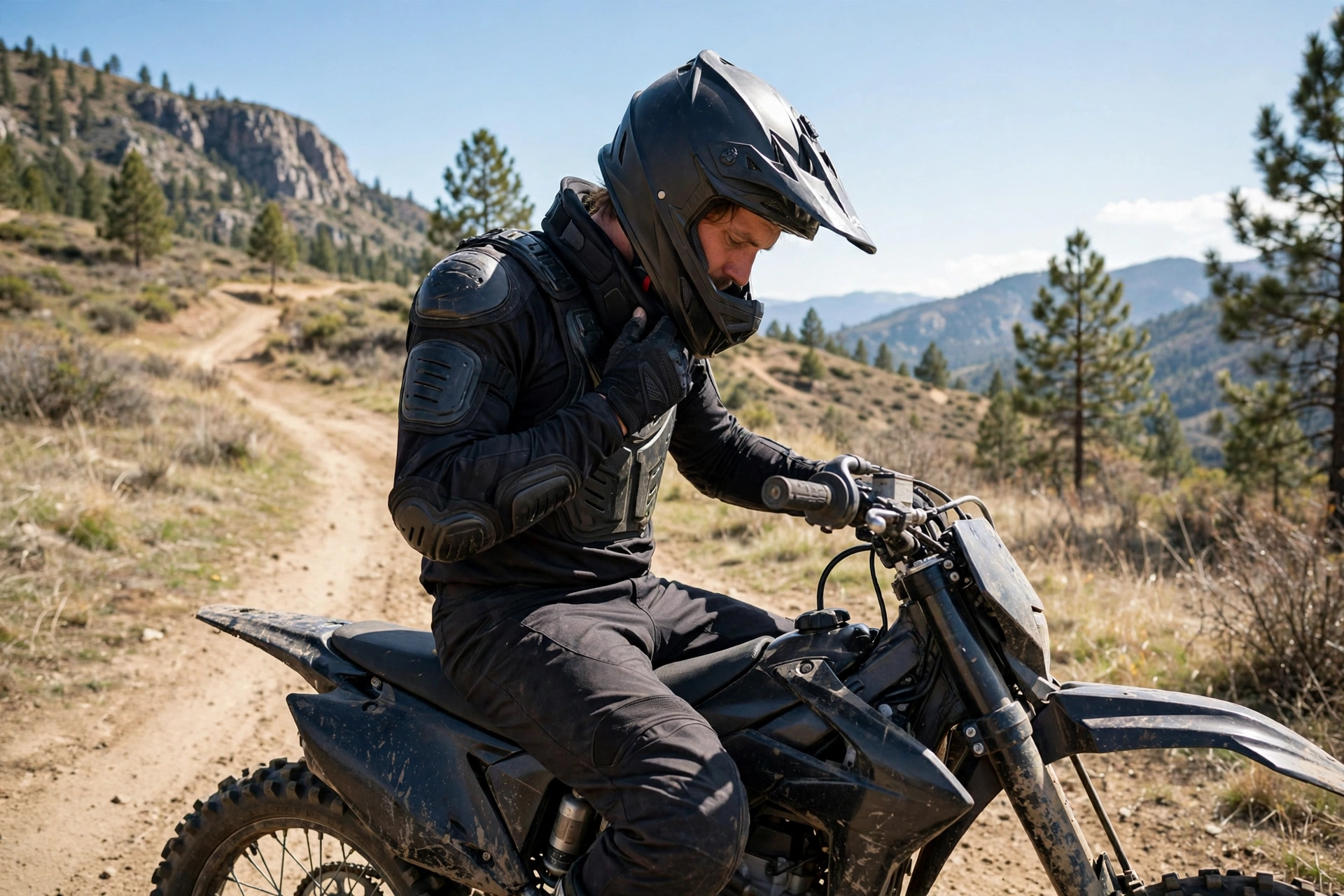
Always fit the helmet with the neck brace on, exactly as you will ride. Put the brace on first, settle it in its normal position, then put the helmet on and check the fit. The helmet should sit level, with the front edge about two fingers’ width above the eyebrows, and it should cover the forehead and the back of the head evenly. If the brace pushes the helmet up at the front, the helmet may be too long at the back for that brace, and a different helmet shape may work better.
Check the gap between the helmet and the brace. There should be only a small, even gap all round, so that the helmet and the brace meet smoothly without pressing hard on each other. A large gap at the back means the helmet is too short or the brace is sitting too low; a helmet that presses firmly onto the brace means the helmet is too long at the back or the brace is sitting too high. Follow the brace maker’s guidance on how the two should meet, because different braces are designed to work with different helmet shapes.
What Should You Look for When Choosing a Helmet to Wear with a Brace?
Look for a helmet designed with neck braces in mind. Many motocross and downhill helmets are shaped with a slightly shorter or sculpted rear edge so that they sit well with a brace, and some makers state clearly that a model is brace-compatible. A helmet with a long, straight rear edge is more likely to clash with the brace, so check the shape at the back before you buy.
Size matters as much as shape. Measure your head as usual, but try the helmet on with the brace in place, because the brace changes how the helmet sits and a size that works without it may not work with it. A helmet with a dial adjustment at the back and pads in different thicknesses gives you more room to fine-tune the fit around the brace, but adjustment cannot fix a helmet whose basic shape clashes with the brace.
Consider weight, ventilation, and the chin strap. A lighter helmet will feel more comfortable with a brace over a long ride, and good airflow matters because a brace adds warmth around the neck. The chin strap should be easy to fasten with the brace on, and it should not press on the front of the brace. If you want to understand how some helmets handle the twisting forces that can happen in a fall, reading about what MIPS is for helmets can help you decide whether that feature is worth looking for, but compatibility with the brace should come first.
How Do You Check the Fit Before a Ride?
Do the fit check with the brace on and in your normal riding position, ideally sitting on the bike. The helmet should sit level and should not rock when you shake your head gently. The chin strap should be snug enough that only one or two fingers fit underneath, and the side straps should sit evenly without catching on the brace.
Check the meeting point between the helmet and the brace all round, and make sure the gap is small and even. Turn your head left and right as far as you need to for riding, and check that the helmet does not press hard on the brace or lift at the front. Lean forward into your riding position and look up, since that is when the back of the helmet is most likely to meet the brace.
When Should You Seek Expert Help?
Seek expert help whenever you are unsure about the combination, and always if the brace was fitted for a medical reason or after an injury. A brace fitted for medical reasons should only be used as your clinician advised, and any change to the helmet or the brace should be discussed with them first. Do not adjust a medical brace yourself to make a helmet fit.
Replace the helmet after any significant impact, even if there is no visible crack, because the foam inside can be compressed by a hard knock. Check the brace after a crash too, and follow the maker’s guidance on inspection and replacement. A helmet and a brace are both safety equipment, and both need to be in good condition to do their job.
Frequently Asked Questions
Q: Can I wear any helmet with a neck brace?
A: In general terms, no — not every helmet works well with every brace. Look for a helmet designed to be brace-compatible, with a rear edge shaped to meet the brace, and always try the helmet and the brace on together before riding.
Q: Should the helmet touch the neck brace?
A: There should be only a small, even gap between the helmet and the brace all round, so that they meet smoothly without pressing hard on each other. A large gap or a hard press both suggest the combination needs adjusting, and you should follow the brace maker’s guidance.
Q: Do I need a neck brace if I wear a good helmet?
A: A helmet and a neck brace do different jobs: a helmet protects the head, while a brace is designed to limit how far the neck can move. Whether you need a brace depends on the type of riding you do, and if it was fitted for a medical reason, follow your clinician’s guidance on using it.

Olivia
Writer at Helmet Today, covering helmet reviews, fit and riding safety.