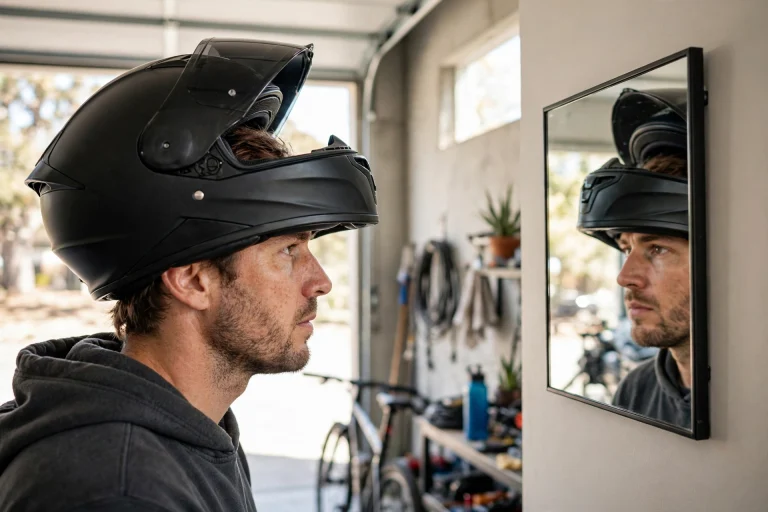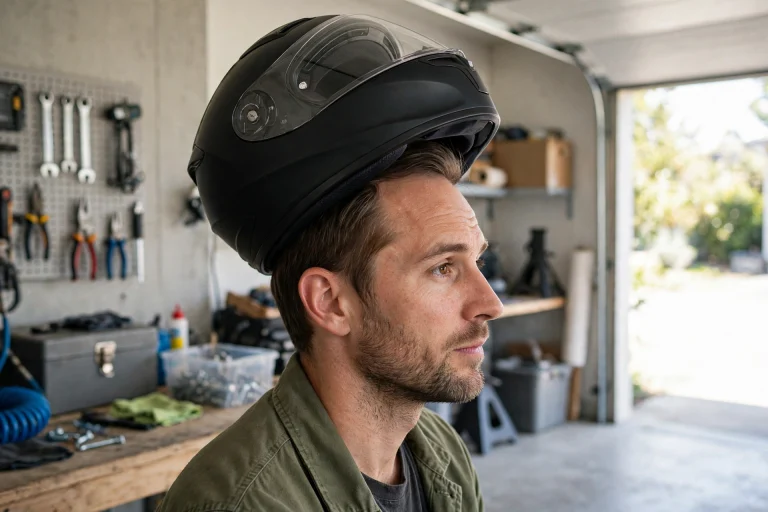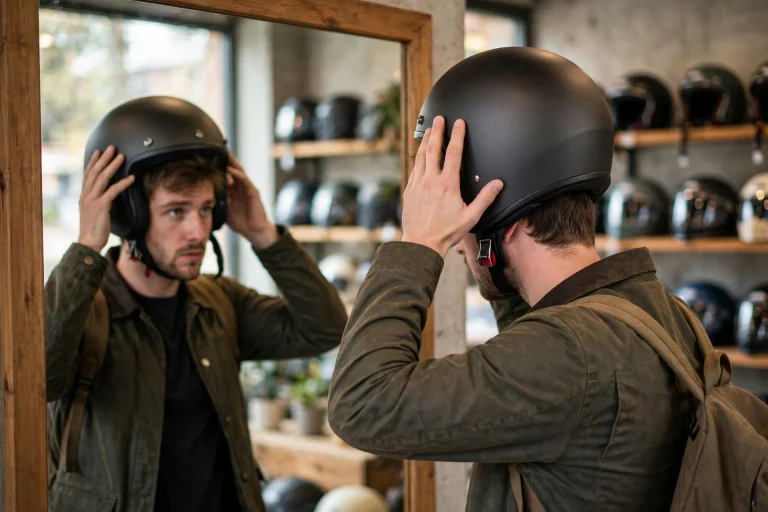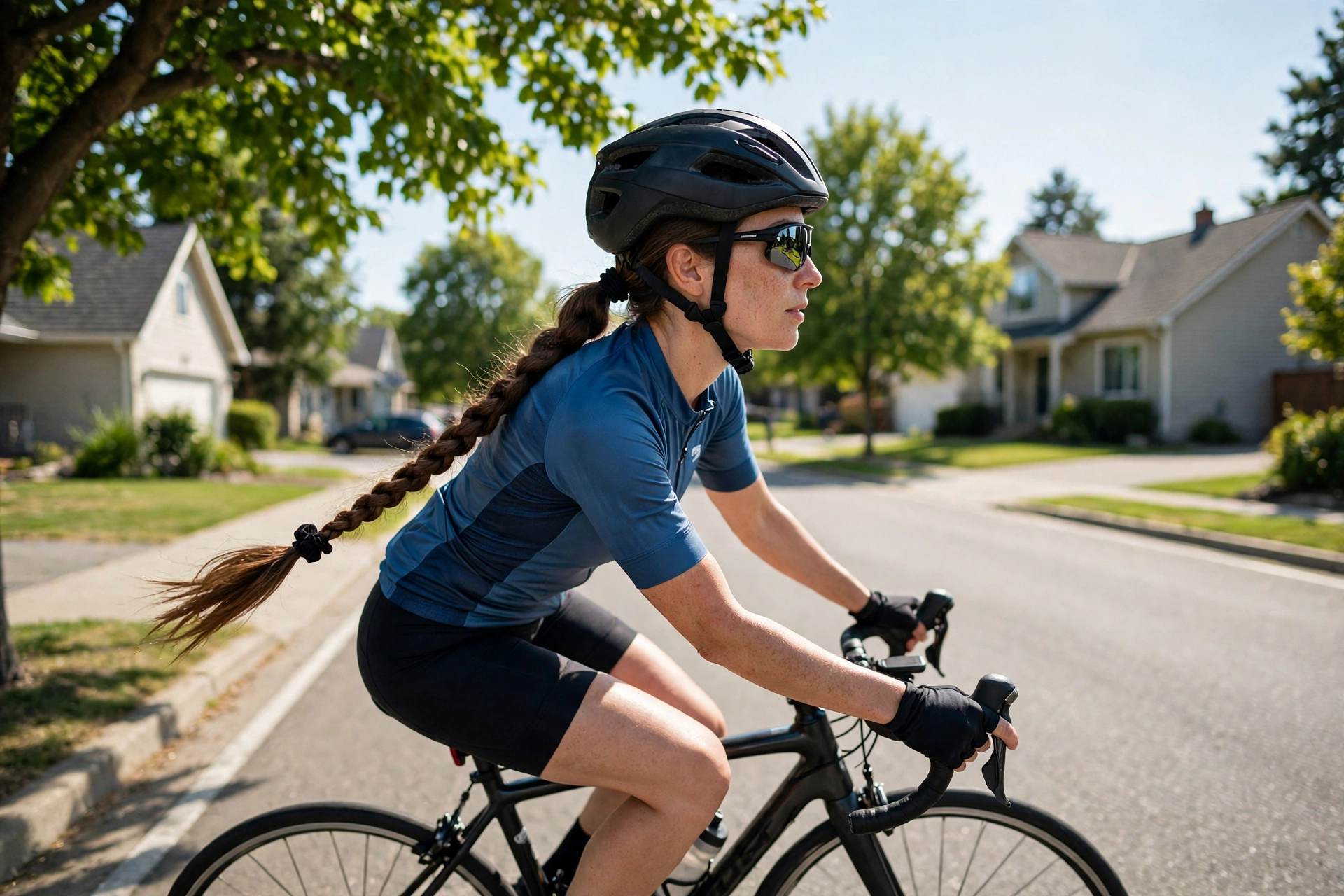
In general terms, a rider with braids needs a helmet with a slightly larger or deeper fit, worn with the braids gathered low and flat, and the fit checked with the braids styled exactly as they will be worn on the ride. Braids add bulk and create uneven pressure points where they bunch together, so a helmet that fits the same head without braids may sit too high or press painfully. The fix is usually a roomier helmet, a low braided style, and a careful fit check.
Many riders with braids find that helmets press on the braided sections, catch on the straps, or slide around as the braids shift, and some end up wearing a helmet that is too loose because it is the only one that feels bearable. That is a poor trade, because a loose helmet may not protect the head properly in a fall. This guide explains how braids change the fit, how to style them for a helmet, and how to choose a helmet that works with your hair.
How Do Braids Change the Way a Helmet Fits?
Braids add volume in a way that loose hair does not. Each braid is a compact bundle of hair, and where several braids meet — at the crown, at the back of the head, or in a bun — they create raised areas that push against the helmet. A helmet that would fit the same head with loose hair may feel tight at the temples, press on the crown, or sit too high on the forehead because it is resting on the braids rather than on the head.
Braids also shift. When you move your head, braids can slide under the helmet and change how it sits, so a fit that feels right when you first put the helmet on may feel different halfway through a ride. In general terms, the helmet should sit level, with the front edge about two fingers’ width above the eyebrows, and it should move with your head rather than sliding on its own. If braids stop it from sitting that low, the size or the hairstyle needs to change.
How Should You Style Braids Under a Helmet?
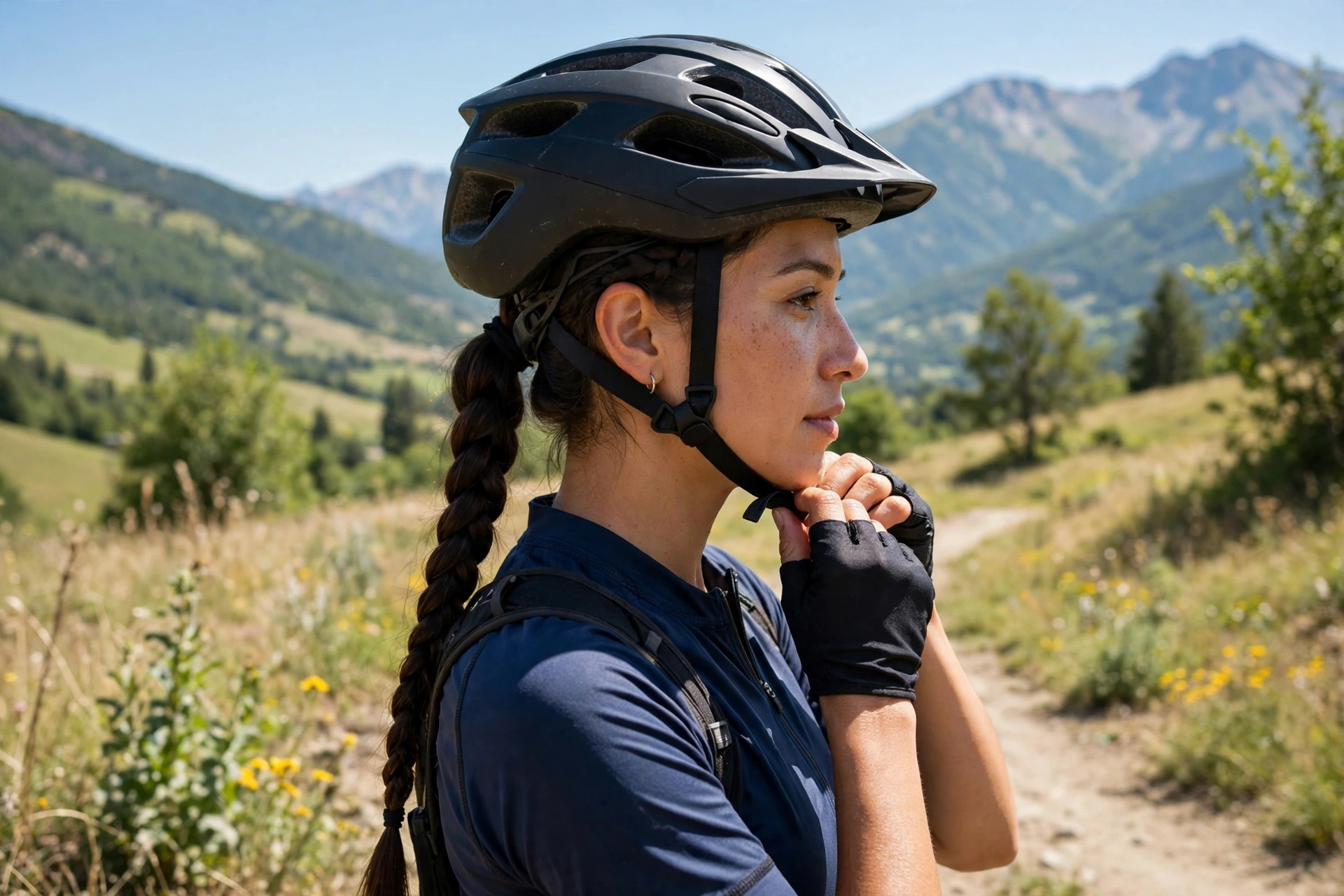
Keep the braids low and flat. A low ponytail of braids at the nape of the neck, braids worn loose and hanging below the back of the helmet, or braids gathered into a low bun at the base of the skull all keep the volume away from the crown and sides, where the helmet needs to sit close. Avoid high buns, top knots, and braids piled on top of the head, because they push the helmet up and leave the back of the head exposed.
If your braids are long, let them hang out below the rear edge of the helmet rather than tucking them inside, where they will bunch and push the helmet forward. Some helmets have a ponytail opening at the back, which can make a low ponytail of braids far more comfortable. If the braids are short, a thin skull cap or durag can help keep them flat and stop the ends from catching in the straps or vents.
What Should You Look for When Choosing a Helmet?
Start by measuring your head with your braids in your usual riding style, and use that number as a starting point rather than a final answer. Many riders with braids find they need one size up, or a model with a deeper shell, and that is normal: the size label is a guide, and the fit check matters more. Try helmets on with your braids styled as you will ride, and expect the right size to be larger than the size you would pick without braids.
Look for a helmet with a deep fit and good adjustment. A dial at the back that adjusts in small steps, and pads in different thicknesses, gives you more room to fine-tune the fit around braids. Helmets with a slightly rounder shell often suit braided hair better than narrow, shallow models, because they leave more room over the crown. A helmet with a ponytail opening at the back is also worth looking for if you wear your braids in a low ponytail.
Comfort is a useful test: a helmet that presses hard in one place, usually where several braids meet, is the wrong shape for your head and hair, and another model will usually fit better. A helmet that feels fine for a minute may start to press after twenty minutes as the braids settle, so if you can, wear it around the house for a while before a long ride. If you want to understand how some helmets handle the twisting forces that can happen in a fall, reading about what MIPS is for helmets can help you decide whether that feature is worth looking for, but fit should always come first.
How Do You Check the Fit with Braids?
Do the fit check with your braids styled exactly as you will ride, and with any cap or scarf you plan to wear. The helmet should sit level, with the front edge about two fingers’ width above the eyebrows, and it should cover the forehead and the back of the head evenly. Shake your head gently from side to side: the helmet should move with your head, not slide around on its own.
Check the straps next, making sure they do not catch on the braids. The side straps should meet in a V just below each ear, and the chin strap should be snug enough that only one or two fingers fit underneath. Open your mouth wide: the helmet should pull down slightly, which shows the strap is holding it in place. If the helmet lifts when you open your mouth, the strap is too loose, or the braids are pushing the helmet up.
What Mistakes Should Riders with Braids Avoid?
The most common mistake is forcing a too-small helmet over a high bun of braids or a top knot. The helmet ends up sitting high on the head, the forehead is exposed, and the straps cannot be adjusted properly, which leaves the rider less protected and less comfortable. A larger size, or a lower braided style, is a better answer than forcing a small helmet to fit.
Frequently Asked Questions
Q: Should I buy a bigger helmet if I have braids?
A: In general terms, yes — many riders with braids need one size up, or a deeper model, from the size a bare-head measurement suggests. Measure with your braids in your usual riding style, try the helmet on in that style, and let the fit check, not the label, decide.
Q: What is the best way to wear braids under a helmet?
A: A low ponytail at the nape, braids worn loose below the back of the helmet, or a low bun at the base of the skull usually work best. Avoid high buns and top knots, which push the helmet up, and do not tuck long braids inside the helmet.
Q: Will a helmet damage my braids?
A: A helmet should not damage healthy braids, though it can cause some frizz at the edges. A silk or satin scarf or durag under the helmet reduces friction, and gathering the braids low and flat before putting the helmet on helps them keep their shape after the ride.

Olivia
Writer at Helmet Today, covering helmet reviews, fit and riding safety.