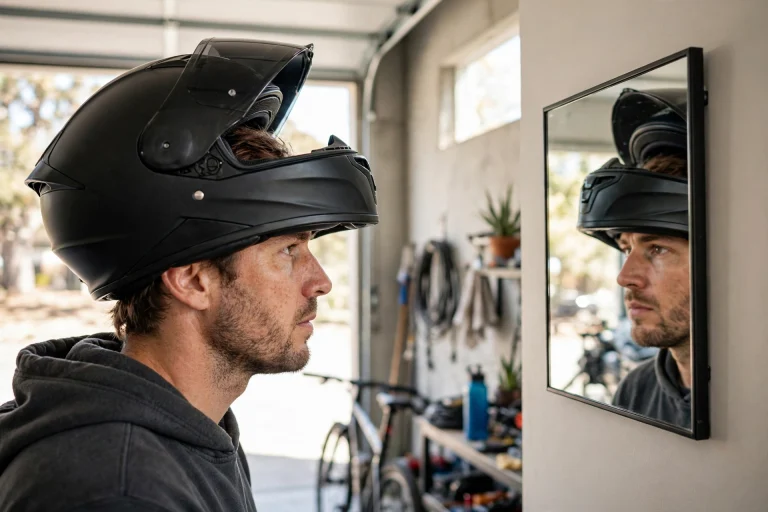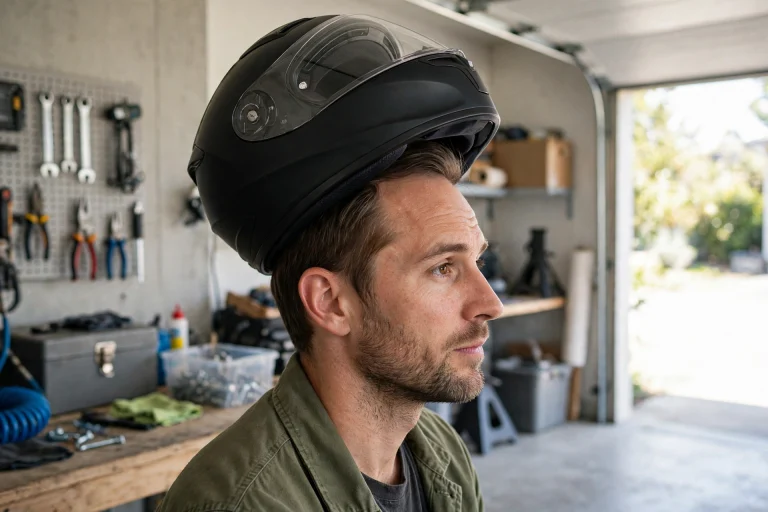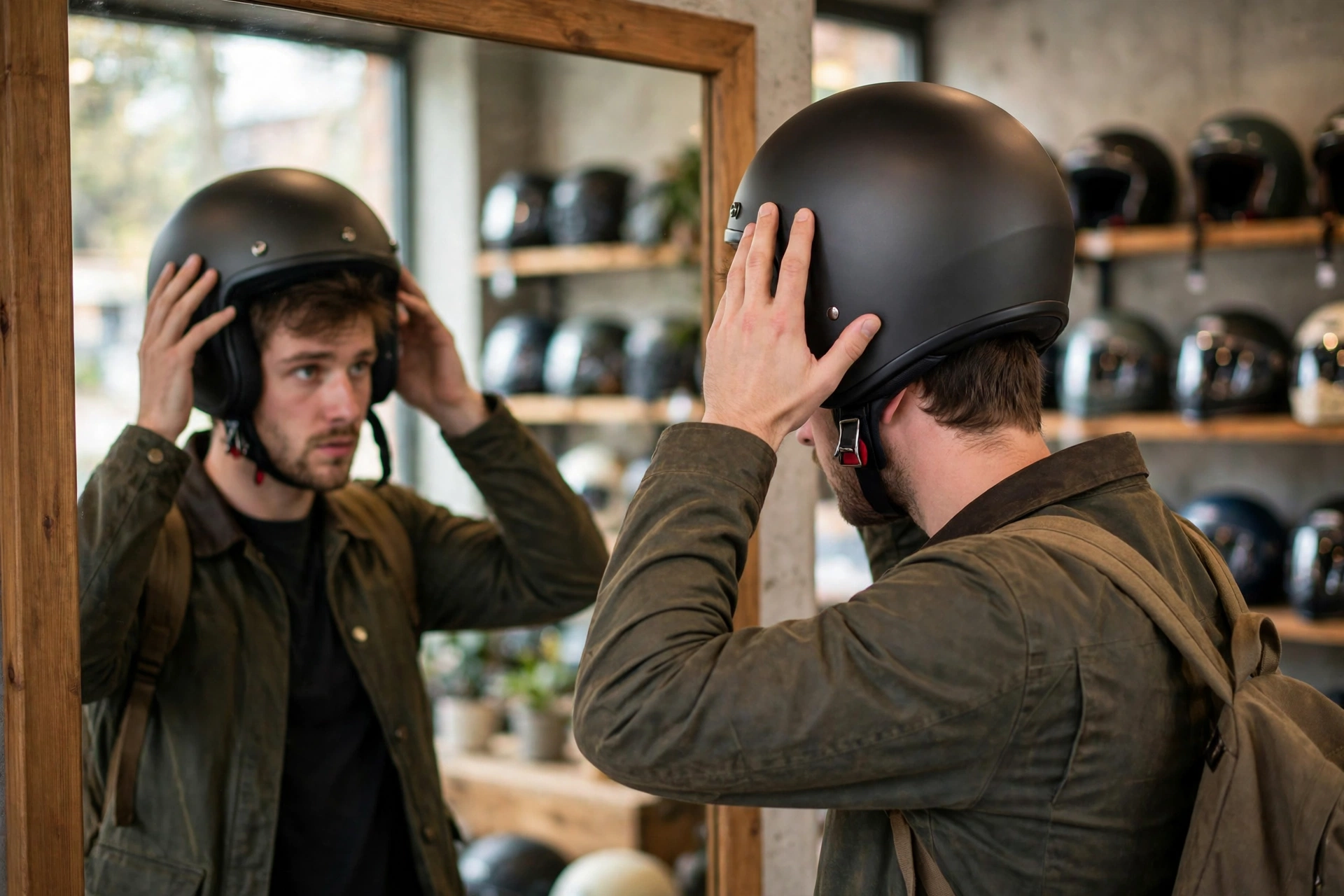
A helmet fits a new rider correctly when it sits level on the head, feels snug all the way round with no pressure points, and barely moves when you shake your head or push the front of the shell. If it wobbles, slides over your eyes, or leaves a gap at the forehead, it does not fit — no matter how good it looks or how comfortable it feels in the first minute. A correct fit is the single most important thing about a helmet, because a helmet that does not fit properly cannot protect you the way it was designed to.
New riders often assume that any helmet in roughly the right size will do, or that a helmet should feel loose and roomy like a hat. In reality, a helmet should feel noticeably snug when it is new, and the padding will settle slightly with wear. The trick is knowing the difference between a healthy snug fit and a helmet that is simply too small. This guide walks through the checks a new rider can do at home or in a shop, in general terms, so you can tell a good fit from a bad one before you ride anywhere.
What Does a Correct Helmet Fit Feel Like?
A correctly fitting helmet feels firm and even all the way around your head. When you first put it on, it should grip your cheeks and the sides of your head without pinching one spot more than another. You should feel the liner touching your head everywhere, with no empty pockets of air, especially at the forehead and the crown. If you can slide a finger easily between the liner and your head, the helmet is probably too big.
The helmet should also sit level. Look in a mirror: the front edge should sit just above your eyebrows, roughly a finger’s width or two above them, and the bottom edge should sit low enough to cover the back of your head. If the front edge sits high on your forehead, the helmet is riding up, which leaves your forehead exposed. If it sits so low that it nearly touches your eyebrows, it is sitting too far forward and may block your view of the road ahead.
How Do You Measure Your Head Before Buying a Helmet?
Measuring your head before you shop saves a lot of guessing. Take a soft measuring tape and wrap it around your head just above your eyebrows and ears, at the widest point, keeping the tape level all the way round. Write the number down and compare it with the size chart of the helmet you are considering. Most brands publish a chart that matches a head measurement to a size such as small, medium, or large, but the ranges differ from brand to brand, so always check the chart for the exact model you want.
Your head shape matters as much as the measurement. Some heads are rounder, some are longer front to back, and helmet shells are made in different shapes to match. If a helmet in your measured size presses hard on your forehead but feels loose at the sides, the shell shape may not suit you, and a different model in the same size could fit far better. This is why trying a helmet on, rather than ordering purely by the number, is always worth doing when you can.
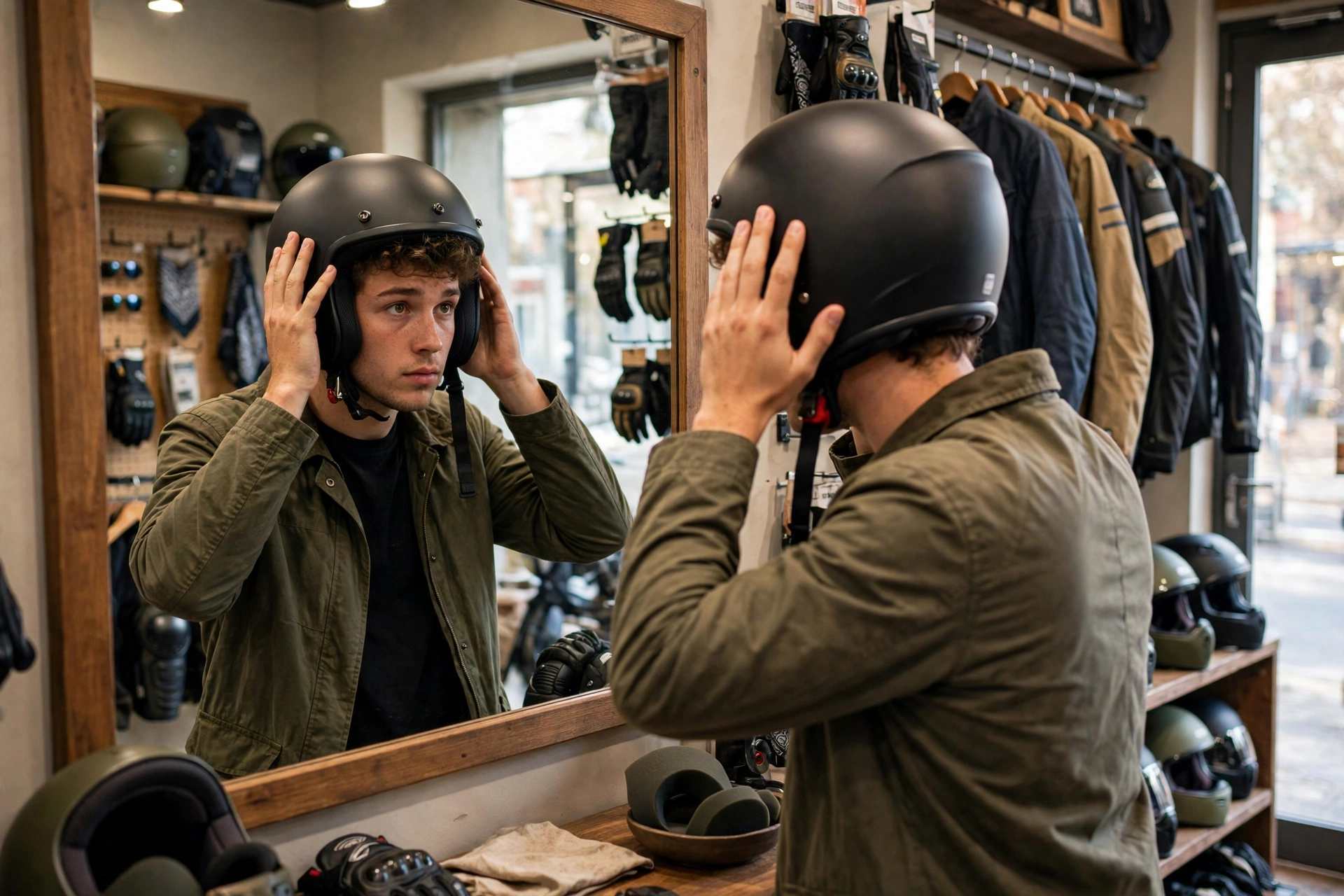
What Checks Should You Do Once the Helmet Is On?
Once the helmet is on and the strap is fastened, run through a few simple checks. First, try to move the helmet. Hold the chin bar or the front of the shell and try to push it up, down, and side to side. A well-fitting helmet should move your skin and scalp with it rather than sliding freely over your head. If it slides easily, it is too big. If it barely moves at all and feels locked in place, that is a good sign.
Next, shake your head gently from side to side and nod up and down. The helmet should stay put and move with your head, not lag behind or bounce. Then open your mouth wide: you should feel the cheek pads press against your cheeks. This is normal and expected. If your mouth opens freely with no pressure at all, the cheek pads are not gripping enough, and the helmet may be too large.
One more check is worth doing: fasten the chin strap properly and make sure you cannot pull the helmet off over the back of your head. With the strap done up, try rolling the helmet forward and off. If it comes off, the fit is wrong or the strap is too loose. The strap should sit snugly under your chin — you should be able to fit about two fingers between the strap and your throat, but no more.
How Tight Is Too Tight — and How Loose Is Too Loose?
Too tight is easy to recognise: a sharp pressure point that hurts within minutes, a headache that starts while you are still standing in the shop, or red marks that stay on your forehead after you take the helmet off. A helmet that is too tight will also make it hard to wear for any length of time, and a helmet you dread putting on is a helmet you will be tempted to leave behind. If you feel pain rather than pressure, go up a size or try a different shape.
The right balance is a helmet that feels firm and even, with no single sore spot and no free movement. Many new riders are surprised by how snug a correct fit feels, and that surprise is normal. Give yourself a few minutes in the helmet before deciding, and remember that comfort after a short wear test tells you more than comfort in the first ten seconds. If you are learning how modern helmets handle different kinds of impact, reading about what MIPS is for helmets can help you understand one of the safety features built into many current designs.
What Mistakes Do New Riders Make When Choosing a Helmet?
The most common mistake is buying a size up because the correct size feels tight. New riders often pick the helmet that feels comfortable straight away, which is usually the one that is too big. A helmet that is too big will feel fine in the shop and be a problem on the road, so trust the checks rather than the first impression of comfort.
Frequently Asked Questions
Q: How snug should a new helmet feel?
A: It should feel firm and even all the way round, with the cheek pads pressing your cheeks when you open your mouth. A little snugness is normal, and the padding settles slightly with wear. Sharp pain or a headache within minutes means it is too tight.
Q: Can I check helmet fit at home without a shop?
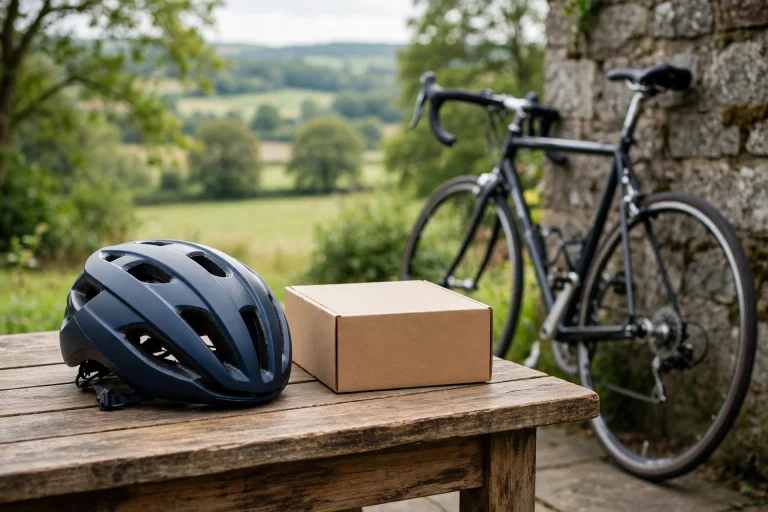
A: Yes. Measure your head with a soft tape, compare it with the brand’s size chart, and once the helmet arrives, run the shake test, the roll-off test with the strap fastened, and a ten-minute wear test to check for pressure points before you ride.
Q: Should a new rider buy a helmet a size bigger to grow into?
A: No. A helmet should fit correctly from the start, because a loose helmet can move or come off in a crash. Buy the size that passes the fit checks now, and replace the helmet when it no longer fits or shows wear.

Olivia
Writer at Helmet Today, covering helmet reviews, fit and riding safety.