A Nordic combined helmet is a helmet worn for Nordic combined, a winter sport that pairs ski jumping with cross-country skiing. It protects the head during the ski jump, where the athlete flies through the air and lands at speed, and it is also worn for the cross-country part of the event. Nordic combined is one of the oldest winter sports, and it asks the athlete to be both a jumper and an endurance skier. The helmet is most important on the jump, where the speeds and heights are greatest, but it is part of the kit for the whole event.
What Is Nordic Combined?
Nordic combined is a winter sport that combines two disciplines: ski jumping and cross-country skiing. The athlete first competes in the ski jump, where points are scored for distance and style, and then races in the cross-country event, with the jumping results deciding the starting order and the time gaps. The athlete who crosses the finish line first in the cross-country race wins the event, so both parts matter.
The sport takes its name from the Nordic tradition of skiing, and it has been part of the winter sporting calendar for a very long time. The two halves of the event ask for very different skills: the jump needs courage, timing, and control in the air, while the cross-country race needs endurance, pacing, and efficient technique over a long distance. In general terms, the helmet is there for the jumping half, where the risk of a hard fall is highest.
Why Does Nordic Combined Call for a Helmet?
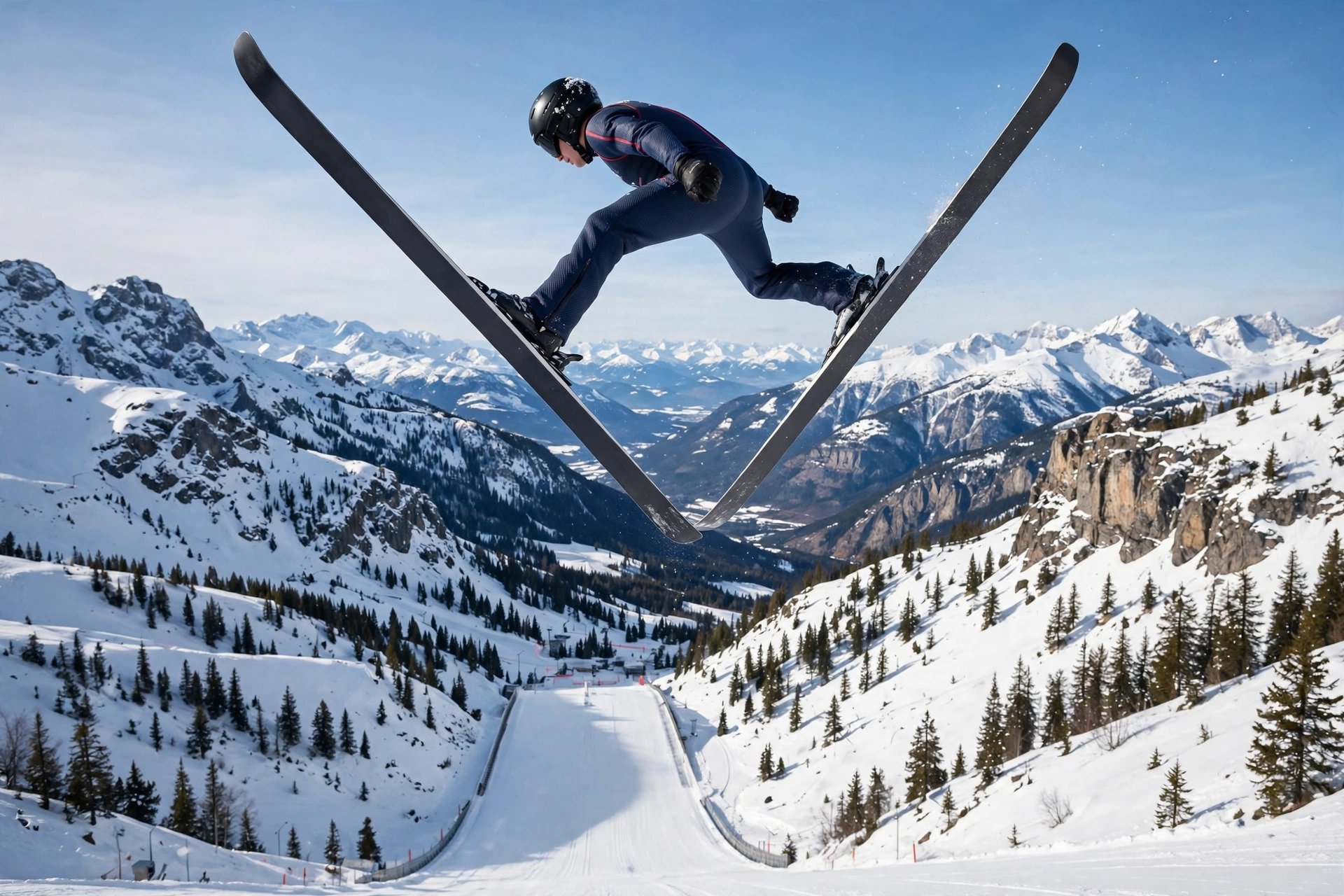
Nordic combined calls for a helmet because ski jumping involves speed, height, and a landing at high velocity on a steep slope. The jumper travels down a steep in-run, launches into the air, and lands on a slope that is firm and fast, and a small error in the take-off or in the air can turn a planned landing into a fall from height. The head can strike the snow hard before the jumper has time to react.
The cross-country half of the event is lower risk, but the helmet is still worn, and it can help in a fall on an icy descent or in a collision with another skier. In general terms, a helmet does not make Nordic combined safe in every case, and it cannot protect against every kind of fall, but it does reduce the force that reaches the head in the kinds of impacts that happen most often in ski jumping. That is why helmets are standard kit in the sport.
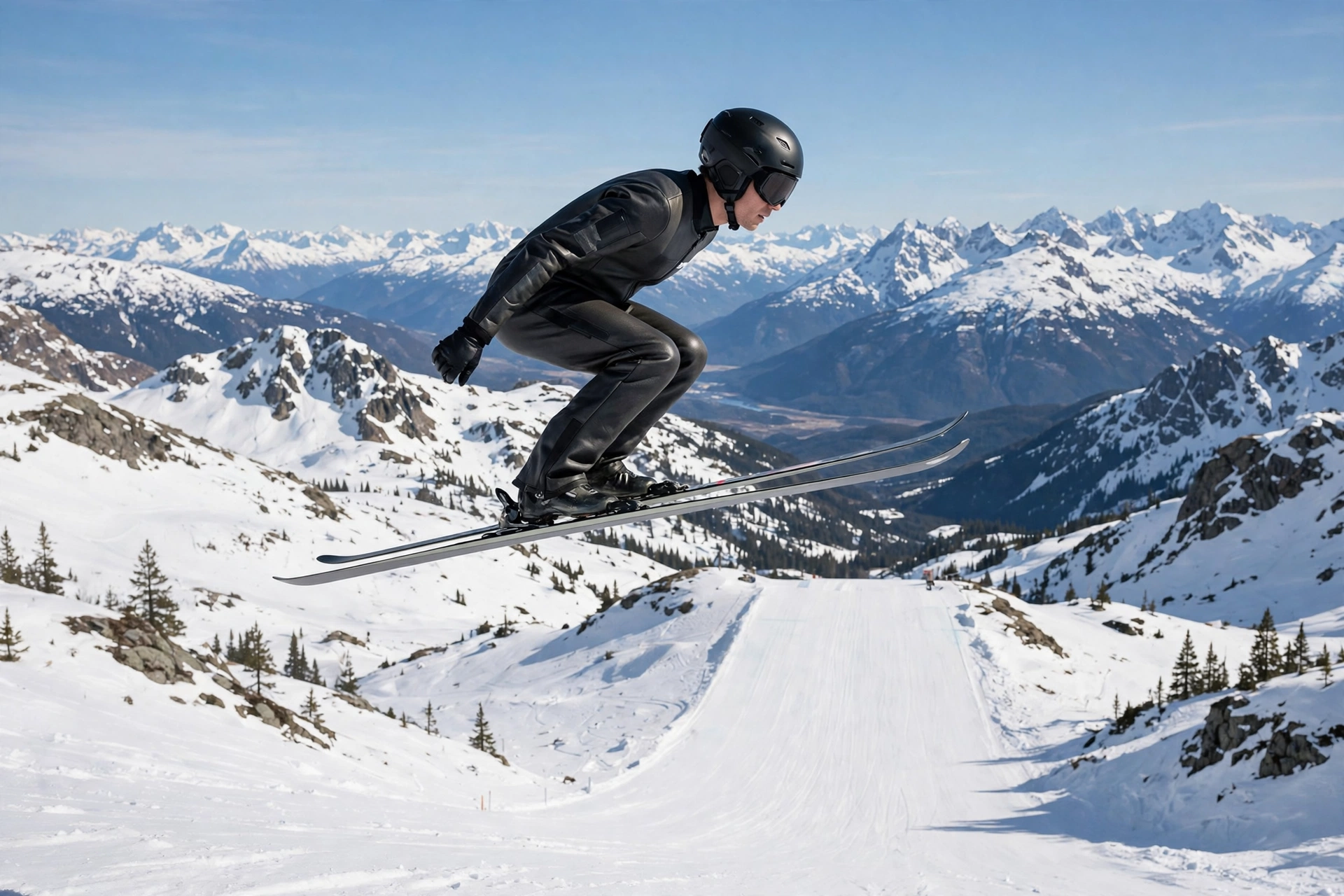
How Is a Nordic Combined Helmet Different From Other Ski Helmets?
A Nordic combined helmet is, in general terms, a ski jumping helmet, and it is shaped for the aerodynamics of the jump. It usually has a smooth, rounded shell that helps the air flow over it, and it sits close to the head so that it does not add drag in flight. The helmet is designed to work with the jumper’s suit, goggles, and skis as part of a streamlined whole, because even small changes in shape can affect how the jumper flies.
The helmet still has the same basic job as any snow sports helmet: a hard outer shell with a liner that absorbs some of the force of an impact. The fit is especially important, because the helmet must stay exactly in place through the in-run, the flight, and the landing. If you want to understand one of the safety technologies used in modern helmets, reading about what MIPS is for helmets is a good place to start, since that system is found in many snow helmets.
What Should a Nordic Combined Helmet Fit Like?
A Nordic combined helmet should fit snugly all round the head, sitting level and covering the forehead without slipping down over the eyes. It should not wobble when the athlete shakes the head, and it should not press painfully on any one spot. The back should sit low enough to protect the back of the head, and the goggles should sit neatly against the front without a gap that lets in cold air.
The fit system should be adjusted before the event, and the chin strap should be fastened snugly, so the helmet stays in place through the jump and the landing. It is worth trying the helmet on with the goggles and any thin balaclava that will be worn underneath, because layers change how the helmet sits. In general terms, a helmet that fits well is one the athlete can forget about while focusing on the jump, and that is exactly what is needed in this sport.
What About the Cross-Country Part of Nordic Combined?
The cross-country part of Nordic combined is a race over a set distance, and the athlete skis it wearing the same helmet used for the jump. The cross-country course is usually a loop with climbs, descents, and turns, and the athlete must pace the effort carefully after the excitement of the jump. The helmet is less critical here than on the jump, because the speeds are lower and the snow is often softer, but it still gives protection on icy descents and in a fall.
Some athletes find a jumping helmet warm during a long cross-country race, because the helmet is designed for the jump rather than for endurance skiing. Ventilation helps, and the athlete may open the vents or loosen the fit slightly for the race, as long as the helmet stays secure. In general terms, wearing one helmet for both halves of the event is the norm, and it keeps the kit simple on a busy competition day.
When Should You Replace a Nordic Combined Helmet?
A Nordic combined helmet should be replaced after a hard impact, even if it looks fine from the outside. The liner inside the helmet can compress or crack in a heavy fall, and that damage may be hidden under the shell. A helmet that has already absorbed a serious knock may not protect as well the next time, so it is generally sensible to retire it and use a new one.
Age and wear matter as well. Years of use, sun, cold, and knocks can wear down the liner, the straps, and the fit system, and a helmet that no longer fits snugly may not stay in place during a jump or a fall. Checking the helmet at the start of the season is a good habit: look for cracks, loose straps, worn padding, or a shell that feels brittle. If anything seems wrong, or if the helmet has taken a heavy landing, replacing it is the safer choice.
Do Nordic combined athletes wear a helmet for both parts?
Yes, in general terms the helmet is worn for both the ski jump and the cross-country race. It matters most on the jump, where the speeds and heights are greatest.
Can I use a normal ski helmet for Nordic combined?
A normal ski helmet can work for casual practice, but a ski jumping helmet is shaped for the aerodynamics of the jump. For serious jumping, a helmet made for the discipline is the better choice.
Is ski jumping the risky part of Nordic combined?
Yes, in general terms the ski jump carries the higher risk of a hard fall, because of the speed, height, and firm landing slope. The cross-country race is lower risk, though falls can still happen.

Olivia
Writer at Helmet Today, covering helmet reviews, fit and riding safety.