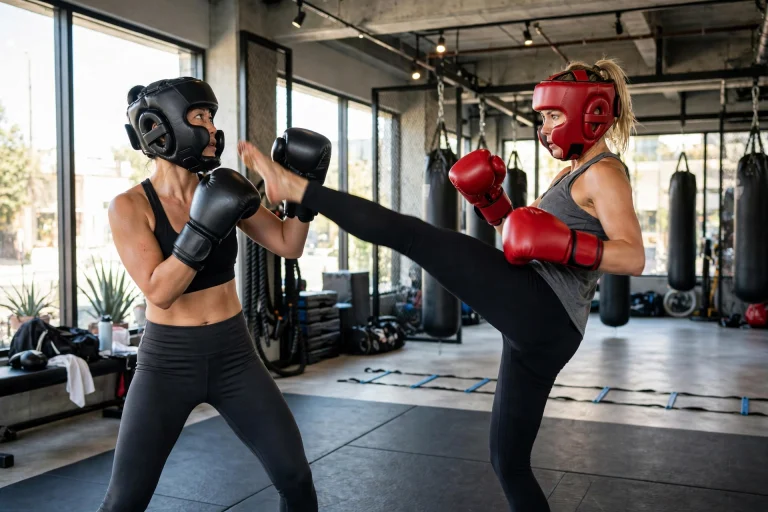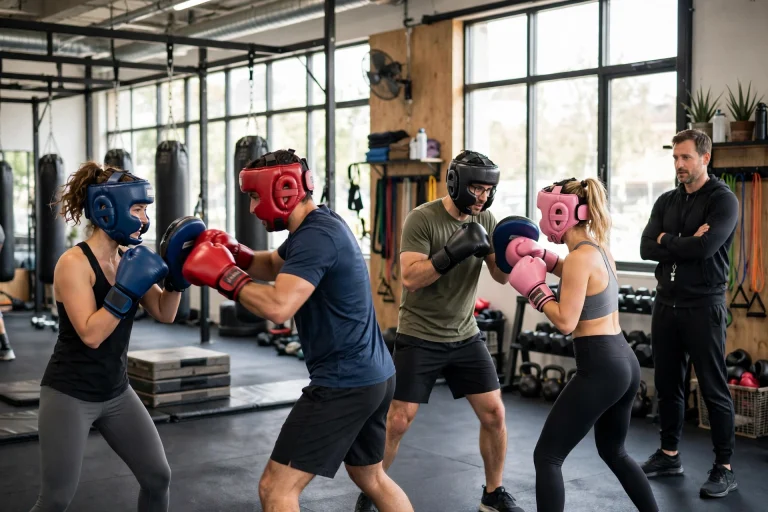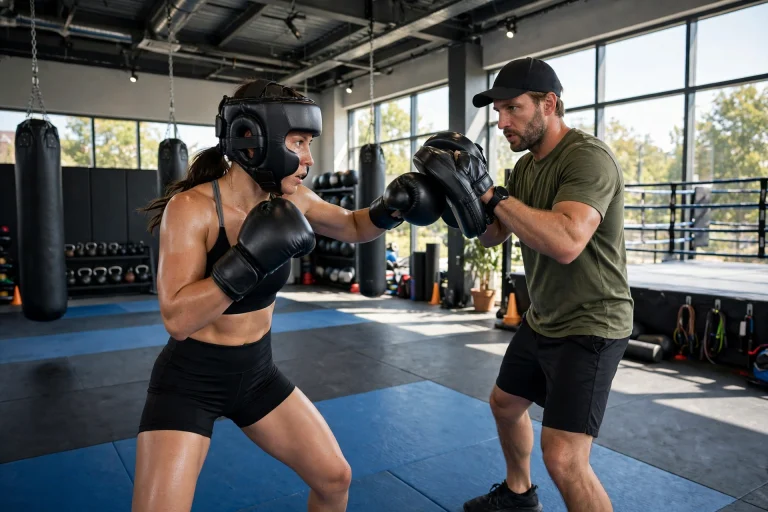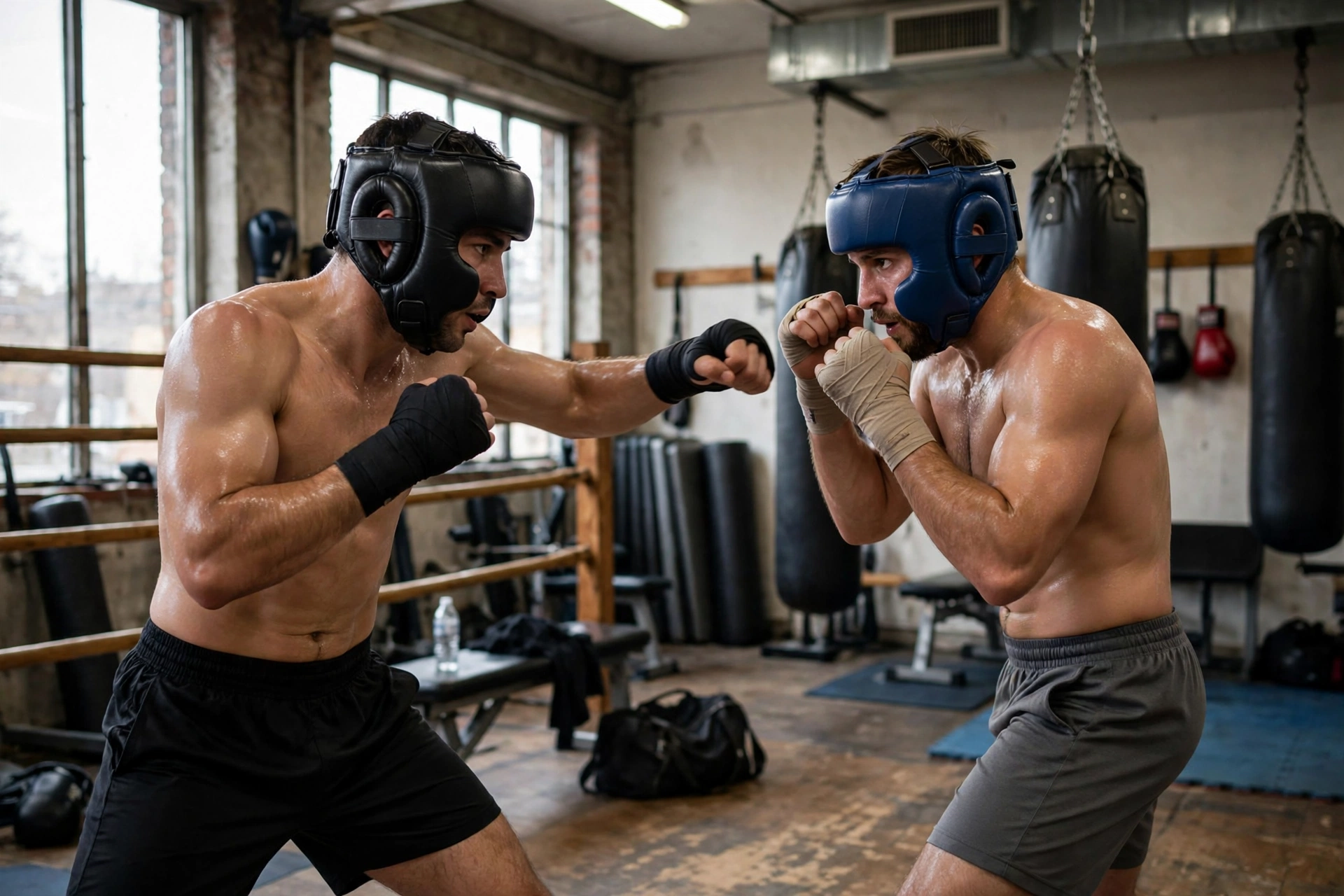
Bare-knuckle boxing training headgear is padded headgear worn in the gym while preparing for bare-knuckle boxing, and in general terms it is used to soften punches, reduce cuts and bruising, and let fighters spar more often, even though bare-knuckle bouts themselves are usually fought without headgear. The distinction matters: in training, the goal is to learn and to stay healthy enough to train again tomorrow, while in a bout the fighters accept the risks of fighting with bare fists. Headgear, along with gloves or hand wraps and a mouthguard, is part of how a bare-knuckle gym makes hard sparring sustainable.
What Is Bare-Knuckle Boxing?
Bare-knuckle boxing is boxing fought without padded gloves, with the hands wrapped in cloth or tape. It is one of the oldest forms of boxing, and it has returned in recent years as an organised sport with referees, rounds, weight divisions and medical supervision, although the rules vary between promotions and between places. Fighters strike only with their fists, and the absence of large gloves changes the sport: punches land more sharply, cuts are more common, and hand injuries are a constant concern for fighters and coaches.
Because the fists are unprotected by padding, bare-knuckle fighters have to be careful about how they punch, where they aim, and how much force they use. A punch to the top of the head, for example, is far riskier for the hand than the same punch with a glove on, so technique and target selection matter a great deal. That is why training is so structured: fighters spend a lot of time on pads, bags and footwork, and they spar with protection so they can practise timing and distance without taking the damage a real bout would cause.
Why Wear Headgear in Bare-Knuckle Training?
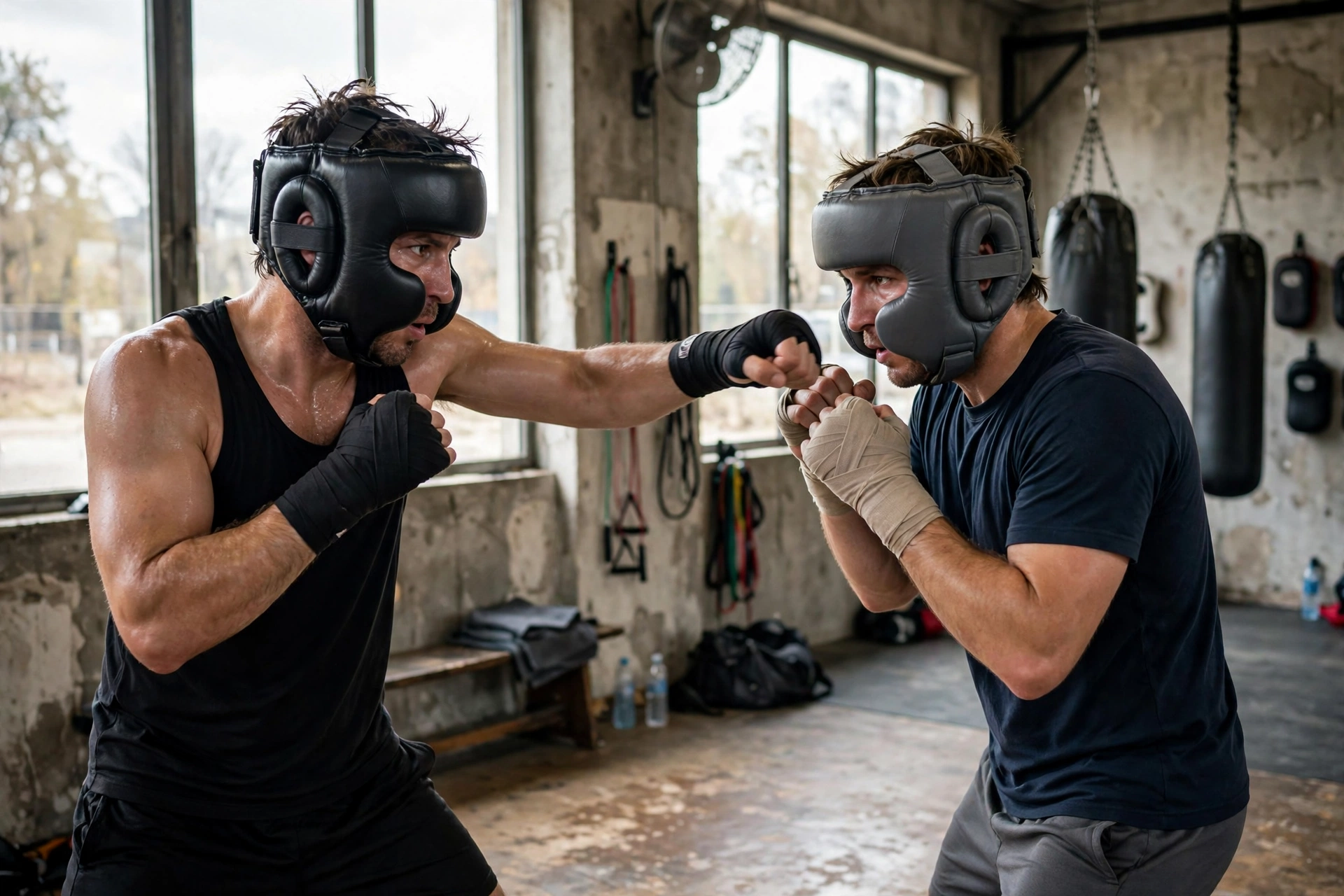
Headgear is worn in bare-knuckle training because sparring without it would cause too much damage too quickly. Even at controlled speed, a bare fist or a wrapped hand can cut skin and bruise tissue more easily than a padded glove, and repeated sparring without protection would leave fighters cut, swollen and unable to train. Headgear spreads the force of a punch over a wider area, protects the skin around the forehead, temples and cheeks, and reduces the chance of a cut that would need time to heal.
It also lets fighters spar more realistically. With headgear on, partners can practise combinations, counters and head movement at a useful pace, knowing that a clean punch will sting rather than split the skin. That builds timing, confidence and conditioning, all of which a fighter needs in a bout. Coaches usually set the level of contact for each round, and they may use headgear together with sparring gloves or padded mitts for some sessions, so that the hands are protected as well as the head.
What Should Bare-Knuckle Training Headgear Cover?
Good bare-knuckle training headgear should cover the areas most likely to be hit: the forehead, the temples, the cheeks and the back of the head. In general terms, padding around the forehead and temples is especially important, because those are common targets for a jab and a cross, and cheek padding helps protect the cheekbones and the skin around the eyes. Some designs add extra padding over the top of the head, while others keep the headgear lighter so the fighter can move and see more freely.
There is a trade-off between protection and vision, and every fighter has to find the balance that suits them. Heavily padded headgear with a face bar offers more protection but can narrow the field of view and make it harder to see punches coming from the side. Lighter, open-face headgear gives a clearer view but leaves more of the face exposed. For most training, a design that protects the forehead, temples and cheeks while leaving the eyes clear is a sensible middle ground, and the choice should always be made with the coach’s advice and the gym’s rules in mind.
How Should the Headgear Fit?
Fit is what makes headgear work. It should sit snugly on the head, with even pressure all the way around, and it should not move when the wearer slips, ducks or takes a punch. The chin strap should be fastened firmly, and the headgear should stay in place when the head is shaken gently from side to side. If it slides down over the eyes or twists after a single punch, it is either the wrong size or it has not been adjusted properly, and it should be fixed before sparring continues. For background on how helmet technology manages impact forces, see what MIPS is for helmets.
When trying headgear on, it is worth moving as you would in a real round: slip, weave, turn and open the mouth wide, because the headgear needs to stay put through all of that. The padding should not press painfully on any one spot, and the wearer should still be able to breathe through a mouthguard and hear instructions from the corner. Headgear that fits well soon becomes something a fighter forgets about during a round, while headgear that fits badly is a constant distraction and a safety risk.
How Do You Look After Training Headgear?
Training headgear takes a lot of sweat and a lot of impacts, so it needs regular care. After each session, wipe it inside and out with a clean damp cloth and leave it in a place with good airflow until it is completely dry. Do not leave it wet in a closed kit bag, because that encourages smell and can weaken the materials. In general terms, mild soap and water are enough for cleaning, and harsh chemicals should be avoided because they can damage the foam padding and the outer cover.
Check the headgear often for wear. Look for padding that has gone flat or hard, stitching that is coming undone, straps that no longer hold tightly, and tears or cracks in the outer material. Headgear in that condition may not protect as well as it should, and it can also become uncomfortable. If the padding no longer springs back when pressed, or if the headgear has become loose even when the strap is fully tightened, it is time to replace it. Many fighters keep their headgear as part of a regular kit check, alongside gloves, wraps and a mouthguard.
Does Headgear Make Bare-Knuckle Sparring Safe?
Safe bare-knuckle training depends on more than equipment. Partners need to agree on the level of contact, coaches need to supervise rounds and stop them when the pace rises too high, and fighters need to be honest about how they feel after a hard punch. Beginners should start with light, technical sparring and build up slowly, and anyone who feels dizzy, confused or unwell after a blow to the head should stop and seek medical advice. Headgear is one layer of protection; control, supervision and common sense are the others.
Is headgear worn in bare-knuckle boxing bouts?
Usually not. Organised bare-knuckle bouts are generally fought without headgear. Headgear is mainly used in training and sparring, so fighters can practise safely.
Does headgear stop cuts in bare-knuckle training?
It reduces the chance of cuts, in general terms, by spreading the force of a punch and covering vulnerable skin. It cannot prevent every cut, especially if contact is heavy or the headgear fits badly.
Do you still need a mouthguard with headgear?
Yes. Headgear does not protect the teeth or the jaw in the way a mouthguard does, so a mouthguard should always be worn for sparring alongside headgear.

Olivia
Writer at Helmet Today, covering helmet reviews, fit and riding safety.