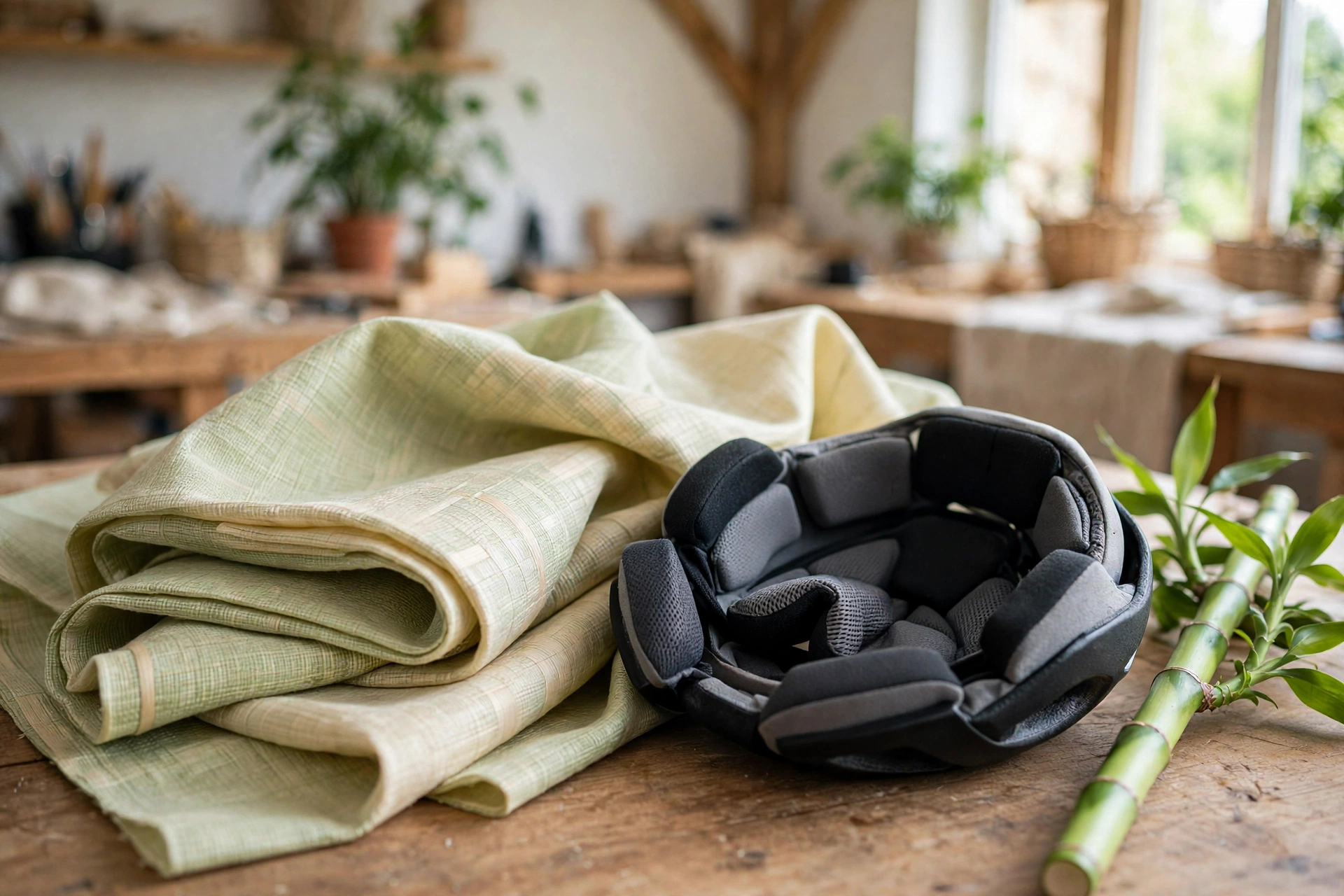
A bamboo fibre helmet liner is a helmet liner made with bamboo fibre, a natural fibre taken from bamboo plants, which is used in the padding inside a helmet to cushion the head, wick away sweat, and feel soft against the skin. Bamboo fibre is light, breathable, and naturally soft, and it is often mixed with other materials to make a liner that is comfortable and easy to care for. In general terms, it is a natural-fibre alternative to the synthetic padding used in most helmets, and it is usually found in the comfort padding rather than in the impact-absorbing foam.
What Is Bamboo Fibre?
Bamboo fibre is a fibre made from the bamboo plant, a fast-growing grass that needs little water and no replanting after it is cut. The fibre can be made by breaking the bamboo down mechanically or by processing it into a soft pulp that is spun into thread, much like cotton. The result is a light, smooth fibre that feels soft to the touch and lets air pass through it, which is why it is used in clothing, bedding, and towels as well as in helmet padding.
Bamboo grows quickly and can be harvested without killing the plant, which makes it an attractive material for makers who want a renewable source. In general terms, bamboo fibre is valued for being soft, breathable, and naturally able to handle moisture, and these are the qualities that make it interesting for helmet liners. It is not a structural material on its own: it is used in the padding that touches the head, not in the hard shell or the impact foam.
How Is a Bamboo Fibre Liner Made?
A bamboo fibre liner is made by turning bamboo fibre into a fabric or a soft padding, then cutting and sewing that padding to fit the inside of the helmet. The bamboo fibre is often blended with another fibre, such as cotton or a synthetic, to give the padding more strength and shape, since pure bamboo fibre on its own can be soft and hard to hold in form. The finished pads are fixed inside the helmet with press studs, hook-and-loop fasteners, or stitching, so they can be removed for washing.
The impact-absorbing foam underneath the padding is usually still made from a standard foam, because bamboo fibre on its own does not absorb impact in the way a foam liner does. In general terms, the bamboo fibre is the comfort layer that sits against the skin, while the foam beneath it does the protective work. The two layers work together: the foam absorbs energy in a crash, and the bamboo padding makes the helmet comfortable to wear.
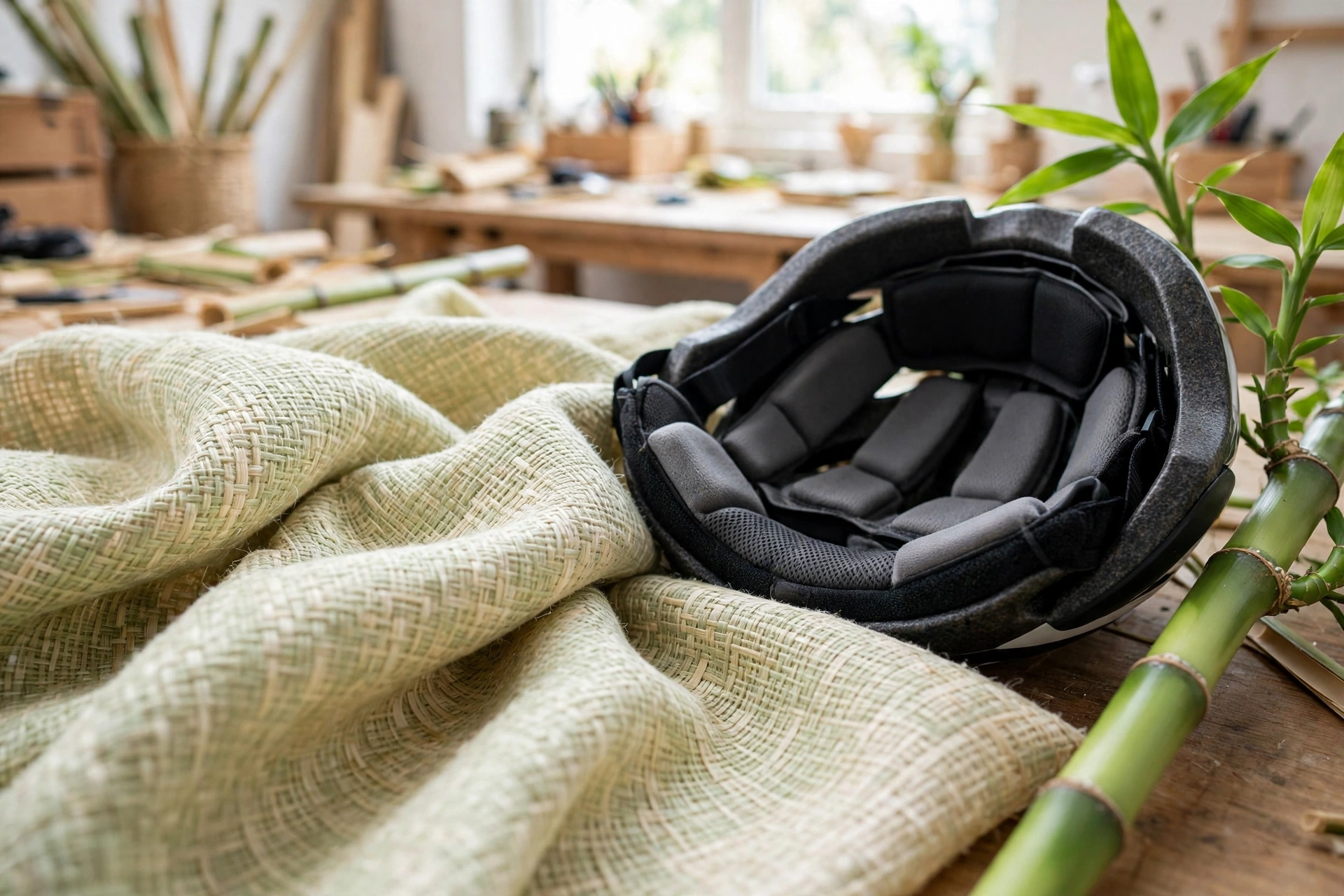
How Does a Bamboo Fibre Liner Feel to Wear?
A bamboo fibre liner feels soft and smooth against the skin, and many riders find it more comfortable than synthetic padding, especially on long rides. The fibre lets air move through it, which can help the helmet feel cooler, and it wicks sweat away from the skin rather than holding it against the head. This can make a difference on warm days or during hard riding, when sweat builds up quickly inside a helmet.
Bamboo fibre is also known for feeling fresh for longer, since it is less likely to hold smells than some synthetic padding. If you want to understand the safety system that works beneath the comfort padding, reading about what MIPS is for helmets is a good place to start, since the padding and the slip layer sit in the same space and both need to work with the foam liner. In general terms, a bamboo fibre liner is about comfort and freshness, not about changing how the helmet protects the head in a crash.
What Are the Benefits of a Bamboo Fibre Liner?
The main benefit of a bamboo fibre liner is comfort. The fibre is soft, breathable, and good at moving sweat away from the skin, which makes the helmet feel fresher and cooler on long rides. Riders who find synthetic padding itchy or hot may prefer bamboo fibre, and the natural feel of the material can make the helmet more pleasant to wear day after day. The padding is also usually removable and washable, so it can be kept clean with little effort.
There is also an environmental point. Bamboo grows fast and needs little in the way of water or chemicals to grow, so a liner made with bamboo fibre can have a smaller footprint than one made entirely from synthetic materials. In general terms, these benefits are real, but they are comfort and environmental benefits rather than safety benefits. A bamboo fibre liner does not make a helmet safer on its own, and the helmet should still be chosen on fit and certification first.
What Are the Limits of Bamboo Fibre Liners?
Bamboo fibre liners have limits, and the main one is that the fibre is a comfort material, not a protective one. Bamboo fibre on its own does not absorb impact, so it cannot replace the foam liner that does that job. A helmet that claims to have a bamboo fibre liner still needs its standard foam underneath, and a rider should not assume that the natural fibre makes the helmet safer. The liner also needs care: bamboo fibre can wear out with repeated washing, and it may lose its softness over time.
Another limit is that the fibre can hold moisture if it is not dried properly, and a damp liner can smell or go soft. In general terms, a bamboo fibre liner needs to be removed and dried after sweaty rides, just like any other padding. Riders who are interested in the material should check that the padding is genuinely made with bamboo fibre and not just labelled that way, and they should look for a helmet that carries the right certification for their sport.
Should You Choose a Helmet With a Bamboo Fibre Liner?
Choosing a helmet with a bamboo fibre liner comes down to the same checks as any helmet: fit, certification, and comfort. The liner material is a bonus, but it matters far less than whether the helmet fits snugly, covers the head properly, and carries the safety certification for the kind of riding you do. If a helmet with a bamboo fibre liner meets those checks and feels comfortable, the soft, breathable padding is a genuine advantage, especially for riders who sweat a lot or find synthetic padding uncomfortable.
It is worth asking whether the padding is removable and washable, since that makes it much easier to keep fresh. The helmet should be tried on for several minutes, since a liner that feels soft at first may press after a while. In general terms, a bamboo fibre liner is a good choice for riders who want a comfortable, natural-feeling helmet and are willing to look after the padding, as long as the helmet itself fits well and is certified for their sport.
Is a bamboo fibre liner the impact-absorbing part of a helmet?
No. The bamboo fibre is the comfort padding that touches the skin. The foam liner underneath it is the part that absorbs the force of an impact.
Can I wash a bamboo fibre helmet liner?
Yes, in general terms, if the padding is removable. Follow the maker’s washing instructions, use a mild wash, and let the pads dry fully before putting them back in the helmet.
Is bamboo fibre good for sweaty riders?
Yes, bamboo fibre wicks sweat away from the skin and lets air through, which can help a helmet feel cooler and fresher. Even so, the padding should still be removed and dried after a sweaty ride.

Olivia
Writer at Helmet Today, covering helmet reviews, fit and riding safety.