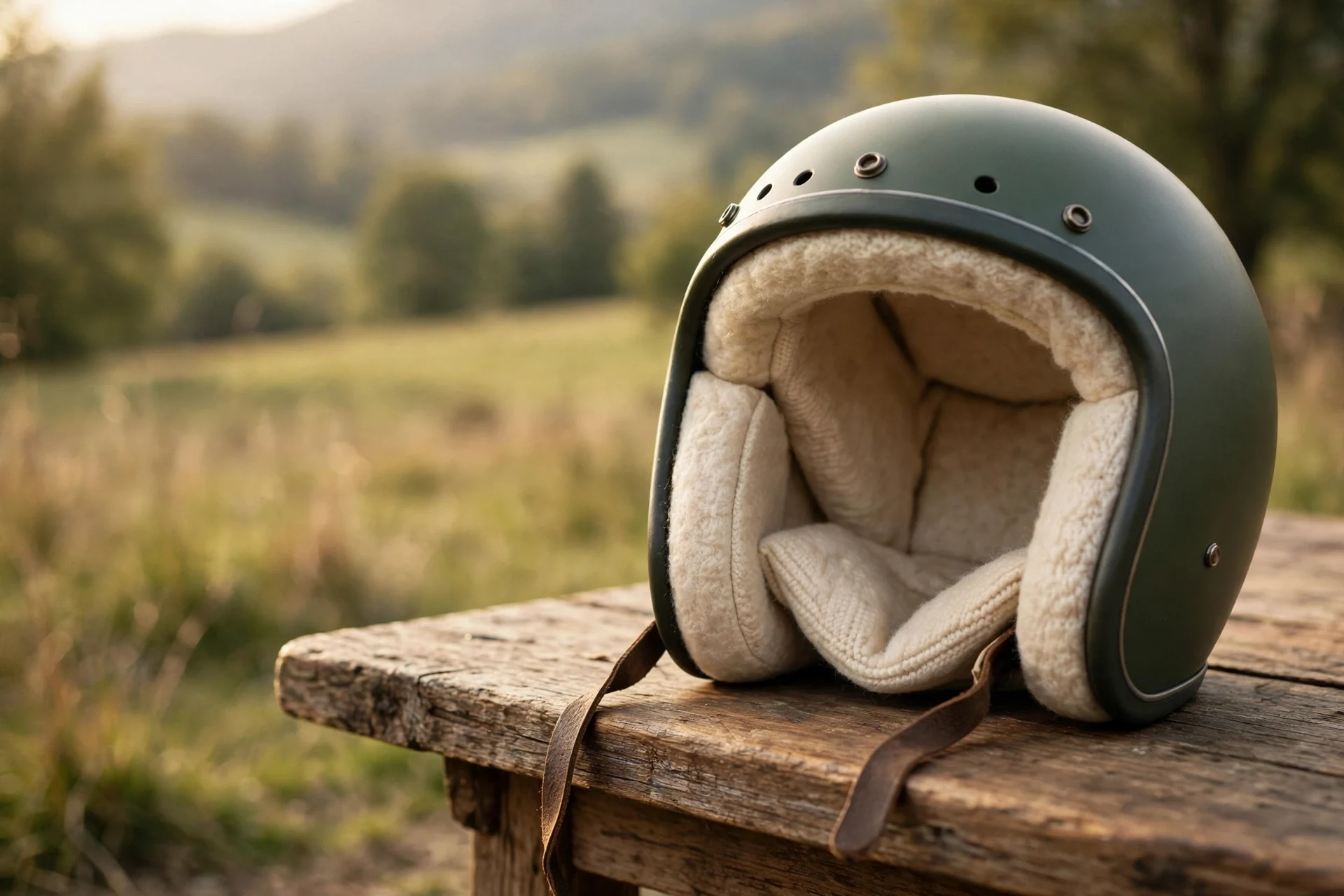
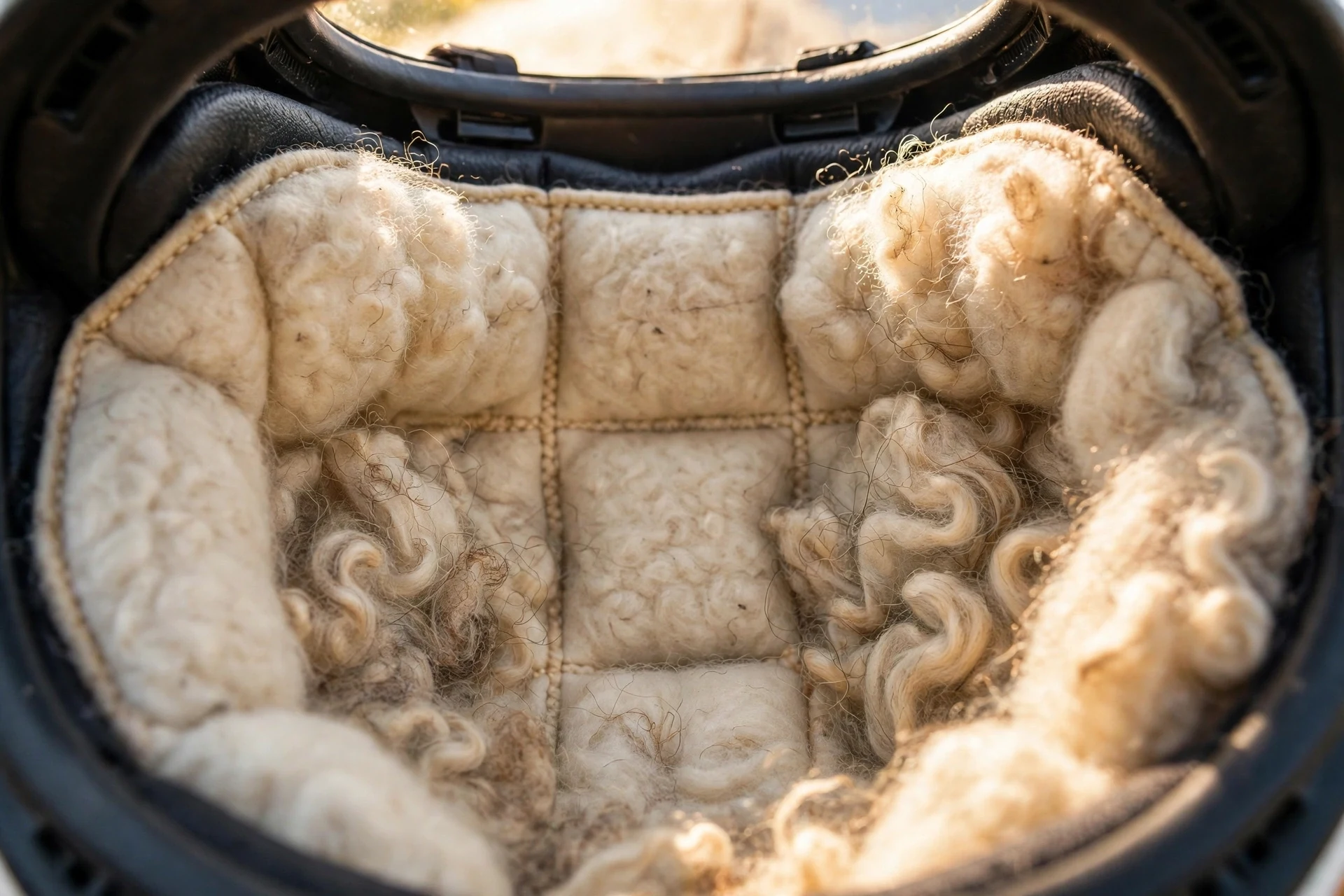
A wool helmet liner is a soft inner lining made from wool, or from a wool blend, that sits inside a helmet shell to cushion the head, manage sweat, and add warmth in cold weather. It is the layer that touches the rider’s head, and it works with the helmet’s shell and impact foam to make the helmet comfortable and wearable for long periods. Wool liners are found in some motorcycle, ski, snowboard, and work helmets, especially those designed for cold conditions.
What Is a Wool Helmet Liner Made Of?
A wool helmet liner is usually made from sheep’s wool, lambswool, or merino wool, either on its own or blended with other fibres such as polyester or cotton. Merino wool is a fine, soft type of wool that feels less scratchy against the skin than coarser wool, which is one reason it is often chosen for liners that sit directly against the forehead and cheeks. The wool may be woven into a fabric, knitted, or felted, depending on the liner’s design.
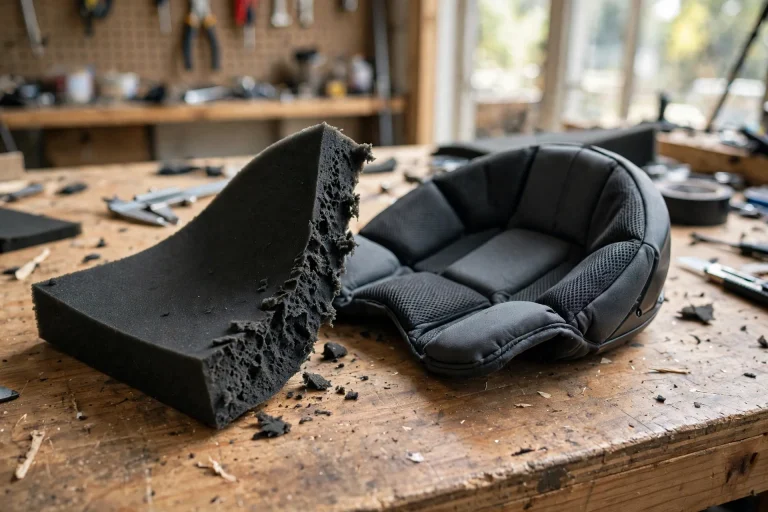
In many helmets the wool is not the whole liner but one layer within it. A typical liner has a wool or wool-blend comfort layer on the inside, backed by a layer of foam or another padding material that gives the liner its shape and thickness. The wool layer provides the soft feel and moisture handling, while the foam underneath provides cushioning. Some liners are removable, so they can be taken out for washing or replaced when they wear out.
How Does a Wool Helmet Liner Work?
A wool helmet liner works by sitting between the head and the hard parts of the helmet, spreading pressure evenly so no single spot feels pinched or sore. When the helmet is on, the liner fills the small gaps between the head and the shell, which helps the helmet stay in place and feel stable. The fibres of the wool also trap air, which is what makes wool a natural insulator and helps keep the head warm in cold weather.
Wool also handles moisture in a useful way. It can absorb a good amount of sweat without feeling wet to the touch, and it releases that moisture slowly into the air, which helps keep the skin drier and more comfortable during a long ride or a day on the slopes. If you want to understand one of the safety technologies used in modern helmets, reading about what MIPS is for helmets is a good place to start, though the liner and the safety system are separate parts of the helmet.
What Are the Benefits of a Wool Helmet Liner?
One of the main benefits of a wool helmet liner is warmth. Wool is a natural insulator, and a wool liner can make a real difference on a cold morning ride or a winter day on the mountain, when a thin synthetic liner might leave the head feeling chilled. In general terms, wool keeps working as insulation even when it gets a little damp, which is not true of every material used in helmet liners.
Comfort is another benefit. Wool fibres are springy and soft, so a wool liner tends to feel gentle against the skin and to mould itself to the shape of the head over time. Many people also find that wool liners smell less after use than some synthetic liners, because wool fibres resist the build-up of odour in general terms. For riders who wear a helmet for hours at a time, that comfort and freshness can matter a lot.
Are There Any Downsides to Wool Helmet Liners?
Wool helmet liners do have some downsides. One is that wool can feel warm in hot weather, so a thick wool liner may be less comfortable in summer than a light, ventilated synthetic liner. A helmet with a wool liner may also be heavier than one with a thin foam liner, and it may take longer to dry out if it gets soaked through in heavy rain or snow.
Care can be more demanding too. Wool can shrink or lose its shape if it is washed in hot water or dried with too much heat, so a wool liner usually needs gentler washing than a synthetic one. Some people are also sensitive to wool and find it itchy, even when the wool is fine merino. In general terms, these are trade-offs to weigh against the warmth and comfort that wool offers.
How Do You Care for a Wool Helmet Liner?
Caring for a wool helmet liner starts with checking the maker’s instructions, because different liners need different treatment. In general terms, a removable wool liner can be hand-washed in cool or lukewarm water with a mild detergent, then rinsed gently and pressed in a towel to remove water. It should be left to dry in the air, away from direct heat such as a radiator or a hair dryer.
For a liner that cannot be removed, regular airing helps a lot. Taking the helmet out of its bag after use and letting it dry in a ventilated spot stops moisture and odour from building up. A soft brush can lift dust and dirt from the wool surface. It is best not to use harsh cleaners or bleach on wool, since these can damage the fibres and make the liner feel rough or lose its shape.
How Do You Choose a Wool Helmet Liner?
Choosing a wool helmet liner starts with the helmet itself. Many liners are made for a specific helmet model, so the safest choice is the liner that the helmet maker supplies or recommends for that model. A liner that is the wrong size or shape can change how the helmet fits, which can affect both comfort and protection, so it is worth checking the size and model carefully before buying.
Think about when and where the helmet will be used. A thick merino liner suits cold-weather riding and winter sports, while a thinner wool blend may be better for milder conditions. If the liner is removable, that is a bonus, since it makes washing and replacement much easier. In general terms, a good wool liner should feel soft, sit smoothly against the head, and not add pressure anywhere when the helmet is worn for a while.
Is a wool helmet liner warmer than a synthetic liner?
Yes, in general terms a wool liner is warmer than a thin synthetic liner, because wool fibres trap air and keep insulating even when slightly damp, which makes it a good choice for cold weather.
Can I wash a wool helmet liner?
Yes, in most cases, but it needs gentle care. Hand-wash a removable liner in cool water with a mild detergent, press out the water, and let it air dry away from direct heat.
Does a wool liner affect helmet safety?
The liner is a comfort layer, and the main impact protection comes from the shell and the foam inside the helmet. A liner that fits correctly should not reduce protection, but a wrong-size liner can change the fit, so use one made for your helmet model.

Olivia
Writer at Helmet Today, covering helmet reviews, fit and riding safety.