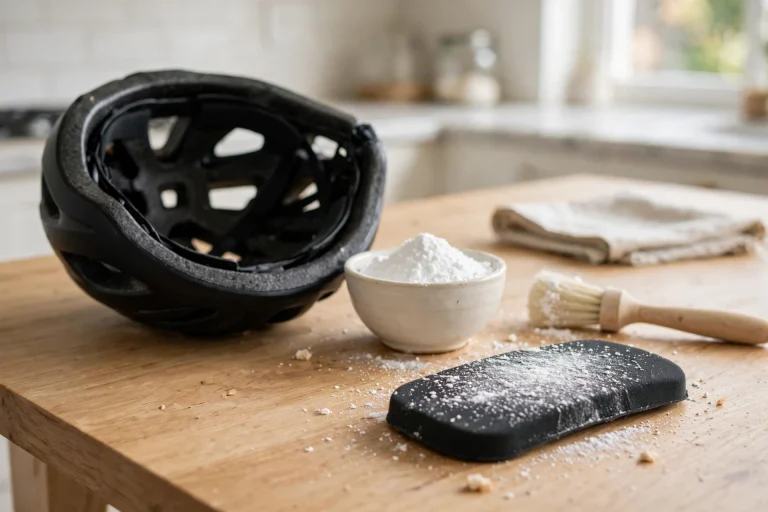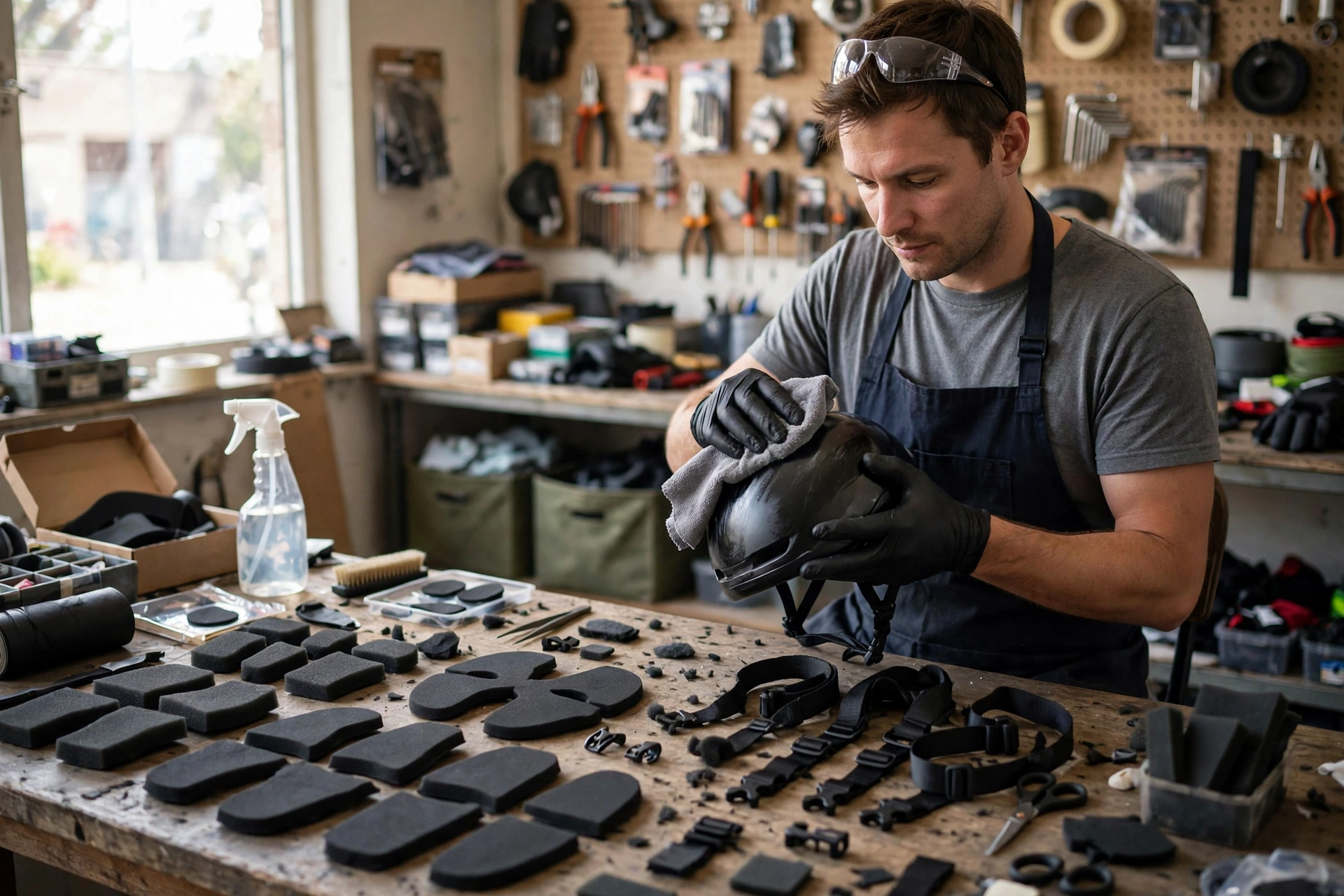
Helmet refurbishment is the process of checking, cleaning, and restoring a used helmet so that it can be used again safely. It usually means inspecting the shell and liner for damage, replacing worn padding and straps, cleaning every part, and testing the fit before the helmet goes back into use. In general terms, refurbishment is about bringing a sound helmet back to good condition, not about repairing a helmet that has been in a crash. A helmet whose shell or liner is damaged should be replaced, not refurbished.
What Does Helmet Refurbishment Involve?
Refurbishment starts with a careful inspection. The shell is checked for cracks, dents, and deep scratches, and the liner is checked for cracks, compression, or crumbling. The straps and buckles are tested to make sure they hold firmly, and the padding is checked for wear, smell, and fit. Anything that is worn out or damaged is noted, and the helmet is either passed for refurbishment or retired. This inspection is the most important step, because it decides whether the helmet is worth saving at all.
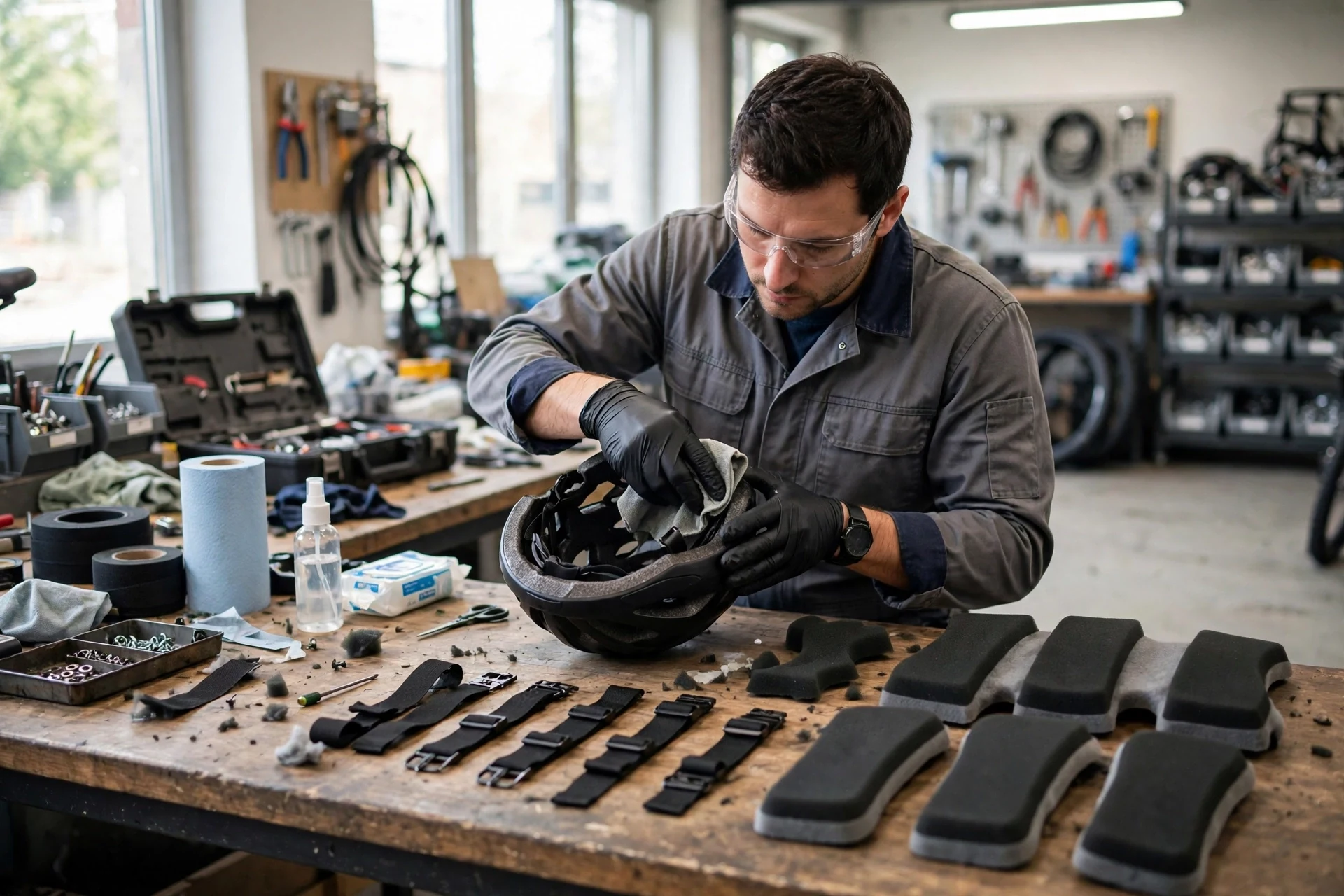
Once a helmet passes inspection, the refurbishment itself begins. The old padding is taken out and replaced with new padding, the straps are cleaned or replaced, and the shell is washed and polished. Vents are cleared of dirt, and any small cosmetic marks are dealt with. The helmet is then reassembled and checked again for fit and function. In general terms, a refurbished helmet should look clean, feel comfortable, and work exactly as it did when it was new, apart from normal signs of age.
Which Helmets Can Be Refurbished?
Not every helmet is a good candidate for refurbishment. The best candidates are helmets that are structurally sound but cosmetically worn: the shell and liner are whole, the helmet has never been in a crash, and only the padding, straps, or surface finish have suffered. A helmet that has been used lightly for a season or two and then stored well is often an ideal case. Helmets used by ski schools, hire fleets, and sports clubs are often refurbished in batches for this reason.
Helmets that should not be refurbished include any helmet that has been in a crash, any helmet with a cracked shell or liner, and any helmet that is very old or has been stored badly. Age matters because the materials inside a helmet weaken over time, even without a crash, and a helmet that is past its useful life cannot be made safe again by new padding. In general terms, if you do not know a helmet’s history, or if there is any doubt about its condition, refurbishment is not the right choice, and replacement is safer.
How Is Refurbishment Different From Repair?
Refurbishment and repair sound similar, but they are different jobs. Repair means fixing a specific fault, such as a broken vent cover or a torn strap, while the rest of the helmet stays as it is. Refurbishment is a fuller process: the whole helmet is inspected, cleaned, and restored, with every worn part replaced, so that it is returned to a known good condition. A repair can be a small, one-off job, while refurbishment is a complete service.
The other difference is the standard that applies. A repair only needs to fix the broken part, but a refurbishment should leave the helmet safe to use in every way, which is why the inspection matters so much. A refurbished helmet should be checked against the same standards as a new helmet of the same model, and if it cannot meet them, it should not be put back into use. In general terms, think of repair as fixing one thing, and refurbishment as giving the whole helmet a fresh start, as long as its core structure is still sound.
Who Carries Out Helmet Refurbishment?
Helmet refurbishment is carried out by different people depending on the type of helmet and where it is used. Some helmet makers offer a refurbishment or servicing programme for their own models, and they are the best choice when one exists, because they know the helmet and can supply the right parts. Sports clubs, ski schools, and hire shops often refurbish their own fleets, either in-house or through a specialist service, so that their helmets stay safe and presentable season after season.
Individual owners can also refurbish their own helmets, but only within limits. Replacing padding, cleaning the shell, and fitting new straps are jobs that most owners can do with parts from the maker. Anything that involves the shell or the liner, however, should be left alone, because those parts cannot be fixed at home. If you want to understand one of the safety technologies used in modern helmets, reading about what MIPS is for helmets is a useful starting point before you decide whether your helmet is worth refurbishing. When in doubt, ask the maker or a specialist.
How Much Does Helmet Refurbishment Cost?
The cost of refurbishment depends on the type of helmet, the parts that need replacing, and who does the work. A simple home refurbishment, with new padding and a clean, may cost very little beyond the price of the parts. A professional service, with a full inspection and new straps, padding, and fittings, will cost more, though it is usually still cheaper than buying a new helmet of the same quality. For fleets and clubs, refurbishing in batches often brings the cost per helmet down.
Cost is not the only thing to consider, however. A refurbishment is only good value if the helmet is genuinely worth saving: a sound shell, a good liner, and plenty of life left in it. Spending money to refurbish a helmet that is old or doubtful is poor value, because a new helmet would be safer and may not cost much more. In general terms, compare the cost of the service with the cost of a new helmet, and if the two are close, a new helmet is usually the better choice.
When Should You Refurbish Instead of Replacing?
Refurbish a helmet when it is structurally sound, fairly new, and only the soft parts are worn. Padding that has gone flat, straps that are frayed at the ends, and a shell that is dirty or scuffed are all good reasons to refurbish, because none of them affect the helmet’s ability to protect you. A helmet that still fits well and has never been crashed is usually worth the effort, and refurbishment can give it several more seasons of use.
Replace a helmet instead when the shell or liner is damaged, when it has been in a crash, when it no longer fits, or when it is very old. These are not problems that refurbishment can solve, and trying to save such a helmet is a false economy. In general terms, refurbishment is for helmets that are tired, while replacement is for helmets that are damaged or done. If a helmet’s protection is ever in doubt, replace the helmet rather than refurbishing it, and let the old one go.
What is helmet refurbishment?
It is the process of inspecting, cleaning, and restoring a used helmet with new padding and straps so it can be used again safely, as long as its shell and liner are still sound.
Can any helmet be refurbished?
No. Only helmets with a sound shell and liner and no crash history should be refurbished. A crashed, cracked, or very old helmet should be replaced instead.
Is a refurbished helmet as safe as a new one?
It can be, in general terms, if the helmet passed a full inspection and only worn soft parts were replaced. If its protection is ever in doubt, a new helmet is the safer choice.

Olivia
Writer at Helmet Today, covering helmet reviews, fit and riding safety.