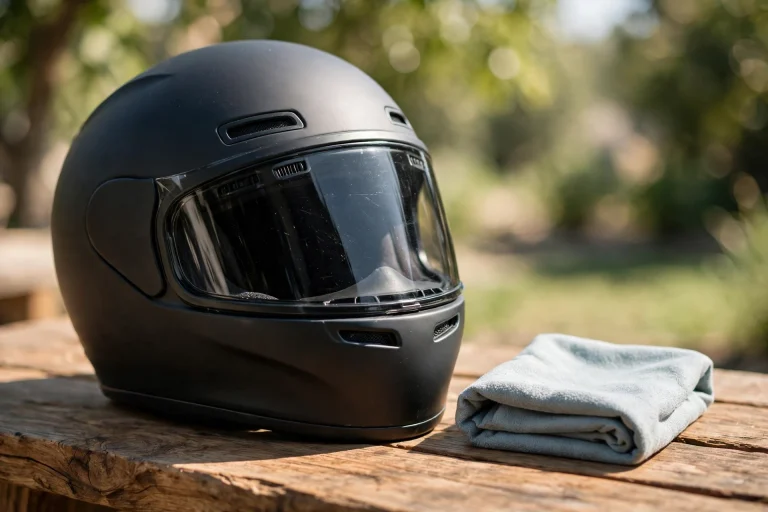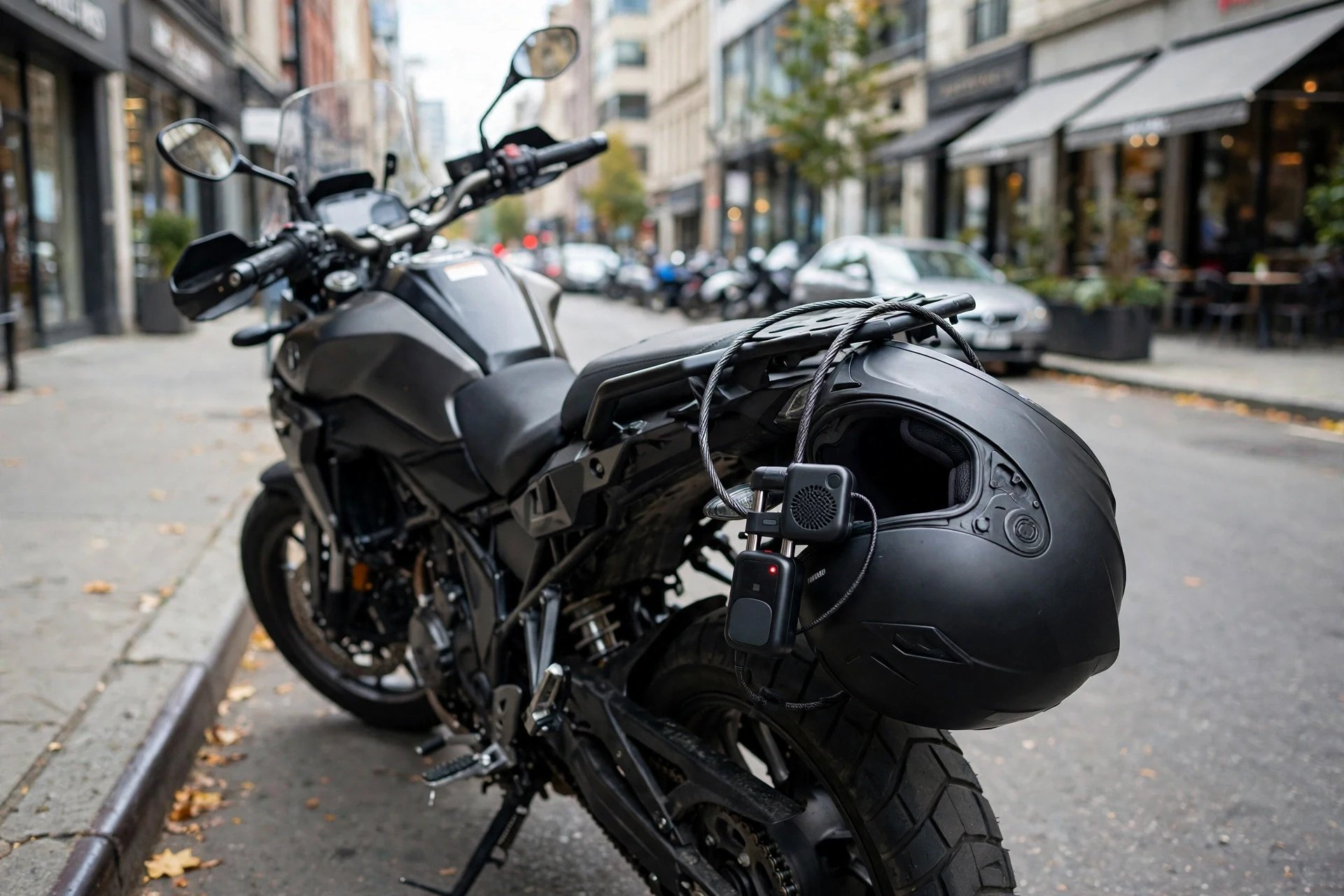
A helmet anti-theft alarm is a small alarm that warns you, and warns off a thief, if someone moves or tampers with your helmet. In general terms, it is a compact device that attaches to the helmet or to a lock, and it sounds a loud alarm when it senses movement, cutting, or unauthorised handling. Helmets are expensive and easy to steal: they are light, portable, and often left on a bike while the rider is away. An alarm does not make a helmet impossible to steal, but it makes stealing it noisy and risky, which puts many thieves off.
What Is a Helmet Anti-Theft Alarm?
A helmet anti-theft alarm is a small electronic device, usually battery powered, that fits on or inside a helmet, or on the lock or cable that secures the helmet to a bike. It has a motion sensor, and sometimes a cable-cut sensor as well. When the alarm is armed and the helmet is moved, shaken, or the cable is cut, the device sounds a loud siren, often for a minute or more, and may flash a light as well.
Some alarms are built into a helmet lock, so the lock itself is the alarm. Others are separate units that clip to the helmet or to the D-ring of the chin strap. In general terms, the idea is the same in every case: a thief who picks up the helmet triggers a noise that draws attention, and most thieves would rather walk away than risk being noticed.
How Does an Anti-Theft Alarm Work?
Most helmet alarms work with a motion sensor. You arm the alarm when you leave the helmet, and the sensor learns the helmet’s resting position. If the helmet is lifted, tilted, or shaken beyond a small threshold, the alarm sounds. Some alarms give a short warning beep first, so that an accidental knock does not set off the full siren, and then sound the full alarm if the movement continues.
Cable alarms work differently. A cable runs through the helmet and locks to the bike, and the alarm sounds if the cable is cut or unplugged. Some alarms combine both: a motion sensor and a cable sensor, so the helmet is protected whether it is moved or cut free. Most alarms last for weeks or months on a charge or a set of batteries, and many have a low-battery warning. If you want to understand how helmets protect the head in a crash, reading about what MIPS is for helmets is a useful starting point, though an alarm does not change how the helmet itself protects you.
What Types of Helmet Alarm Are There?
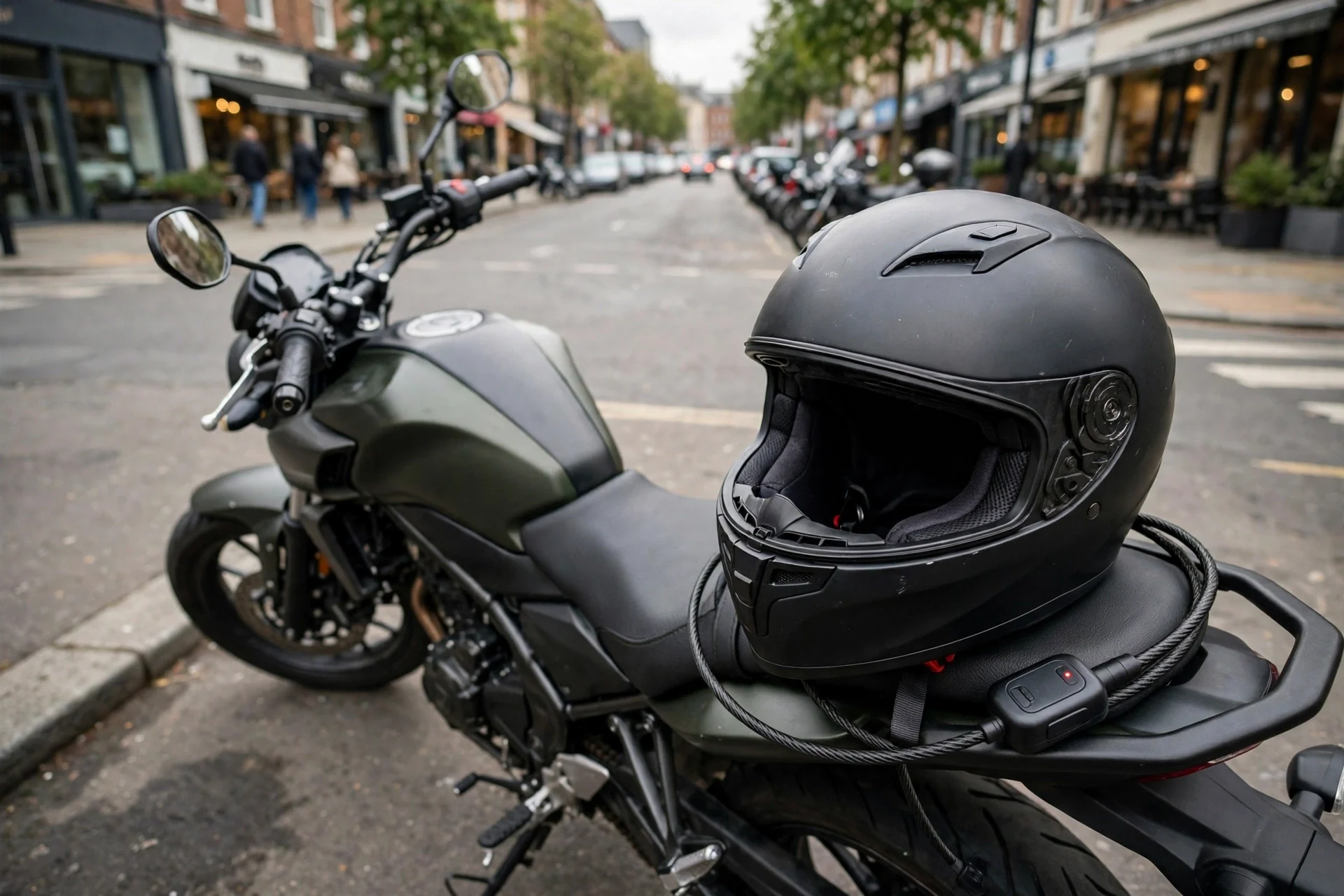
There are three main types of helmet anti-theft alarm. The first is a standalone motion alarm, a small unit that clips or sticks to the helmet and sounds when the helmet is moved. The second is an alarm lock, where the alarm is built into a padlock or cable lock that secures the helmet to the bike. The third is a smart alarm, linked to a phone app, which can send a notification to your phone and sometimes track the helmet’s location.
Standalone alarms are cheap and easy to fit, but they can be removed if the thief finds them. Alarm locks are harder to defeat, because the alarm and the lock are one unit, but they are heavier and more expensive. Smart alarms offer the most features, including phone alerts, but they need charging and a phone connection, and they may not work in areas with poor signal. In general terms, the best type depends on where you park, how long you leave the helmet, and how much you are willing to spend.
How Do You Fit and Use a Helmet Alarm?
Fitting a helmet alarm depends on the type. A standalone alarm usually clips to the chin strap D-ring, sticks to the shell with a strong adhesive pad, or sits inside the helmet under the liner. An alarm lock is used like a normal lock: thread the cable through the helmet and around a solid part of the bike, then lock it and arm the alarm. A smart alarm needs to be paired with its app before first use, and its battery charged.
Using the alarm is a habit worth building. Arm it every time you leave the helmet, and disarm it when you return, so you do not set it off yourself. Test it occasionally by moving the helmet gently while it is armed, to make sure the battery is still good and the sensor still works. Keep the alarm’s key, remote, or phone app to hand, and remember how to disarm it quickly, because an alarm that you cannot switch off is as annoying for you as it is for a thief.
What Are the Limits of a Helmet Alarm?
A helmet alarm is a deterrent, not a guarantee. A determined thief can still take a helmet, especially if they are willing to make noise or to work quickly. An alarm that sounds in a busy street may be ignored by passers-by, and an alarm that sounds in a quiet place may not be heard at all. A thief can also muffle some alarms by wrapping the helmet, or remove a standalone alarm if they can find it.
For that reason, an alarm works best as part of a wider approach. Lock the helmet to the bike with a solid lock, park in a busy, well-lit place, and, where you can, take the helmet with you instead of leaving it. In general terms, the alarm adds a layer of protection, but it does not replace a good lock or common sense. It is also worth remembering that a false alarm can be a nuisance: an alarm that goes off in the wind or when someone brushes past the bike can annoy neighbours and make you less likely to use it.
How Do You Choose a Helmet Alarm?
When choosing a helmet alarm, start with loudness: the alarm should be loud enough to be heard clearly from a few metres away, so it draws attention. Check the battery life and how it is charged or replaced, because an alarm with a dead battery is no protection at all. Look at the size and weight, too, since a heavy alarm on a helmet can be uncomfortable if you leave it fitted while riding.
Check how the alarm attaches to your helmet and your lock, and whether it will fit without interfering with the visor, vents, or chin strap. If it is a smart alarm, check whether it works with your phone and whether it needs a subscription. In general terms, a simple, loud, reliable alarm that you will actually use is better than a complex one that you leave at home. Read reviews from riders who have used the alarm in real conditions, and buy from a reputable seller, so you know the alarm will work when you need it.
Will a helmet alarm stop my helmet being stolen?
Not always. An alarm is a deterrent that makes stealing noisy and risky, but a determined thief can still take a helmet, so it works best with a good lock and sensible parking.
Can I leave an alarm fitted while I ride?
In general terms, yes, if it is small and does not affect the fit or the visor. Many riders remove standalone alarms before riding, though, to keep the helmet light and comfortable.
Do helmet alarms go off in the wind?
They can, if the sensor is very sensitive or the helmet is left loose. A good alarm has a warning beep first, and fitting the helmet snugly on a lock helps stop false alarms.

Olivia
Writer at Helmet Today, covering helmet reviews, fit and riding safety.