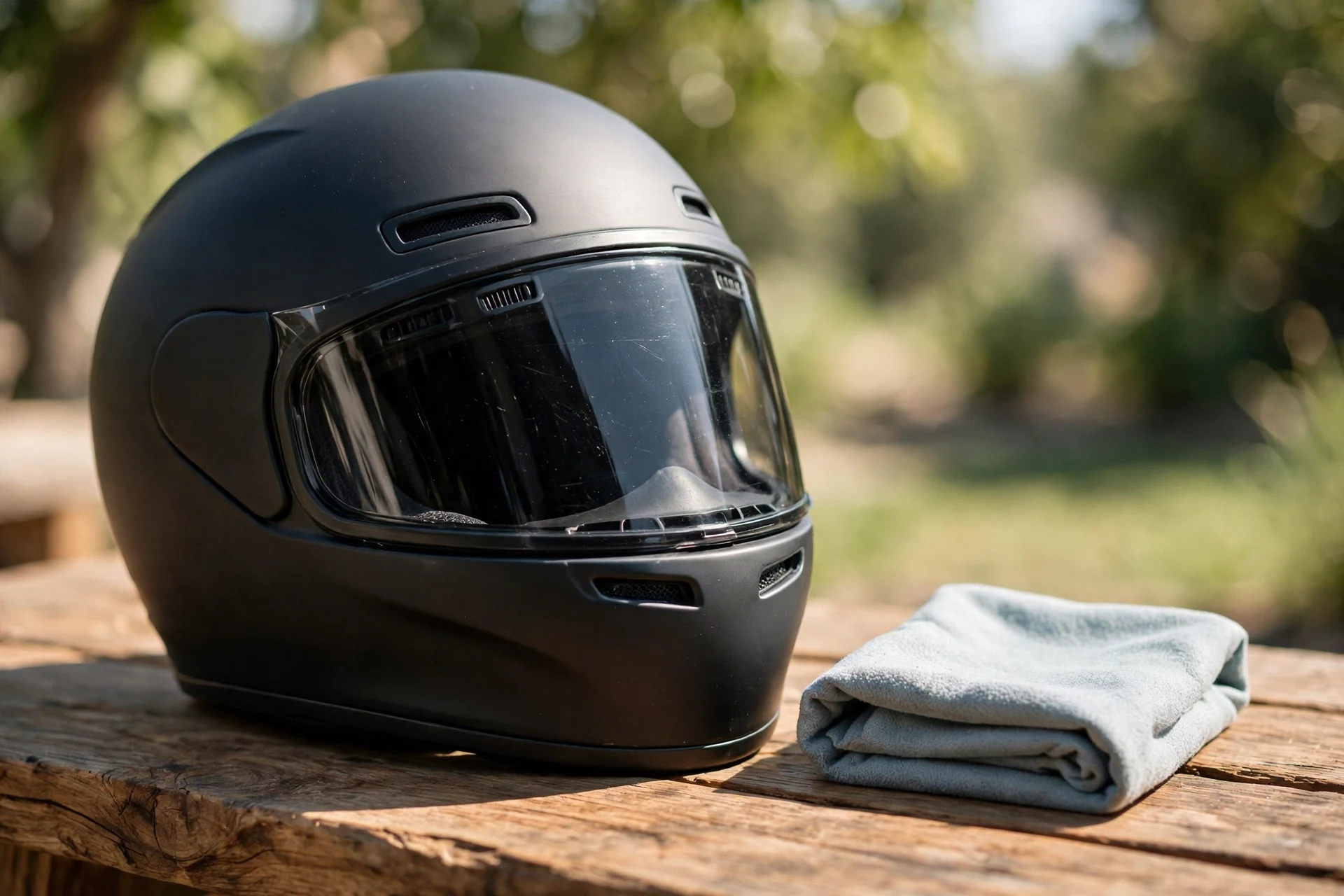
A visor cleaning cloth is a soft cloth made for wiping a helmet visor clean without scratching it. In general terms, it is a microfibre cloth, often kept in a pocket or tank bag, that you use to remove dust, insects, rain, and smears from the visor, so you can see clearly without damaging the lens or its coatings. A visor is the rider’s window on the road, and it gets dirty fast: insects, dust, rain, and road grime all land on it. A proper cleaning cloth is the simplest tool for keeping that window clear, and it is far safer for the visor than a glove, a sleeve, or a paper tissue.
What Is a Visor Cleaning Cloth?
A visor cleaning cloth is a small, soft cloth, usually made of microfibre, designed to clean a helmet visor without scratching it. Microfibre is made of very fine fibres that trap dust and dirt rather than dragging it across the surface, and it absorbs water well, so it can wipe away rain and condensation. Cloths come in different sizes, from a small square that fits in a pocket to a larger cloth kept at home for a proper clean.
Some cloths are plain, while others are sold as part of a visor cleaning kit, with a spray cleaner or a storage pouch. In general terms, the key quality of a visor cloth is softness: it should feel smooth against the visor, with no rough edges, seams, or labels that could scratch the lens. A cloth that is too rough, or one that has picked up grit, can do more harm than good.
Why Not Just Use a Glove or a Tissue?
Using a glove, a sleeve, or a paper tissue to wipe a visor is tempting, especially on a ride, but it is a bad habit. Gloves are often made of leather or textile with seams, zips, or hard knuckle protectors, and any of these can scratch the visor. Paper tissues and paper towels are rougher than they feel, and they can leave fine scratches that build up over time. Even a clean-looking sleeve can carry grit from the road.
Those fine scratches matter. Each one scatters a little light, and at night the scatter shows up as a halo around every headlight and street light, which is tiring and can hide the road ahead. A microfibre cloth, used properly, avoids that damage. If you want to understand how helmets protect the head in a crash, reading about what MIPS is for helmets is a useful starting point, though a cleaning cloth does not change how the helmet itself protects you.

How Do You Clean a Visor With a Cloth?
Cleaning a visor with a cloth is simple, but the order matters. First, rinse the visor with water if you can, to wash off loose grit, insects, and dust. If you are on the road and have no water, shake the cloth out first, and wipe very gently, lifting the cloth rather than dragging it, so any grit is picked up rather than dragged across the lens. For dried insects, it helps to lay a damp cloth over the visor for a minute to soften them before wiping.
Use a clean part of the cloth for each wipe, folding it to a fresh surface as it picks up dirt. Wipe in straight lines rather than circles, and finish with a light, dry pass to remove any smears. If the visor has an anti-fog coating on the inside, be extra gentle there, and avoid any cleaner that the helmet maker does not recommend. In general terms, a little patience and a clean cloth will get a visor clearer than a quick, hard rub ever will.
What Makes a Good Visor Cleaning Cloth?
A good visor cleaning cloth is made of soft, dense microfibre, with no rough seams or hard edges. It should be large enough to hold comfortably and to fold to a fresh surface, but small enough to carry in a pocket or a tank bag. A cloth in a bright colour is easier to find in a bag, and a cloth kept in a small pouch stays cleaner than one loose in a pocket full of keys and coins.
Some riders keep two cloths: one for the road, and one clean cloth at home for a proper wash. Others use a cloth with a spray cleaner, which can help shift dried insects and road film. In general terms, the best cloth is the one you will actually carry and use, so choose one that fits your kit and your habits. Avoid cloths that have been used for other jobs, such as cleaning a bike or a windscreen, because they may have picked up grit or chemicals that can damage a visor.
How Do You Look After a Cleaning Cloth?
A cleaning cloth only works well if it is clean itself. Wash it regularly in lukewarm water with a mild soap, or in a washing machine on a gentle cycle, without fabric softener, which can leave a residue that smears on the visor. Rinse it well, and let it dry naturally, away from direct heat. A cloth that is stiff, greasy, or full of grit should be washed or replaced.
Keep the cloth in a pouch or a sealed bag when you are not using it, so it does not pick up dust and grit from your pocket or your luggage. Check it before each use: if it feels rough, or if you can see dirt in it, use a fresh part of the cloth or a different cloth. In general terms, a cleaning cloth is a consumable item, and replacing a worn one costs very little compared with replacing a scratched visor. Keep a spare in your kit, so you are never tempted to wipe the visor with a glove instead.
When Should You Replace a Cleaning Cloth?
Replace a cleaning cloth when it no longer feels soft, when it has become thin or frayed, or when washing no longer gets it clean. A cloth that has been dropped on the ground, used to wipe up oil, or stored loose with gritty items may have picked up particles that will scratch a visor, and it is safer to replace it than to risk the lens. If a cloth leaves smears or lint on the visor, even after washing, its fibres are worn out.
It is also worth replacing a cloth if it has been used with a cleaner that has left a residue, or if it has been dried on a hot radiator and gone stiff. In general terms, a fresh cloth is cheap, and a scratched visor is not, so err on the side of replacing the cloth. Keep the old one for other jobs around the bike or the garage, where a scratch does not matter, and keep a new, soft cloth for the visor alone.
Can I wash a microfibre visor cloth?
Yes, wash it in lukewarm water with a mild soap, without fabric softener, and let it dry naturally. A clean cloth works far better than a dirty one, and washing keeps it soft.
Is a microfibre cloth safe for an anti-fog coating?
In general terms, yes, if you wipe gently and use only water or a cleaner the helmet maker recommends. Avoid harsh chemicals and hard rubbing, which can damage the coating.
What should I do if I have no cloth on a ride?
Rinse the visor with water if you can, and wipe it very gently with the softest clean fabric you have. Avoid gloves and paper, and clean the visor properly with a microfibre cloth as soon as you can.

Olivia
Writer at Helmet Today, covering helmet reviews, fit and riding safety.